
Your Browsing History






Featured Brands








SHOP BY Screen Size
Quick View
#1 Best Seller
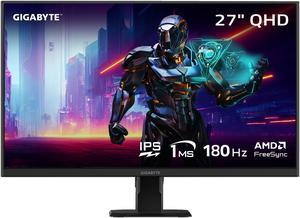
- Screen Size: 27"
- Refresh Rate: 180Hz
- Resolution: 2560 x 1440 (2K)
- Response Time: 1ms (MPRT)
- Model #: GS27QA SA1
- $249.99
- $159.99 –
- Save: 36%
- More options from $159.00 - $339.29
- Free Shipping
Quick View
in 30 days
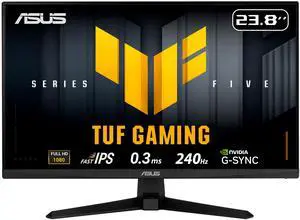
ASUS TUF Gaming 24" (23.8" viewable) Full HD 1080P 240hz Fast IPS with AMD FreeSync Premium & G-Sync Compatible 0.3ms Gaming Computer Monitor VG249QM5A- Screen Size: 24"
- Refresh Rate: 240Hz
- Resolution: 1920 x 1080
- Response Time: 0.30 ms
- Model #: VG249QM5A
- $169.99
- $99.99 –
- Save: 41%
- Free Shipping
Quick View
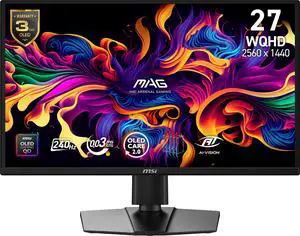
MSI 27" WQHD 2K 1440P 240Hz with Adaptive Sync 0.03ms OLED Gaming Computer Monitor with Height Adjustable, Pivot, Swivel & Tilt stand MAG 272QP QD-OLED X24
- Screen Size: 27"
- Refresh Rate: 240Hz
- Resolution: 2560 x 1440 (2K)
- Response Time: 0.03 ms
- Model #: MAG 272QP QD-OLED X24
- $499.99
- $449.99 –
- Save: 10%
- More options from $408.49 - $1,097.44
- Free Shipping
Quick View
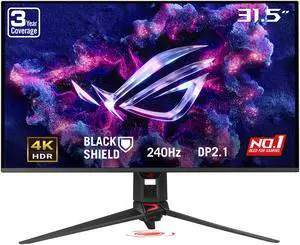
ASUS ROG Swift 32 inch UHD 4K 240Hz AMD FreeSync Premium Pro & G-Sync Compatible 0.03ms HDR500 USB-C OLED Gaming Computer Monitor with Height Adjustable, Swivel & Tilt Stand PG32UCDM3
- Screen Size: 31.5"
- Refresh Rate: 240Hz
- Resolution: 3840 x 2160 (4K)
- Response Time: 0.03 ms
- Model #: PG32UCDM3
- $1,299.99 –
- More options from $1,299.99 - $1,495.88
- Free Shipping
Quick View
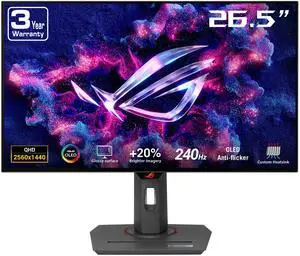
ASUS ROG Strix 27" QHD 2K 1440P 240Hz with AMD FreeSync Premium & G-Sync Compatible 0.03ms Glossy OLED Gaming Computer Monitor XG27AQDMGZ
Free gift w/ purchase, limited offer
- Screen Size: 27"
- Refresh Rate: 240Hz
- Resolution: 2560 x 1440 (2K)
- Response Time: 0.03 ms (GTG)
- Model #: XG27AQDMGZ
- $524.99 –
- More options from $524.99 - $699.99
- Free Shipping
Quick View
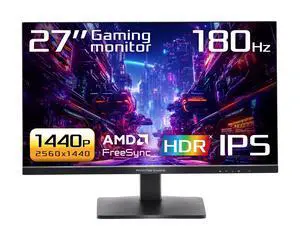
ASRock Phantom Gaming 27" QHD 2K 1440P 180Hz IPS with AMD FreeSync (AMD Adaptive Sync) HDR400 Gaming Computer Monitor PG27QFT1B

- Screen Size: 27"
- Refresh Rate: 180Hz
- Resolution: 2560 x 1440 (2K)
- Response Time: 1ms (MPRT), 5ms (GTG)
- Model #: PG27QFT1B
- $209.99
- $129.77 –
- Save: 38%
- Free Shipping
Quick View
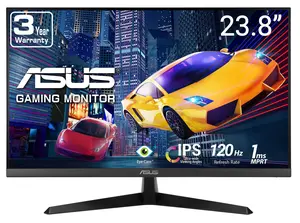
ASUS 24" (23.8" viewable) Full HD 1080P 120hz IPS with Adaptive Sync, 1ms low blue light Eye Care Gaming Computer Monitor VY249HGR
Free gift w/ purchase, limited offer
- Screen Size: 24"
- Refresh Rate: 120Hz
- Resolution: 1920 x 1080
- Response Time: 1 ms (MPRT)
- Model #: 90LM06A3-B02AB0
- $119.99
- $89.99 –
- Save: 25%
- More options from $89.99 - $179.43
- Free Shipping
Quick View
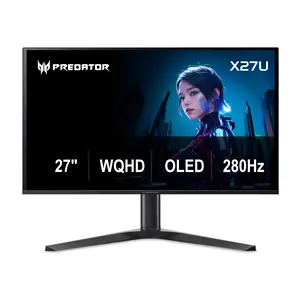
Acer Predator 27" WQHD 2K 1440P 280hz with AMD FreeSync Premium Pro, 0.03ms OLED Gaming Computer Monitor X27U Z1bmiiprx
- Screen Size: 27"
- Refresh Rate: 280Hz
- Resolution: 2560 x 1440 (2K)
- Response Time: 0.03 ms
- Model #: UM.GXXAA.103
- $549.99
- $399.99 –
- Save: 27%
- More options from $399.99 - $712.32
- Free Shipping
Quick View
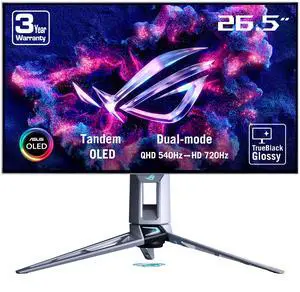
ASUS ROG Swift 27" (26.5" viewable) Dual Mode QHD 1440P 540Hz Full HD 720Hz AMD FreeSync Premium Pro & G-SYNC compatible 0.02ms HDR500 OLED Gaming Computer Monitor Glossy True Black PG27AQWP-W
Free gift w/ purchase, limited offer
- Screen Size: 26.5"
- Refresh Rate: Dual-Mode QHD@540Hz/HD@720Hz
- Resolution: 2560 x 1440 (2K)
- Response Time: 0.02 ms(GTG)
- Model #: PG27AQWP-W
- $1,099.00 –
- More options from $1,099.00 - $1,182.81
- Free Shipping
Quick View
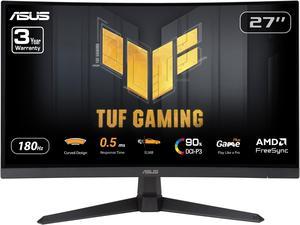
ASUS TUF Gaming 27" QHD 2K 1440P 180Hz with AMD FreeSync, 0.5ms, 1500R, Extreme Low Motion Blur Curved Gaming Computer Monitor VG27WQ3B
Free gift w/ purchase, limited offer
- Screen Size: 27"
- Refresh Rate: 180Hz
- Resolution: 2560 x 1440 (2K)
- Response Time: 1ms(GTG), 0.5ms(min.)
- Model #: 90LM0AQ1-B011B0
- $239.99
- $179.99 –
- Save: 25%
- More options from $179.99 - $325.77
- Free Shipping
Quick View
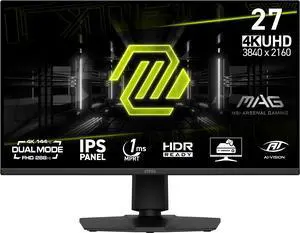
MSI 27" Dual Mode UHD 4K 144Hz Full HD 288Hz IPS with Adaptive-Sync 1ms HDR400 Ai Crosshair Gaming Computer Monitor with Height Adjustable, Swivel, Pivot & Tilt Stand MAG 275UPD E14
- Screen Size: 27"
- Refresh Rate: 144Hz UHD / 288Hz FHD
- Resolution: 3840 x 2160 (4K)
- Response Time: 1 ms
- Model #: MAG 275UPD E14
- $279.99
- $249.99 –
- Save: 10%
- More options from $249.99 - $378.92
- Free Shipping
Quick View
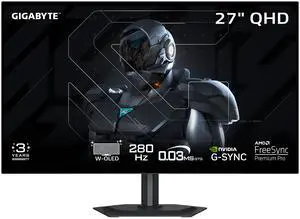
GIGABYTE 27" QHD 2K 1440P 280Hz with AMD FreeSync Premium Pro & G-SYNC Compatible 0.03ms HDR500 USB-C KVM OLED Gaming Computer Monitor with Height adjustable, Pivot, Swivel and Tilt stand MO27Q28G
- Screen Size: 27"
- Refresh Rate: 280Hz
- Resolution: 2560 x 1440 (2K)
- Response Time: 0.03 ms (GTG)
- Model #: MO27Q28G SA1
- $599.99 –
- More options from $599.99 - $749.99
- Free Shipping
Quick View
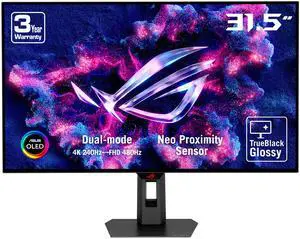
ASUS ROG Strix 32" Dual Mode UHD 4K 240Hz FHD 480Hz with AMD FreeSync Premium Pro & G-Sync Compatible 0.03ms HDR400 USB-C KVM OLED Gaming Computer Monitor
Free gift w/ purchase, limited offer
- Screen Size: 32"
- Refresh Rate: 240Hz
- Resolution: 3840 x 2160 (4K)
- Response Time: 0.03 ms
- Model #: XG32UCWMG
- $1,099.00 –
- More options from $1,099.00 - $1,429.99
- Free Shipping
Quick View
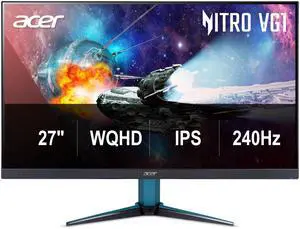
Acer Nitro 27" WQHD 2K 1440P 240HZ IPS 0.5ms with AMD FreeSync Premium HDR400 Gaming Computer Monitor with Speakers VG272U W2BMIIPX
- Screen Size: 27"
- Refresh Rate: 240Hz
- Resolution: 2560 x 1440 (2K)
- Response Time: 0.50 ms
- Model #: UM.HV2AA.201
- $219.99
- $209.99 –
- More options from $209.99 - $464.50
- Free Shipping
Quick View
in 30 days
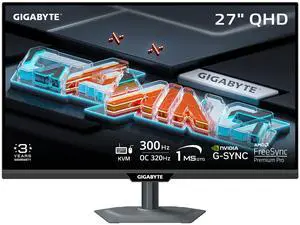
GIGABYTE 27" QHD 2K 1440P 300Hz/OC 320Hz IPS with AMD FreeSync Premium Pro & G-SYNC Compatible 1ms USB-C KVM Gaming Computer Monitor with Height Adjustable, Pivot, Swivel & Tilt Stand M27Q3- Screen Size: 27"
- Refresh Rate: 300Hz
- Resolution: 2560 x 1440 (2K)
- Response Time: 1 ms
- Model #: M27Q3 SA1
- $279.99
- $199.99 –
- Save: 28%
- More options from $199.99 - $399.99
- Free Shipping
Quick View
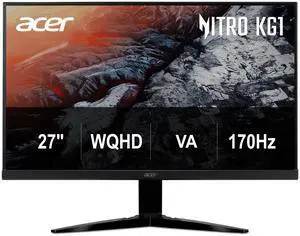
Acer Nitro 27 " WQHD 2K 1440P 170Hz 1ms AMD FreeSync Premium Gaming Computer Monitor KG271U Pbiip
- Screen Size: 27"
- Refresh Rate: 165Hz
- Resolution: 2560 x 1440 (2K)
- Response Time: 1 ms
- Model #: UM.HX1AA.P03
- $249.99
- $139.99 –
- Save: 44%
- More options from $139.99 - $212.06
- Free Shipping
Quick View
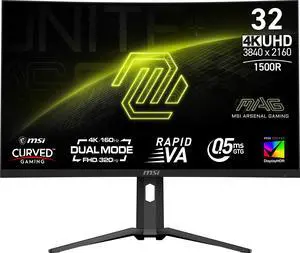
MSI 32" (31.5" viewable) DUAL MODE UHD 4K 160Hz Full HD 320Hz FreeSync Premium 0.5ms HDR400 DCI-P3 97% USB-C AI Vision Curved Gaming Computer Monitor with Height Adjustable & Tilt stand MAG 321CUPDF
- Screen Size: 31.5"
- Refresh Rate: 160Hz
- Resolution: 3840 x 2160 (4K)
- Response Time: 0.5ms (GTG)
- Model #: MAG 321CUPDF
- $332.15 –
- More options from $332.15 - $625.30
- Free Shipping
Quick View
in 30 days
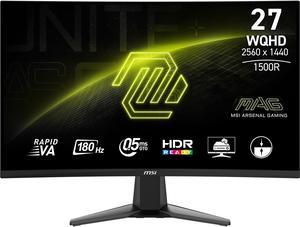
MSI 27" QHD 2K 1440P 180Hz with AMD FreeSync Sync 0.5ms HDR Ready support VRR Ai Vision Less Blue Light Anti-Flicker Curved Gaming Computer Monitor MAG 27CQ6F- Screen Size: 27"
- Refresh Rate: 180Hz
- Resolution: 2560 x 1440 (2K)
- Response Time: 0.50 ms
- Model #: MAG 27CQ6F
- $199.99
- $149.99 –
- Save: 25%
- More options from $149.99 - $282.68
- Free Shipping
Quick View
in 30 days
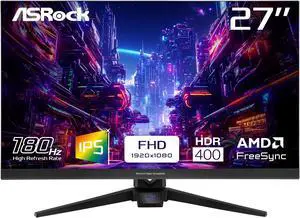
ASRock Phantom Gaming 27" Full HD 180Hz IPS AMD FreeSync HDR400 Gaming Computer Monitor with Swivel & Tilt stand PG27FFT1A- Screen Size: 27"
- Refresh Rate: 180Hz
- Resolution: 1920 x 1080
- Response Time: 1ms (MPRT), 4ms (GtG)
- Model #: PG27FFT1A
- $159.99
- $96.77 –
- Save: 39%
- Free Shipping
Quick View
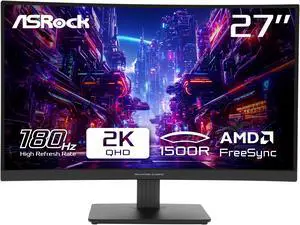
ASRock Phantom Gaming 27" QHD 2K 1440P 180Hz WITH AMD FreeSync Premium 95% DCI-P3 Curved Gaming Computer Monitor PG27QRT1B
- Screen Size: 27"
- Refresh Rate: 180Hz
- Resolution: 2560 x 1440 (2K)
- Response Time: 1ms (MPRT)
- Model #: PG27QRT1B
- $195.99
- $129.99 –
- Save: 33%
- Free Shipping

Quick View
MSI 27" WQHD 2K 1440P 240Hz with AMD Adaptive Sync 0.03ms OLED Gaming Computer Monitor with Height Adjustable, Pivot, Swivel & Tilt stand for both PC & Console MAG 274QP QD-OLED X24
- Screen Size: 26.5"
- Refresh Rate: 240Hz
- Resolution: 2560 x 1440 (2K)
- Response Time: 0.03 ms (GTG)
- Model #: MAG 274QP QD-OLED X24
- $499.99
- $449.99 –
- Save: 10%
- More options from $379.99 - $524.44
- Free Shipping
Quick View
in 30 days
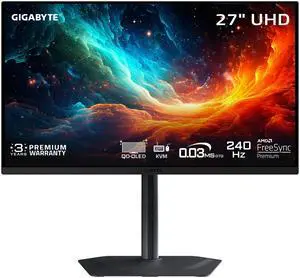
GIGABYTE 27" UHD 4K 240Hz with AMD FreeSync Premium Pro &, G-SYNC Compatible HDR400 USB-C KVM OLED Gaming Computer Monitor with Height adjustable, pivot, tilt and swivel stand MO27U2+ $50 off w/ promo code BUSF635, limited offer
- Screen Size: 27"
- Refresh Rate: 240Hz
- Resolution: 3840 x 2160 (4K)
- Response Time: 0.03 ms
- Model #: MO27U2 SA
- $999.99
- $649.99 –
- Save: 35%
- More options from $649.99 - $1,215.63
- Free Shipping
Quick View
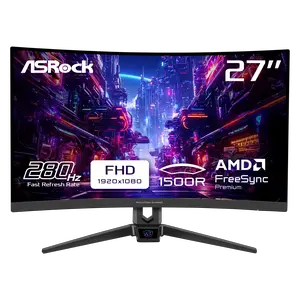
ASRock Phantom Gaming 27" Full HD 280Hz with FreeSync Premium (AMD Adaptive Sync) 1ms Flicker-Free Low Blue Light 1500R Curved Gaming Computer Monitor PG27FRS1A
- Screen Size: 27"
- Refresh Rate: 280Hz
- Resolution: 1920 x 1080
- Response Time: 1ms (MPRT)
- Model #: PG27FRS1A
- $189.99
- $118.99 –
- Save: 37%
- Free Shipping
Quick View
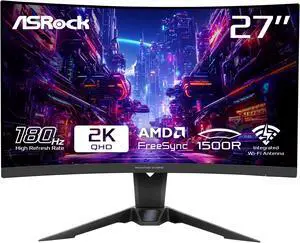
ASRock Phantom Gaming 27" QHD 2K 1440P 180Hz 1ms with AMD FreeSync Premium and Built-in Wi-Fi Antenna 1500R Curved Gaming Computer Monitor with Height Adjustable, Swivel & Tilt stand PG27QRT2A
- Screen Size: 27"
- Refresh Rate: 180Hz
- Resolution: 2560 x 1440 (2K)
- Response Time: 1ms (MPRT)
- Model #: PG27QRT2A
- $201.99
- $139.99 –
- Save: 30%
- Free Shipping
Quick View
in 30 days
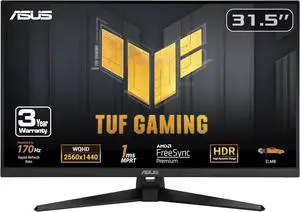
ASUS TUF Gaming 32" (31.5" viewable) QHD 2K 1440P 170Hz AMD FreeSync Premium (Adaptive Sync) 1ms HDR10 Built-in Speakers Gaming Computer Monitor VG32AQA1A- Screen Size: 32"
- Refresh Rate: 170Hz
- Resolution: 2560 x 1440 (2K)
- Response Time: 1 ms
- Model #: 90LM07L0-B033B0
- $239.99
- $189.99 –
- Save: 20%
- More options from $189.99 - $360.33
- Free Shipping
Quick View
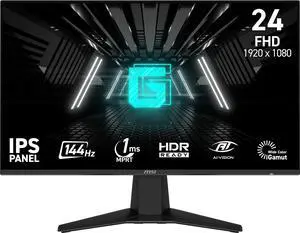
MSI 24" (23.8" viewable) Full HD 144Hz IPS with Adaptive-Sync 1ms HDR Ready Ai Vision Less Blue Light Pro Anti-Flicker Gaming Computer Monitor G242L E14
- Screen Size: 24" (23.8" Viewable)
- Refresh Rate: 144Hz
- Resolution: 1920 x 1080
- Response Time: 1ms (MPRT)
- Model #: G242L E14
- $99.99
- $84.99 –
- Save: 15%
- More options from $84.99 - $238.85
- Free Shipping
Quick View
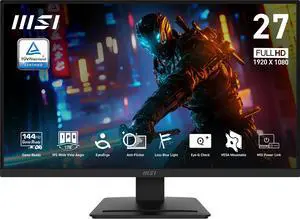
MSI 27" Full HD 144Hz IPS with AMD Adaptive Sync 1ms HDR Ready 102% sRGB LCD Gaming Computer Monitor for both Work and Gaming PRO MP273L E14
- Screen Size: 27"
- Refresh Rate: 144Hz
- Resolution: 1920 x 1080
- Response Time: 1ms (MPRT) / 4ms (GTG)
- Model #: PRO MP273L E14
- $129.99
- $104.99 –
- Save: 19%
- More options from $103.88 - $198.89
- Free Shipping

Quick View
Acer Nitro 24" (23.8" viewable) Full HD 1080P 180hz with AMD FreeSync Technology 0.5ms, HDR10, compatible with VESA mounting 100mm x 100mm Gaming Computer Monitor KG241Y P3bip
- Screen Size: 24"
- Refresh Rate: 180Hz
- Resolution: 1920 x 1080
- Response Time: 0.50 ms
- Model #: UM.QX1AA.305
- $129.99
- $89.99 –
- Save: 30%
- More options from $89.99 - $159.99
- Free Shipping
Quick View
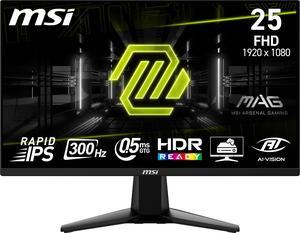
MSI 24" (24.5" viewable) Full HD 300Hz IPS with AMD FreeSync Premium 0.5ms HDR Ready Ai vision Gaming Computer Monitor MAG 255XF
- Screen Size: 25"(24.5" viewable)
- Refresh Rate: 300Hz
- Resolution: 1920 x 1080
- Response Time: 0.5ms (GTG, Min.)
- Model #: MAG 255XF
- $149.99
- $139.99 –
- Save: 6%
- More options from $139.99 - $259.95
- Free Shipping
Quick View
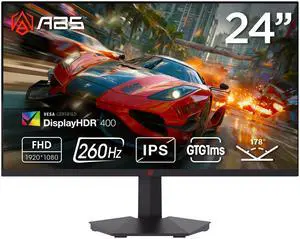
ABS 24" (23.8" viewable) Full HD 1080P 260Hz Fast IPS with AMD FreeSync 1ms HDR400 Anti-Glare Low Blue Light HDMI DisplayPort VESA Mount Gaming Computer Monitor GF241NE

- Screen Size: 24"(23.8" viewable)
- Refresh Rate: 260Hz
- Resolution: 1920 x 1080
- Response Time: 1 ms
- Model #: GF241NE
- $115.00
- $99.99 –
- Save: 13%
- Free Shipping
Quick View
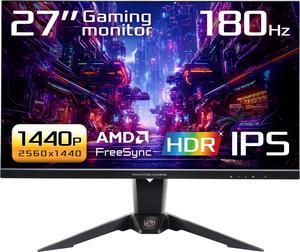
ASRock Phantom Gaming 27" QHD 2K 1440P 180Hz IPS with AMD FreeSync HDR400 Gaming Computer Monitor with Height Adjustable, Swivel & Tilt stand PG27QFT2A
- Screen Size: 27"
- Refresh Rate: 180Hz
- Resolution: 2560 x 1440 (2K)
- Response Time: 1ms (MPRT), 5ms (GtG)
- Model #: PG27QFT2A
- $209.99
- $144.77 –
- Save: 31%
- Free Shipping
Quick View
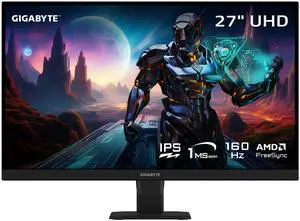
GIGABYTE 27" UHD 4k 160Hz IPS with AMD FreeSync (AMD Adaptive Sync) 1ms HDR400 Gaming Computer Monitor GS27U
- Screen Size: 27"
- Refresh Rate: 160Hz
- Resolution: 3840 x 2160 (4K)
- Response Time: 1 ms
- Model #: GS27U SA1
- $349.99
- $249.99 –
- Save: 28%
- More options from $249.99 - $470.00
- Free Shipping
Quick View
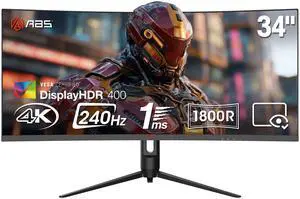
ABS 34" Ultrawide UWQHD 2K 1440P (Quasi 4K) 240Hz with AMD FreeSync 1ms HDR400 1500R Curved Gaming Computer Monitor with Height Adjustable stand GQ341NE
- Screen Size: 34"
- Refresh Rate: 240Hz
- Resolution: 3440 x 1440 (2K)
- Response Time: 1 ms
- Model #: GQ341NE
- $319.99
- $299.99 –
- Save: 6%
- Free Shipping
Quick View
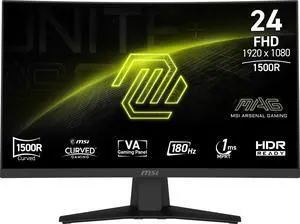
MSI 24" (23.6" viewable) Full HD 180Hz with Adaptive-Sync HDR Ready 1ms 1500R 105% sRGB Anti-Glare Curved Gaming Computer Monitor Frameless Design for both Work and Gaming MAG 244C
- Screen Size: 24"
- Refresh Rate: 180Hz
- Resolution: 1920 x 1080
- Response Time: 1ms (MPRT) / 4ms (GTG)
- Model #: MAG 244C
- $119.99
- $99.99 –
- Save: 16%
- More options from $94.99 - $183.08
- Free Shipping
Quick View
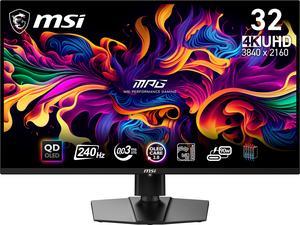
MSI 32" UHD 4K 240Hz with AMD FreeSync Premium Pro & Nvidia G-Sync compatible 0.03ms 90W USB-C OLED Gaming Computer Monitor with Height Adjustable & Swivel Stand MPG 321URX QD-OLED
- Screen Size: 32"
- Refresh Rate: 240Hz
- Resolution: 3840 x 2160 (4K)
- Response Time: 0.03 ms
- Model #: MPG 321URX QD-OLED
- $959.99
- $899.99 –
- Save: 6%
- More options from $807.49 - $1,268.26
- Free Shipping
Quick View
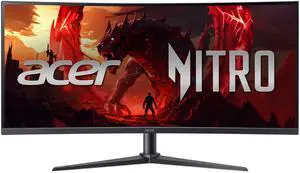
Acer Nitro 34" QHD 2K 1440P 240Hz with AMD FreeSync Premium (AMD Adaptive Sync) Gaming Computer Monitor XZ340CUR W0BMIIPHX
- Screen Size: 34"
- Refresh Rate: 240Hz
- Resolution: 3440 x 1440
- Response Time: 1 ms
- Model #: UM.CX0AA.007
- $329.99
- $279.99 –
- Save: 15%
- More options from $279.99 - $291.70
- Free Shipping
Find Your Perfect Gaming Monitor
Elevate Your Gaming Experience: The Monitor Matters
Your gaming monitor isn't just a screen—it's your window into virtual worlds. Whether you're dodging bullets in competitive shooters or getting lost in cinematic RPGs, the right display can make all the difference. Let's break down what really matters when choosing your gaming monitor.
Read our complete step-by-step walkthrough here: How to choose the right gaming monitor.
Size: Find Your Sweet Spot
Bigger isn't always better when it comes to gaming monitors. Here's what works best:
- 24-27 inches: The esports sweet spot. Smaller screens keep everything in your field of view for faster reactions.
- 32+ inches: Perfect for immersive single-player games where you want to soak in every detail.
- Ultrawide (34+ inches): Curved screens that wrap around your vision for next-level immersion.
Pro tip: Measure your desk space first—you don't want a monitor that overwhelms your setup!
Resolution & Refresh Rate: The Speed vs. Clarity Balance
These two specs work together to create buttery-smooth gameplay:
- Resolution:
- 1080p(Full HD): 1920 X 1080 pixel, still great for competitive gaming and budget builds, offering a good between quality and performance.
- 1440p(QHD): 2560 x 1440 pixels, The sweet spot for most gamers—sharp visuals without crushing your GPUs
- 4K(UHD): 840 x 2880 pixels,Stunning detail and clarity, but only if your graphics card can handle it,suitable for gaming, video editing, and multitasking
- 5K(WUHD): 512 x 2880 pixels, a premium resolution for large, high-end monitors, offering even great detail and clarity
- Refresh Rate:
- 60Hz or 75Hz: It might be sufficient for casual gamers and can offer a more comfortable experience for tasks like scrolling and working with spreadsheets
- 144Hz: The baseline for serious gaming—everything feels smoother
- 240Hz+: For esports pros who need every competitive edge
Remember: A high refresh rate means nothing if your GPU can't keep up!
Response Time: Speed in Every Frame
Monitor response time refers to how quickly a monitor can change the color of a pixel, measured in milliseconds (ms).
- Lower is Better: A lower response time means the monitor can switch colors faster, resulting in smoother visuals—especially during fast-paced action and gaming.
- Gaming: In competitive gaming, a lower response time reduces motion blur and ghosting (where motion trails follow fast-moving objects), creating a more responsive and immersive experience.
- General Use: For tasks like browsing or streaming, a response time below 5ms is usually sufficient, as most users won’t notice the difference between 1ms and 5ms.
- 1ms Response Time: Ideal for high-speed gaming, a 1ms response time ensures pixel transitions are nearly instantaneous.
- Real-World Performance: Manufacturer specs may exaggerate performance—refer to third-party reviews for accurate results.
- 0.03ms Response Time: Seen in premium OLED and QD-OLED monitors, this ultra-fast response delivers near-instant pixel changes for the smoothest motion clarity.
Panel Technology: Choose Your Strength
Different panel types excel at different things:
- IPS (In-Plane Switching): Gorgeous colors and wide viewing angles—perfect for visually stunning games.
- TN (Twisted Nematic): Lightning-fast response times (1ms), ideal for competitive gaming.
- VA (Vertical Alignment): Deep blacks and high contrast—offering a balanced experience for gaming and media.
- OLED (Organic Light Emitting Diode): Delivers true blacks by turning off individual pixels. Known for high contrast, wide viewing angles, and ultra-fast response times.
- QD-OLED (Quantum Dot OLED): Combines OLED with a quantum dot layer to enhance brightness and color vibrancy—great for immersive visuals.
- W-OLED (White OLED): Uses a white light-emitting layer and an extra white subpixel for improved brightness efficiency and accurate color reproduction.
Game-Changing Features
These technologies can take your gaming to the next level:
Adaptive Sync (G-Sync/FreeSync)
No more screen tearing or stuttering! These technologies sync your monitor's refresh rate with your GPU's output for perfectly smooth gameplay.
HDR & Advanced Display Tech
For visuals that pop:
- HDR: Makes colors more vibrant and lifelike
- OLED/QLED: Incredible contrast with perfect blacks
- Curved Screens: Wrap around your vision for deeper immersion
Built-in Crosshair Features
Many modern gaming monitors now include built-in crosshair overlays—ideal for first-person shooters like Counter-Strike 2, Valorant, Apex Legends, or Overwatch 2. These features can enhance accuracy by helping you line up shots more effectively, giving you a competitive edge without relying on in-game settings.
To truly maximize this advantage, modern setups now prioritize the smoothness of high refresh rates and sync technology which has become a daily standard for fluid motion. For those seeking a balance between speed and visual fidelity, understanding 4K gaming and GPU balance is essential to maintain high frame rates at crisp resolutions.
Beyond performance, the visual experience is further refined by HDR and panel evolution offering lifelike contrast, while higher pixel density ensures clarity that matches professional workloads. Finally, choosing the right monitor size and curved trends can provide the ergonomic comfort needed for long gaming sessions.
Last Updated: March 2026 | Newegg Computer Monitors Buying Guide
Gaming Monitor FAQs:
What is a gaming monitor and how is it different from a regular monitor?
A gaming monitor is designed for smoother motion, lower input lag, and better responsiveness than a standard display. Many models on Newegg also include higher refresh rates, adaptive sync support, and gaming-focused panel options.
What does refresh rate mean on a gaming monitor?
Refresh rate is how many times the screen updates per second. A higher refresh rate can make gameplay look smoother and feel more responsive, especially in fast-paced titles.
What does response time mean and why is it important?
Response time measures how quickly pixels change from one state to another. Lower response times can help reduce motion blur and ghosting in fast-moving scenes.
What gaming monitor resolutions are available (1080p, 1440p, 4K)?
Common gaming monitor resolutions include 1080p, 1440p, ultrawide 1440p, and 4K. On Newegg, the best choice usually comes down to your GPU power, preferred screen size, and target frame rate.
What panel types are used in gaming monitors (IPS, VA, TN, OLED)?
Gaming monitors commonly use IPS, VA, TN, OLED, and related panel technologies. Each one offers a different mix of speed, contrast, color performance, and viewing angles.
What is the difference between a 60Hz and a 144Hz (or higher) gaming monitor, and how does it affect gameplay?
A higher refresh rate can make gameplay look smoother and feel more responsive, especially in fast-paced titles. On Newegg, many competitive players filter by refresh rate first because it has a direct impact on motion clarity.
For gaming, how does a 1080p high-refresh-rate monitor compare to a 1440p or 4K lower-refresh-rate monitor?
1080p high refresh rate monitors are usually chosen for speed and higher frame rates, while 1440p and 4K models focus more on image sharpness and detail. The better choice depends on your GPU, the games you play, and whether you prioritize responsiveness or visual fidelity.
What is the difference between IPS, VA, TN, and OLED panels?
IPS panels are popular for strong color and viewing angles, VA panels emphasize contrast, TN panels focus on speed, and OLED panels deliver deep blacks and premium image quality. The right choice depends on how you prioritize motion, color, and immersion.
How do G-Sync and FreeSync compare?
Both technologies help reduce tearing and improve smoothness by matching monitor refresh with GPU output. On Newegg, checking whether a monitor supports the sync standard that matches your graphics card is an easy way to narrow down the right options.
What is the difference between curved and flat gaming monitors?
Curved monitors can feel more immersive, especially in ultrawide formats, while flat monitors are often preferred for traditional layouts and multi-monitor setups. The best fit depends on screen size, desk depth, and personal preference.
How do I choose the right gaming monitor for my setup?
Start with your GPU, then compare resolution, refresh rate, screen size, panel type, and sync support. On Newegg, filters for refresh rate, resolution, and panel type make it much easier to narrow down the right fit.
What size gaming monitor should I get (24, 27, or 32 inches)?
Smaller screens are often preferred for close-up competitive play, while larger sizes improve immersion and workspace. The right size depends on desk distance, resolution, and how you use your monitor every day.
Is 1440p the best resolution for gaming?
For many PC gamers, 1440p is a strong balance between sharp image quality and smooth frame rates. It is especially popular on 27-inch gaming monitors paired with capable mid-range to high-end GPUs.
Do I need a high refresh rate monitor for competitive gaming?
A high refresh rate monitor can make fast gameplay feel smoother and more responsive, which is why many competitive players prioritize 144Hz or higher. Your GPU still needs enough performance to take advantage of it.
Should I prioritize an IPS panel for color and image quality or a TN/fast IPS panel for speed when choosing a gaming monitor?
That depends on your gaming priorities. Fast IPS is a popular middle ground for strong color and good speed, while TN still appeals to players focused on pure responsiveness. On Newegg, comparing panel type alongside refresh rate helps keep the choice balanced.
What are common issues to watch out for when buying a gaming monitor?
Common concerns include limited refresh rate support over certain ports, motion blur, uneven brightness, and panel-specific tradeoffs. Reading specs carefully helps avoid buying a monitor that does not match your setup.
Are budget gaming monitors reliable?
Some budget gaming monitors offer strong value, but features, color performance, and build quality can vary more at lower price points. On Newegg, reviews and spec comparisons are useful for spotting the safest budget picks.
What compatibility issues should I check before buying a gaming monitor?
Check your GPU outputs, cable type, supported refresh rate at your target resolution, adaptive sync compatibility, and available desk space. These details matter just as much as screen size and panel type.
Do gaming monitors have motion blur or ghosting issues?
Some gaming monitors can show motion blur or ghosting depending on panel type, response tuning, and game settings. Buyer feedback on Newegg can help you compare real-world motion performance between models.
Should I worry about dead or stuck pixels when buying a gaming monitor, and what kind of pixel policies are typical?
It is uncommon, but possible. Pixel policies vary by brand, so it is smart to review the listing warranty and return details before you buy. On Newegg, checking return coverage first can make the purchase feel much safer.
How do I set up a gaming monitor for the best performance?
Use the right cable, set the monitor to its highest supported refresh rate, enable adaptive sync if available, and confirm display settings in Windows or your GPU software. Those steps help you get the most from your monitor right away.
What cables should I use for high refresh rate gaming monitors?
The best cable depends on your monitor resolution, refresh rate, and port version. Before ordering on Newegg, check the monitor’s input specs to confirm whether DisplayPort or HDMI is the better fit for your target performance.
How do I enable G-Sync or FreeSync on my monitor?
First enable the feature in the monitor’s on-screen display if needed, then turn it on in your GPU control software. Compatibility can also depend on your graphics card, driver version, and connection type.
How do I adjust refresh rate settings in Windows or GPU control panels?
You can usually change refresh rate in Windows display settings or in your GPU control panel. After connecting the monitor, make sure the selected refresh rate matches the monitor’s supported specification.
What should I do after setting up a new gaming monitor?
Check the resolution and refresh rate, update GPU drivers if needed, confirm sync settings, and test a few games to make sure the monitor is performing as expected. It is also a good time to adjust brightness and picture mode.
Bestselling Gaming Monitor Reviews:
Jeanlucw
3/5/2026 8:33:46 PM
Great value OLED monitor
“ I recommend this gaming monitor to anyone who wants vibrant OLED colors, and 240Hz refresh rate ”
MSI 27 inch WQHD 2K 1440P 240Hz with Adaptive Sync 0.03ms OLED Gaming Computer Monitor with Height Adjustable, Pivot, Swivel & Tilt stand MAG 272QP QD-OLED X24Lew
3/2/2026 5:58:24 PM
Great product!
“ Great gaming monitor with no complaints so far!! ”
MSI 32 inch UHD 4K 240Hz with AMD FreeSync Premium Pro & Nvidia G-Sync compatible 0.03ms 90W USB-C OLED Gaming Computer Monitor with Height Adjustable & Swivel Stand MPG 321URX QD-OLEDegotistical
2/27/2026 5:37:11 PM
First Ever OLED Monitor. Very hapyy
“ The MSI MAG 271QP QD-OLED X24 is an impressive 27" QHD gaming monitor that really shines where it matters mostspeed and image quality. ”
MSI 27 inch WQHD 2K 1440P 240Hz with Adaptive Sync 0.03ms OLED Gaming Computer Monitor with Height Adjustable, Pivot, Swivel & Tilt stand MAG 272QP QD-OLED X24Kyle Winters
2/25/2026 10:49:36 AM
First gaming monitor
“ This is my first gaming monitor and im absolutely blown away by the responsiveness and the visuals. ”
MSI 27 inch WQHD 2K 1440P 240Hz with Adaptive Sync 0.03ms OLED Gaming Computer Monitor with Height Adjustable, Pivot, Swivel & Tilt stand MAG 272QP QD-OLED X24Daniel C.
2/18/2026 8:15:02 PM
Next-Level Clarity and Speed: A True Upgrade to QD-OLED Gaming
“ Overall, the MSI MAG 272QP QD-OLED 27 Gaming Monitor is an exceptionally strong choice if you want next-level visuals and performance without spending flagship-tier money. ”
MSI 27 inch WQHD 2K 1440P 240Hz with Adaptive Sync 0.03ms OLED Gaming Computer Monitor with Height Adjustable, Pivot, Swivel & Tilt stand MAG 272QP QD-OLED X24wdavis054
2/18/2026 4:51:19 PM
A Stunning Ultrawide OLED That Delivers on Every Front
“ The combination of a 3440×1440 QDOLED panel, 240Hz refresh rate, and an incredibly fast 0.03ms response time creates one of the smoothest and most visually impressive gaming experiences Ive ever used. ”
MSI 34" Ultrawide UWQHD 2K 1440P 240Hz G-Sync Compatible 0.03ms HDR400 USB-C KVM 1800R Curved OLED Gaming Computer Monitor with Height Adjustable, Swivel & Tilt stand MPG 341CQPX QD-OLEDJim P
2/3/2026 3:08:10 PM
A really great starter OLED Gaming monitor
“ This is a great step up from my LCD gaming monitor I've been using. ”
MSI 27 inch WQHD 2K 1440P 240Hz with Adaptive Sync 0.03ms OLED Gaming Computer Monitor with Height Adjustable, Pivot, Swivel & Tilt stand MAG 272QP QD-OLED X24Anonymous
2/2/2026 8:49:16 PM
Incredible Oled Monitor
“ The MSI MAG 272QPW QD-OLED X28 is a great gaming monitor for people who want fast performance and a really good picture. ”
MSI 27 inch QHD 2K 1440P 280Hz with FreeSync Premium Pro & G-Sync Compatible 0.03ms HDR400 USB-C White OLED Gaming Computer Monitor with Height Adjustable, Swivel, Pivot & Tilt stand MAG272QPW QD-OLED X28