




 here!
I’m your shopping assistant for PC builds, upgrades, and everything tech.
Got questions? Ask away!
Start a conversation
here!
I’m your shopping assistant for PC builds, upgrades, and everything tech.
Got questions? Ask away!
Start a conversation





Any questions? Ask CelesteSM will help you find out quickly.

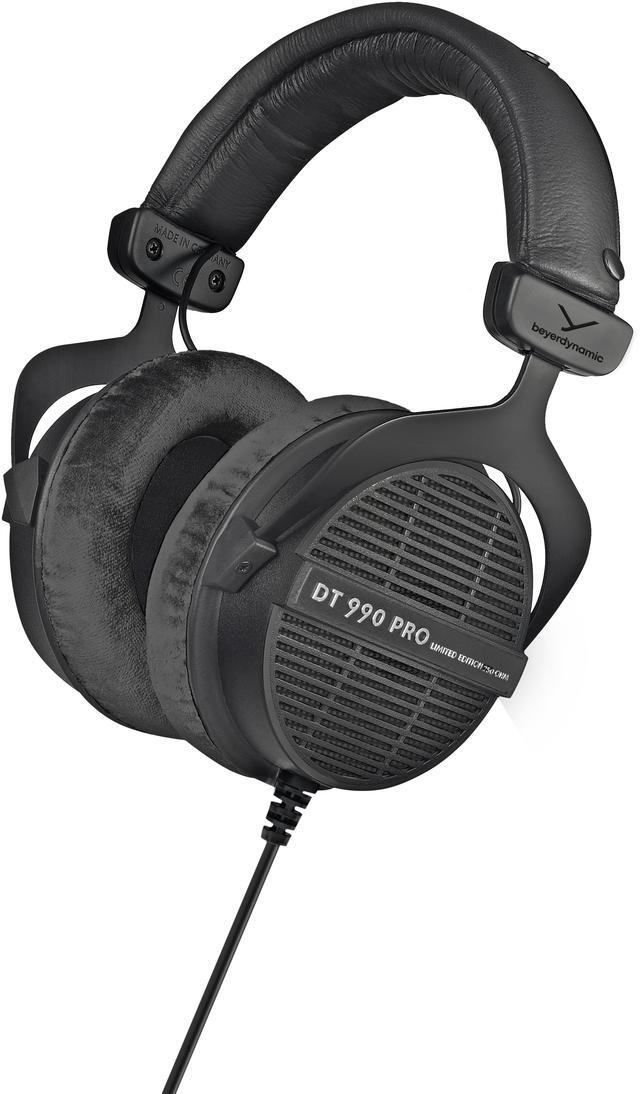
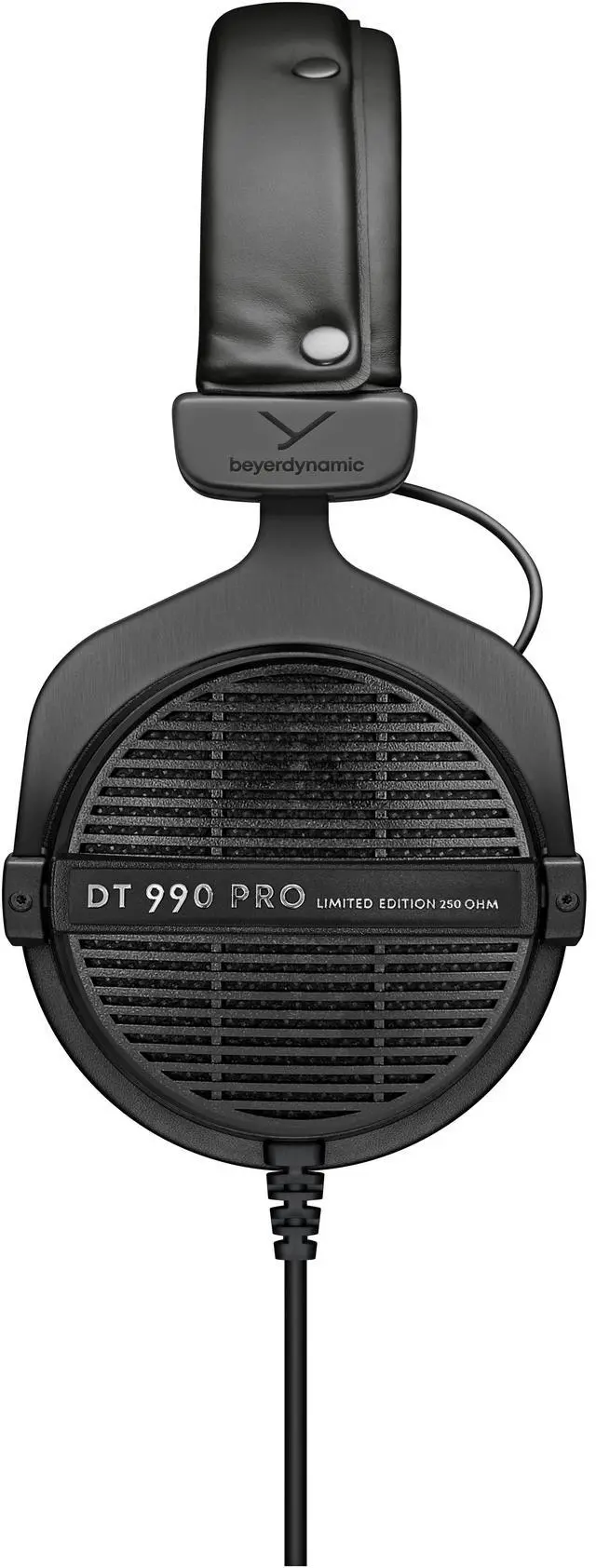
250 OHM - Limited Edition (Black, Open-back)
With an impedance of 250 ohms, the headphones are perfect for mixing in the studio.


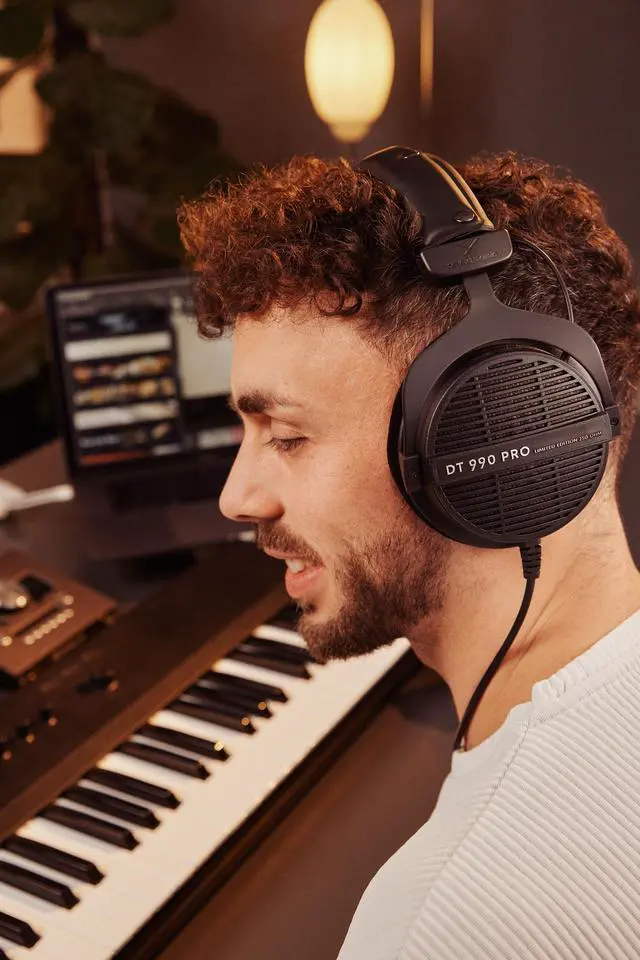
When every detail matters, the DT 990 PRO delivers the clarity you need. Its open design, brilliant highs and precise spatial imaging make even subtle noise, clipping or digital artifacts audible – perfect for professional editing and critical listening.

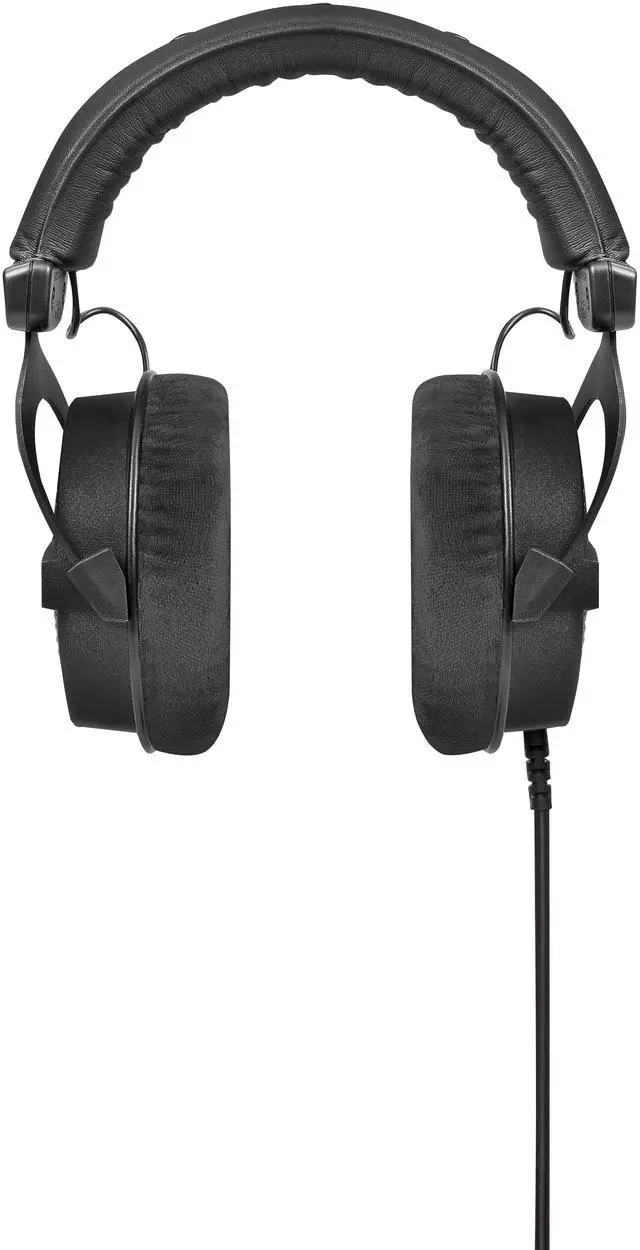
The single-sided cable allows the headphones to be put on and taken off frequently without cables getting tangled, and soft, adjustable ear cups provide for added comfort. The robust spring steel headband design ensures that the over-ear headphones also offer a secure fit.
Soundwise, both models are identical as they feature identically designed acoustic transducers. First of all, they are distinguished by the black design elements and secondly, the Black Limited Edition model is equipped with a straight 3m cable and the standard version with a spiral cable.

In professional environments, one thing matters above all: reliability. The DT 990 PRO has been handcrafted in Germany for decades – built with care, expertise, and materials made to last.
What does that mean for you? A headphone that won’t quit, even after years of daily use. And if something does need replacing – every part is serviceable. No throwaway product, no compromises – just a tool that’s with you every step of the way.


beyerdynamic HEADPHONE LAB delivers the sound of a high-end studio. For better mixes — no matter where you produce. Free, easy to use, and ready to go.
Which headphones are suitable for gaming?
The DT 990 PRO, DT 990 PRO X, DT 900 PRO X, and DT 1990 PRO MKII (open-back) are generally well-suited for gaming and streaming.
For use in combination with a microphone, we recommend closed-back headphones, as they provide better isolation from external noise and reduce sound leakage into the microphone. Open-back models offer a more spacious and natural soundstage but may bleed into sensitive microphones and cause feedback at high volumes.
What is the difference between the classic DT models and the PRO X models?
Classic DT models like the DT 770 PRO or DT 990 PRO have been studio standards for decades. They are available in various impedance versions to ensure optimal compatibility—whether you're using a compact interface in a home studio or a professional setup with a headphone amplifier.
The PRO X models, on the other hand, feature the STELLAR.45 driver, developed in Germany. This modern driver design ensures consistent sound quality across a wide range of playback devices—from mobile gear to high-end studio amplifiers. With an impedance of 48 ohms, they are especially versatile.
Additionally, PRO X models come with detachable cables, whereas the classic DT models have fixed cables. All models are handcrafted in Germany and designed for long-term use, thanks to their replaceable components.
Which headphones are best for mixing and mastering?
For mixing and mastering, open-back headphones are typically the preferred choice, as they offer a natural sense of space and an uncolored representation of the frequency spectrum. The DT 900 PRO X delivers a particularly linear and precise sound image, making it ideal for these tasks. For those seeking maximum detail and resolution, the DT 1990 PRO MKII is a high-end option, offering excellent depth, clear bass, and detailed highs.
While models like the DT 990 PRO and DT 990 PRO X also feature an open design and outstanding spatial imaging, they are primarily intended for critical listening and precise editing, rather than tonal balancing during mixing.
As a closed-back alternative, the DT 700 PRO X is a strong candidate. Thanks to its linear sound tuning, it can also be used for mixing—especially in environments where open-back headphones are not acoustically feasible.
What are the differences between the PRO and Edition models?
The PRO models (DT 770 PRO, DT 880 PRO, DT 990 PRO) are designed for professional applications, e.g. in the recording studio. The Edition models are suitable for use at home on the stereo system. The corresponding models of both product families PRO and Edition are hardly distinguishable in terms of sound, as long as they have the same impedance (e.g. DT 880 Edition / 250 Ohm and DT 880 PRO / 250 Ohm sound the same). The DT 990 Edition and the DT 990 PRO (in the 250 Ohm version) sound identical. The identical transducers are used. However, the Edition models have a slightly softer contact pressure for comfortable music enjoyment at home, while the Pro headphones sit a little tighter on the head to stay in place even during faster movements in everyday studio use. In addition, the Pro version comes with a coiled cable and the Edition version with a stretched cable. In addition, the Edition version is available in three different impedances.
The Beyerdynamic DT 990 Pro 250 Ohm Limited Edition is an open-back wired studio headphone built for mixing, editing, and critical listening, best suited for creators using proper desktop audio gear who want a spacious soundstage, strong detail retrieval, and long-session comfort.
| Attribute | Value |
|---|---|
| Best For | Professional studio monitoring, critical listening, and entertainment/gaming use; suited to higher-impedance playback chains (250 Ohm) and studio/high-output sources |
| Acoustic & Electrical Performance | Dynamic drivers; frequency response 5 Hz–35 kHz; THD < 0.2%; nominal SPL 96 dB/mW; 250 Ohm input impedance for controlled, detailed monitoring |
| Design & Fit | Circumaural (over-ear) round earcups with black velour ear pads and steel/plastic enclosure; limited-edition all-black styling |
| Connectivity & Cable | Wired connection with gold-plated 3.5 mm mini stereo jack and included 1/4" (6.35 mm) adapter; straight 3 m cable; wired-only (no Bluetooth) |
| Physical Dimensions & Weight | Product weight 250g without cable |
| Accessories & Package Contents | Includes 1 headset, 1/8" to 1/4" jack adapter and a black drawstring bag; carrying bag color black |
| Compatibility & Use Notes | Wired universal compatibility for professional, entertainment and gaming use; |
| Model Identifiers | Beyerdynamic DT 990 Pro 250 ohm Limited Edition — model/part number 713368 (series DT 990 Pro 250 ohm Black Limited Edition) |
| Safety & Power | Safety attestation present; no active noise control; not water-resistant; wired operation with no batteries required or included |
| Additional Features | Push-button control on wired interface; straight cord; over-ear styling |
Q: Is the DT 990 Pro 250 ohm a good choice for portable use, or should I pick something easier to drive?
A: The DT 990 Pro 250 ohm is the better choice for performance-first home or studio use, not portability-first use. Its open-back design leaks sound and its 250 ohm impedance is better suited to stronger headphone outputs. If you want to plug directly into more devices with fewer setup questions, an easier-to-drive alternative is usually the more practical choice. If your listening happens mostly at a desk with an interface or amp, the DT 990 Pro 250 ohm makes more sense.
Q: For desktop use, is the DT 990 Pro 250 ohm better than the DT 990 Pro X?
A: Choose the DT 990 Pro 250 ohm for a fixed desktop or studio setup where a dedicated amp or interface is already part of the chain. Choose the DT 990 Pro X if you want similar product intent with easier drivability and a detachable cable. This makes the Pro X the more flexible choice for mixed-device use, while the 250 ohm DT 990 Pro fits better when the system is already built around higher-impedance studio headphones.
Q: Should I buy the DT 990 Pro 250 ohm or step up to the DT 900 Pro X?
A: Choose the DT 990 Pro 250 ohm if you want the classic DT 990 presentation and already have gear that can handle a 250 ohm headphone. Choose the DT 900 Pro X if you want a newer model that is easier to drive from a wider range of devices and is positioned by beyerdynamic for critical listening, mixing, and mastering. The upgrade decision is mainly about modern driver design and easier device compatibility rather than a completely different use case.
Q: Is the DT 990 Pro 250 ohm worth it over the DT 990 Pro 80 ohm?
A: Choose the DT 990 Pro 250 ohm if you will use a proper audio interface, headphone amp, or studio gear and want the version aimed at higher-voltage sources. Choose the DT 990 Pro 80 ohm if you want an easier match for PCs, smaller interfaces, and simpler setups. The buying decision is usually less about a dramatic tuning difference and more about what will drive the headphone comfortably and consistently in your setup.
Q: Should I get the Beyerdynamic DT 990 Pro 250 ohm or the DT 770 Pro?
A: Choose the DT 990 Pro 250 ohm if you want an open-back headphone for mixing, editing, or home listening where a wider soundstage and easier spatial placement matter more than isolation. Choose the DT 770 Pro if you need a closed-back design for recording, tracking, office use, or any environment where sound leakage and outside noise matter. The core trade-off is openness and space on the DT 990 Pro versus isolation and containment on the DT 770 Pro.
Q: Should I choose the DT 990 Pro or a closed-back alternative like the DT 770 Pro?
A: Choose the DT 990 Pro if you want a wider, more speaker-like presentation for mixing and critical listening in a quiet space. Choose a closed-back alternative like the DT 770 Pro if you need better isolation, less sound leakage, or plan to record near microphones. The main trade-off is openness and spatial feel versus privacy and isolation.Choose the DT 990 Pro if you want a wider, more speaker-like presentation for mixing and critical listening in a quiet space. Choose a closed-back alternative like the DT 770 Pro if you need better isolation, less sound leakage, or plan to record near microphones. The main trade-off is openness and spatial feel versus privacy and isolation.
Q: Who is the DT 990 Pro 250 Ohm best for?
A: It is best for users who listen in a quiet room and care more about spacious sound, detail, and comfort than isolation. That includes mixing, editing, mastering, critical listening, and home desktop use. It is less suitable for tracking vocals, noisy environments, mobile use, or anyone who needs a built-in mic.
Q: Do the DT 990 Pro leak sound, and can they block outside noise?
A: Yes, they leak sound, and no, they do not block much outside noise. Open-back headphones are designed for a wider, more natural presentation, but the trade-off is sound escaping outward and ambient sound getting in. They work best in quiet rooms where isolation is not important.
Q: Are these good for office work, meetings, or travel?
A: No, not as a primary office or travel headphone. The DT 990 Pro is wired, open-back, and has no microphone or noise cancellation. That makes it a poor fit for commuting, shared offices, and calls. It is better suited to quiet indoor listening, editing, mixing, and long desk sessions.
Q: Do I need a headphone amp or audio interface for the DT 990 Pro 250 Ohm?
A: Usually yes. The 250-ohm DT 990 Pro is intended for studio gear, audio interfaces, headphone amps, and other stronger outputs. It may play from some laptops or phones, but volume and control can be limited. If you want reliable headroom and the most accurate performance, pair it with a proper interface or headphone amplifier.
Q: Are the DT 990 Pro 250 Ohm worth buying if I want one headphone for both home use and travel?
A: Usually no. They are better as a dedicated home or studio headphone. The open-back design leaks sound, does not isolate well, and the 250 ohm impedance is less convenient with phones, laptops, and portable gear. They are worth buying if your main use is at a desk with proper amplification; they are a weaker choice if you need one do-everything portable headphone.
Q: Are the DT 990 Pro 250 Ohm comfortable enough for long sessions?
A: Usually yes. The product data points to low-fatigue design with around-ear replaceable pads and a lightweight build, and Reddit discussions commonly mention the DT 990 family when comfort for long desk use matters. They are a practical choice if you wear headphones for hours at a time, especially in a fixed setup.
Q: Who are the DT 990 Pro 250 Ohm best suited for?
A: They are best suited for home studio users, desktop listeners, and buyers who prioritize spacious open-back sound over isolation. They are a better fit for mixing, critical listening, or long desk sessions than for commuting, office isolation, or mobile use. If you need noise blocking or plan to use headphones mostly in loud environments, this is probably not the right version to buy.
Q: Are the DT 990 Pro 250 Ohm a good choice for mixing and critical listening?
A: Yes, if you want an open-back headphone for editing, mix checking, and hearing small details. The product information supports that use: open-back design, wide soundstage, extended frequency response, and 250 ohm studio tuning. Reddit discussions around this model also repeatedly frame it as a desktop or studio headphone rather than a casual portable option. The trade-off is that open-back headphones leak sound and do not isolate outside noise well.
Q: Do the DT 990 Pro 250 Ohm need an amp, or can I plug them straight into a PC or interface?
A: For best results, plan on using a capable headphone amp or an audio interface with a strong headphone output. The 250 ohm version can play from some devices, but user discussions repeatedly focus on low volume, weak dynamics, or inconsistent sound from basic PC and controller outputs. This model makes the most sense in a desktop or studio setup, not as an easy plug-into-anything headphone.
Q: What is the weight of the Beyerdynamic DT 990 PRO 250 OHM headphones?
A: The weight of the headphones is 340 g.
Q: What is the frequency response range of the Beyerdynamic DT 990 PRO 250 OHM headphones?
A: The frequency response range is from 5Hz to 35KHz.
Q: Should I get the Beyerdynamic DT 990 Pro 250 ohm or the DT 770 Pro?
A: Choose the DT 990 Pro 250 ohm if you want an open-back headphone for mixing, editing, or home listening where a wider soundstage and easier spatial placement matter more than isolation. Choose the DT 770 Pro if you need a closed-back design for recording, tracking, office use, or any environment where sound leakage and outside noise matter. The core trade-off is openness and space on the DT 990 Pro versus isolation and containment on the DT 770 Pro.
Q: Is the DT 990 Pro 250 ohm a good choice for portable use, or should I pick something easier to drive?
A: The DT 990 Pro 250 ohm is the better choice for performance-first home or studio use, not portability-first use. Its open-back design leaks sound and its 250 ohm impedance is better suited to stronger headphone outputs. If you want to plug directly into more devices with fewer setup questions, an easier-to-drive alternative is usually the more practical choice. If your listening happens mostly at a desk with an interface or amp, the DT 990 Pro 250 ohm makes more sense.
Q: Should I buy the DT 990 Pro 250 ohm or step up to the DT 900 Pro X?
A: Choose the DT 990 Pro 250 ohm if you want the classic DT 990 presentation and already have gear that can handle a 250 ohm headphone. Choose the DT 900 Pro X if you want a newer model that is easier to drive from a wider range of devices and is positioned by beyerdynamic for critical listening, mixing, and mastering. The upgrade decision is mainly about modern driver design and easier device compatibility rather than a completely different use case.
Q: Is the DT 990 Pro 250 ohm worth it over the DT 990 Pro 80 ohm?
A: Choose the DT 990 Pro 250 ohm if you will use a proper audio interface, headphone amp, or studio gear and want the version aimed at higher-voltage sources. Choose the DT 990 Pro 80 ohm if you want an easier match for PCs, smaller interfaces, and simpler setups. The buying decision is usually less about a dramatic tuning difference and more about what will drive the headphone comfortably and consistently in your setup.
Q: For desktop use, is the DT 990 Pro 250 ohm better than the DT 990 Pro X?
A: Choose the DT 990 Pro 250 ohm for a fixed desktop or studio setup where a dedicated amp or interface is already part of the chain. Choose the DT 990 Pro X if you want similar product intent with easier drivability and a detachable cable. This makes the Pro X the more flexible choice for mixed-device use, while the 250 ohm DT 990 Pro fits better when the system is already built around higher-impedance studio headphones.


