




 here!
I’m your shopping assistant for PC builds, upgrades, and everything tech.
Got questions? Ask away!
Start a conversation
here!
I’m your shopping assistant for PC builds, upgrades, and everything tech.
Got questions? Ask away!
Start a conversationShipped by Newegg


Make informed decisions with expert advice. Learn More




Any questions? Ask CelesteSM will help you find out quickly.


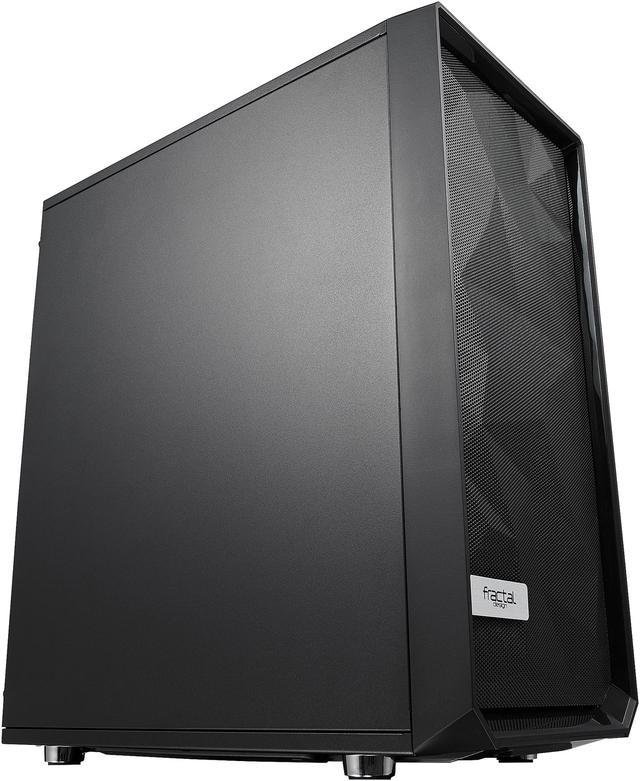
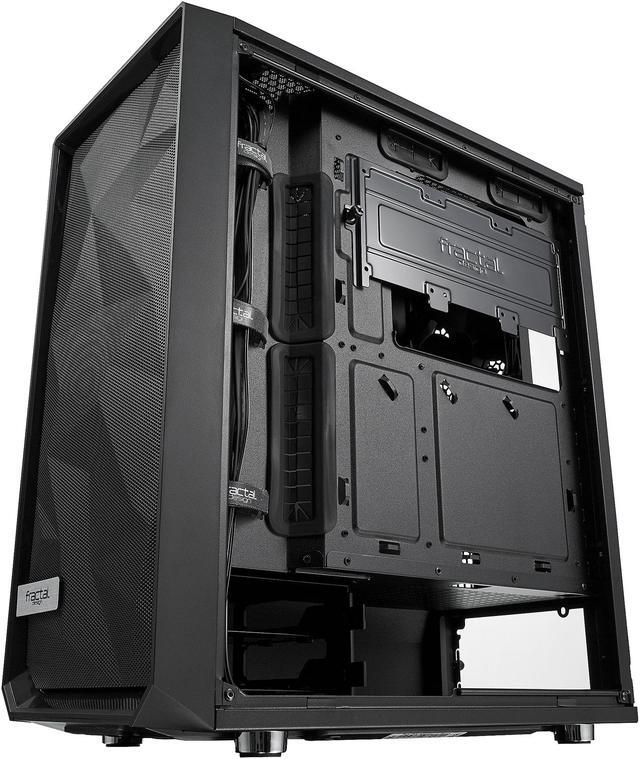
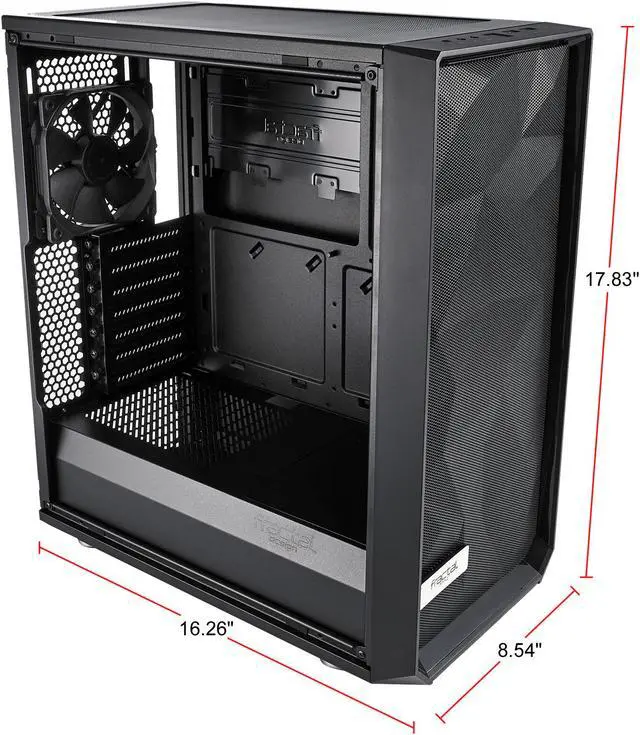
Meshify strikes an aggressive pose in the Fractal Design lineup with unparalleled cooling performance and a defiant new look.
Like diamond facets, the angular asymmetry of the Meshify C carves a space uniquely its own as a new dominant force in high-airflow design with stealth-inspired aesthetics for exceptional style. A compact yet spacious open layout creates an unrestricted airflow path from front intakes directly through key components to exhaust, ensuring heat is never an issue.
When performance is top priority and compromise is not an option, Meshify has you covered in style.


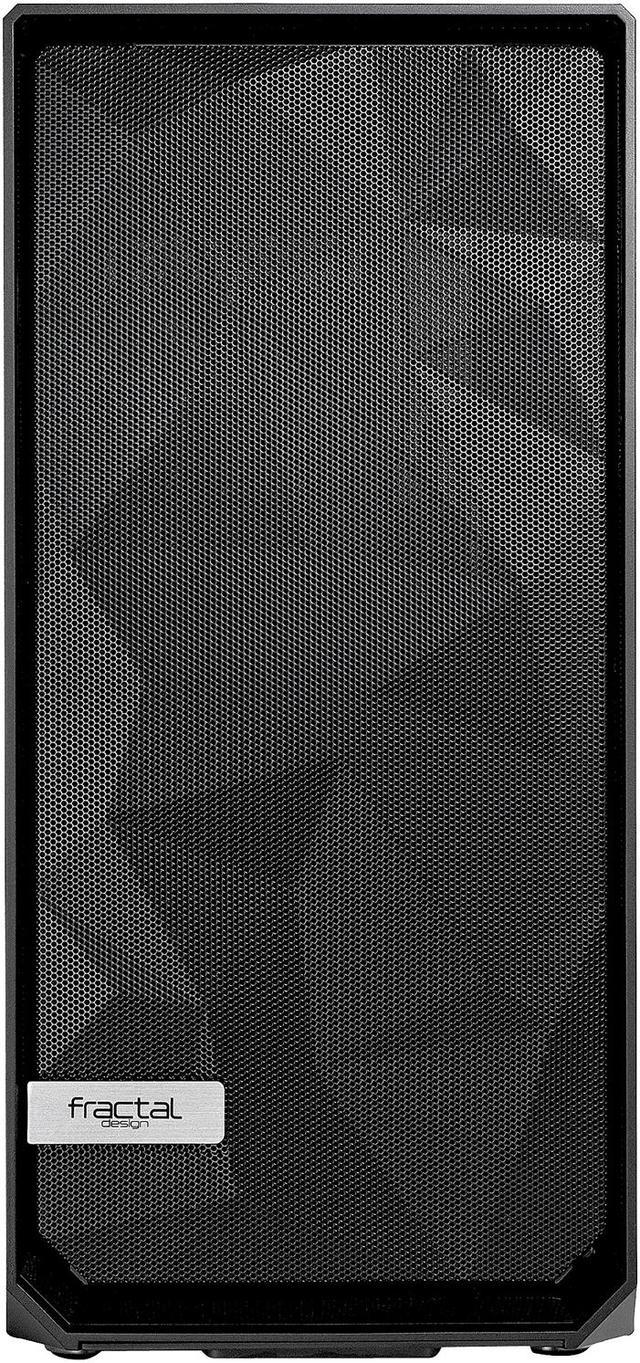
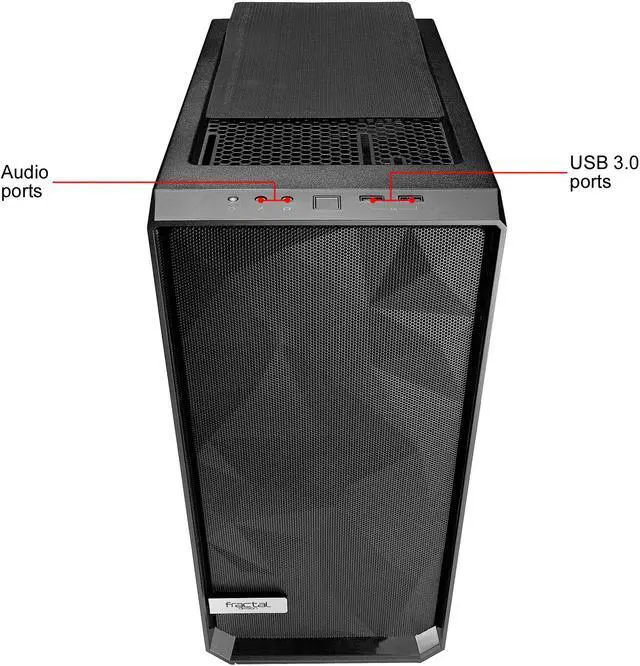
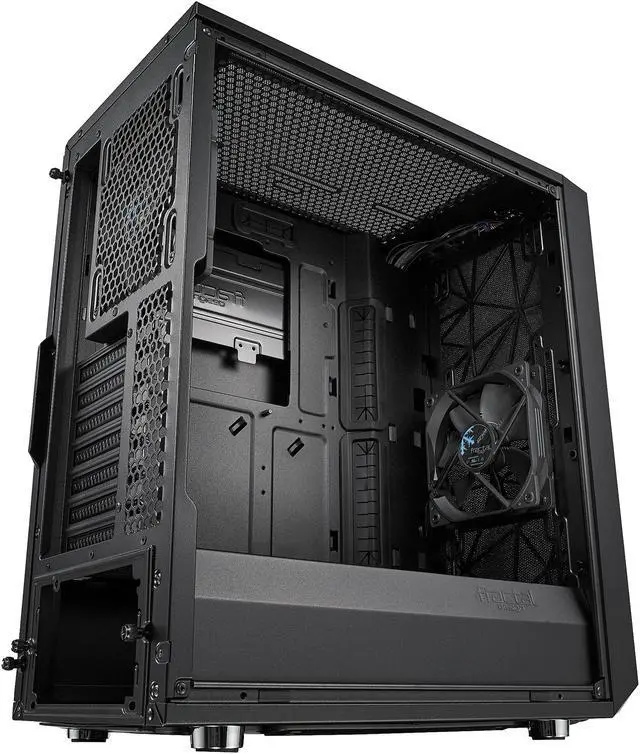
Meshify's distinctive styling features a newly designed angular mesh front panel that maximizes air intake.

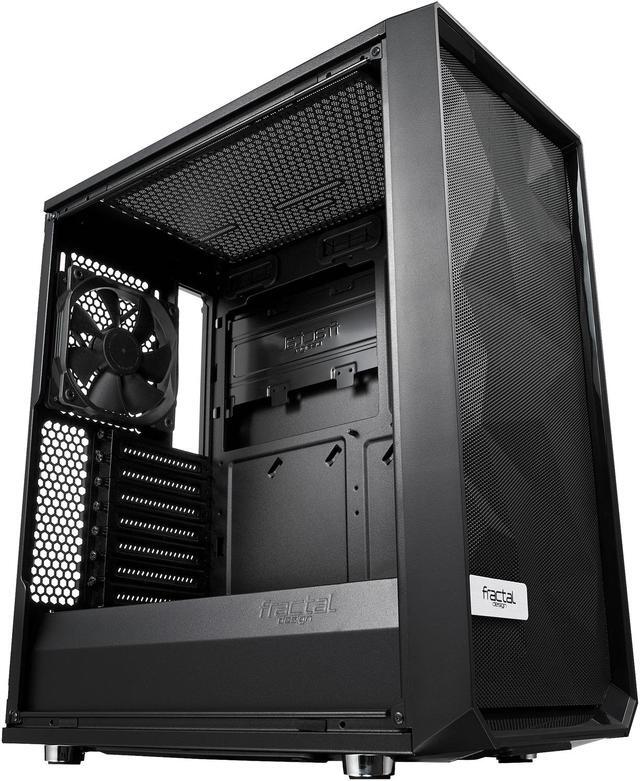
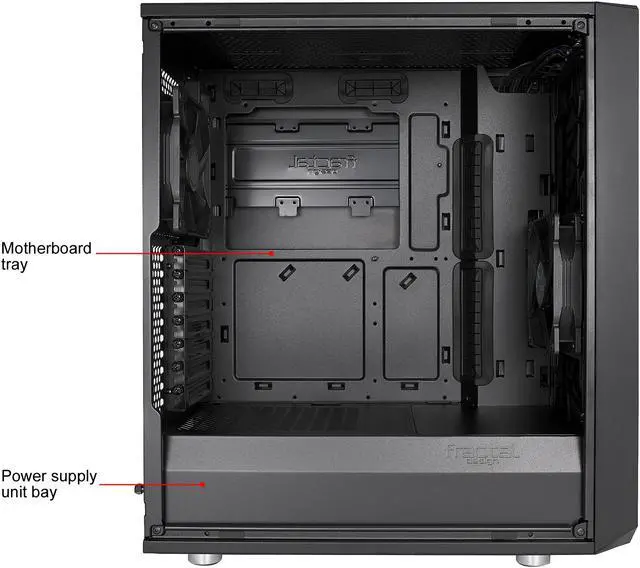
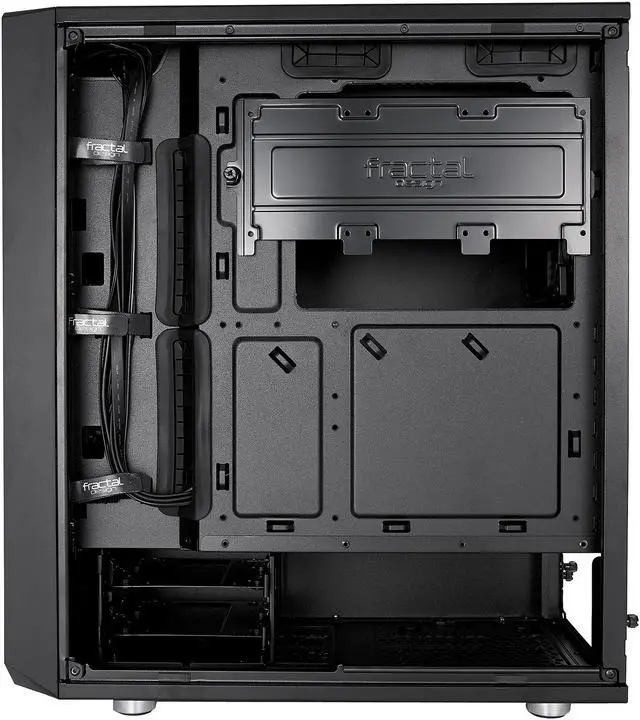
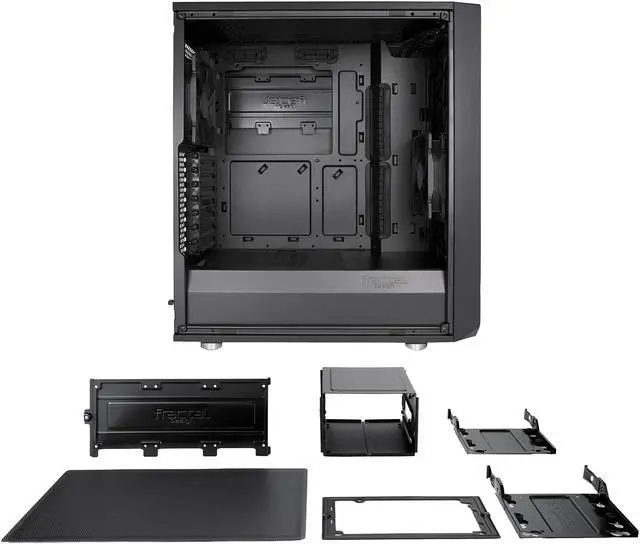
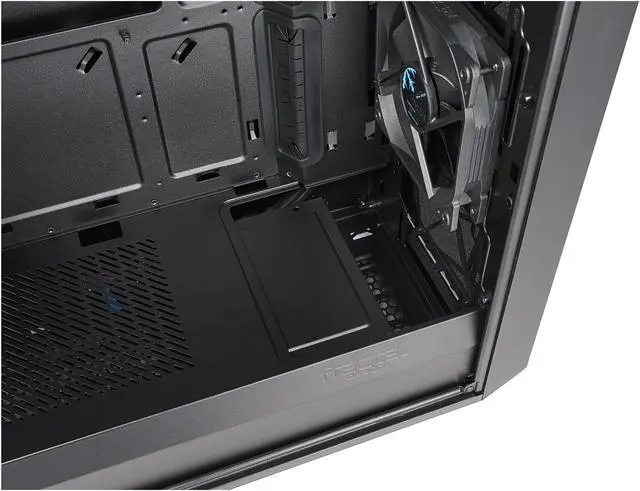
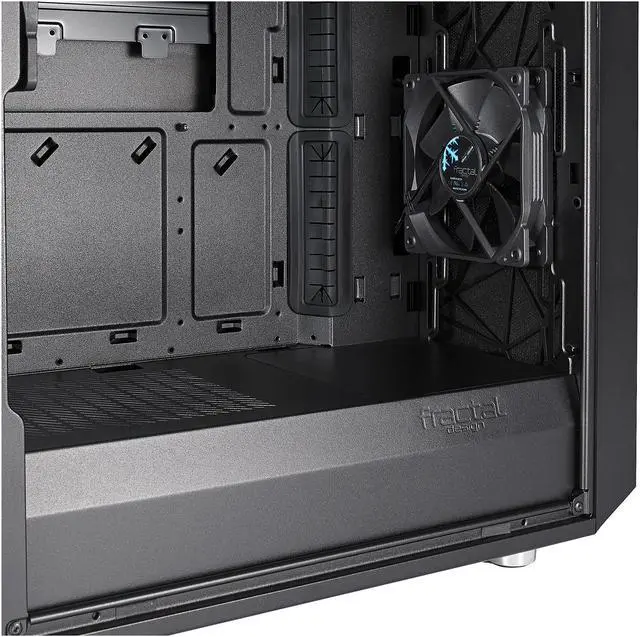
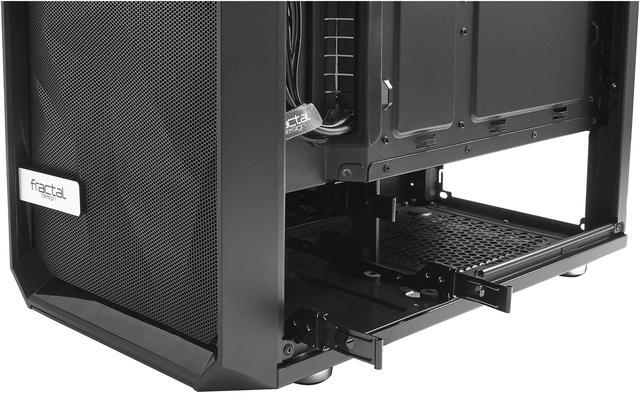
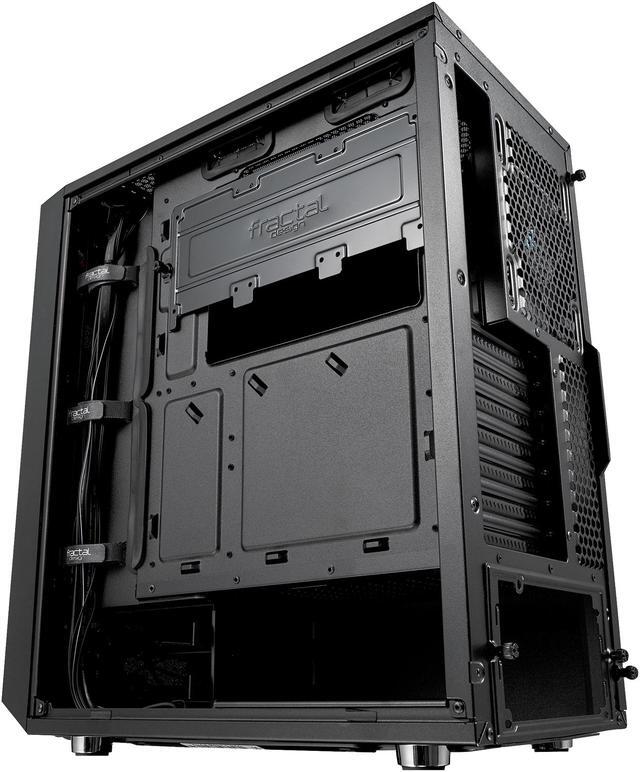
An open interior with a full-length, ventilated-steel power supply shroud hides drives and cabling to create an unobstructed airflow path from front intake to rear exhaust.

Sturdy steel trays and vibration-dampening rubber grommets cushion your drives for smooth, quiet and reliable operation.


Even the largest enthusiast-class GPUs leave plenty of room for thick triple-fan radiator in the front. The adjustable drive cage can be moved or removed to fit even the lengthiest heavy-duty PSUs.

Conceal up to five storage devices with an adjustable and removable drive cage beneath the PSU shroud plus dedicated SSD mounts behind the motherboard tray.

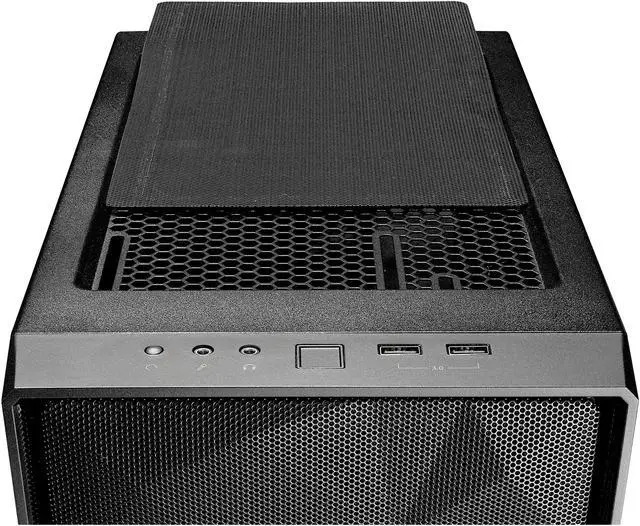
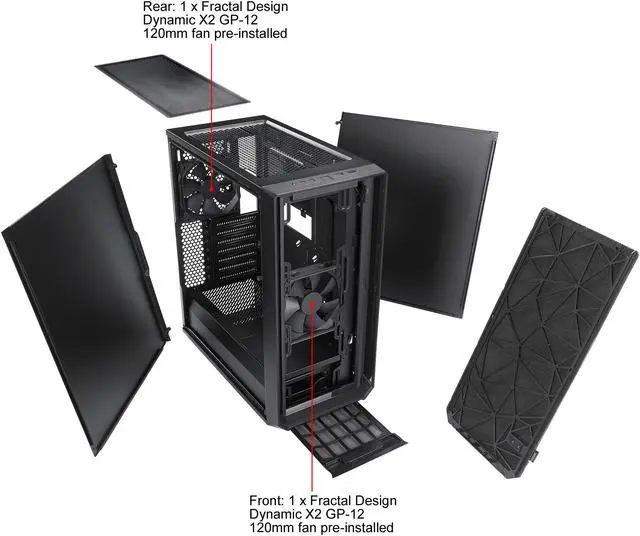
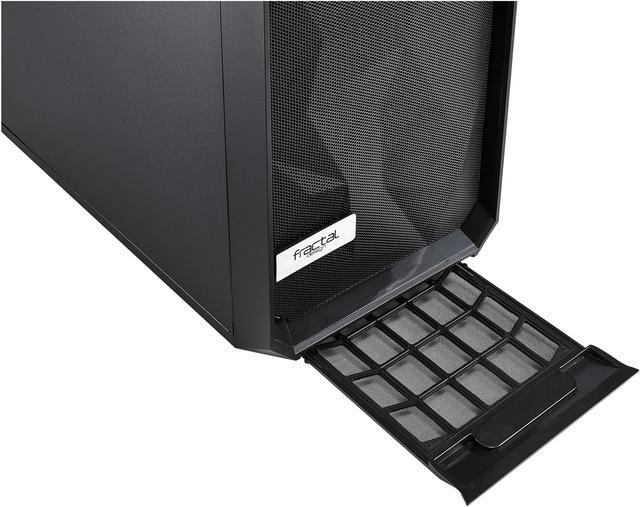
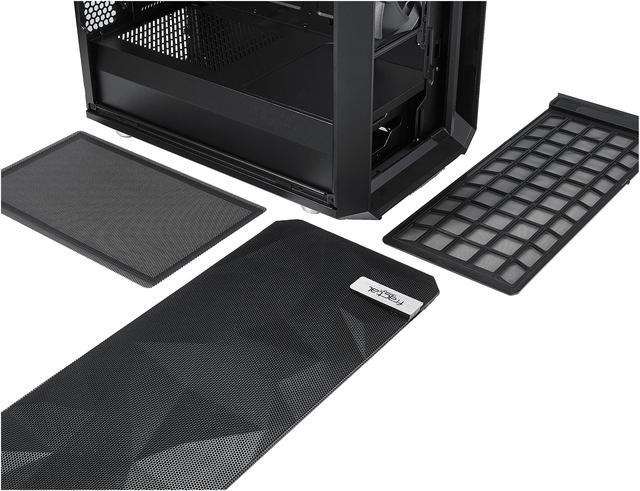
Removable front, top and base filters channel clean air with effortless maintenance and convenient front access.

Seven total fan positions allow for extensive air cooling. Two Fractal Design Dynamic X2 GP-12 fans come pre-installed for maximum airflow, minimal noise and 100,000-hour life expectancy.

Whatever your liquid cooling ambitions may be, Meshify C can make it happen with support for radiators up to 360mm in the front and 240mm up top.


We want to ensure your holiday shopping this year is hassle-free. That’s why we’re automatically extending our return policies on almost every product! For purchases placed between November 1st, 2026 and December 31, 2026 you will have until January 31, 2027 to return your product.
The Fractal Design Meshify C is a compact ATX mid-tower PC case built for high-airflow gaming and performance systems, making it a strong fit for builders who want full-size component support, clean cable management, and flexible fan or radiator setup in a space-efficient chassis.
| Attribute | Value |
|---|---|
| Best For | Builders seeking a compact ATX mid-tower with high-airflow and strong water-cooling support; fits ATX/Micro ATX/Mini ITX motherboards and standard-length GPUs/PSUs while concealing drives and cables for clean builds |
| Model Identifiers | Fractal Design Meshify C — FD-CA-MESH-C-BKO |
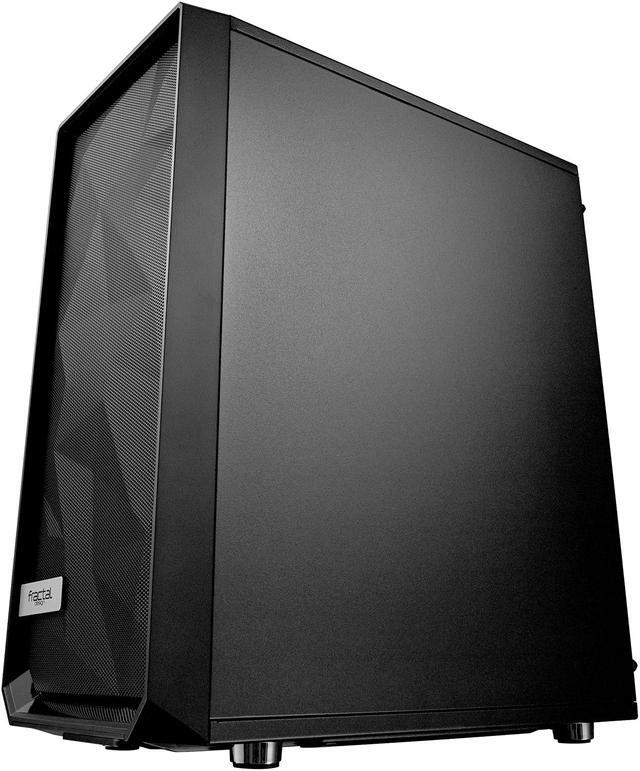
| Case And Chassis | ATX mid-tower steel chassis in black with bottom-mounted PSU and full-length ventilated shroud; no side window |
| Dimensions And Weight | 16.1 x 8.35 x 17.83 inches (HxWxD); weight 16.50 lbs |
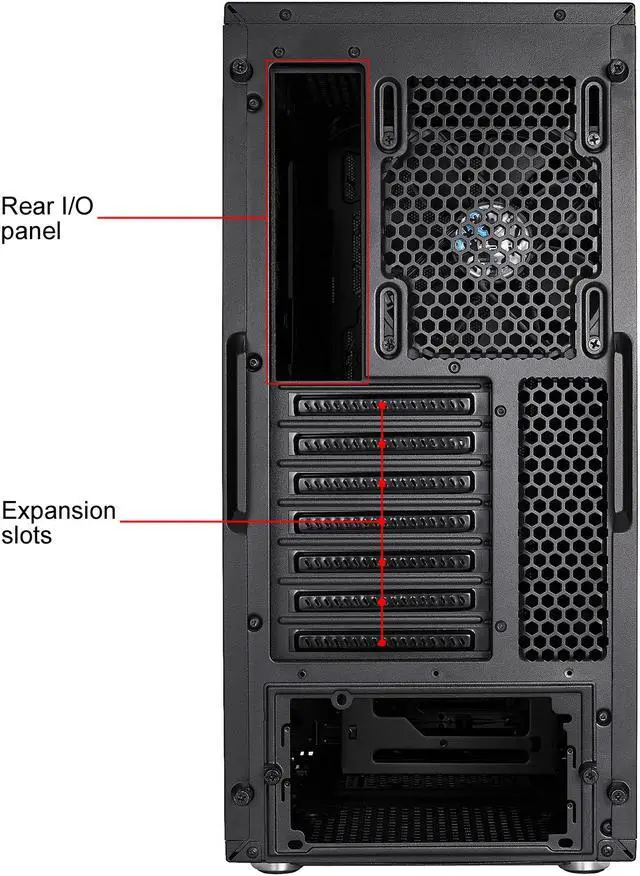
| Motherboard And Expansion | Supports ATX, Micro ATX and Mini ITX motherboards with 7 expansion slots |
| Cooling And Fans | Air-cooled design with two preinstalled Fractal Design Dynamic X2 GP-12 120mm fans and seven total fan positions (front/top/bottom/rear; supports 120mm and 140mm fan options) |
| Radiator And Water-Cooling Support | Multiple radiator mounts: front up to 360/280/240/140/120 mm (max 144 mm width), top up to 240/120 mm (note max component height 40 mm on motherboard), rear 120 mm (max 125 mm width) |
| Drive Bays And Storage | Concealed storage for up to 5 drives: 2 x 3.5"/2.5" universal bays plus 3 dedicated 2.5" SSD mounts; sturdy steel trays with vibration-dampening grommets |
| Power Supply And Shroud | Bottom-mounted PSU (no PSU included) with full-length ventilated shroud that conceals the drive cage and excess cabling; recommended max PSU length 175 mm |
| Front I/O And Indicators | Front-panel I/O includes 2 x USB 3.0 and 2 x audio jacks; blue LED power and disk activity indicators |
| Clearance And Component Compatibility | Supports GPUs up to 315 mm long, CPU coolers up to 172 mm tall, and PSUs up to 175 mm in length |
| Dust Filters And Maintenance | Easy-to-clean, removable dust filters on the front, top and base for straightforward maintenance |
| Cable Management And Additional Features | 27 tie-down locations and Velcro straps with 15–35 mm of clearance behind the motherboard tray and grommeted through-holes for tidy cable routing; open-air interior for unobstructed airflow |
| Material And Side Panel | Steel construction with black finish; side panel configured without a window |
Q: Should I buy the Fractal Design Meshify C or the NZXT H510 for a gaming PC?
A: Choose the Meshify C if airflow and component cooling are the priority. Its full-mesh front design is consistently positioned and reviewed as the more ventilation-focused option, while the H510 is usually chosen more for its cleaner closed-front style and simpler front I/O mix. The Meshify C is the better fit for hotter GPUs, higher sustained gaming loads, or builds that may add more fans later. The H510 makes more sense if visual simplicity matters more than maximizing airflow.
Q: Is the Meshify C still a good buy, or should I get the newer Meshify 2 Compact instead?
A: Buy the Meshify C if you want a compact ATX airflow case and your parts fit comfortably within its tighter clearance limits. Move to the Meshify 2 Compact if you want a more modern layout, front USB-C, and more flexibility for larger GPUs, updated cable management, and easier building. The Meshify C remains a practical choice for straightforward air-cooled builds, while the Meshify 2 Compact is the better upgrade path for newer high-end hardware.
Q: Meshify C vs Define C: which one makes more sense for everyday use?
A: Choose the Meshify C if you want lower temperatures and stronger airflow behavior under load. Choose the Define C if quieter operation and a more closed-off design matter more than maximizing intake airflow. Reviews commonly frame this as an airflow-versus-acoustics trade-off rather than a quality difference. For gaming systems with stronger GPUs, the Meshify C is usually the more practical choice.
Q: Should I choose the Meshify C or Fractal Pop Air?
A: Choose the Meshify C if you want a smaller, more compact footprint and are building with parts that stay within its clearance limits. Choose the Pop Air if you want a roomier modern mid-tower with easier fitment for newer components and a less constrained build process. Both target airflow-first buyers, but the Meshify C is more about compact efficiency, while the Pop Air is the easier choice for mainstream current-generation parts and simpler upgrades.
Q: Is the Meshify C better for compact builds or for maximum cooling hardware?
A: The Meshify C is better for compact performance builds than for maximum-size cooling hardware. It supports strong airflow and multiple radiator positions, but its shorter GPU clearance and top-radiator space limits mean planning matters more than in larger modern cases. It is a strong fit for air-cooled gaming systems or modest liquid-cooling setups. If your goal is large GPUs plus thick front radiators or more relaxed top-clearance compatibility, a newer and roomier case is the safer choice.
Q: Is the Fractal Design Meshify C a good choice for an airflow-focused gaming or workstation build?
A: Yes. The Meshify C is well suited to buyers who prioritize airflow in a compact ATX mid-tower. Its mesh front panel, open interior layout, seven fan positions, and support for front 360 mm or top 240 mm radiators make it a practical case for cooling-focused builds. It is a better fit for users who care more about temperatures and simple internal layout than tempered-glass presentation or bundled RGB features.
Q: Will this case fit large GPUs and tall air coolers?
A: Usually yes, but buyers should check dimensions before purchase. The Meshify C supports GPUs up to 315 mm long and CPU coolers up to 172 mm tall, which covers many mainstream and performance parts. The main trade-off is that this is still a compact mid-tower, so very large GPUs, front radiators, or extra front-mounted hardware can reduce usable clearance compared with larger airflow cases.
Q: Is the Meshify C a good case for liquid cooling?
A: It is good for moderate liquid-cooling setups, not maximum-size ones. The case supports up to a 360 mm front radiator, a 240 mm top radiator, and a 120 mm rear radiator. For most single-radiator builds, that is enough. The limitation is top clearance: if you want a larger top radiator or more room around tall RAM and motherboard heatsinks, a larger case is usually easier to work in.
Q: Does the case include enough fans and accessories to start a build right away?
A: It includes the basics, but not a full cooling or accessory package. The Meshify C comes with two pre-installed 120 mm fans and removable dust filters, so it is ready for a standard build. It does not include a power supply, and buyers planning a higher-heat gaming or workstation system may still want to add more fans. Storage and component cables should also be confirmed separately, since cases generally do not include all drive or motherboard connection cables.
Q: Who is the Meshify C best for, and who should choose a larger alternative?
A: The Meshify C is best for buyers who want a compact ATX case with strong airflow, clean cable management, and support for standard gaming or productivity hardware. A larger alternative is better if you expect oversized GPUs, multi-radiator liquid cooling, extra drive capacity, or more generous working room during assembly. In short: choose the Meshify C for a compact airflow build, and choose a larger case if expansion headroom matters more than footprint.
Q: Is the Fractal Design Meshify C still a good buy for a compact ATX gaming build?
A: Yes, if you want a compact ATX case with strong airflow and straightforward internal layout. Reddit and YouTube discussion repeatedly treat the Meshify C as a solid airflow-first case, but the trade-off is tighter component clearance than newer, larger mid-towers. It is best for builders who value cooling and a smaller footprint more than maximum expansion room.
Q: Who is the Meshify C best suited for?
A: The Meshify C is best suited for builders who want an ATX-compatible case that stays relatively compact, has good airflow, and does not need many drives. Its layout fits ATX, Micro ATX, and Mini ITX boards, but storage is limited to up to five drives total and interior space is tighter than full-size cases.
Q: Are there any important clearance trade-offs with the Meshify C?
A: Yes. The main trade-off is space. The case supports long GPUs and multiple radiator positions on paper, but repeated Reddit discussion focuses on front radiator and GPU clearance becoming tight in real builds. It is a better fit for standard air-cooled builds or carefully planned liquid-cooling setups than for oversized GPUs combined with thick front radiators.
Q: Is the Meshify C a good case for liquid cooling?
A: It can work well for liquid cooling, but only within its compact limits. Community discussion repeatedly centers on fitment checks for top and front radiators, which suggests this is not a forgiving case for large or thick radiator setups. It is more suitable for moderate AIO or planned custom-loop builds than for maximum-radiator configurations.
Q: What are the main reasons to skip the Meshify C?
A: Skip it if you need generous interior space, a high-drive build, or a less restrictive platform for large GPUs and radiators together. Reddit discussion regularly points to compactness as both the benefit and the limitation. Buyers who want easier building clearance or more upgrade headroom may prefer a larger, newer airflow case.


