
Your Browsing History


Brendan D.
Joined on 06/03/04
0
0
product reviews
- 6
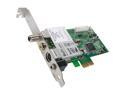
Hauppauge WinTV-HVR-1250 NSTC/ATSC/QAM Internal HDTV Card PCI-E x1 - OEM
Pros: Bought this card for a Linux MythTV box to complement a PVR-150. Works perfectly; I can pick up all of the local stations using QAM256 over my cable feed without any issues and it caps everything fine without problems. Plus, it was very easy to setup.
Cons: None so far for me.
Overall Review: People have said this has horrible analog quality but I'm not using this card for analog. For the price, it is a very, very good option for cheap QAM or OTA HD, especially in Linux.
5/9/2008See more detail
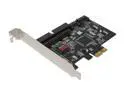
SYBA SY-JM363-2S1P PCI Express SATA / IDE Combo Controller Card
Pros: Works in Linux (currently using Gentoo with 2.6.24-r4), does what I need it to do (connect to 1x 200gb ATA drive and use that drive in software RAID).
Cons: Driver support using the libata driver in Linux is a little flakey; I can't have the drive go to sleep after a set time without some issues waking up. Also, it seems to periodically kick the drive down to UDMA66 or 33 for no reason whatsoever. This wasn't really a con to me but the card I got was not the card advertised; mine had 1x IDE, 1x Internal SATA, and 1x External SATA.
Overall Review: I got this card because there are no IDE controllers that are PCI Express and I only needed one more IDE port. It does it's job decently enough, but if I had another option I would have gone with that instead. Unfortunately, no other options exist: it looks like all of these 1x IDE/2x SATA cards are based on the Jmicron JM363 chipset, which isn't perfect in Linux.
4/10/2008See more detail
Good drive- until it died. Twice.
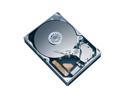
Seagate Momentus 7200.3 ST9320421AS 320GB 7200 RPM 16MB Cache SATA 3.0Gb/s 2.5" Internal Notebook Hard Drive Bare Drive
Pros: Very fast, very quiet, doesn't really generate much heat, 5 year warranty, worked great with BitLocker on Vista and Server 2008.
Cons: The first one I got worked fine for a month before suddenly Vista would just "freeze"- everything that was open would work until I tried to do something that accessed the hard drive, then that program would freeze, until I had to restart. Turned out to be bad clusters already, according to the Seagate SeaTools and chkdsk. Paid $20 for the Advanced Replacement RMA (a gigantic freaking rip off), received the new one, restored from my last backup. New drive worked fine for a month and a half, then developed bad clusters, exactly the same conditions as the old drive.
Overall Review: Now normally I am not one for hating on brands when it comes to Seagate, but two drives in a row is just unacceptable- especially with all the problems plaguing their 1tb SATA drives (which I also had the same issue with). I think I'm going to just buy a Hitachi 320gb, do the normal RMA for this drive, and sell the replacement. I don't think I could stand a third drive dying within a month of me having it.
11/20/2008See more detail
Excellent network adapter
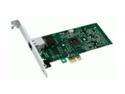
Intel EXPI9300PTBLK Gigabit Desktop Adapter 10/100/1000Mbps PCI-Express 1 x RJ45
Pros: Very fast (gets me 70mbyte/sec on my mixed 100/1000 network, pretty sure this is hard drive limited) with lots of features- should I ever need them.
Cons: None
Overall Review: I was fed up with my file server's onboard gigabit card getting me wonderful speeds of 15-20mbyte/sec, which is barely above 100mbit top speeds. So I added in one of these cards and things are flying now. Great purchase at a good price.
9/12/2008See more detail
Excellent server OS for home users
Microsoft Windows Home Server 32 Bit 1 Pack
Pros: Fast (I transfer to/from the shares at about 70mbyte/sec), incredibly easy to use, just works, backs up multiple computers without any interaction on my end, has a wide amount of expandability with add-ins, has never crashed or frozen, just works.
Cons: Doesn't really integrate that well with Windows Media Center PCs, had a bit of a pain getting it installed using AHCI mode.
Overall Review: Ignore the linux fanboy below. I have never had a single problem with it being "too slow" or with it freezing when transferring files, and I'm running with 4.22tb of space and duplication turned on for most of the shares. Yes, you can setup something similar with Linux- but only if you're willing to drop down to the command line on occasion and spend hours and hours on configuration whenever the gui tools don't work. WHS has always just worked for me, and considering I often don't have the time or the urge to spend hours fixing issues, this is a blessing for me. People reviewing this need to remember: it's not for power users. It's for everyday people that want a simple server solution with minimal fuss.
9/12/2008See more detail
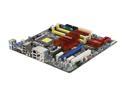
ASUS P5E-VM HDMI <GREEN> LGA 775 Intel G35 HDMI Micro ATX Intel Motherboard
Pros: EXCELLENT motherboard. Using it in an HTPC hooked up to my TV. Gigantic amount of built in options, very good overclocking potential. All I did was raise the FSB on my E8400 and it got up to 3.6ghz no sweat- if it wasn't for the fact I'm leaving it at the default 3ghz I could have probably gotten it up to 4ghz or more with voltage adjustment. Has full Linux support (running Gentoo with kernel 2.6.24-r4), minus some minor driver issues with the video card.
Cons: The onboard video card (an Intel X3500) is still having its drivers for Linux being updated pretty continuously, so some things are still buggy with the video. I had to run Xorg-X11 7.3 with the latest drivers (xf86-video-intel 2.2.99.902 I believe) to get it to work properly and fix issues with visual tearing during full screen video playback. And even then, the card was fairly stuttery still so I ended up just putting a geforce 8400 gs I had in it. But I have rather specific requirements for my system so this may not apply. Also, I could never get Suspend to RAM to work correctly, but that's no big deal.
Overall Review: I am so glad I bought this board. I was thinking of going with something cheaper but this board has been beyond excellent. A Zalman 8700 fits perfectly on this as well, and keeps my E8400 nice and cool around ~40 C at idle. If you update to the latest version of lm_sensors and kernel in Linux you can get full monitoring of the individual CPU core temps, chipset temp, and voltages too.
4/10/2008See more detail