




 here!
I’m your shopping assistant for PC builds, upgrades, and everything tech.
Got questions? Ask away!
Start a conversation
here!
I’m your shopping assistant for PC builds, upgrades, and everything tech.
Got questions? Ask away!
Start a conversationShipped by Hebei XG Technology Co., Ltd.


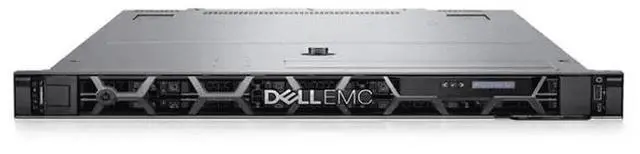

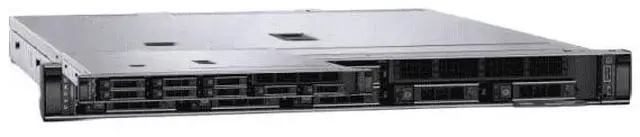
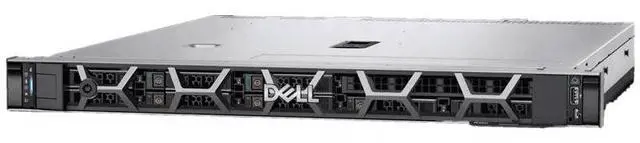
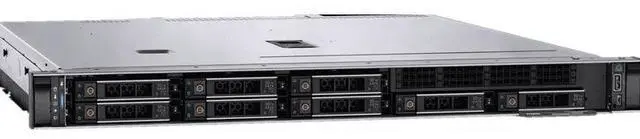




Any questions? Ask CelesteSM will help you find out quickly.
1. Unparalleled Customization:With no pre - installed CPU, heatsink, disk, RAID card, or power supply, you have the freedom to hand - pick components. This allows for a server build that's perfectly tailored to your unique business needs, whether it's for high - end data analytics, cloud computing, or simple file - serving tasks.
2. High - Performance Readiness:The R660XS server's architecture is engineered to support top - tier processors. Even without a pre - installed CPU, it stands ready to deliver exceptional computing power for the most data - intensive and resource - hungry applications.
3. Flexible Storage Strategies:The absence of a pre - installed disk gives you the liberty to choose between high - speed SSDs for quick data access in transactional systems or large - capacity HDDs for cost - effective long - term data storage and archiving.
4. Scalable I/O Capabilities:The server is equipped with ample expansion slots, providing room for future upgrades such as adding a high - performance RAID card. This ensures that your server can keep up with growing data transfer and processing demands.
5. Cost - Effective Solution:By not including pre - installed components, Dell offers a more budget - friendly starting point. You can invest in components as your business grows, controlling costs while still achieving a powerful and customized server setup.
The Dell PowerEdge R660XS is a 12-bay 3.5-inch server barebones chassis built for IT teams, system integrators, and businesses that want to configure their own CPU, storage, RAID, and power setup for custom rack deployments.
| Attribute | Value |
|---|---|
| Best For | System builders and IT teams who need a rack-mounted, customizable barebones PowerEdge server for building a tailored configuration and scaling over time; sold without CPU, heatsink, storage drives, RAID card, or power supply |
| Model Identifiers | Dell PowerEdge R660XS (Model R660XS, Series PowerEdge R660XS) |
| Processor And Socket | Rack CPU type with LGA 3647 socket — accepts compatible rack/server processors for custom CPU selection |
| Chassis And Configuration | Barebones rack chassis sold without key components (no CPU, heatsink, disks, RAID card, or power supply) to allow user-selected installation and future upgrades |
Q: Should I choose the Dell PowerEdge R660xs or the R760xs for a custom storage-heavy build?
A: Choose the PowerEdge R660xs when you want a denser 1U platform and your priority is fitting a two-socket server into less rack space. Choose the R760xs when storage expansion and PCIe headroom matter more. Dell positions the R660xs as a 1U, feature-optimized two-socket server, while the R760xs is the 2U counterpart. Dell’s rack server guide shows the R760 family supports up to 12 x 3.5-inch drives and more PCIe expansion than the 1U R660 platform, so the R760xs is usually the easier fit for bulk storage or broader add-in card plans. For this barebones listing specifically, the 12-bay 3.5-inch concept aligns more naturally with the R760xs class than with standard Dell R660xs documentation, so buyers should verify the exact chassis/service tag before purchasing.
Q: Is the PowerEdge R660xs a better fit than a full PowerEdge R660?
A: Choose the PowerEdge R660xs if you want a simpler, cost-conscious 1U two-socket server for mainstream virtualization, infrastructure, or general business workloads. Choose the standard R660 if you need the broader configuration range of the non-xs model, especially around storage layouts, NVMe options, and platform flexibility. Dell’s product materials and third-party coverage consistently position the xs models as feature-optimized systems aimed at lowering complexity and cost, while the standard R660 is the more configurable 1U platform.
Q: Should I buy this barebones R660xs or a pre-configured server?
A: Buy the barebones R660xs if you already know your CPU, memory, storage, RAID, and power requirements and want to control the final build. A pre-configured server is the better choice when you want validated part matching, less deployment work, and a faster path to production. For experienced IT teams, barebones can be the better value because it avoids paying for unwanted parts. The trade-off is that compatibility checking, thermal planning, and support coordination become more important, especially on enterprise platforms with multiple approved backplanes, risers, and power options.
Q: Is the R660xs the right upgrade from an older 1U PowerEdge like the R640 or R650?
A: Yes, the R660xs is the better upgrade when your goal is moving to newer Intel Xeon Scalable generations, DDR5-era platform features, and a current 1U two-socket design for virtualization or mixed business workloads. An older R640 or R650 can still make sense if you are trying to minimize upfront cost and already have compatible parts or an established fleet. In practice, the upgrade case for the R660xs is strongest when you value newer platform longevity, current Dell management and firmware support, and improved consolidation potential rather than lowest acquisition cost.
Q: Should I choose a 1U server like the R660xs or a larger 2U server for performance-first deployments?
A: Choose the R660xs when rack density is part of the requirement and your workload fits a compact two-socket server without needing large accelerator support or maximum expansion. Choose a 2U server when performance-first means more drive bays, more PCIe slots, or stronger GPU and add-in card flexibility. Dell’s own comparison materials show the 1U R660 platform has less expansion and accelerator room than 2U PowerEdge models, so the decision usually comes down to density versus expansion headroom rather than raw server quality.
Q: Does this Dell PowerEdge R660XS come with the core parts needed to boot right away?
A: No. This listing is a barebones server meant for custom builds, so it does not include a CPU, heatsink, drives, RAID card, or power supply. In practice, buyers should expect to add the essential compute, storage, and power components before the system can be put into service.
Q: Who is this server best suited for?
A: This model is best suited for IT teams, homelab users, integrators, and businesses that already plan to choose their own CPU, storage, RAID, and power configuration. It is a better fit for buyers who want deployment flexibility than for buyers looking for a ready-to-run server.
Q: Is this a good choice if I want to customize storage for capacity or speed?
A: Yes. The main advantage of this configuration is storage flexibility: because no disks are included, you can choose the drive type and capacity that match your workload. That makes it suitable for buyers who want to optimize for either higher performance, larger capacity, or a staged upgrade path.
Q: What are the main trade-offs of buying this barebones R660XS instead of a fully configured server?
A: The trade-off is control versus convenience. This barebones listing gives you more freedom over component choice and cost timing, but it also adds setup work, parts sourcing, compatibility checks, and a longer path to deployment. It is best for buyers who value customization more than out-of-box readiness.
Q: Is this a good fit for buyers who want a simple plug-and-play server?
A: No. This listing is not ideal for plug-and-play use because key operating components are missing by design. It is a better choice for experienced buyers building to a specific spec than for anyone who needs a server that can be deployed immediately after delivery.
Q: Who is this barebones Dell PowerEdge R660xs best suited for?
A: This barebones R660xs is best for experienced server buyers who already know which CPU, cooling, storage, RAID or HBA, and power supplies they want to install. It is a better fit for custom infrastructure builds, lab use, or parts-based deployments than for first-time buyers who want a ready-to-run server.
Q: Is this a good buy if I want maximum control over the build?
A: Yes, if your main goal is component control. Because this listing includes no CPU, heatsink, disks, RAID card, or power supplies, you can choose the exact parts that match your workload and budget. The trade-off is that total cost, compatibility checking, and setup effort all shift to the buyer.
Q: What are the main trade-offs of buying this server without key parts installed?
A: The main trade-offs are higher setup complexity and more compatibility responsibility. You need to source and validate the CPU, heatsink, storage devices, RAID or HBA option, and power supplies yourself. That can reduce wasted spend on unwanted factory parts, but it also means longer deployment time and more risk of buying mismatched components.
Q: Is this a practical choice for homelab or file-server use?
A: It can be practical for a homelab or storage-focused build if you specifically want a modern Dell platform and plan to choose your own drives and controller path. It is less practical for buyers who want the cheapest path to bulk 12-bay storage, because older 12-bay Dell platforms are discussed more often as lower-cost alternatives.


