


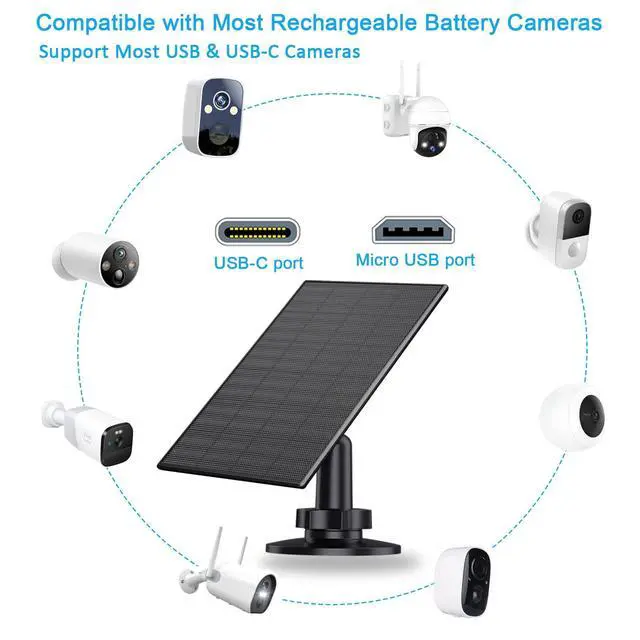
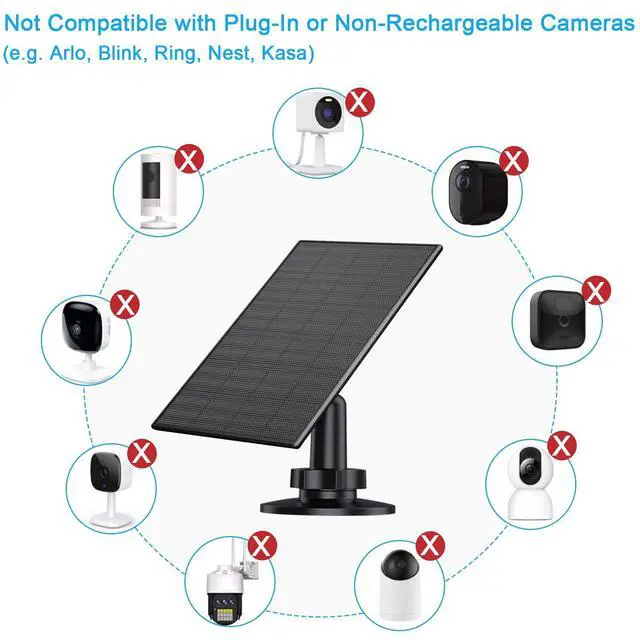


Which cameras is it compatible with?
Works with most rechargeable battery-powered cameras using Micro USB or Type-C ports. Not compatible with Arlo, Blink, Ring, Google Nest, Kasa, or plug-in/non-rechargeable cameras.
How is the waterproof performance?
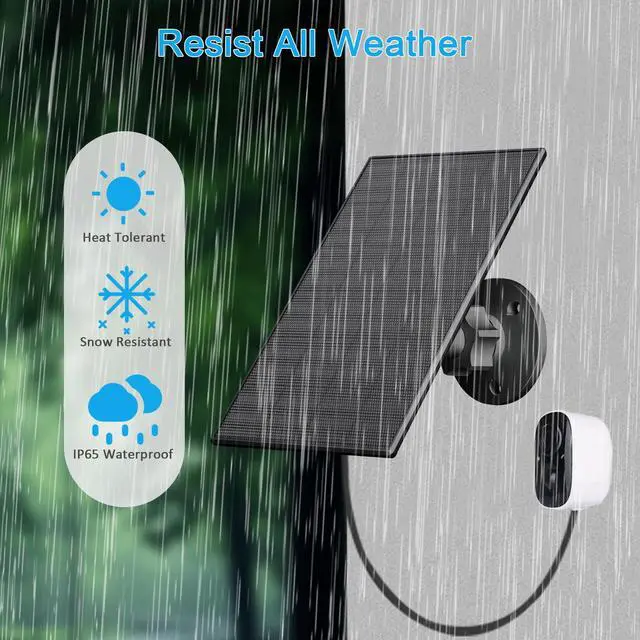
IP65 waterproof, operating temperature -5°F to 120°F, works year-round in rain, snow, wind, and intense sunlight.
How should I install the solar panel for the best performance?
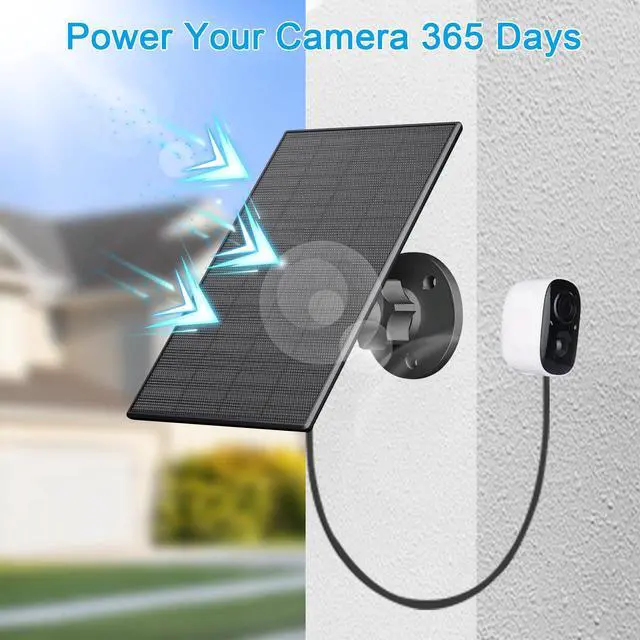
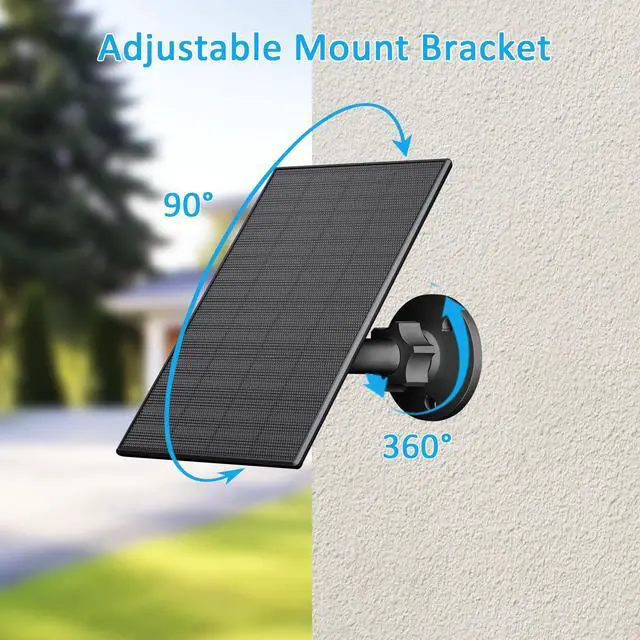
To get the most sunlight and maximize solar charging, install your solar panel in a location with clear, unobstructed exposure to the sunlight. Hold the solar panel at about a 45-degree angle to the sky to absorb as much direct sunlight as possible.
Will solar power keep my camera charged in cloudy or seasonal weather?
Solar panels require direct sunlight to charge effectively. During cloudy, rainy, or snowy weather, charging may be reduced. When the solar panel receives enough direct sunlight again, it will be able to resume normal charging speed.
Why do some battery cameras have the same charging port as a solar panel, but the panel still can't charge the camera?
Some models use specific charging protocols, and some brands restrict third-party solar panels. We can't list all compatible models, so please check if your camera has such limitations before purchasing.


Who We Are?
FUTUREZEN is a globally recognized brand committed to the research and development, manufacturing, and sales of high-efficiency solar panels. With years of experience and continuous innovation, we constantly upgrade our technologies and production lines to deliver reliable, high-performance solar solutions to customers worldwide.
We help people embrace clean energy through smarter, more efficient, and accessible solar technology.
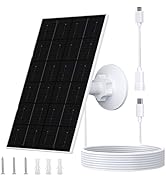
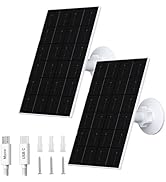
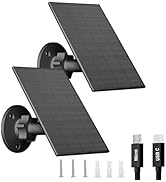
Solar Panel for Cameras
Who We Are?
FUTUREZEN is a globally recognized brand committed to the research and development, manufacturing, and sales of high-efficiency solar panels. With years of experience and continuous innovation, we constantly upgrade our technologies and production lines to deliver reliable, high-performance solar solutions to customers worldwide.
We help people embrace clean energy through smarter, more efficient, and accessible solar technology.
Solar Panel for Cameras


Which cameras is it compatible with?
Works with most rechargeable battery-powered cameras using Micro USB or Type-C ports. Not compatible with Arlo, Blink, Ring, Google Nest, Kasa, or plug-in/non-rechargeable cameras.
How is the waterproof performance?
IP65 waterproof, operating temperature -5°F to 120°F, works year-round in rain, snow, wind, and intense sunlight.
How should I install the solar panel for the best performance?
To get the most sunlight and maximize solar charging, install your solar panel in a location with clear, unobstructed exposure to the sunlight. Hold the solar panel at about a 45-degree angle to the sky to absorb as much direct sunlight as possible.
Will solar power keep my camera charged in cloudy or seasonal weather?
Solar panels require direct sunlight to charge effectively. During cloudy, rainy, or snowy weather, charging may be reduced. When the solar panel receives enough direct sunlight again, it will be able to resume normal charging speed.
Why do some battery cameras have the same charging port as a solar panel, but the panel still can't charge the camera?
Some models use specific charging protocols, and some brands restrict third-party solar panels. We can't list all compatible models, so please check if your camera has such limitations before purchasing.