
 here!
I’m your shopping assistant for PC builds, upgrades, and everything tech.
Got questions? Ask away!
Start a conversation
here!
I’m your shopping assistant for PC builds, upgrades, and everything tech.
Got questions? Ask away!
Start a conversation




Any questions? Ask CelesteSM will help you find out quickly.

|
CPU |
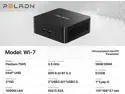
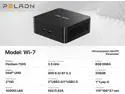
Intel Alder Lake N95 (4C/4T, 6M Cache, 0.8GHz to 3.4GHz) |
|---|---|
|
Graphics |
Intel UHD Graphics 1200MHz |
|
RAM |
16GB DDR4 |
|
ROM |
512GB M.2 SSD |
|
Storage Expansion |
Dual SSD slots, M.2 2280 PCIe Up to 8TB; + M.2 2242 SATA Up to 1TB; |
|
Wireless LAN |
WiFi 5, Bluetooth 5.0, Ethernet 1000Mbps Giga LAN RJ45 |
|
Video output |
Dual Display Output, 2*HDMI 2.0 (4K@60Hz) |
|
lnterface |
1 x DC Port; 3 x USB 3.2+1xUSB2.0; 2 x HDMI Ports; 1 x RJ45 Ethernet LAN Port 1000Mbps; 1 x 3.5mm Audio Port(HP&MIC); |
|---|---|
|
Power Adapter |
12V-3A Certification Input: 100-240V AC, 50/60Hz , Output: 12V/3A |
|
Operating Environment |
-10 to 45°C, 30% to 85% Humidity |
|
Storage Environment |
-20 to 60°C, 10% to 90% Humidity |
|
Other Functions |
Wake ON Lan, Auto Power ON |
|
Package Contents |
|


What's in the box
The GMKtec G3S is a compact Windows 11 Pro mini PC with an Intel N95 processor, 8GB DDR4 RAM, and 256GB SSD, best suited for office work, web browsing, streaming, light home use, and space-saving dual-4K desk setups.