
If you have shopped for a gaming CPU in the past few years, you have almost certainly run into the letters “X3D.” AMD’s X3D processors sit at the top of nearly every gaming benchmark chart, and the technology behind them, 3D V-Cache, is one of the cleverest tricks in modern chip design. Here is how it works, why it matters for your frame rates, and why the X3D story is about to get even more interesting.

Background: The Memory Wall Problem
A CPU core is astonishingly fast, but it constantly needs data, and fetching that data from system RAM is slow in relative terms. To hide that delay, processors keep small pools of ultra-fast memory called cache right on the chip. The biggest of these pools, L3 cache, acts like a workbench: the more of your working data that fits on the bench, the less often the CPU has to walk across the room to the filing cabinet (your RAM).
The problem is that cache takes up a lot of physical space on the die. Chip designers traditionally had to choose between more cores, higher clocks, or more cache within the same silicon budget.
Step 1: Understand What AMD Did Differently
AMD’s answer was to stop spreading cache out and start stacking it up. 3D V-Cache takes an extra slab of L3 cache and bonds it vertically to the processor die, connected by thousands of microscopic through-silicon vias. The result: an eight-core chiplet that would normally carry 32MB of L3 suddenly has 96MB, nearly triple the workbench space, without growing the chip’s footprint.
In AMD’s current second-generation implementation, found in the Ryzen 7 9800X3D, the cache layer sits beneath the compute die rather than on top. That change lets the cores sit closer to the cooler, which is why the 9800X3D can sustain higher clocks and even supports overclocking, something earlier X3D chips restricted.
Step 2: Why Games Love Cache More Than Anything
Games are unusual workloads. They juggle physics, AI, draw calls, and asset streaming in tight loops that jump around memory unpredictably. That access pattern makes games extremely sensitive to memory latency, and extra L3 cache directly reduces how often the CPU stalls waiting on RAM.
This is why an eight-core X3D chip routinely outruns sixteen-core flagships in games. Reviewers at outlets like Tom’s Hardware and GamersNexus have measured double-digit percentage gains in CPU-limited titles, especially simulation-heavy games, MMOs, and competitive shooters running at high refresh rates.

Step 3: Know Where X3D Does Not Help
Honesty matters when you are spending real money. If you play at 4K with the settings maxed, your graphics card is usually the bottleneck, and an X3D chip will not add many frames. Pure productivity workloads such as video rendering also gain little from the extra cache and favor higher core counts instead. X3D is a specialist: it is the best tool specifically for high-frame-rate gaming.
Step 4: The Chips That Prove It
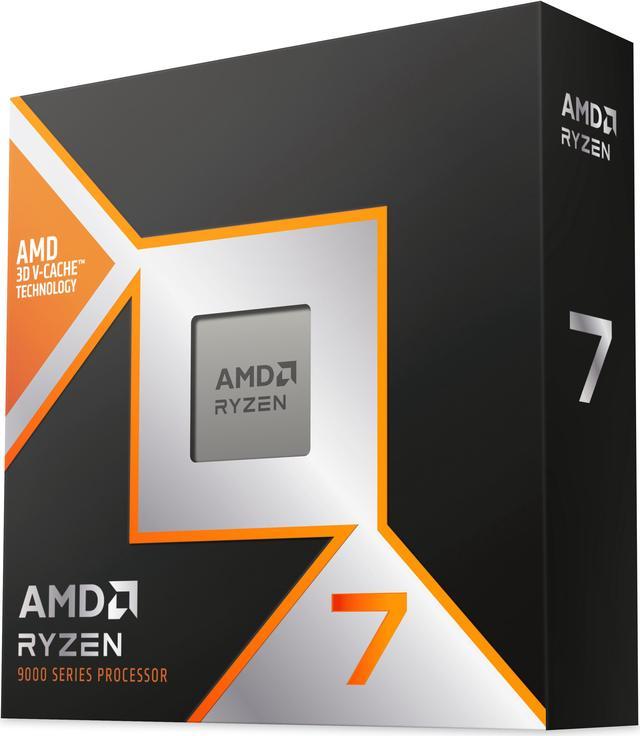
Two processors carry the X3D banner today. The Ryzen 7 9800X3D ($429.99 on Newegg at this writing) pairs eight Zen 5 cores boosting to 5.2GHz with 96MB of L3 and a 120W TDP. It is the fastest gaming CPU most people can actually buy.
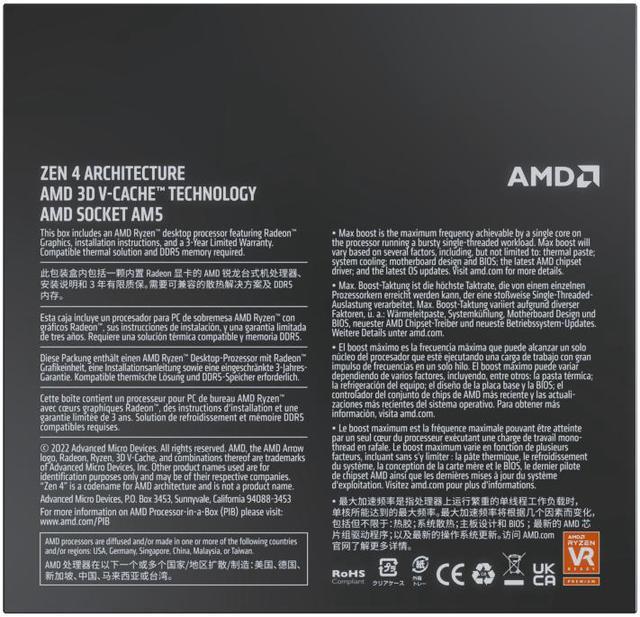
Its predecessor, the Ryzen 7 7800X3D (currently around $340 on Newegg), delivers most of that experience for less, built on eight Zen 4 cores with the same 96MB of L3.
Summary: Why This Matters Right Now
3D V-Cache turned AMD’s eight-core chips into gaming royalty, and the technology keeps trickling outward. Industry chatter strongly suggests the X3D family is about to grow again, with a new option aimed at making stacked cache more accessible to mainstream builders on AM5. If you have been waiting for the right moment to plan an AM5 gaming build, keep your eyes on Newegg over the coming days; the X3D story is not finished yet.
Read More
- Tom’s Hardware: Best CPUs for Gaming — Regularly updated ranking that shows where X3D chips land against Intel and non-X3D Ryzen.
- AMD Official: Ryzen Desktop Processors — AMD’s official product hub for the full Ryzen and X3D lineup.
- Tom’s Hardware: AMD Rumored to Ready a Budget-Friendly Zen 4 X3D CPU — Coverage of what might be next for the X3D family.
- Newegg: Ryzen 7 9800X3D Listings — Current stock and pricing for AMD’s gaming flagship.
- Newegg Insider: PCIe 5.0 vs PCIe 4.0 SSDs in 2026 — Pair your X3D build with the right storage.
Related Posts
- 7700X3D vs 7800X3D vs 9800X3D: Which X3D Chip Should You Buy Today?
- PCIe 5.0, USB4, and Wi-Fi 7: Understanding Motherboard Connectivity Standards in 2026
- 7800X3D vs 7700X3D: Which X3D Gaming Chip Should You Buy Now?
- Ryzen 7 7700X3D vs 7700X, 9600X, Core Ultra 7 265K & i7-14700K: Which Gaming CPU Wins?
- AMD Ryzen 7 7700X3D Is Here: The $329 Gateway to High-End AM5 Gaming
Frequently Asked Questions
Answers to the most common questions about AMD 3D V-Cache.