
In the rapidly evolving landscape of gaming display technology, response time remains one of the most critical yet frequently misunderstood specifications. As we navigate 2026’s advanced gaming ecosystem where AI-enhanced displays and ultra-high refresh rates have become mainstream, understanding what response time truly means and why it matters has never been more important for making informed purchasing decisions.
What Is Response Time?
Response time measures how quickly a monitor’s pixels can transition from one color to another, typically expressed in milliseconds (ms). The specification most commonly cited is Gray-to-Gray (GtG) response time, which indicates how long it takes for a pixel to shift from one shade of gray to another.
This measurement directly impacts motion clarity during gaming. When pixels cannot transition quickly enough to keep up with fast-moving on-screen action, the result is motion blur and ghosting artifacts that degrade visual quality and competitive performance.
The Technical Foundation
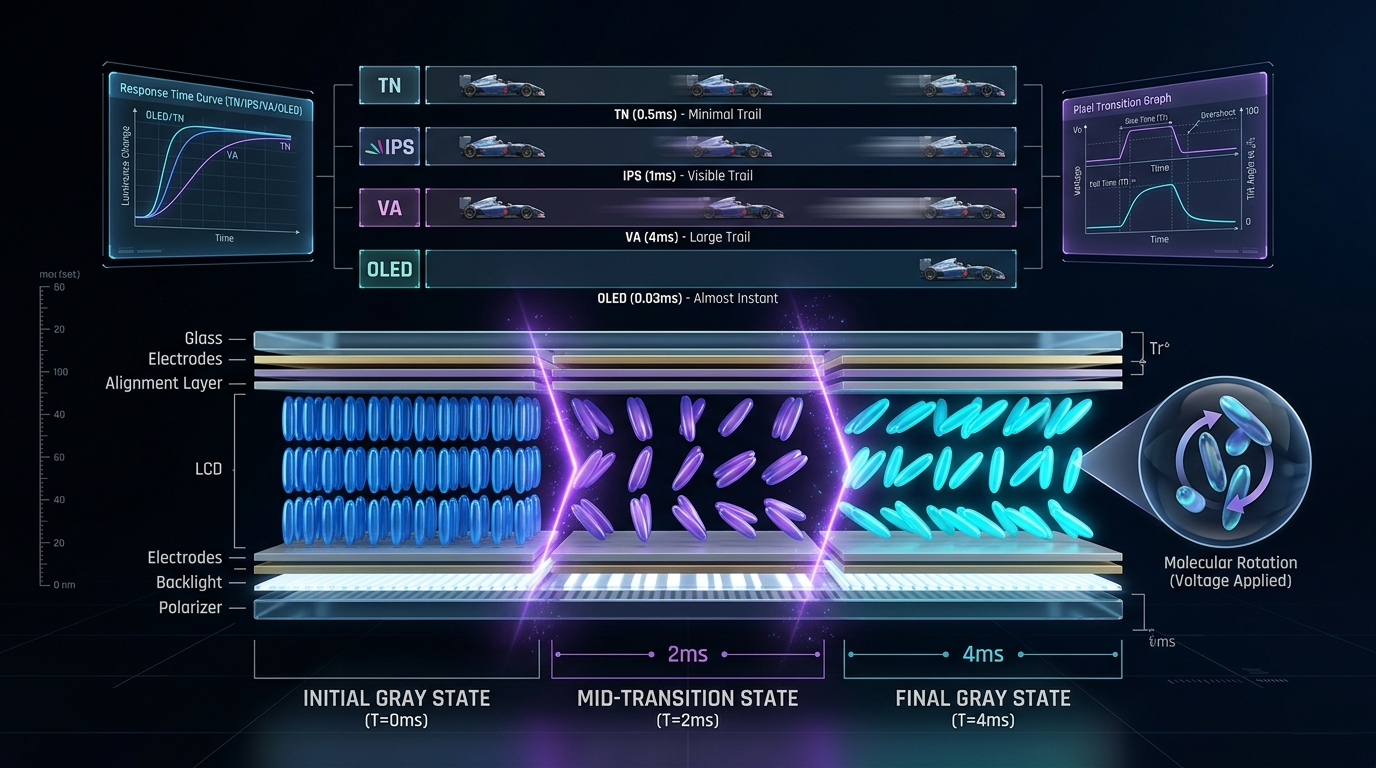
At the molecular level, response time is determined by how quickly liquid crystals in LCD panels can reorient themselves when voltage is applied. In 2026, several panel technologies offer distinctly different response time characteristics based on their underlying physics.
Response Time Across Panel Technologies
TN (Twisted Nematic) panels maintain the fastest native response times, with modern gaming monitors achieving 0.5ms to 1ms GtG transitions. These high-performance displays remain the gold standard for competitive esports where every millisecond matters.
IPS panels have undergone revolutionary improvements, with Fast IPS and Nano IPS technologies now delivering 1ms to 4ms response times. These balanced gaming monitors combine excellent color accuracy with respectable speed, making them versatile choices for diverse gaming needs.
VA panels typically exhibit slower response times ranging from 3ms to 5ms, though recent advancements have narrowed this gap. Their superior contrast ratios make them popular for immersive curved displays where atmospheric gaming takes priority over absolute speed.
OLED technology represents a paradigm shift, achieving response times below 0.1ms through per-pixel illumination control that eliminates liquid crystal transition delays entirely. These premium OLED monitors deliver unmatched motion clarity.
Why Response Time Matters for Gaming
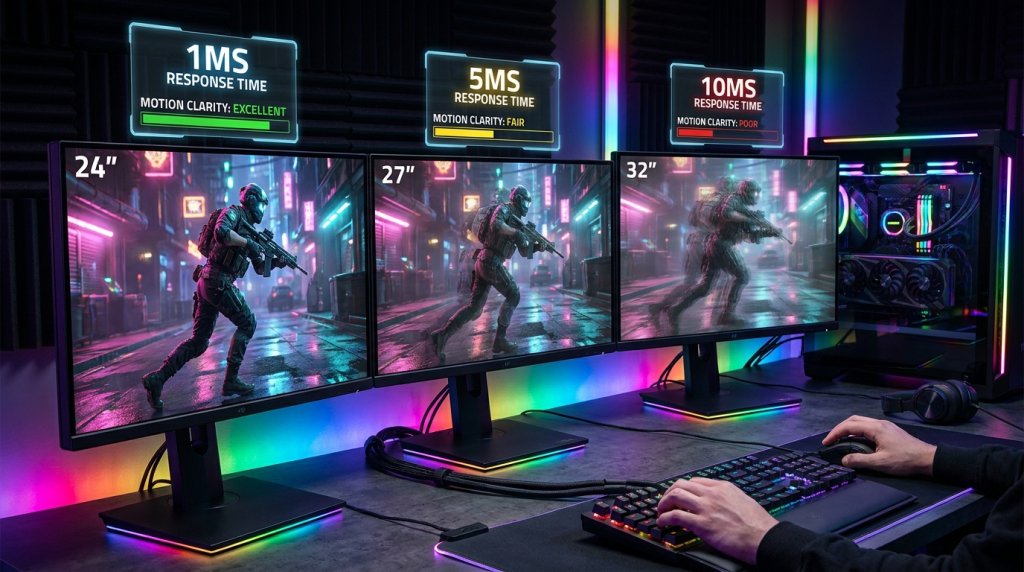
Response time directly correlates with motion clarity, input lag perception, and competitive advantage. In fast-paced gaming scenarios, slow pixel transitions create several problematic artifacts.
Motion Blur and Ghosting
When response time is insufficient for the displayed content’s motion speed, previous frames leave visible trails behind moving objects. This ghosting effect makes tracking enemies in competitive shooters or following racing lines in sim racing significantly more difficult.
At typical viewing distances for 24-26 inch monitors, response times above 5ms become increasingly noticeable during rapid motion sequences. The effect becomes more pronounced on larger displays, where 33+ inch screens demand faster response to maintain clarity across their expansive viewing area.
The Refresh Rate Relationship
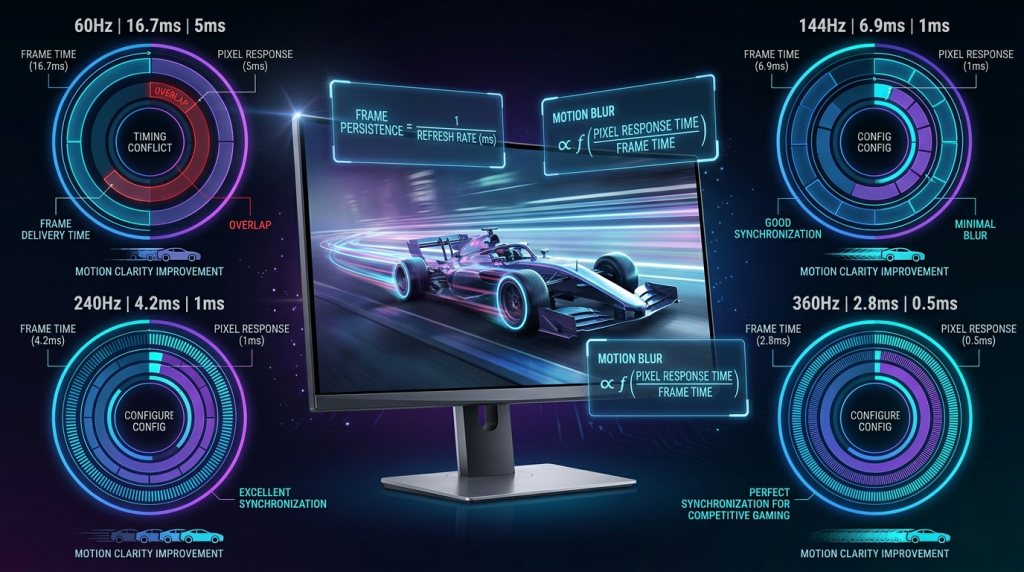
Response time must align with refresh rate for optimal performance. A 360Hz monitor displaying a new frame every 2.78ms benefits little from a 5ms response time, as pixels remain in transition when the next frame arrives. This is why high refresh rate displays invariably feature fast response times to maximize their smoothness advantage.
Modern G-Sync and FreeSync technologies work in concert with fast response times to eliminate both tearing and motion blur, creating the smooth, responsive experience competitive gamers demand.
Response Time Measurement Standards in 2026
Understanding how manufacturers measure and advertise response times has become crucial for consumers. The industry has moved toward more transparent testing methodologies, though variations persist.
Gray-to-Gray (GtG) vs MPRT
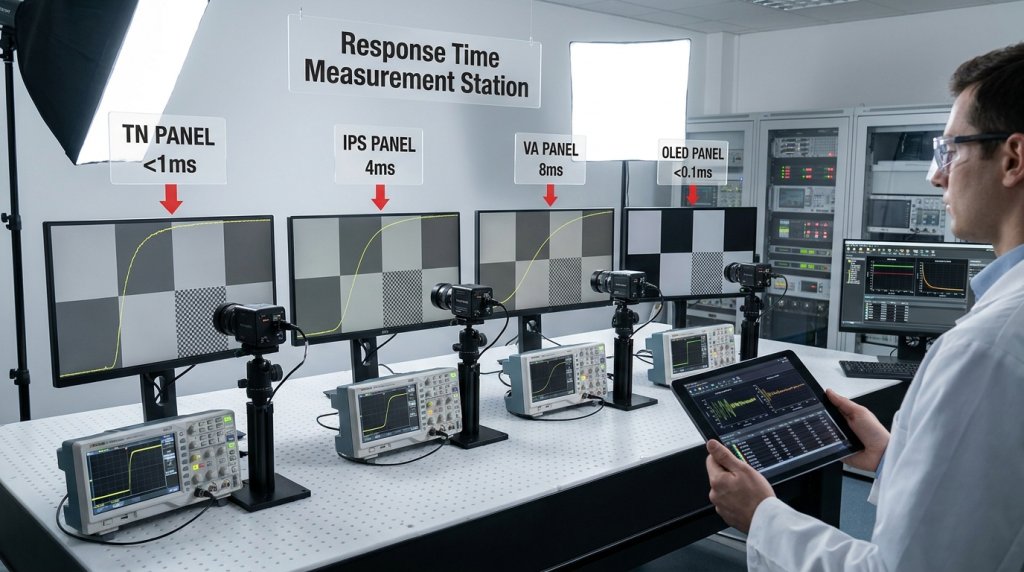
GtG measures pure pixel transition speed, while Moving Picture Response Time (MPRT) accounts for how the human eye perceives motion blur. Many modern gaming monitors now specify both measurements, providing more complete performance pictures.
Advanced 2026 displays incorporate AI-powered pixel overdrive algorithms that predict frame content and preemptively adjust voltage to minimize transition times. These intelligent systems adapt response time optimization based on content type, delivering superior results across diverse gaming scenarios.
Response Time Performance Table
| Panel Type | Typical Response Time | Best Case Response | Motion Blur Level | Optimal Use Case |
|---|---|---|---|---|
| TN | 0.5-1ms | 0.5ms | Minimal | Competitive Esports |
| Fast IPS | 1-4ms | 1ms | Low | Balanced Gaming |
| VA | 3-5ms | 3ms | Moderate | Cinematic Gaming |
| OLED | <0.1ms | 0.03ms | None | Premium All-Purpose |
The GPU Performance Connection
Response time optimization works best when paired with capable hardware. Modern graphics cards from both NVIDIA and AMD now include motion clarity enhancement features that complement fast response time displays.
These GPU technologies analyze frame-to-frame changes and implement compensation algorithms, effectively extending the benefits of fast response times even in demanding scenarios where frame rates might fluctuate.
Resolution and Response Time Interactions
Higher resolutions present unique challenges for response time performance. 4K gaming monitors with their massive pixel counts must transition significantly more pixels per frame, making fast response times even more critical.
Conversely, 1080p displays with their lower pixel counts can more easily maintain consistent fast response times across the entire panel. This is one reason competitive players often prefer Full HD displays beyond just the frame rate advantages.
Emerging 5K ultra-wide monitors represent the pinnacle of display technology, combining massive resolutions with response times fast enough to maintain motion clarity across their expansive screen real estate.
Overdrive Technology and Inverse Ghosting
Most modern gaming monitors implement overdrive technology, applying higher voltage to liquid crystals to accelerate transitions. However, excessive overdrive creates inverse ghosting or coronas around moving objects.
The 2026 generation of displays features adaptive overdrive systems that dynamically adjust voltage based on current refresh rate and frame timing. This eliminates the previous compromise between motion clarity and inverse ghosting artifacts, particularly important for variable refresh rate gaming.
HDR and Response Time Considerations
HDR gaming monitors face additional response time challenges due to zone-based dimming systems. However, 2026’s advanced implementations use AI prediction to pre-adjust backlight zones, maintaining fast response times even with complex HDR content.
OLED displays sidestep this issue entirely through per-pixel control, delivering consistent sub-millisecond response times regardless of brightness levels or HDR demands.
The Future of Response Time Technology
Looking beyond 2026, emerging display technologies promise even faster response times. MicroLED displays currently in development target response times measured in microseconds rather than milliseconds, potentially eliminating motion blur entirely even at theoretical refresh rates exceeding 1000Hz.
AI-driven temporal interpolation technologies continue evolving, with next-generation systems capable of synthesizing intermediate frames based on predicted motion paths, effectively creating perceived response times faster than physically possible.
Making Response Time Work for You
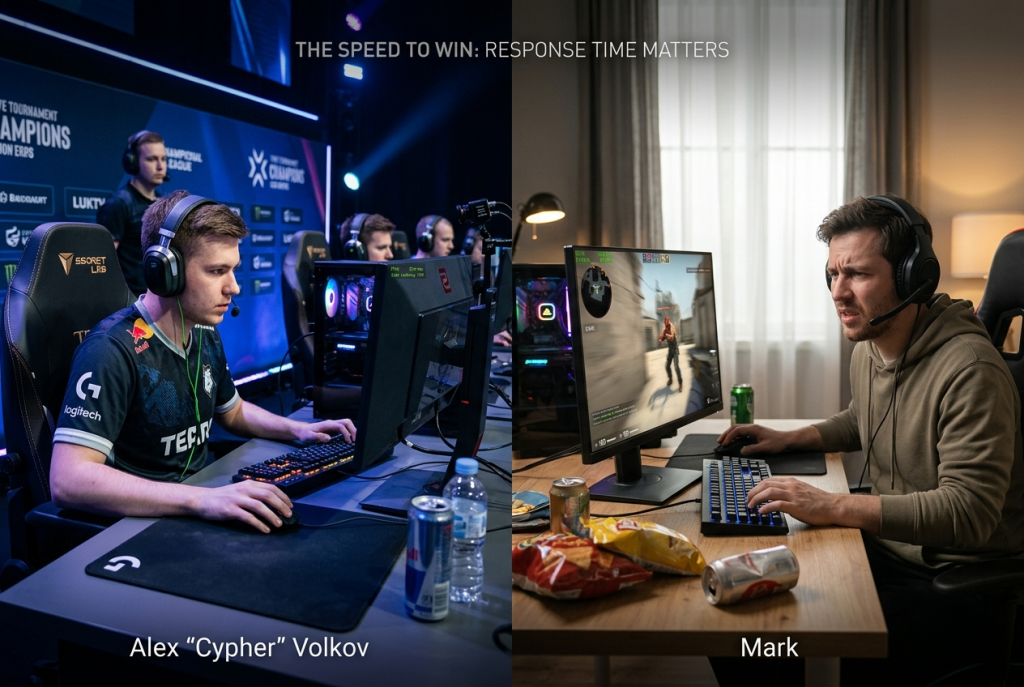
When evaluating gaming monitors, consider response time in context with your gaming priorities, preferred genres, and hardware capabilities. For competitive gaming, prioritize displays with verified response times under 2ms. For balanced gaming and content creation, 1-4ms response times provide excellent results. For cinematic single-player experiences where contrast and color matter more, 3-5ms remains perfectly acceptable.
The convergence of fast response times, high refresh rates, and intelligent AI-enhanced technologies in 2026 means gamers can enjoy unprecedented motion clarity across all display categories. Whether you’re pursuing competitive excellence or immersive storytelling, modern gaming monitors deliver the responsive, blur-free experiences that define cutting-edge gaming.
Related Posts
- Do Gaming Monitors Have Motion Blur or Ghosting Issues? What Buyers Need to Know
- Curved vs. Flat Gaming Monitors: Which Shape Is Right for You in 2026?
- Using a Windows 11 Laptop in a Dual Monitor Setup
- How to choose the best computer monitor
- 7800X3D vs 7700X3D: Which X3D Gaming Chip Should You Buy Now?