If you have shopped for storage lately, you have noticed: SSDs cost meaningfully more than they did a year ago. After years of ever-cheaper flash, 2026 broke the trend hard. This FAQ explains what happened, whether waiting makes sense, and which drives still represent good value at today’s verified prices.

Why did SSD prices jump?
Two forces collided. First, AI data centers are consuming NAND flash at enormous scale — enterprise SSD orders from cloud providers have soaked up production capacity that used to serve the consumer market. Second, memory makers shifted investment toward high-margin AI products and cut consumer NAND output; one major brand even wound down its consumer SSD business entirely to reallocate capacity to enterprise customers. Contract prices for NAND have climbed sharply across consecutive quarters since late 2025, and those increases have been flowing into retail shelf prices throughout 2026.

Should I wait for prices to drop?
Probably not, if you have a real need. Industry analysts broadly point to 2027 as the earliest window for meaningful relief, once new fab capacity comes online at volume. Prices may wobble seasonally, but the structural demand from AI infrastructure is not going away this year. The practical advice: buy the capacity you need when you need it, and avoid panic-buying capacity you do not.
Do I really need PCIe 5.0, or is 4.0 still fine?
For most people, PCIe 4.0 remains the value sweet spot. Real-world game loading and everyday desktop work rarely saturate even a fast Gen4 drive, and Gen4 models carry smaller price premiums. PCIe 5.0 earns its cost for heavy content creation, large file transfers, and AI workloads that stream big models from disk — or simply for buyers who want maximum future-proofing in a new Gen5-capable build.
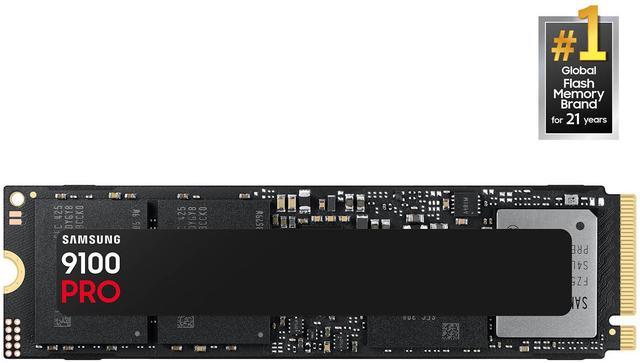
Product Spotlight: Samsung SSD 9100 PRO 2TB — $394.95
The Samsung 9100 PRO is the flagship option: PCIe 5.0 with sequential reads up to 14,700 MB/s and random performance up to 2,200K/2,600K IOPS that Samsung positions squarely at AI applications, massive game libraries, and professional creative work. If your motherboard has a Gen5 M.2 slot and your workloads actually move big data, this is the drive that will not be the bottleneck for years.
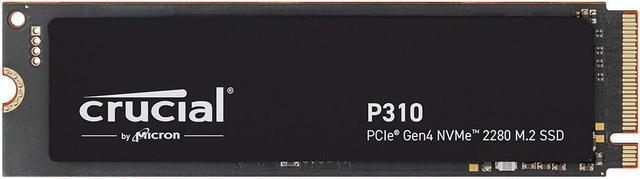
Product Spotlight: Crucial P310 2TB — $288.90
The Crucial P310 2TB is the sensible pick: a PCIe 4.0 M.2 2280 drive from a first-party NAND manufacturer at one of the lowest verified per-terabyte prices among name brands right now. For gamers and general users upgrading from a smaller or SATA drive, it captures nearly all the everyday experience of pricier drives. Worth noting: with Crucial’s consumer line being wound down, remaining first-party stock like this may not be replenished — another reason not to wait too long.
How do the current 2TB options compare?
| Drive | Interface | Seq. Read | Verified Price | Best For |
|---|---|---|---|---|
| Crucial P310 2TB | PCIe 4.0 | Gen4-class | $288.90 | Value upgrade, gaming |
| Crucial P510 2TB | PCIe 5.0 | Up to 10,000 MB/s | $329.00 | Affordable Gen5 entry |
| Samsung 9100 PRO 2TB | PCIe 5.0 | Up to 14,700 MB/s | $394.95 | Flagship performance, AI/creator work |
Recommendations
Most buyers: the Crucial P310 2TB at $288.90 — proven Gen4 value while it lasts. New Gen5 build on a budget: the Crucial P510 2TB at $329.00 splits the difference. No-compromise performance: the Samsung 9100 PRO 2TB at $394.95. And whichever you choose, buy for the capacity you will use in the next two years — in this market, unused terabytes are expensive insurance. Browse the full 2TB NVMe SSD selection on Newegg for current pricing.
Read More
- Price of SSDs in 2026: why they are skyrocketing — Dropreference — A breakdown of the NAND flash supply crisis behind the surge.
- When Will SSD Prices Go Down? Q3-Q4 2026 Outlook — Oscoo — Analyst expectations for the rest of 2026.
- SSD Storage Trends 2026: Speed and Capacity — RAMseeker — Capacity and pricing trend predictions.
- Samsung 9100 PRO Official Page — Samsung — Official specifications for Samsung’s PCIe 5.0 flagship line.
- Shop 2TB NVMe SSDs on Newegg — Compare live SSD prices across brands.
Related Posts
- Best 2TB NVMe SSDs Right Now: Smart Buys in a Rising Market
- Best PC Cases for Airflow in 2026
- Best NAS Setups for a Home or Small Office in 2026
- Turn a Mini PC into a Local AI Edge Computer
- 2-in-1 vs Traditional Laptop for Students: Which Should You Buy?
Frequently Asked Questions
Common questions about the 2026 SSD price surge and what to buy.