
If you’re building a new desktop and want a processor that looks built for gaming first without giving up everyday responsiveness, the AMD Ryzen 7 7700X3D is an easy one to keep on your radar. It brings together an 8-core, 16-thread Zen 4 design, 96MB of L3 cache, a 4.0 GHz operating frequency, and Socket AM5 support — a mix that should appeal to buyers who want a modern platform with strong gaming potential.
Because this CPU is not yet available, the smartest way to size it up is by looking at the specs that are already known and what they mean for real-world PC shopping. In this preview, we’re focusing on where the Ryzen 7 7700X3D fits in the Ryzen 7000 family, what stands out on the spec sheet, and why it may be a smart pick for a balanced gaming build.
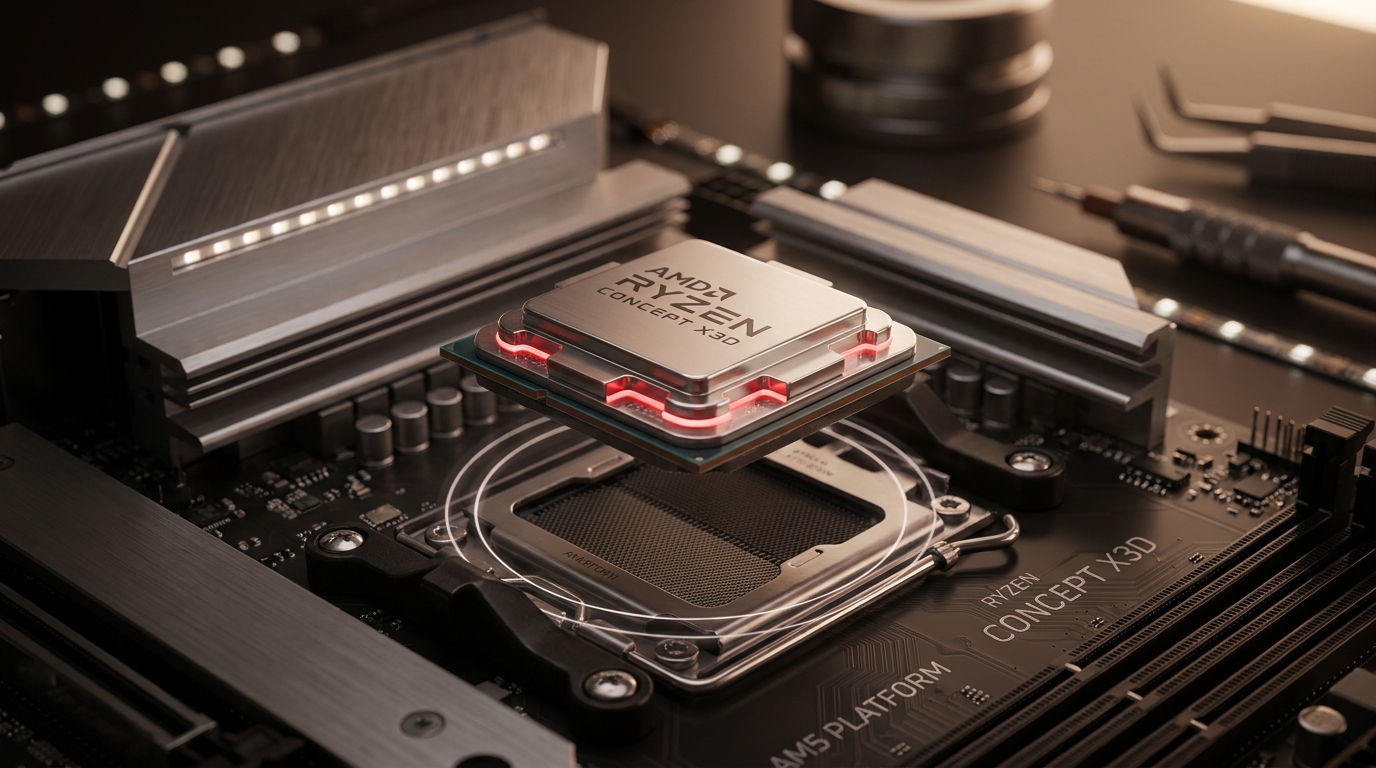
Contenders Overview
When you look at the Ryzen 7 7700X3D next to other desktop CPUs shoppers commonly compare, its lane becomes pretty clear. It sits between a standard high-clocked 8-core AM5 chip, a mainstream gaming-focused X3D part, and a higher-core-count Ryzen 9 model. That makes it especially interesting for buyers who want gaming-friendly cache capacity without jumping all the way to a bigger, more demanding CPU class.
The official specification set includes a 5nm process, 120W TDP, DDR5 5200 memory support, dual-channel memory, ECC support, and AMD Radeon Graphics with a 2.2 GHz maximum dynamic frequency. It also supports AM5 chipsets ranging from A620 and B650 to X670E and newer boards such as X870 and B850, which gives builders plenty of flexibility when planning a new system.
- Zen 4 architecture on a 5nm process
- 8 cores and 16 threads for gaming and multitasking
- 96MB L3 cache for latency-sensitive workloads
- Socket AM5 compatibility across a wide chipset range
- Integrated Radeon Graphics for basic display output and troubleshooting
Side-by-Side Comparison
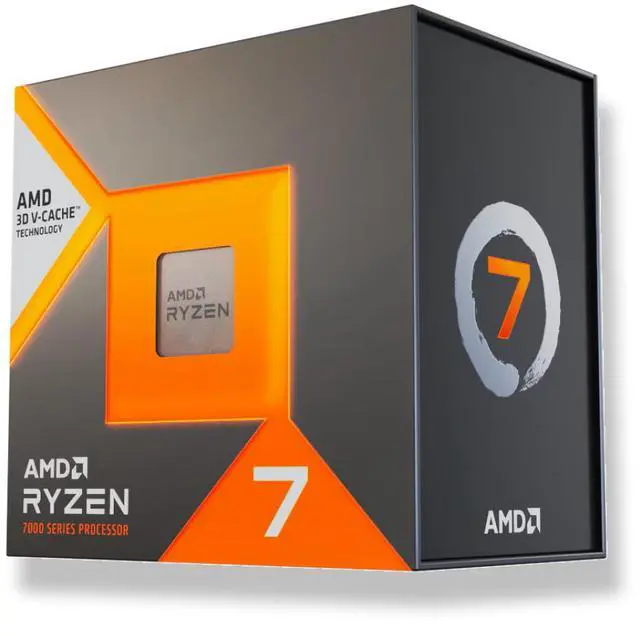
Here’s a practical way to think about the Ryzen 7 7700X3D versus the kinds of chips shoppers often cross-shop. Since this processor has not launched yet, the table below focuses on platform-level differences and the tradeoffs buyers usually weigh when choosing between a gaming-first CPU and a more productivity-heavy option.
Comparison note: the Ryzen 7 7700X3D is defined by its 96MB L3 cache and 120W TDP, which makes it more cache-heavy than typical non-X3D 8-core parts while still staying below the heat and power demands of many higher-core CPUs.
| CPU Category | Core / Thread Count | Cache Profile | Platform | Best-Fit Use |
| Ryzen 7 7700X3D | 8 / 16 | 96MB L3, 8MB L2 | AM5, DDR5 5200 | Gaming-focused balanced desktop builds |
| Typical Ryzen 7 non-X3D AM5 CPU | 8 / 16 | Usually lower L3 cache | AM5, DDR5 | All-around use and high clocks |
| Ryzen 9 AM5 CPU | 12 / 24 or higher | More cores, sometimes lower gaming efficiency per watt | AM5, DDR5 | Heavy rendering, creation, and multitasking |
| Intel mainstream gaming CPU | Varies by generation | Often stronger frequency focus | LGA platform | High-FPS gaming and mixed workloads |
If you want the most cores possible, a Ryzen 9 still makes sense. But if your goal is a smoother-feeling gaming PC with a more manageable 120W envelope, the Ryzen 7 7700X3D becomes a much more compelling middle ground. Its integrated graphics also add a practical layer of convenience for first boot, troubleshooting, or temporary GPU downtime.
Deep Dive: Why the Ryzen 7 7700X3D Stands Out
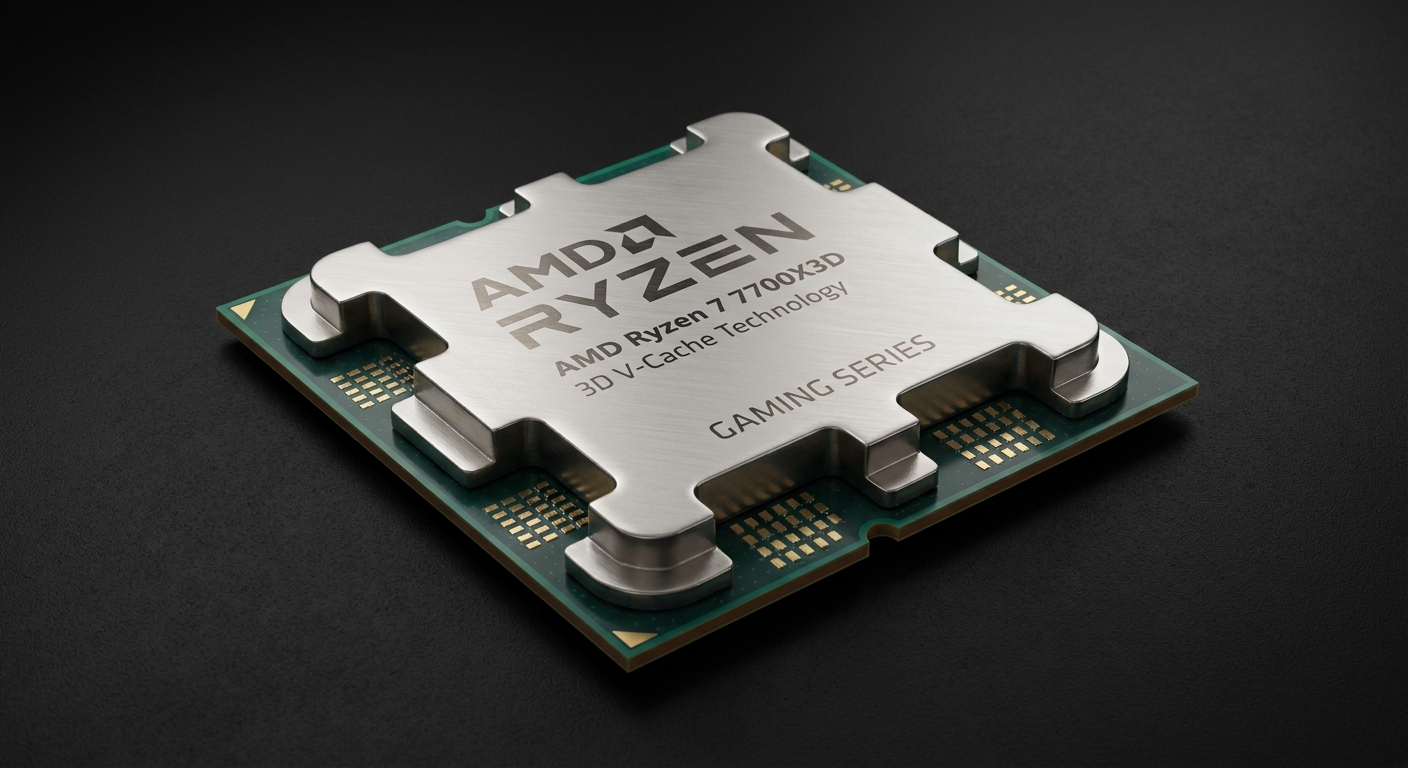
The headline feature here is the cache, not just the core count. With 96MB of L3 cache and 8MB of L2 cache, the Ryzen 7 7700X3D is aimed at workloads that benefit from keeping more game data, instructions, and working sets close to the cores. For buyers, that can mean smoother frame pacing and fewer dips in cache-sensitive titles than you might see from a standard 8-core chip with less last-level cache.
At 4.0 GHz operating frequency, it is not trying to win by brute-force clock speed. Instead, it follows the X3D playbook: prioritize low-latency access and keep the overall platform practical for a wide range of builds. The 120W TDP and processor-only bundle mean you’ll want to plan on a quality aftermarket cooler and a case with good airflow.
- 8-core, 16-thread layout is enough for gaming plus background apps
- 96MB L3 cache favors latency-sensitive gaming workloads
- 5nm Zen 4 design should help efficiency relative to older desktop generations
- Socket AM5 keeps upgrade paths open on modern boards
- DDR5 5200 support is a solid baseline for current gaming and productivity builds
For a lot of PC shoppers, that’s exactly the sweet spot they want right now: a CPU that feels fast in games, stays responsive with everyday multitasking, and leaves more of the budget and thermal headroom for a strong graphics card. In that sense, the Ryzen 7 7700X3D looks like a very Newegg-style pick for builders who want performance without overcommitting to a workstation-class chip.
Who It Makes Sense For
The Ryzen 7 7700X3D looks especially appealing for three types of buyers. First are gamers who want a strong AM5 foundation without stepping up to a Ryzen 9. Second are users who regularly keep a lot going at once — browser tabs, launchers, chat apps, recording software, and game clients. Third are builders who want integrated graphics as a backup even though they’ll be using a discrete GPU most of the time.
It is not the obvious choice for buyers who need the highest possible thread count for rendering, heavy encoding, or workstation-style production. Those users will still have a stronger case for a Ryzen 9. But for many desktop shoppers, 8 Zen 4 cores and 16 threads remain the practical sweet spot, especially when paired with the larger cache and the upgrade-friendly AM5 platform.
What to Watch Before Buying
Since this processor has not hit retail yet, there are a few things worth watching once final launch details and independent benchmarks show up. First is gaming performance scaling across different resolutions, because X3D-style chips often shine when the GPU is not the main bottleneck. Second is power behavior and cooling demand, since this is a 120W desktop part and does not include a bundled cooler. Third is memory tuning, because official support is DDR5 5200 and many builders will want to know how much extra headroom the platform has.
You’ll also want to pay close attention to motherboard compatibility. Official support includes A620, B650, B650E, X670, X670E, and newer AM5 chipsets such as X870, X870E, B840, and B850. That broad support is great news for shoppers, but BIOS readiness and board quality still matter — especially if you’re planning a fresh build around a CPU that isn’t on shelves yet.
If you’re already in the AM5 ecosystem and want a chip that looks designed to balance gaming cache behavior with mainstream usability, the Ryzen 7 7700X3D is absolutely worth watching. The formula is straightforward: 8 cores, 16 threads, 96MB of L3 cache, integrated Radeon Graphics, and a modern AM5 platform. That’s a very easy spec stack to build around.
Recommended next step: wait for verified launch benchmarks and motherboard support notes before locking in your build, then choose cooling and memory around the 120W, DDR5-oriented platform profile.
View the AMD Ryzen 7 7700X3D on Newegg
Frequently Asked Questions
Will the Ryzen 7 7700X3D work with my AM5 motherboard?
It is designed for the AM5 platform and is intended to work across a broad range of compatible chipsets. You should still confirm BIOS support on your exact board model before buying, especially if you are using an older A620, B650, or X670 motherboard.
Is the Ryzen 7 7700X3D a good gaming CPU?
Based on its spec sheet, it looks like a strong gaming-focused chip thanks to 8 cores, 16 threads, and 96MB of L3 cache. That combination is especially attractive for buyers who want high frame-rate gaming with a modern AM5 platform.
How much does the 96MB L3 cache matter for games?
A larger L3 cache can keep more game data closer to the cores, which may improve frame consistency and reduce latency-related dips in some titles. The biggest benefits usually show up in games that are sensitive to cache and memory performance rather than just raw core count.
Does the Ryzen 7 7700X3D include integrated graphics?
Yes, the spec sheet lists AMD Radeon Graphics with a 2.2 GHz maximum dynamic frequency. That is useful for basic display output, troubleshooting, or booting the system if your discrete GPU is not installed or has an issue.
What cooler and memory should I plan for?
Because this is a 120W desktop processor and no bundled cooler is mentioned, a quality aftermarket air cooler or liquid cooler is the safer choice. For memory, DDR5 5200 is the official baseline, though many builders may aim higher if their motherboard and kit are well matched.
Read More
- AMD Ryzen 7 7700X3D Official Product Page — AMD’s official product page for the Ryzen 7 7700X3D and its platform details.
- AMD Ryzen Desktop Processors Overview — AMD’s desktop Ryzen lineup page for comparing the chip family and current positioning.
- AMD Computex 2026 Blog Post — AMD’s official announcement context mentioning the Ryzen 7 7700X3D.
- Tom’s Hardware: AMD Ryzen 7 7800X3D Review — A trusted third-party review that helps set expectations for X3D gaming performance.
- Ars Technica: AMD Ryzen 7 7700X Review — A detailed look at a closely related Zen 4 Ryzen 7 chip for broader context.
Related Posts
- AMD Ryzen 7 7700X3D: Why AMD’s Newest X3D Chip Could Be the Smartest Gaming Buy of 2026
- AMD Ryzen 7 7700X3D Preview: A Cache-Heavy AM5 CPU Built for Gaming-First Builds
- AMD Ryzen 7 7700X3D Preview: Everything to Know Before the July 16 Launch
- AMD Ryzen 7 5800X3D 10th Anniversary Edition: The Smart AM4 Gaming Upgrade
- From 5800X3D to 7700X3D: AMD’s 3D V-Cache Evolution Story