A widely shared r/hardware thread in early November wasn't about a product launch. It was about money: reports after AMD's third-quarter earnings that its fourth-quarter revenue guidance would top Intel's, which would make it the first quarter AMD out-earns Intel. For anyone who remembers the Bulldozer years, that's a strange sentence to read.
I get why it's interesting. But I'd be careful about turning it into buying advice.
Who this is for
You're building or replacing a desktop in the next few weeks, maybe with Black Friday on November 27 in mind, and you're wondering whether the AMD headlines mean you should go Ryzen. Short answer: company revenue doesn't tell you which chip is right for your PC. A large share of that money comes from data center and AI sales, not desktop gaming chips.
What does matter is your workload, the platform you're buying into, and how long you plan to keep it.
Scenario 1: You mostly play games
This is where AMD's lead is clearest, and it has nothing to do with earnings. The X3D chips' large L3 cache helps in a lot of games. The Ryzen 7 9800X3D is an 8-core, 16-thread AM5 chip with 96MB of L3 cache and a 120W TDP.
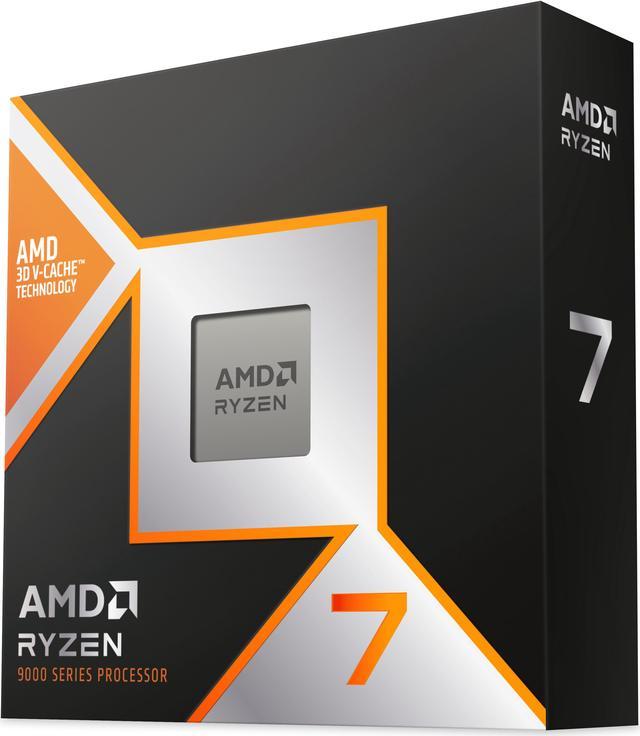
The newer Ryzen 7 9850X3D has the same 8 cores and 96MB of L3, with a higher listed boost clock of 5.6GHz. If you find both, I'd pick whichever one makes more sense for your budget, since the core configuration is the same.
Scenario 2: You game and stream, edit or compile
Here both companies are competitive. The Ryzen 9 9950X has 16 cores and 32 threads with a 170W TDP. On Intel's side, the Core Ultra 9 285K has 24 cores (8 performance and 16 efficient) on LGA 1851.
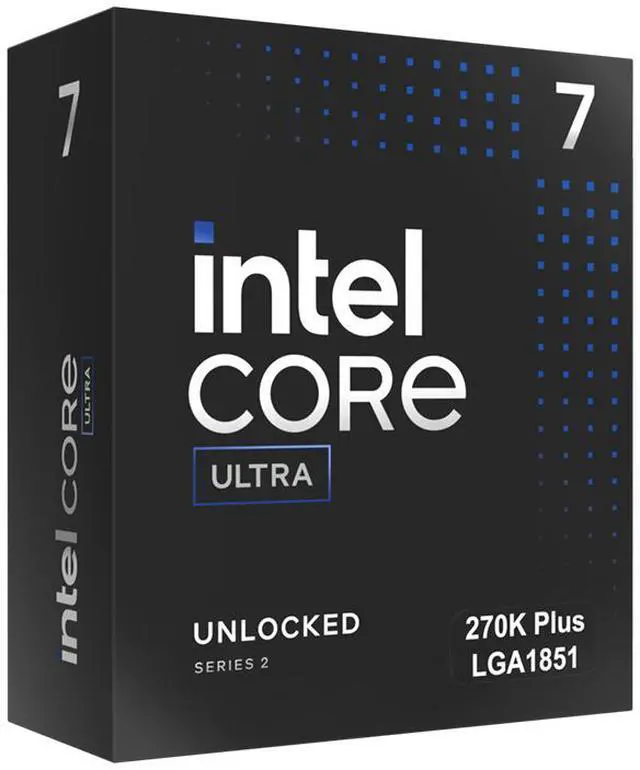
The one I'd look at more closely is Intel's refresh. The Core Ultra 7 270K Plus has the same 24-core, 8P plus 16E layout as the 285K, boost up to 5.5GHz (Turbo Boost Max 3.0) and a 125W base power, with support for DDR5-7200 according to its listing. For mixed gaming and productivity builds, it's a strong middle option.
Scenario 3: You're on a tighter budget
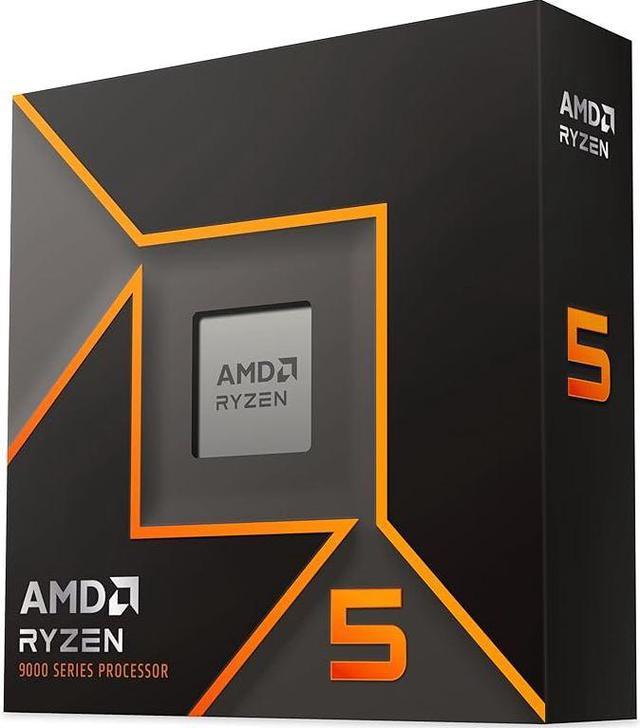
The Ryzen 5 9600X is a 6-core, 12-thread chip at 65W that pairs well with a mid-range GPU and keeps cooling simple. The Core Ultra 5 250K Plus is Intel's alternative, with 18 cores (6P plus 12E) and a 5.3GHz P-core boost. If your build also does a lot of multi-threaded work, those extra cores are worth considering.
In between, the Ryzen 7 9700X gives you eight Zen 5 cores at 65W for people who want more headroom without paying for X3D.
Scenario 4: You want an upgrade path
AM5 has already carried two generations of Ryzen chips on the same socket, and the Ryzen 9000-series CPUs in this guide all use it. Intel's next desktop generation is widely reported to move to a new socket. If dropping in a new CPU in a couple of years matters to you, AM5 is the safer bet.
Don't forget the rest of the platform
The CPU is only part of the cost and the decision. On AM5, B650 and B850 boards are plenty for most gaming builds, and every chip in this guide uses DDR5. On LGA 1851, the Core Ultra 200S Plus chips use Intel 800 series boards and officially list faster DDR5 support than the 285K, which matters if you plan to buy fast memory anyway.
Cooling is the other piece. The 65W Ryzen 5 9600X and Ryzen 7 9700X are easy to cool with a decent air cooler. The X3D chips and the 125W-class Intel parts deserve a stronger tower cooler or a 240mm or 360mm AIO, and the 170W Ryzen 9 9950X even more so. Budget for that before you pick the CPU, not after.
Finally, memory. With DDR5 still expensive, it's tempting to save on RAM and spend on the CPU. For a gaming build, I'd rather have a solid 32GB kit and a slightly cheaper CPU than the other way around.
My verdict
For gaming, I'd buy a Ryzen X3D chip. For a mixed workstation, I'd compare the Ryzen 9 9950X with the Core Ultra 7 270K Plus on benchmarks for the apps you actually use. For a budget build, the Ryzen 5 9600X is the simple choice, and the Core Ultra 5 250K Plus is worth a look if you need more threads. AMD's earnings make a fun headline, but your build should follow your workload.
Frequently Asked Questions
Is AMD or Intel better for gaming in late 2026? For pure gaming, AMD's X3D chips such as the Ryzen 7 9800X3D and 9850X3D are the ones I'd buy. Their large L3 cache helps in many games.
Does AMD outselling Intel affect which CPU I should buy? Not directly. Company revenue is driven largely by data center and AI sales. For a desktop build, buy for your workload, platform and budget.
Which is better for streaming and productivity, Ryzen 9 9950X or Core Ultra 9 285K? Both are 24 or more threads of multi-core performance for heavy work. The Ryzen 9 9950X has 16 cores and 32 threads, while the Core Ultra 9 285K has 24 cores and 24 threads. Check benchmarks for your specific applications.
What is the Intel Core Ultra 200S Plus series? It is Intel's refresh of its LGA 1851 desktop chips, including the Core Ultra 7 270K Plus with 24 cores and the Core Ultra 5 250K Plus with 18 cores, both for Intel 800 series motherboards.
Is AM5 or LGA 1851 the better platform to buy into? AM5 has a longer track record of CPU upgrades on the same socket. If future upgrade paths matter to you, AM5 is the safer bet.
Read More
- CPU Benchmarks and Hierarchy 2026 (Tom's Hardware): A regularly updated ranking of desktop CPUs in gaming and productivity.
- AMD Ryzen 7 9850X3D (AMD): AMD's official specs for its newest 8-core X3D gaming chip.
- Buy a 9800X3D Now or Wait for Zen 6 and Nova Lake? (Newegg Insider): Our take on buying now versus waiting for the next generation.
- Best CPU Upgrades in 2026: AM4, AM5 and Intel (Newegg Insider): Upgrade paths for existing AM4, AM5 and Intel builds.
- How Much Memory for AM5 in 2026? (Newegg Insider): Pair your new CPU with the right amount of DDR5.