
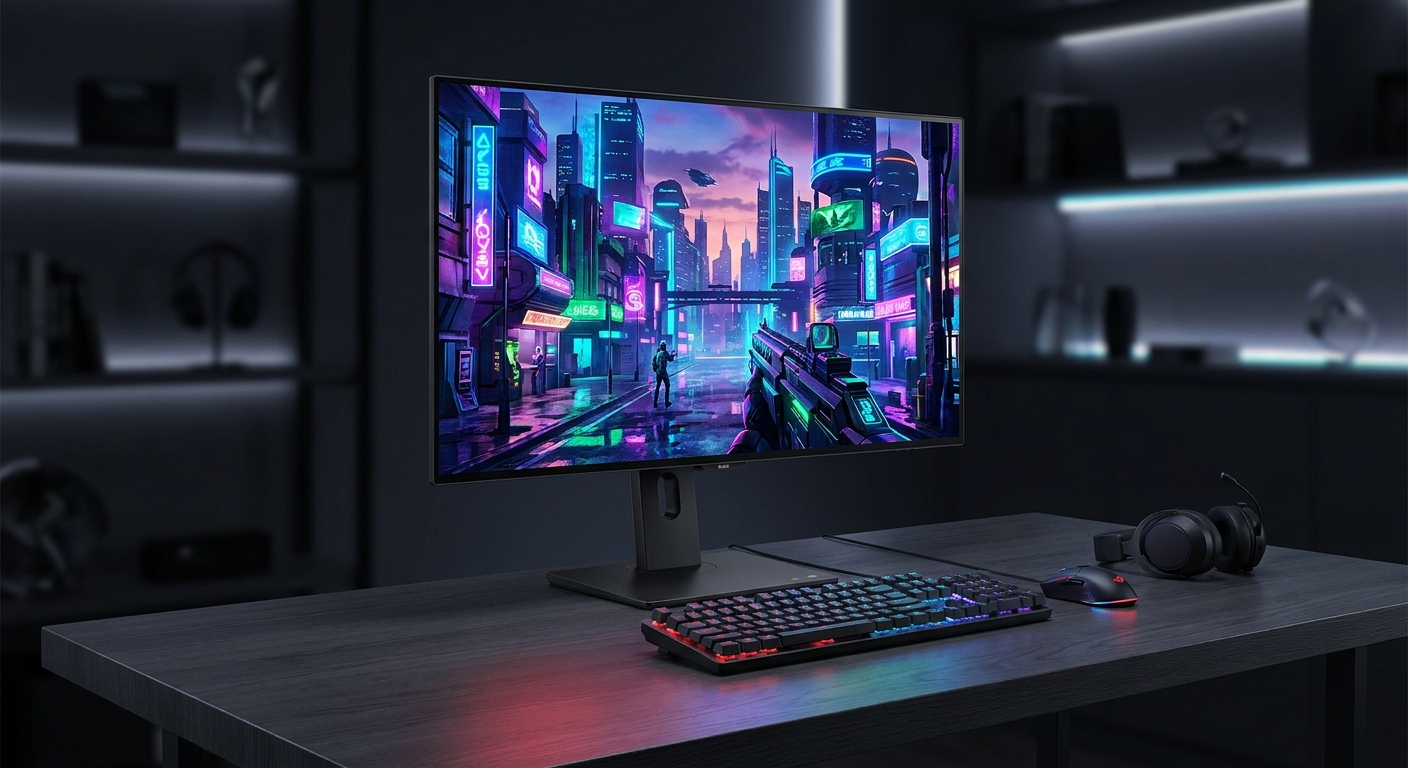
The 32-inch 4K gaming monitor has become the new standard for desktop gaming setups in 2026. At this size and resolution, pixel density is high enough that individual pixels are indistinguishable at normal viewing distances, while the screen area is large enough to be immersive without requiring your neck to swivel. The real decision in 2026 is not whether to go 4K — it is which panel technology to choose: WOLED, QD-OLED, or IPS. This guide breaks down the contenders on Newegg and tells you which is right for your setup.
Panel Technology: The Key Difference
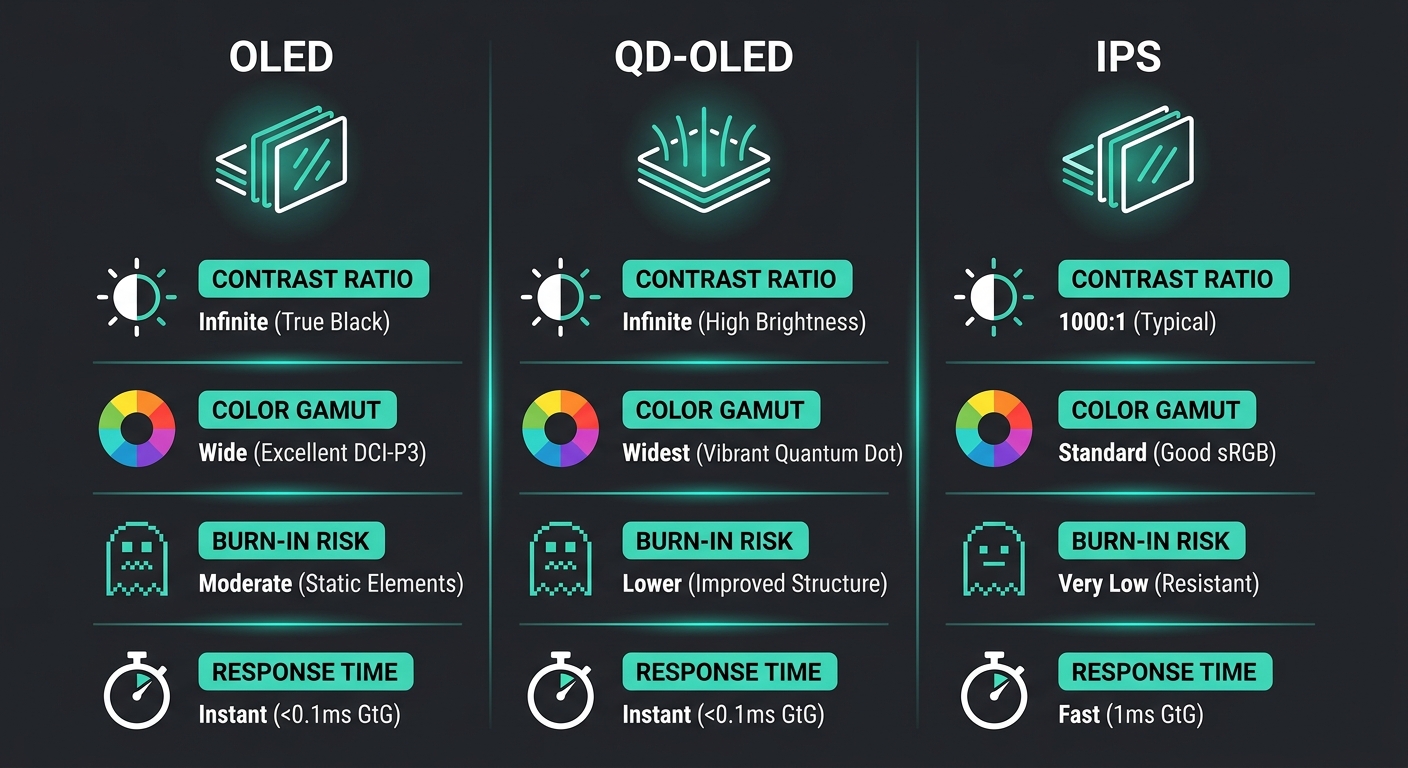
WOLED (White OLED): Used in premium ASUS ROG monitors like the PG32UCDM, WOLED delivers true black levels with near-infinite contrast ratio and 0.03ms response time. WOLED panels have excellent color accuracy and are less prone to image retention compared to QD-OLED. The tradeoff: peak brightness in HDR is slightly lower than QD-OLED.
QD-OLED (Quantum Dot OLED): Used in MSI MPG 321URX and similar monitors, QD-OLED adds a quantum dot filter to OLED to boost peak brightness and color saturation — especially in the reds and greens. QD-OLED monitors tend to get brighter than WOLED in HDR, and color volume (how accurately bright colors are rendered) is excellent. The tradeoff: slightly higher burn-in risk with static elements at peak brightness over years of use.
IPS (In-Plane Switching): Traditional IPS panels like those in the MSI MAG 321CUPDF offer good color accuracy, wide viewing angles, and no burn-in risk, but cannot match OLED’s contrast ratio. IPS is the practical choice for users who run static productivity layouts alongside gaming, use the monitor for full-day work, or want a lower entry price.
Head-to-Head: Best 32-Inch 4K Monitors on Newegg
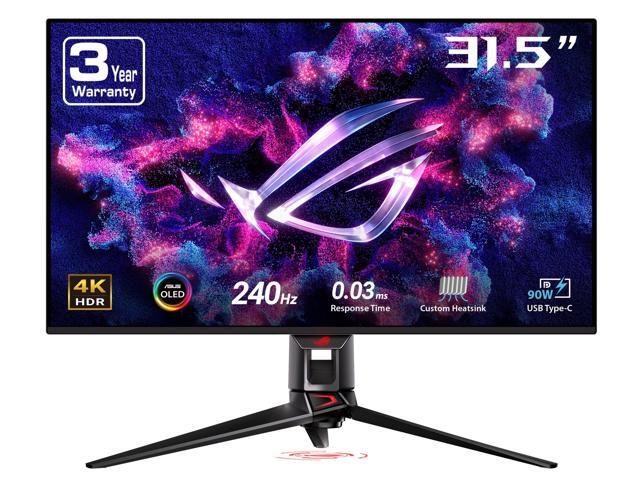
Best Value OLED: ASUS ROG PG32UCDM ($549.99 — currently on sale)
The ASUS ROG PG32UCDM at $549.99 (on sale, normally $999.99) is the standout deal in 32-inch 4K OLED right now — a 32-inch WOLED panel, 4K 240Hz, 0.03ms response time, FreeSync Premium Pro and G-Sync Compatible, at a price that normally belongs to IPS panels. If you are building or upgrading a gaming desk right now, this sale makes this monitor an exceptional buy.
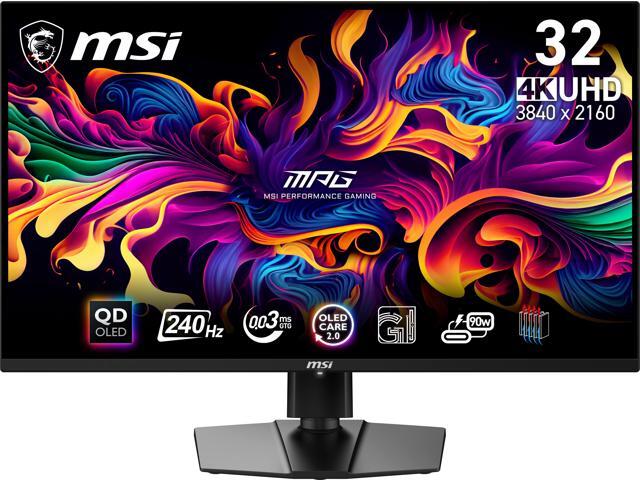
Best QD-OLED Mainstream: MSI MPG 321URX QD-OLED ($959.99)
The MSI MPG 321URX QD-OLED at $959.99 (on sale from $1,089.99) offers a 32-inch QD-OLED panel at 4K 240Hz with 0.03ms GTG, 90W USB-C charging, built-in KVM switch, and MSI’s DisplayHDR True Black 400 certification. The USB-C power delivery makes it an excellent choice for pairing with a laptop as a secondary screen. QD-OLED color saturation in HDR gaming is visibly superior to IPS panels.
Best QD-OLED Alternative: MSI MAG 321UP QD-OLED ($899.99)
The MSI MAG 321UP QD-OLED at $899.99 is the more affordable MSI QD-OLED option in 32-inch 4K, offering similar core specifications to the MPG 321URX at a lower price with fewer premium features (no USB-C charging, simpler OSD). For pure gaming use without the need for USB-C connectivity, this is the better value choice.
Best Premium OLED: ASUS ROG PG32UCDM3 ($999.99 on sale from $1,299.99)
The ASUS ROG PG32UCDM3 at $999.99 (on sale, save $300) is ASUS’s latest-generation 32-inch WOLED panel with upgraded brightness, improved anti-reflective coating, and the latest ROG Smart KVM. For users who want the absolute best OLED performance in 32-inch 4K and are not constrained by the ASUS PG32UCDM deal above, this is the top-end recommendation.
Comparison Table
| Model | Panel | Refresh Rate | Response | Sale Price |
|---|---|---|---|---|
| ASUS ROG PG32UCDM | WOLED | 4K 240Hz | 0.03ms | $549.99 |
| MSI MAG 321UP QD-OLED | QD-OLED | 4K 240Hz | 0.03ms | $899.99 |
| MSI MPG 321URX QD-OLED | QD-OLED | 4K 240Hz | 0.03ms | $959.99 |
| ASUS ROG PG32UCDM3 | WOLED | 4K 240Hz | 0.03ms | $999.99 |
What GPU Do I Need for 4K 240Hz?
To drive 4K at high refresh rates, you need a powerful GPU. Achieving consistent 240 FPS at 4K Ultra in demanding AAA titles is not realistic with any single current GPU. In practice, 4K gaming on these panels looks and feels best with DLSS 4 or FSR 4 enabled, where the GPU renders at 1440p and AI upscaling fills in the 4K detail. With DLSS 4 Multi-Frame Generation on an RTX 5080 or RX 9070 XT, hitting 120–200 FPS at 4K is achievable in most titles. An RTX 5070 Ti or RTX 5070 can comfortably feed these panels at 4K with DLSS 4 engaged.
Final Verdict
The ASUS ROG PG32UCDM at $549.99 on its current sale is the obvious choice if it remains in stock — a deal that makes premium 32-inch OLED accessible at a never-before-seen price point. If that sale has ended, the MSI MAG 321UP QD-OLED at $899.99 is the best all-around QD-OLED value, and the MSI MPG 321URX at $959.99 is better if you need USB-C laptop charging. Browse all 32-inch 4K gaming monitors on Newegg for current pricing.
Related Posts
- Best NAS for Home in 2026
- Best Mini PCs in 2026
- Best Wi-Fi 7 Routers in 2026
- Best Prebuilt Gaming PCs in 2026
- Best Wireless Gaming Headsets in 2026
Frequently Asked Questions
Common questions about 32-inch 4K gaming monitors in 2026.