
I put a projector in my living room three years ago mostly to see whether I would regret it. I did, twice, for about a week each time — once when I realised the wall I had picked faced a window, and once when the lamp hours started climbing faster than I expected. Both were solvable. Neither was in any buying guide I read beforehand.
So instead of ranking eight projectors, I want to answer the questions that actually decide which one you should buy, and point at the machine on Newegg that answers each one best.
How Bright Does It Need to Be?
This is the question everything else hangs off, and the answer depends entirely on light control rather than room size.
A room you can make properly dark works fine somewhere around 3,000 lumens. A living room with curtains you sometimes close needs 3,500 to 4,000. A room with windows you cannot cover, or a projector you want to use during the day, wants 5,000 or more, and you should be honest with yourself here because a dim image in a bright room is the single most common projector regret.
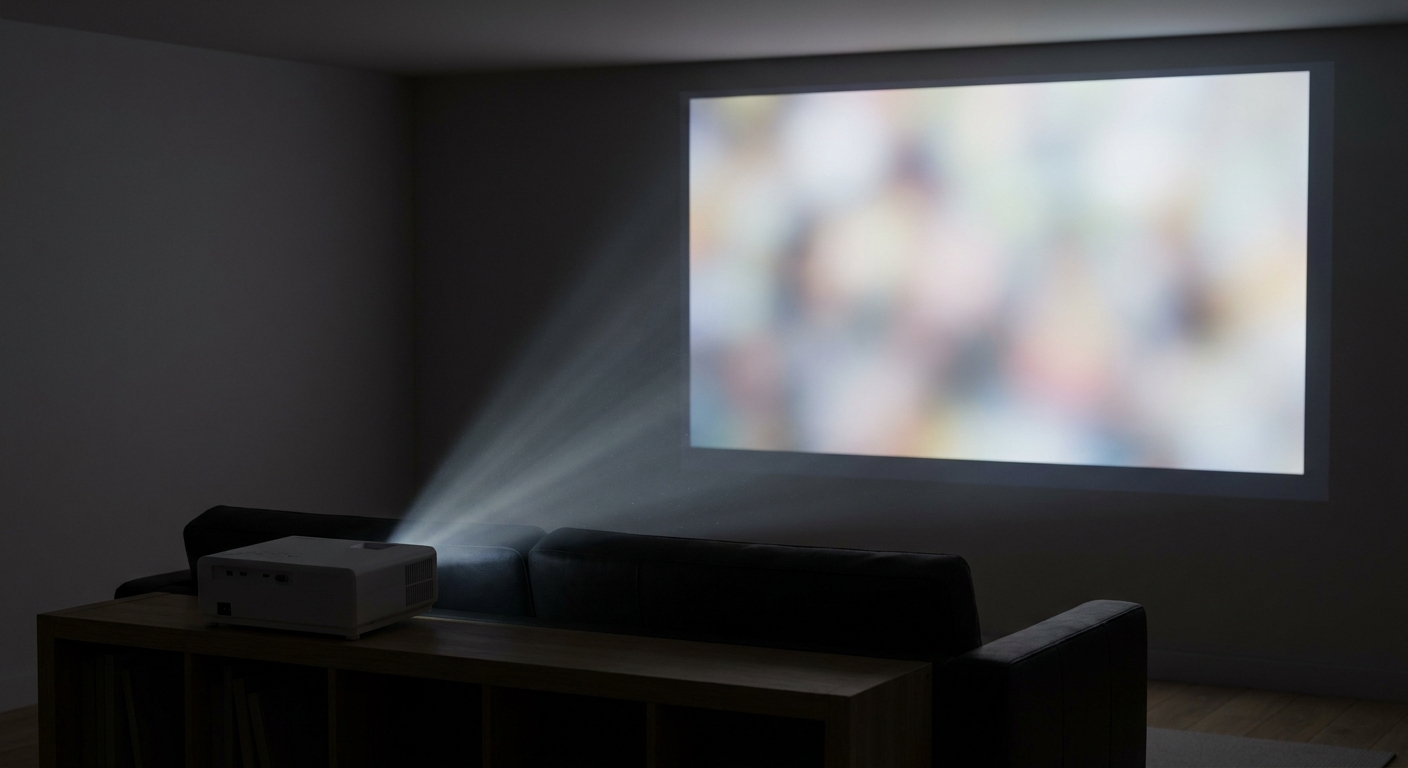
Lamp or Laser?
Lamp projectors are cheaper and their lamps dim over time and eventually need replacing. The Optoma models below rate their lamps at up to 4,000 hours in bright mode, 10,000 in eco and 15,000 in dynamic mode — a big spread that depends entirely on how you run it.
Laser projectors cost more up front and the ViewSonic units here are rated for 30,000 hours, which for most households is functionally forever. They also start instantly and hold brightness far better across their life. If the projector is going to be your main screen rather than an occasional treat, laser is the one I would push you toward.
Which One for Gaming?
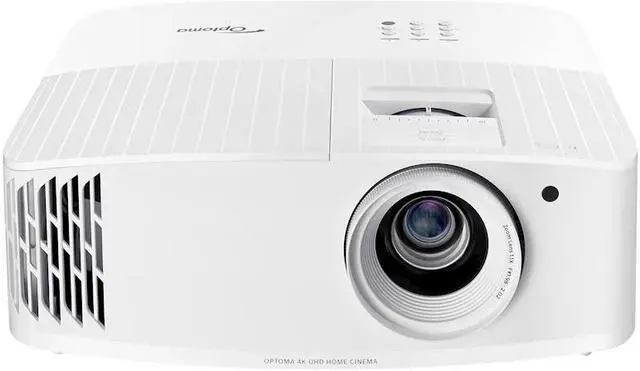
The Optoma UHD38x is where I would start. It is a 4K UHD DLP unit at 4,000 lumens with a 1,000,000:1 contrast ratio, HDR and HLG support, images from 33 to 300 inches diagonal, a 1.5 to 1.66:1 throw ratio and two HDMI 2.0 inputs. The number that matters for gaming is 4.2ms input lag at 1080p and 240Hz, which is genuinely quick — quicker than plenty of televisions.
The Optoma UHD35x is the same idea at 3,600 lumens, with the same 4.2ms figure at 1080p240 and the same optics and throw range. And the Optoma UHD30 sits below both at 3,400 lumens, still 4K UHD with 1080p 240Hz gaming. Between the three, brightness is the only real variable, so pick according to how dark your room gets.
What If the Room Is Small?
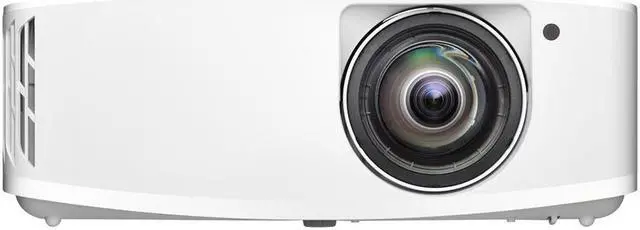
Short throw is the answer, and it is underrated. The Optoma UHD35STx has a 0.5:1 throw ratio and a throw distance from 15.75 to 129.92 inches, versus 47.64 to 389.76 inches on the standard-throw UHD38x. In practice that means a large picture from a unit sitting on a low cabinet rather than mounted behind your head. It runs 3,600 lumens, covers 36 to 300 inches diagonal, and Optoma quotes 4.2ms at 1080p240 and 16.9ms at 4K60.
The Optoma 4K400STx is the brighter short-throw option at 4,000 lumens, also 4K UHD, up to 300 inches, with dual HDMI inputs, four-corner keystone correction and the same 4.2ms at 1080p240. If your short-throw room also has a window, this is the one.
One thing nobody warns you about: short throw projectors are much fussier about a flat surface. Every ripple in a cheap pull-down screen shows up when the light hits it at that angle.
What About Consoles?
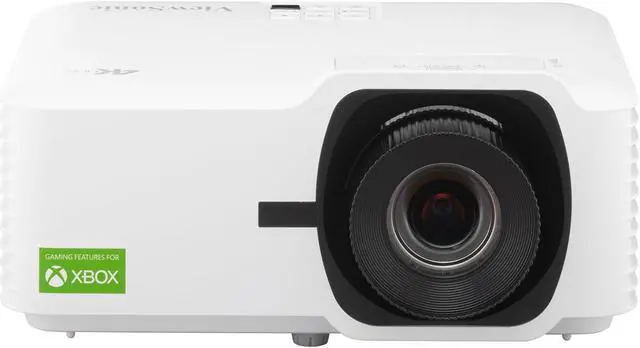
The ViewSonic LX700-4K is explicitly built for it. Third-generation laser phosphor rated at up to 30,000 hours, 3,500 ANSI lumens, native 3840 x 2160, a 0.65 inch DMD chip, 1.36x optical zoom with vertical lens shift, images up to 300 inches, and support for 1440p at 120Hz — which is what a current console will happily hand it. Throw ratio runs 1.06 to 1.45.
Lens shift is the specification I wish more people looked at. Keystone correction fixes a crooked image by distorting the pixels, which costs you sharpness. Lens shift moves the light physically and costs you nothing. If you cannot mount the projector dead centre, lens shift is worth paying for.
And If the Room Just Refuses to Get Dark?
Two units here answer that. The ViewSonic LS740-4K is a 5,000 lumen 4K UHD laser with a 3,000,000:1 contrast ratio, 1.6x optical zoom, horizontal and vertical keystone, four-corner adjustment and 360-degree projection, rated for 30,000 hours. Note it has no built-in speakers, so plan on an external sound setup — which you should be doing at this level anyway.
Above it, the ViewSonic LS901-4K pushes to 5,500 ANSI lumens with the same 30,000 hour laser, 1.7x optical zoom, 360-degree projection, screens up to 300 inches and built-in speakers. This is installation-class brightness. In a properly dark room it is more light than you want; in a sunroom or a space with skylights it is the only kind of projector that works.
What I Would Buy
For most living rooms: the UHD38x. Bright enough for evenings with the curtains open, fast enough for games, and standard throw suits the way most rooms are laid out. Small room, projector on furniture: the UHD35STx. Console-first: the LX700-4K, for the lens shift as much as the 1440p120. Bright room with no fix: the LS740-4K or the LS901-4K.
And spend something on the surface. A good matte screen improves a mid-range projector more than moving up a model improves a bad wall. I painted mine first and learned that the hard way. Newegg’s 4K projector listings are a reasonable place to compare current models side by side.
Frequently Asked Questions
How many lumens do I actually need? It depends on light control, not room size. A room you can make genuinely dark is fine around 3,000 lumens. A living room with curtains wants 3,500 to 4,000, which is where the Optoma UHD38x sits. A room with uncoverable windows or daytime use needs 5,000 or more, which is the territory of the ViewSonic LS740-4K and LS901-4K.
Is a laser projector worth the extra over a lamp? If it is your main screen, yes. The ViewSonic laser models here are rated at 30,000 hours against up to 4,000 hours for a lamp in bright mode, they start instantly and they hold brightness better over their life. For occasional movie nights a lamp projector is still perfectly sensible.
Can you game on a projector without noticeable lag? Yes, on the right one. Several Optoma models in this guide are rated at 4.2ms of input lag at 1080p and 240Hz, which is faster than many gaming televisions. Input lag rises at 4K — the UHD35STx is quoted at 16.9ms for 4K60 — so competitive players generally run 1080p at a high refresh rate.
What is throw ratio and why should I care? Throw ratio is the relationship between how far the projector sits from the screen and how wide the image is. A standard-throw projector such as the UHD38x runs 1.5 to 1.66:1 and needs real distance behind the seating. A short-throw unit such as the UHD35STx is 0.5:1 and can produce a large image from a low cabinet a few feet from the wall. Measure your room before you choose.
Read More
- ProjectorCentral: Projection Calculator Pro — Work out the exact throw distance and image size for a specific model before you commit to a mounting position.
- Projector Reviews: ViewSonic LX700-4K — An independent hands-on review with measured brightness and gaming latency figures.
- Optoma: UHD38x — Official specification sheet including the full input lag table at each resolution and refresh rate.
- ViewSonic: LX700-4K — Manufacturer detail on the laser light source, lens shift range and console compatibility.
- Newegg: 4K Projectors — Compare current models by brightness, light source, throw ratio and connectivity.