
Nobody brags about their power supply, yet it is the one component that touches every other part in your PC, and the one most people buy on guesswork. Too small and you get shutdowns under load; needlessly big and you have donated money to the wattage marketing machine. Here is how to size a PSU honestly in 2026, scenario by scenario.
Who Needs This Guide?
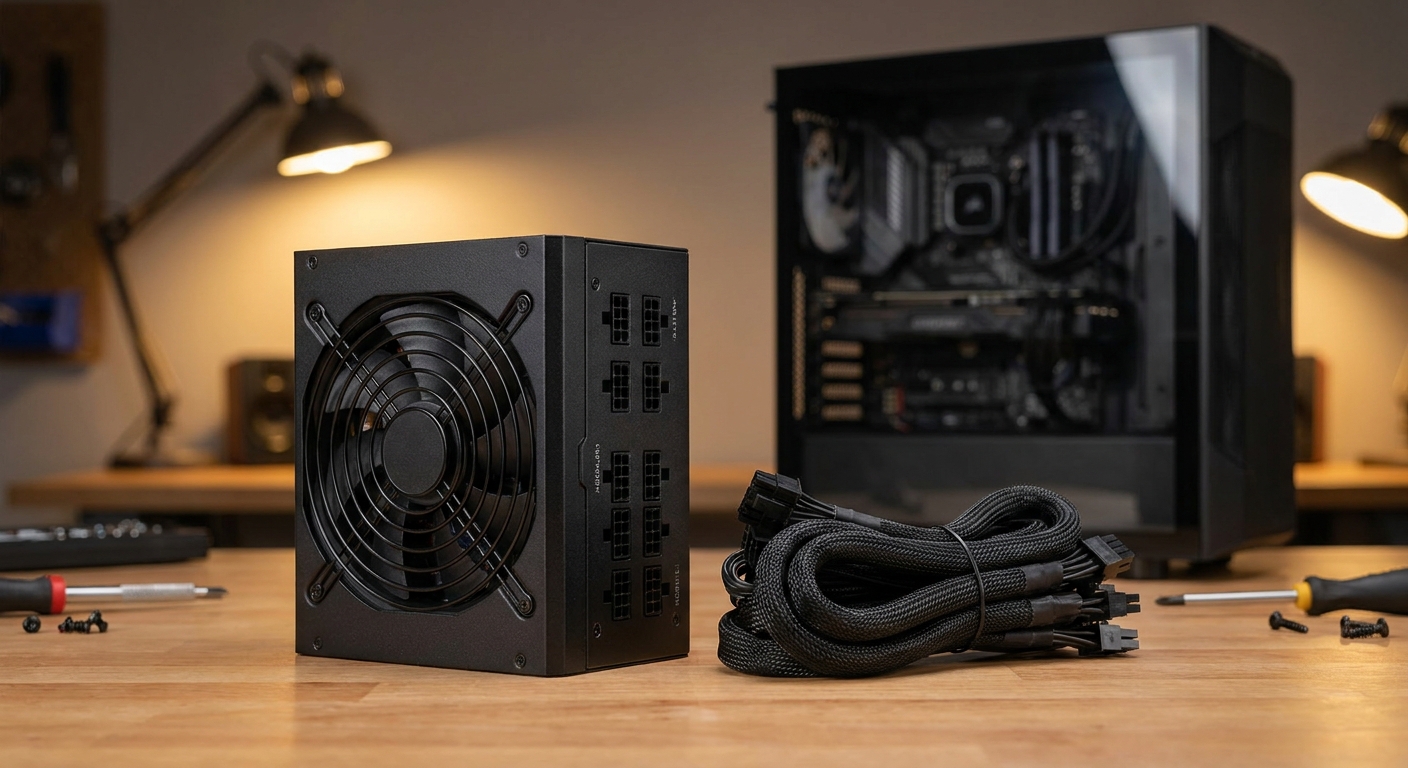
Anyone building or upgrading around modern hardware. Today’s GPUs draw sharp transient spikes, brief surges well above their rated power, and the ATX 3.1 standard exists precisely to handle them gracefully. An ATX 3.1 unit with a native 12V-2×6 GPU connector is the current mark of a properly modern PSU; treat it as your default filter when shopping.
Scenario 1: The Mainstream 1440p Gamer
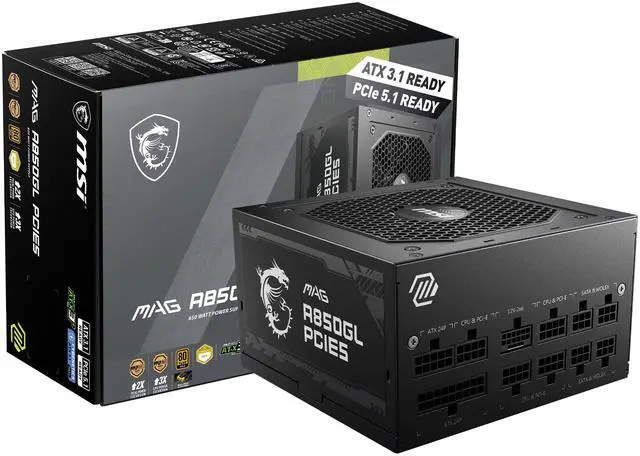
Build profile: Ryzen 7 class CPU, RTX 5070 or RX 9070 class GPU. Realistic full-system draw sits in the 450-550W range with spikes above it. The right answer is a quality 850W Gold unit, which covers spikes, runs its fan slow and quiet at half load, and leaves upgrade room. The MSI MAG A850GL PCIE5 at $106.99 on Newegg is the value benchmark here: fully modular, 80 Plus Gold, with a native PCIe 5 GPU cable.
Scenario 2: The High-End Builder Who Keeps Parts for Years

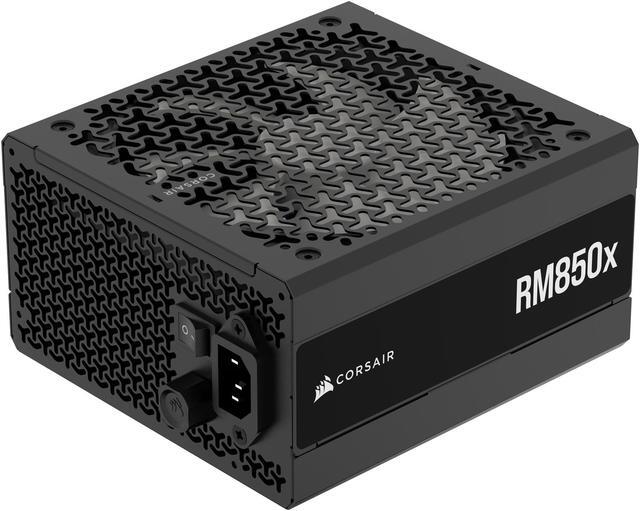
Build profile: X3D flagship CPU, RTX 5070 Ti / RX 9070 XT or better, many drives, and a five-year horizon. Spend on quality rather than raw wattage: the CORSAIR RM850x ATX 3.1 at $166.99 is a perennial editors’ favorite for its regulation, silence, and native 12V-2×6 connector. Same 850W as the value pick, meaningfully nicer electronics.
Scenario 3: The Flagship GPU Owner
Build profile: RTX 5080/5090 territory, heavy overclocking, or a future GPU upgrade already planned. This is the only mainstream scenario where 1000W earns its price. The CORSAIR RM1000x SHIFT at $234.99 adds a side-mounted modular panel that makes cable management in modern cases genuinely easier.
Scenario 4: The Small-Form-Factor or Office Builder
Integrated graphics or a modest GPU? A quality 650W unit is plenty, and the money saved belongs in your SSD budget. The rule scales down as well as up: buy certification and brand reputation first, watts second.
Best Pick per Scenario
Mainstream 1440p: MSI MAG A850GL. Long-haul high-end: Corsair RM850x ATX 3.1. Flagship GPU: Corsair RM1000x SHIFT. Whatever you choose, insist on 80 Plus Gold or better efficiency, a 10-year warranty, and ATX 3.1 with 12V-2×6 if a big GPU is anywhere in your plans. Browse ATX 3.1 power supplies on Newegg to compare the full field.
Read More
- Tom’s Hardware: Best Power Supplies — Rigorous PSU testing and updated rankings.
- Hardware Busters: Best ATX 3.x PCIe5-Ready PSUs — Picks from Cybenetics’ lead testing engineer.
- Corsair Official: RM850x ATX 3.1 — Full manufacturer specifications and warranty terms.
- Newegg Insider: Best 80 Plus Gold PSUs for High-End Builds — Our deeper dive into Gold-tier units.
- Newegg: ATX 3.1 Power Supply Listings — Live pricing on current-standard units.
Related Posts
- Is 8GB of VRAM Still Enough in 2026?
- Best microSD Cards and Portable SSDs in 2026
- Snapdragon X2 Elite vs Panther Lake vs Ryzen: Which Laptop Chip Should Students Buy?
- Best Wi-Fi Routers and Mesh Systems for Dorms and Apartments in 2026
- Prebuilt vs DIY Desktop PC in 2026: Which Is the Better Buy Now?
Frequently Asked Questions
Common questions about choosing power supply wattage.