
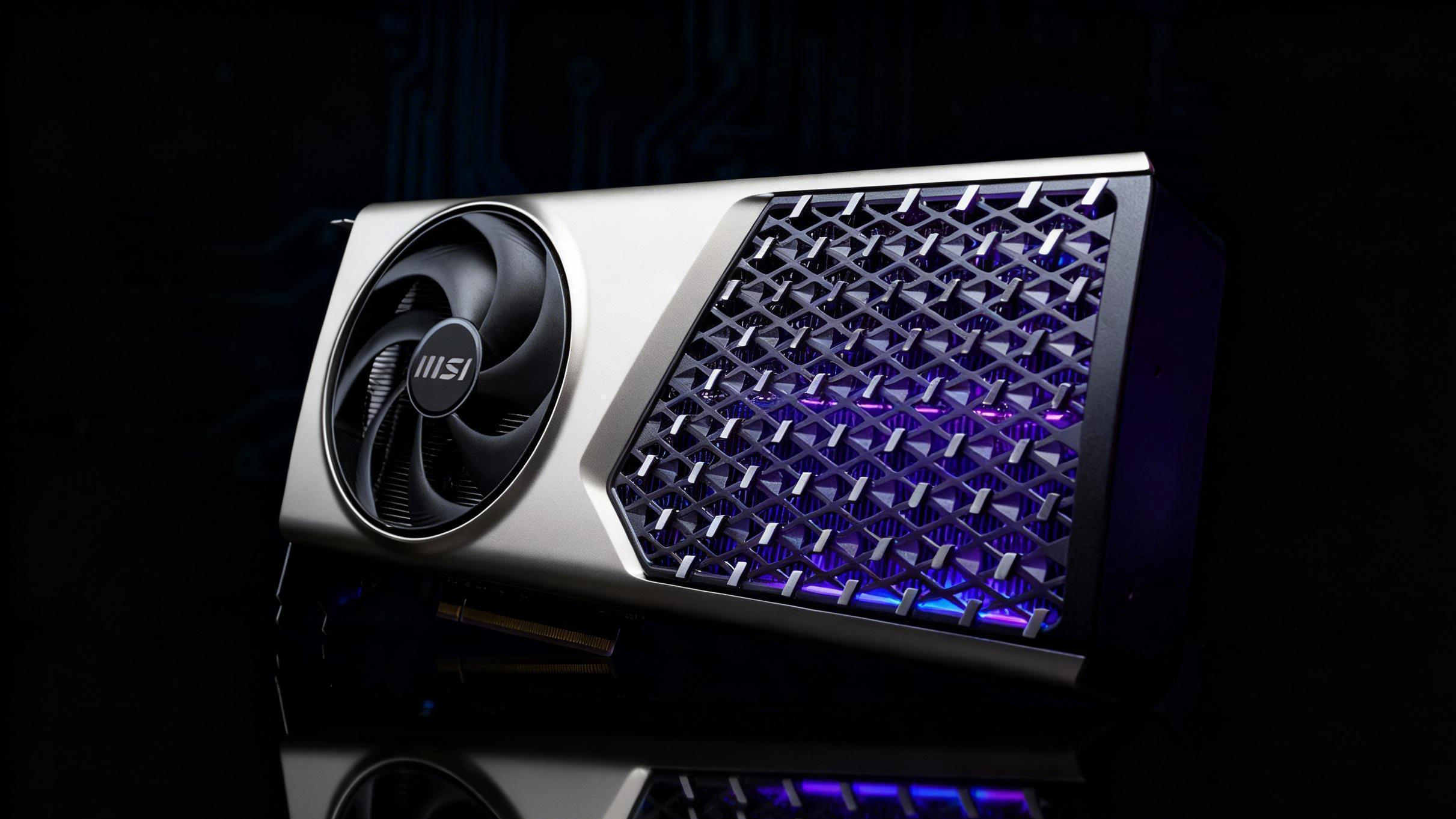
The graphics card market has witnessed a revolutionary leap with NVIDIA’s Blackwell architecture, and MSI’s GeForce RTX 5080 16G EXPERT OC stands at the forefront of this technological advancement. This powerhouse combines cutting-edge GDDR7 memory, PCIe Gen 5 x16 support, and MSI’s renowned EXPERT overclocking design to deliver unprecedented performance for gamers, content creators, and AI enthusiasts.
Technical Specifications That Matter
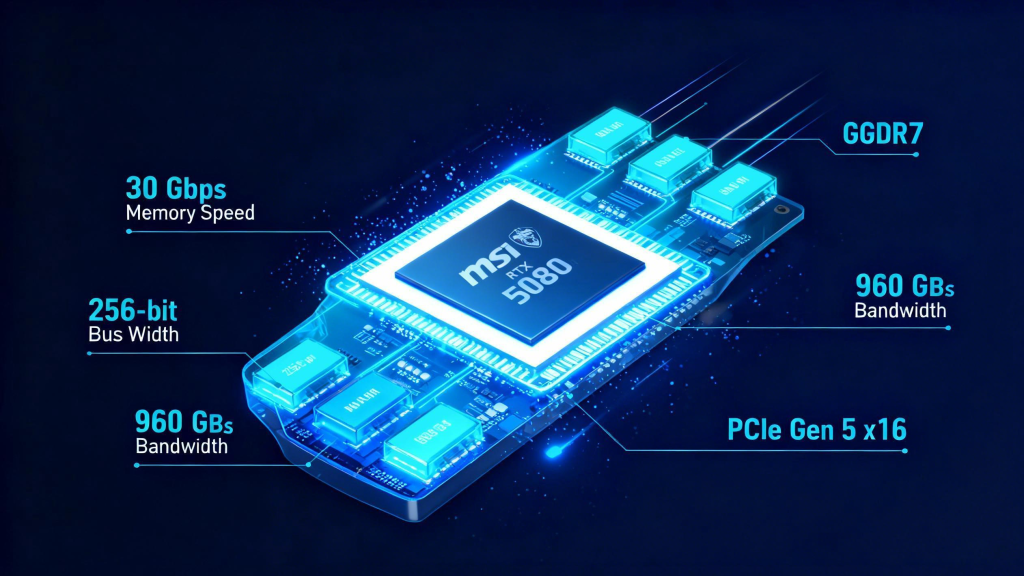
At its core, the MSI GeForce RTX 5080 16G EXPERT OC features 16GB of blazing-fast GDDR7 memory running at 30 Gbps across a 256-bit memory bus. This configuration provides a staggering memory bandwidth of 960 GB/s, significantly outpacing the previous generation’s GDDR6X technology. The GDDR7 standard represents a 50% bandwidth improvement over GDDR6X, enabling smoother 4K gaming experiences and faster AI inference tasks.
The card leverages the PCIe Gen 5 x16 interface, doubling the theoretical bandwidth compared to PCIe Gen 4. While current CPU limitations may not fully saturate this interface, it future-proofs your system for upcoming platforms and ensures optimal data transfer rates for DirectStorage-enabled games and professional applications.
Blackwell Architecture: A Generational Leap
NVIDIA’s Blackwell architecture introduces several groundbreaking features that set the RTX 5080 apart from its predecessors. The enhanced SM (Streaming Multiprocessor) design delivers up to 2x the performance per watt compared to the Ada Lovelace architecture, making this card both powerful and surprisingly efficient for its performance class.
Ray tracing capabilities receive a substantial boost with fourth-generation RT Cores, offering up to 2x faster ray tracing performance. This translates to more realistic lighting, reflections, and shadows in supported games without the performance penalty that plagued earlier generations. Titles like Cyberpunk 2077, Alan Wake 2, and upcoming AAA releases will run butter-smooth with full ray tracing enabled at 4K resolution.
The introduction of DLSS 4 (Deep Learning Super Sampling) with multi-frame generation technology is perhaps the most exciting advancement. Unlike DLSS 3’s single-frame generation, DLSS 4 can generate up to three additional frames for every rendered frame, potentially quadrupling frame rates in supported titles. This technology is exclusive to the RTX 50 series and provides a competitive edge that cannot be matched by previous-generation cards.
MSI EXPERT OC: Engineered for Excellence
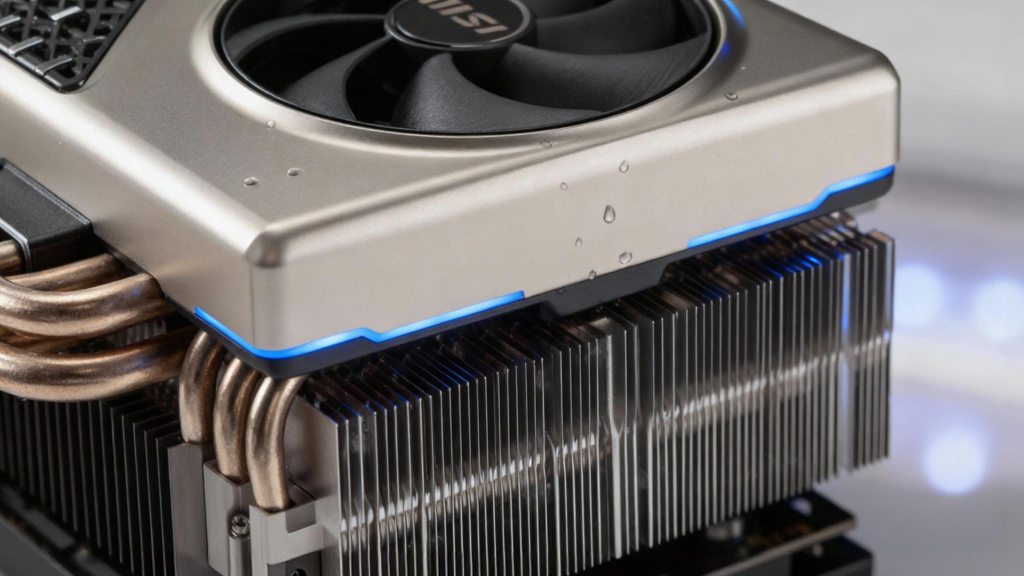
MSI’s EXPERT series represents the pinnacle of their graphics card engineering. The EXPERT OC variant of the RTX 5080 features a robust triple-fan cooling solution with TORX Fan 5.0 technology, which combines traditional fan blades with dispersion fan blades to achieve 23% better airflow while maintaining whisper-quiet operation.
The custom PCB design incorporates a 16-phase power delivery system, ensuring stable power delivery even during intensive overclocking sessions. MSI’s proprietary Tri Frozr 3 thermal solution utilizes seven heat pipes and a massive heatsink array that makes direct contact with the GPU die, memory modules, and VRM components. This comprehensive cooling approach keeps temperatures below 70°C during gaming loads, allowing the card to maintain boost clocks consistently.
For overclockers and enthusiasts, the EXPERT OC comes with dual BIOS functionality. The Performance BIOS pushes the card to its limits with higher power limits and aggressive fan curves, while the Silent BIOS prioritizes acoustics for noise-sensitive environments.
Real-World Performance Scenarios
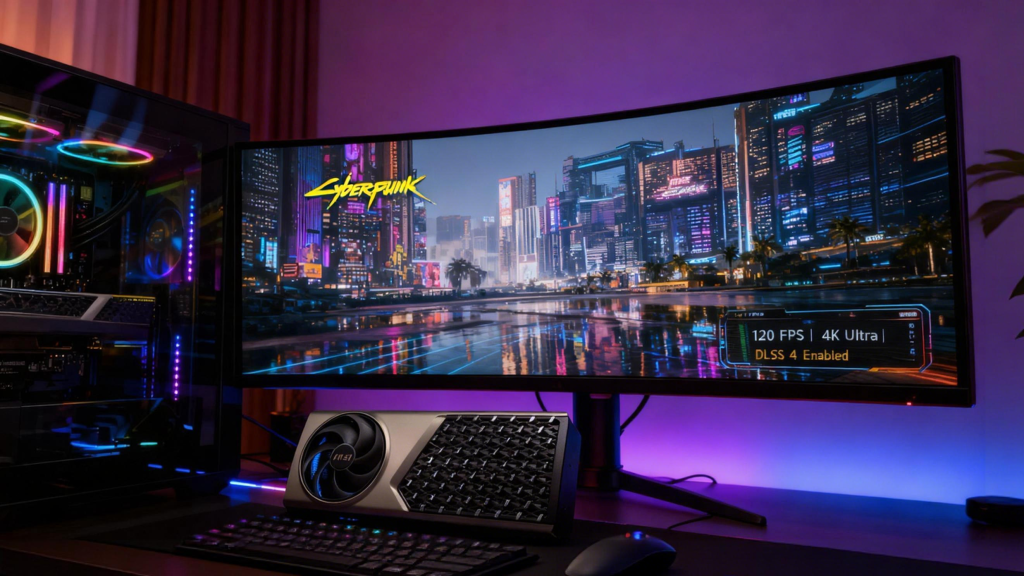
The RTX 5080 targets 4K gaming at high refresh rates, and it delivers admirably. In modern AAA titles, expect 80-120 FPS at 4K Ultra settings with DLSS Quality mode enabled. Competitive esports titles like Counter-Strike 2 and Valorant easily exceed 300 FPS at 1440p, making this card perfect for high-refresh-rate gaming monitors.
Content creators will appreciate the RTX 5080’s prowess in rendering and encoding tasks. The fifth-generation NVENC encoder supports AV1 encoding with improved quality and efficiency, reducing file sizes by 20% compared to H.264 while maintaining visual fidelity. DaVinci Resolve, Adobe Premiere Pro, and Blender all see significant performance improvements, with timeline scrubbing and viewport performance feeling instantaneous.
AI and machine learning workloads benefit enormously from the 16GB GDDR7 memory buffer and enhanced Tensor Cores. The RTX 5080 handles Stable Diffusion image generation, LLM inference, and AI upscaling tasks with remarkable speed. Users running local AI models will find the generous VRAM capacity allows for larger model sizes and batch processing without performance degradation.
Building Your System Around the RTX 5080
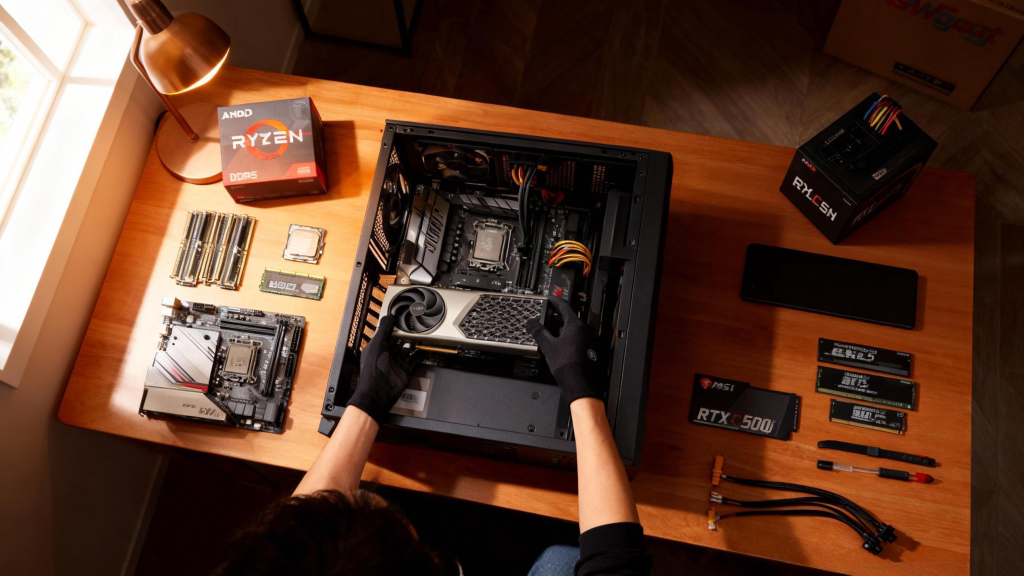
The RTX 5080’s TDP sits at 360W, with peak power consumption potentially reaching 400W during intensive workloads. This necessitates a robust power supply unit—we recommend a minimum 850W unit with 80 Plus Gold certification or higher. For builders planning comprehensive upgrades or new builds, Newegg’s Custom PC Builder tool helps ensure component compatibility and adequate power delivery.
CPU pairing matters significantly for maximizing GPU performance. To avoid bottlenecks at high resolutions, pair the RTX 5080 with at least an Intel Core i5-14600K, AMD Ryzen 7 7800X3D, or their newer equivalents. These processors provide sufficient bandwidth and processing power to feed the GPU with data efficiently.
PCIe Gen 5 motherboard support, while not mandatory, unlocks the full potential of this card. Both Intel 700-series and AMD X670E/B650E chipsets offer PCIe 5.0 lanes, though the performance difference compared to PCIe 4.0 remains minimal in current gaming scenarios.
System memory recommendations start at 32GB DDR5-6000 for gaming and extend to 64GB for professional workflows. Fast system RAM ensures that CPU-bound tasks don’t create bottlenecks during mixed workloads.
Power Supply Considerations
Given the RTX 5080’s power requirements, selecting an appropriate power supply unit becomes critical. The 12VHPWR connector standard used by modern high-end GPUs requires careful cable management to avoid connection issues. Quality power supplies from reputable manufacturers include properly designed cables that eliminate the bending radius concerns that plagued early RTX 40-series implementations.
Calculate your entire system’s power draw using Newegg’s Power Supply Calculator to ensure adequate headroom. A 1000W unit provides comfortable overhead for overclocking both the CPU and GPU while maintaining efficiency and reliability.
Value Proposition and Market Position
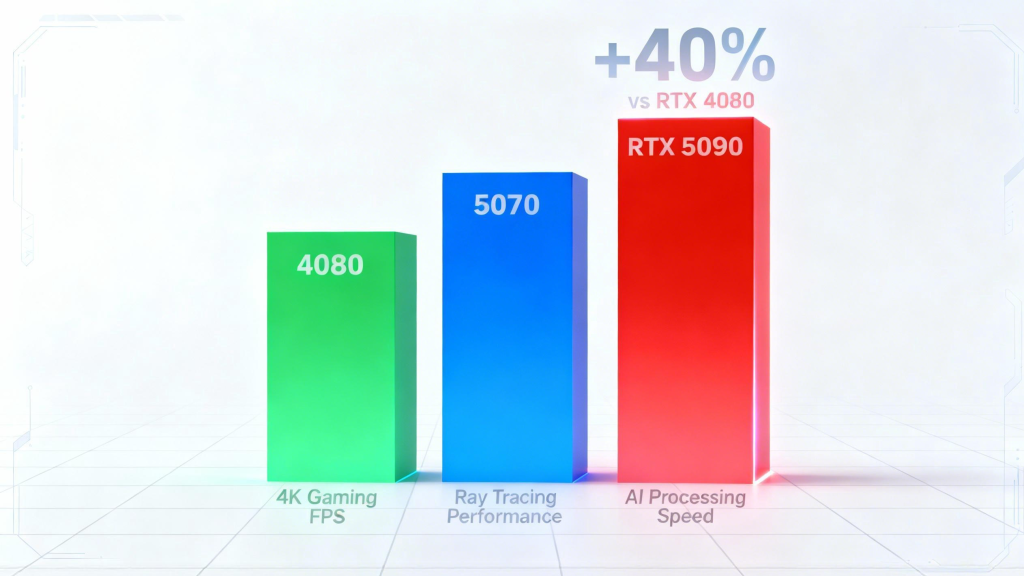
The RTX 5080 occupies a strategic position in NVIDIA’s lineup, offering 85% of the RTX 5090’s performance at roughly 60% of the cost. This value proposition makes it the logical choice for enthusiasts who demand flagship-tier performance without the premium associated with the halo product.
Compared to the previous-generation RTX 4080, the RTX 5080 offers approximately 30-40% better raster performance and up to 70% better ray tracing performance thanks to architectural improvements and faster memory. The DLSS 4 exclusivity alone justifies the upgrade for gamers prioritizing future-proofing.
Conclusion: Who Should Buy the RTX 5080?
The MSI GeForce RTX 5080 16G EXPERT OC represents the sweet spot for high-end PC gaming and professional workstation builds. It excels in 4K gaming scenarios, handles ray tracing with aplomb, and provides substantial computational resources for AI and content creation tasks.
This card targets gamers with 4K displays seeking maximum frame rates, content creators demanding responsive editing experiences, and AI enthusiasts running local models. The combination of 16GB GDDR7 memory, cutting-edge Blackwell architecture, and MSI’s proven EXPERT cooling solution creates a product that will remain relevant for years to come.
If you’re building a new system or upgrading from hardware more than two generations old, the RTX 5080 delivers transformative performance improvements that justify its premium positioning. It’s not just a graphics card—it’s an investment in computational capability that spans gaming, creation, and innovation.
Related Posts
- Smart PC Upgrades with AI: Your Questions About Newegg’s PC Upgrader, Answered
- Build Your First Home NAS with Newegg’s NAS Builder: Three Real Scenarios
- How to Use Newegg’s Custom PC Builder: From Blank Page to Complete Build
- Why 8-Core X3D CPUs Are Still the Gaming Sweet Spot in 2026
- AMD Ryzen 7 7700X3D Preview: Why This AM5 Gaming CPU Is Worth Watching