
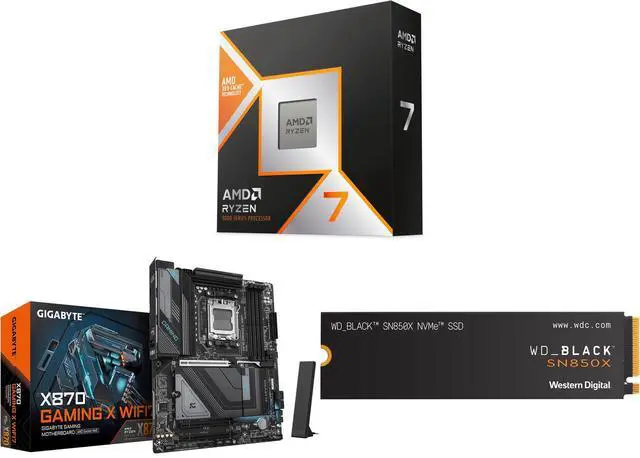
Some hardware launches are about changing everything. Others are about protecting a lead—tightening a formula that already works and making sure no one catches up.
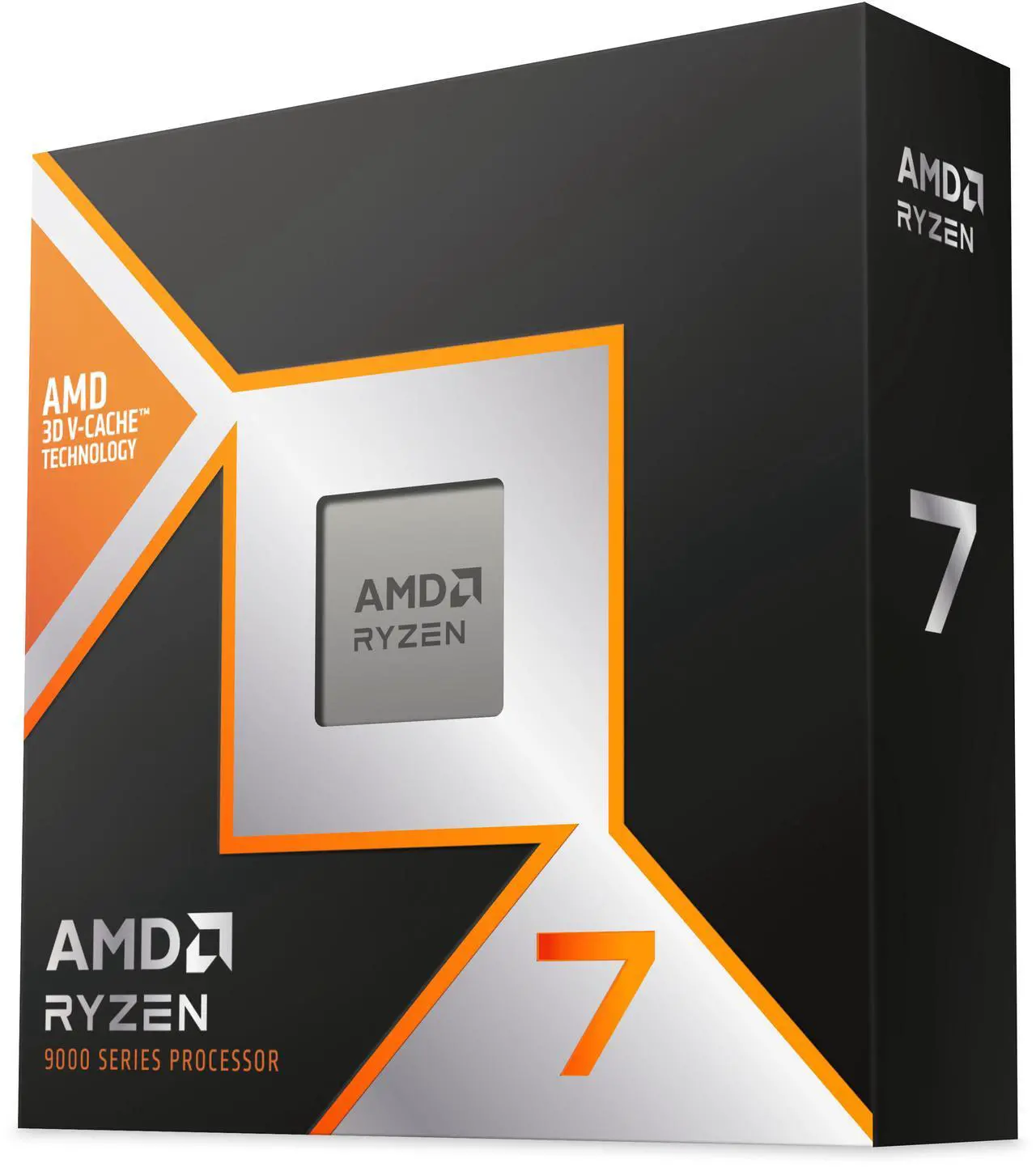
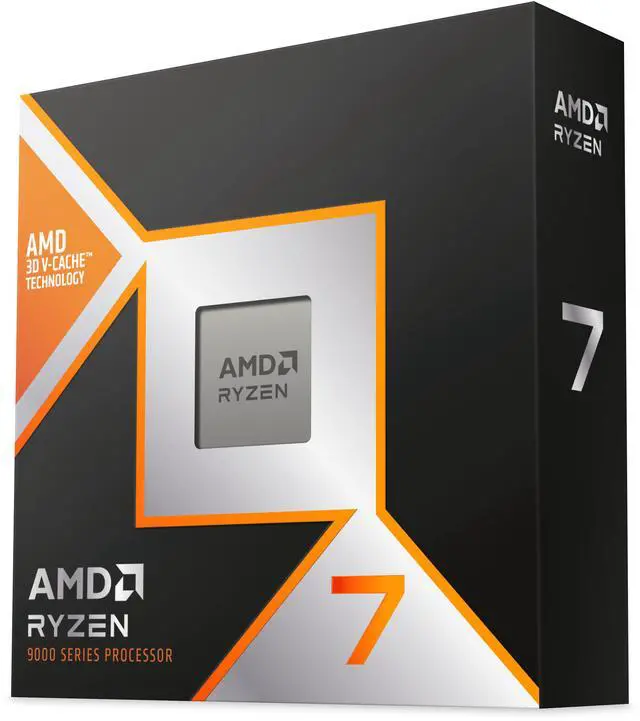
The Ryzen 7 9850X3D, launching January 29, 2026, feels like the second kind. AMD is taking the same winning idea that made recent X3D chips so popular with gamers, polishing it, and aiming straight at the performance category that matters most to competitive players: 1080p gaming, where CPU differences show up most clearly.

If you’ve been watching AMD’s X3D lineup, you already know why people care. These CPUs have built a reputation for improving the part of performance that doesn’t always show up in a single number—frame pacing, 1% lows, and overall “smoothness”. The 9850X3D stays on that path, but with one headline change that’s easy to understand: a higher boost clock.
The Ryzen 7 9850X3D boosts up to 5.6GHz, roughly 400MHz higher than the Ryzen 7 9800X3D’s 5.2GHz max boost. It’s not a radical redesign. It’s a sharper version of a proven gaming chip, designed for players who care about high-refresh performance and consistent responsiveness.
What the Ryzen 7 9850X3D is, in plain terms
The Ryzen 7 9850X3D is AMD’s newest gaming-focused desktop CPU for the AM5 platform. It’s built on Zen 5, comes with 3D V-Cache, and sticks with a configuration AMD clearly believes in: 8 cores / 16 threads.
That 8-core design is not a compromise. For gaming, it’s often a sweet spot—enough cores to handle modern engines comfortably, while keeping boost behavior aggressive and thermals manageable. With X3D, AMD’s priority is not adding cores for the sake of it. It’s optimizing the experience for gaming workloads where performance is shaped by latency, cache behavior, and consistent frame delivery.
The 9850X3D is a continuation of that idea, with a small but meaningful tweak: pushing the frequency ceiling higher to chase additional headroom in CPU-limited scenarios.
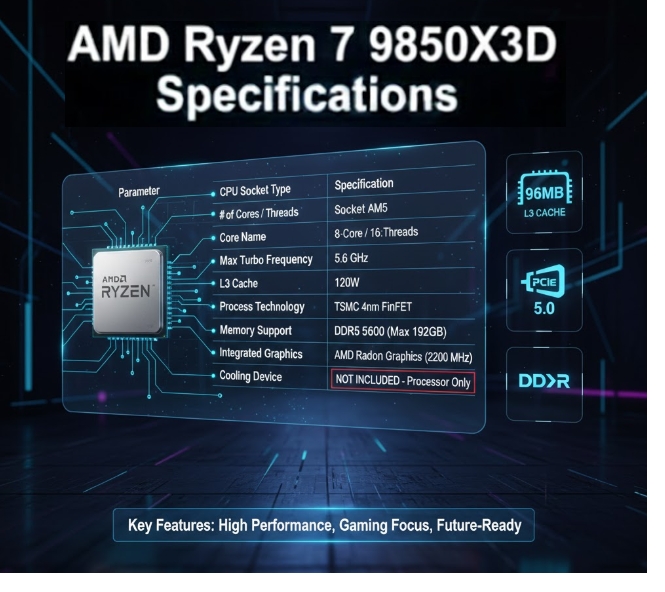
Key specs
Here’s what’s currently known going into launch:
| Specification | Details |
|---|---|
| CPU Socket Type | Socket AM5 |
| Core Name | Granite Ridge |
| # of Cores | 8-Core |
| # of Threads | 16-Threads |
| Operating Frequency | 4.7 GHz |
| Max Turbo Frequency | 5.6 GHz |
| L1 Cache | 640KB |
| L2 Cache | 8MB |
| L3 Cache | 96MB |
| Manufacturing Tech | TSMC 4nm FinFET |
| Instruction Set | x86-64 |
| Memory Type | DDR5 5600 |
| Memory Channel | 2 |
| Max Memory Size | 192 GB |
| ECC Memory | Yes (Requires mobo support) |
| Integrated Graphics | AMD Radeon Graphics |
| Graphic Base Frequency | 2200 MHz |
| PCI Express Revision | 5.0 |
| Max # of PCIe Lanes | 28 Total / 24 Usable |
| Thermal Design Power (TDP) | 120W |
| Cooling Device | Cooling device not included (Processor Only) |
| Operating System Support | Windows 11 64-bit Edition, Windows 10 64-bit Edition, RHEL 8 64-bit, Ubuntu x86-64 |
| Security & Reliability | AMD Secure Processor Support; AMD Platform Secure Boot; Windows Secure Boot; fTPM support; Secure Boot; SMB; VBS; Shadow Stack; AES-NI; SLAT; and more |
On paper, it looks like a familiar X3D recipe: 8 strong cores, huge cache, and a clock speed bump to push the top end a bit harder.
Why X3D CPUs feel different in games
Average FPS is what shows up in charts, but it doesn’t always explain the experience you feel in real gameplay. Many players notice performance issues not as “low averages,” but as:
- sudden dips when a fight starts
- micro-stutters when the game streams new assets
- uneven frame delivery that makes aiming feel inconsistent
- those “why did it hitch right there?” moments
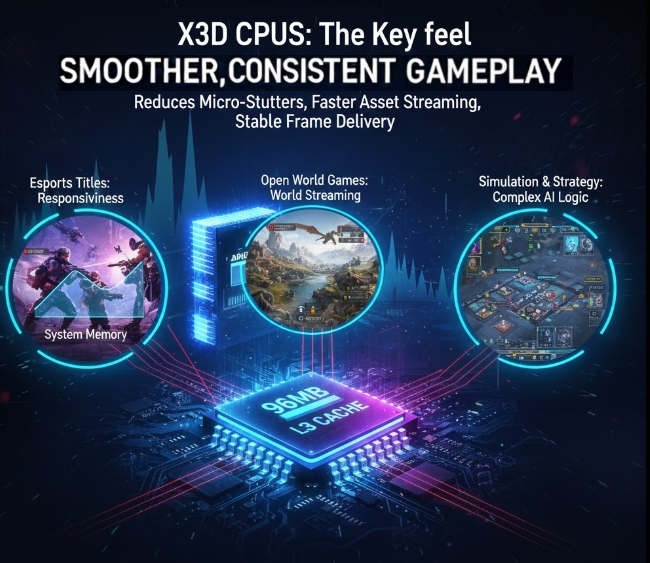
X3D chips often help because their larger cache can reduce how often the CPU has to fetch data from system memory. When that happens less often, some games deliver frames more consistently. The impact varies by title, but X3D tends to match well with games that lean heavily on simulation, world streaming, or CPU-side game logic.
That’s why X3D CPUs show up frequently in discussions around:
- esports titles (where responsiveness matters)
- open-world games (where a lot is happening at once)
- simulation and strategy games (where the CPU is constantly tracking state)
The 9850X3D is still built on that foundation. The difference is that AMD is trying to raise the ceiling for scenarios where clock speed still matters.
9850X3D vs. 9800X3D: realistic expectations
The most honest way to frame this launch is that it’s a refinement, not a reinvention.
The major spec difference is the boost clock: 5.6GHz vs. 5.2GHz. That can translate into modest uplifts in certain CPU-limited games, especially at 1080p and 1440p where very strong GPUs can reveal CPU bottlenecks.
But it’s important to keep expectations grounded. Many titles may show only small improvements, and some games may show almost no difference at all. That doesn’t mean the chip isn’t worth it—especially if you’re buying new. It just means this isn’t designed to replace the 9800X3D overnight for everyone who already owns it.
If you’re already on a 9800X3D, the 9850X3D is likely a “wait and see” product, especially depending on price and availability. If you’re upgrading from an older platform, the 9850X3D is a very different story—it’s an easy way to jump into a modern AM5 build with a gaming-first CPU at the top of AMD’s stack.
Why AMD focuses on 1080p (and why it matters)
You’ll often see CPU performance claims framed around 1080p, and that’s not just marketing. 1080p is where the CPU is most likely to become the limiter because the GPU can push very high frame rates. That makes it easier to see differences between CPUs.
At 4K, most games are GPU-limited. At 1440p, it depends. But at 1080p high refresh—especially with powerful graphics cards—CPU performance becomes the deciding factor for how high your FPS goes and how consistent it stays.
That’s the environment the 9850X3D is targeting. It’s for the builders and competitive players who want the strongest possible platform when the GPU is already fast enough that the CPU becomes the gatekeeper.
AM5 compatibility is the quiet win
One practical reason this launch matters is that it’s built for AM5. If you already have an AM5 motherboard, the 9850X3D should be positioned as a drop-in upgrade with the correct BIOS support. You’re not locked into a full rebuild just to chase the newest gaming CPU.
If you’re building new, AM5 remains a strong long-term choice: DDR5, modern connectivity, and an upgrade path that can outlast a single CPU generation.
Now that the Ryzen 7 9850X3D is Available
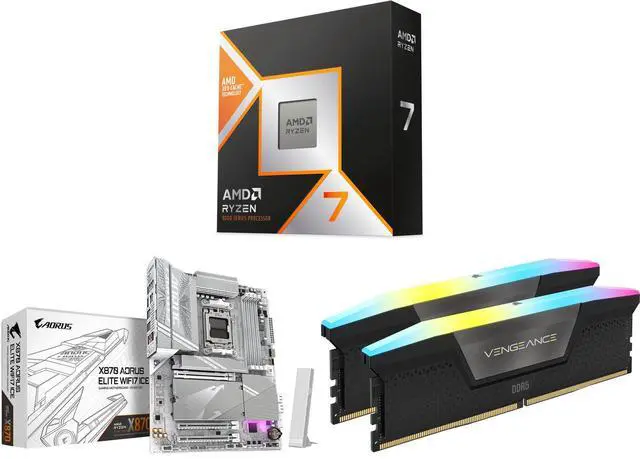
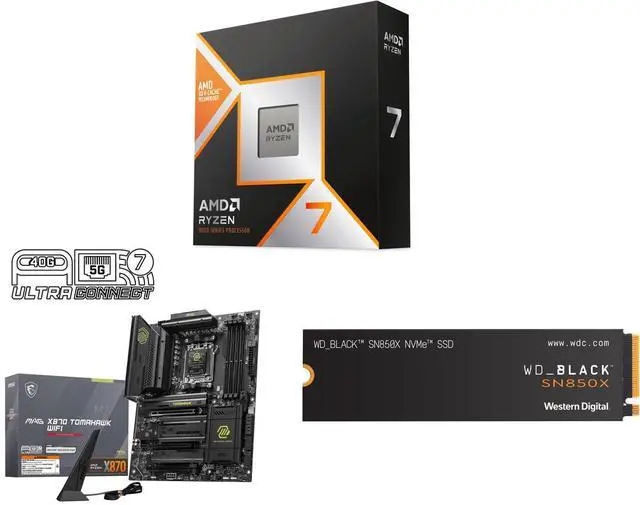
Now that the AMD Ryzen 7 9850X3D has officially launched, this is the perfect time to finalize your build and upgrade plan. If you’re ready to buy, make sure your foundation is already set: choose a motherboard with stable power delivery, pair it with a compatible DDR5 kit, and ensure your cooling solution can handle sustained gaming boosts.
Once you have those essentials in place, installing the CPU is straightforward: drop it in, update your BIOS if needed, and you’re ready to game.
This launch window is also a great opportunity to watch for platform deals. New CPU releases often come with bundles and combo pricing that can make a full build significantly more cost-effective.
Build Ready Anytime
Whether you’re purchasing today or waiting for the next restock, having your platform ready makes the upgrade instant. An AM5 motherboard, stable DDR5, and strong cooling will ensure you can unlock the full performance of the Ryzen 7 9850X3D the moment it’s in your hands.
If you’d like, we can also put together a Newegg-ready parts list tailored to your playstyle—1080p competitive, 1440p high refresh, or a balanced AAA build.
Final take
The Ryzen 7 9850X3D is AMD doubling down on a strategy that’s been working: 8 cores for gaming, massive cache for smoothness, and now a higher boost clock to push more headroom in CPU-limited situations.
It’s not a new category of CPU. It’s a sharper X3D built for the people who care about high-refresh gaming and consistent frame delivery. If you’re building a top-tier gaming PC for early 2026, this is one of the most important launches to watch.