A post on r/buildapc in late October 2026 described the classic symptom: a new RX 9070 XT, an 850W Gold power supply, and a PC that switches off completely in heavy games. No blue screen, just Kernel-Power 41 in Event Viewer. Lowering the power limit by 10 percent made it stable. The owner wanted to know whether to return the GPU or the PSU.
I can't diagnose someone's PC from a post, but this pattern has a few usual suspects, and most of them involve power delivery.
What are transient spikes, and why do they trip a PSU?
Modern GPUs can draw well above their rated power for tiny fractions of a second when the load changes. Seasonic explains that well-designed PSUs ride through these spikes, but spikes beyond a unit's design limits can cause a voltage dip, a restart or a shutdown. An instant power-off under load matches what that Reddit user saw.
RX 9070 XT cards like the Sapphire Pulse list a 304W TDP on Newegg, and some factory-overclocked models allow higher power limits. Spikes above that are short, but they're real.
Does an ATX 3.1 power supply actually help?
Yes, that's what the standard is for. ATX 3.0 and 3.1 power supplies are designed to tolerate short power excursions from the GPU well above their rated output. An older unit that predates the standard may be perfectly good in normal use and still trip on spikes. If you're buying a new PSU for a modern GPU, I'd only consider ATX 3.1 models.
How many watts do I really need?
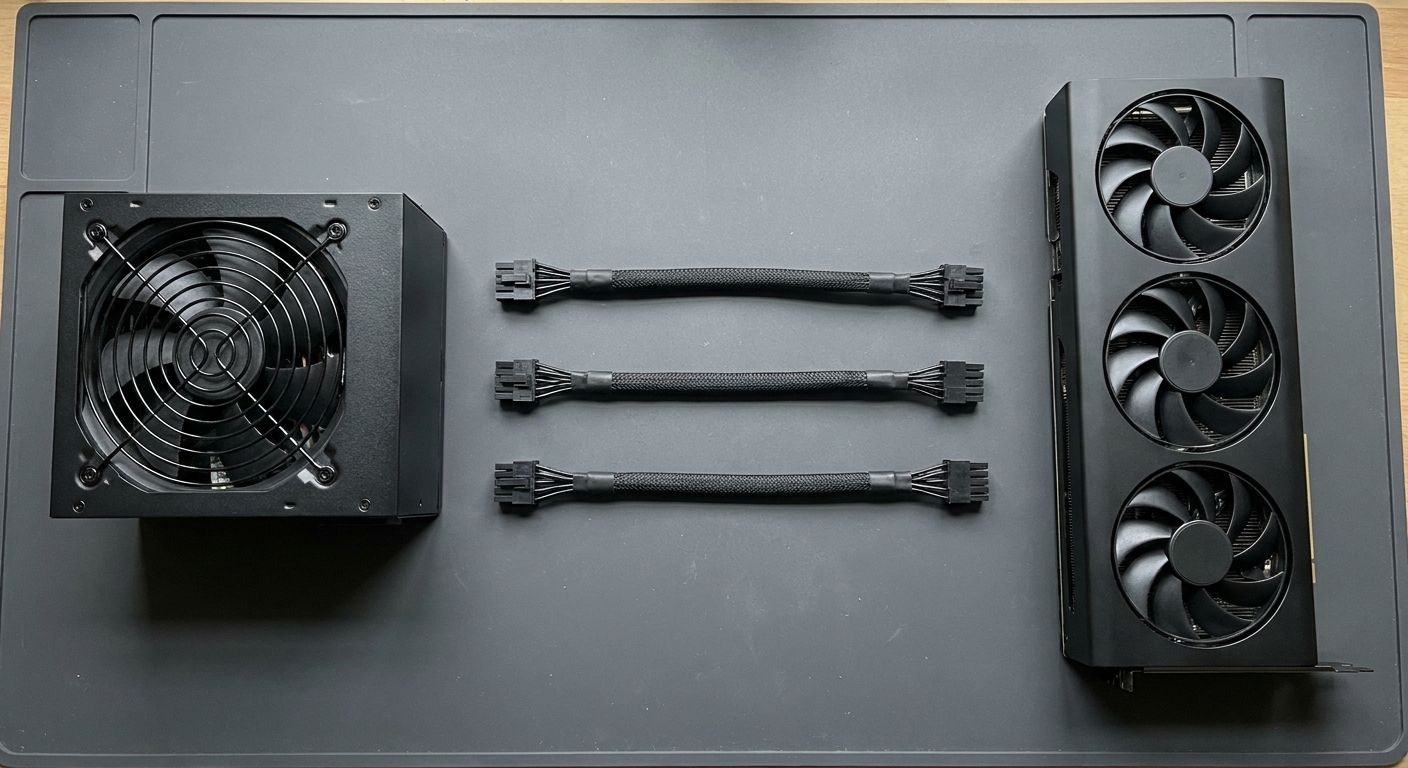
Start with the recommended PSU on the card's listing. Newegg's listing for the Sapphire Pulse RX 9070 XT recommends 750W, while the Sapphire NITRO+ RX 9070 XT listing recommends 850W. Then consider the CPU. The Reddit system used an i9-9900K, which can pull a lot of power under load. For a 9070 XT or RTX 5070 Ti with a high-end CPU, I'd look at 850W as a floor and 1000W if you want headroom or plan to upgrade.
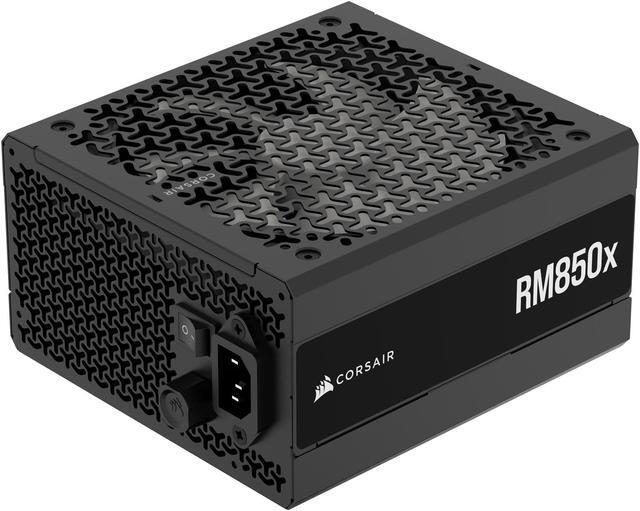
The CORSAIR RM850x is ATX 3.1 with a 12VHPWR connector, a 140mm fan and Cybenetics Gold efficiency. It's an easy recommendation at 850W.
Am I using the right cables?
For cards with two or three 8-pin connectors, use a separate cable from the PSU for each socket instead of one cable with a daisy-chained second plug. The Reddit poster had already done this, which is why the PSU itself became the bigger suspect.
For cards with a 16-pin connector, the newer 12V-2x6 design shortens the sense pins so the card won't draw full power unless the plug is fully seated. Push it in until it clicks and avoid sharp bends near the connector. The Super Flower Zillion FP 1000W and MSI MAG A850GL PCIE5 are both listed with a native 12V-2x6 cable, and the MSI MPG A1000GS PCIE5 II includes two of them.
Which 1000W units would I look at?
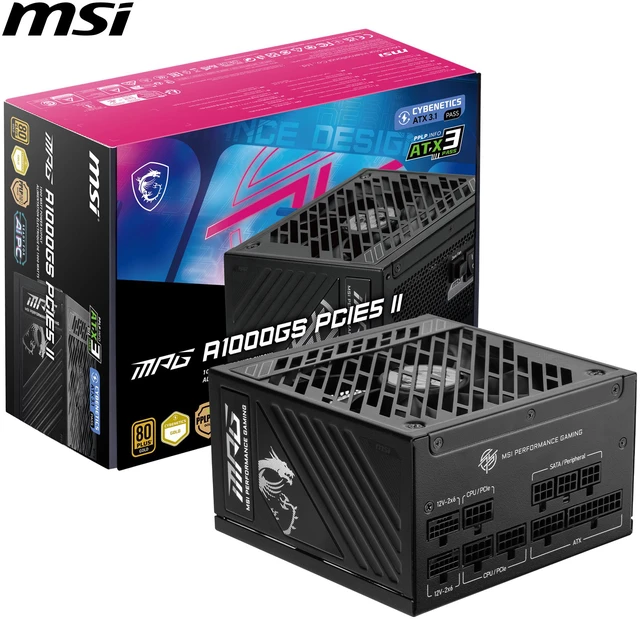
If you're running a high-end GPU or want room for the next one, the Seasonic FOCUS GX-1000 is a long-running favorite with a fluid dynamic bearing fan and a compact 150mm length. The be quiet! Pure Power 13 M 1000W is ATX 3.1 and 80 Plus Gold, and the MSI A1000GS PCIE5 II rounds out the group with Gold efficiency and full modular cables.

For 850W, beyond the Corsair, the Montech Century II 850W is rated 80 Plus Gold and Cybenetics Platinum, and the Phanteks AMP GH 850W is ATX 3.1 and PCIe 5.1 with individual modular cables.
How do I read a PSU spec sheet?
Three things on a listing tell me the most. Efficiency rating: 80 Plus Gold is the common baseline, and Cybenetics ratings add independent testing, including noise in some cases. 12V capacity: modern GPUs and CPUs draw almost everything from the 12V rail. The RM850x, for example, lists 70.8A on +12V, which works out to roughly 850W on that rail alone. Physical size: PSU length matters in compact cases. On these listings, the Super Flower Zillion FP 1000W is 140mm, the Seasonic FOCUS GX-1000 is 150mm and the RM850x is 160mm.
Fan size and fan behavior matter for noise. Many units, including the Phanteks AMP GH, can stop the fan entirely at low loads, which keeps the system silent at the desktop. Under a full gaming load, all of them will spin up, but a larger, slower fan is usually quieter.
Finally, check the cable count against your parts. A card with three 8-pin sockets needs three separate PCIe cables, and not every 850W unit includes that many.
Should I return the GPU or the PSU?
If a modest power limit or undervolt makes the system stable, and the GPU performs normally otherwise, the power side is the stronger suspect. If you have access to a known-good, higher-rated ATX 3.1 PSU, swapping it in is the cleanest test. If the shutdowns continue on a good PSU, then I'd look harder at the card. One more thing worth checking: the wall outlet and any power strip. A worn surge protector can cause odd problems too.
Frequently Asked Questions
Why does my PC turn off when gaming but not at idle? A sudden full shutdown under load often means the power supply's protection tripped, which can happen when a GPU's brief power spikes exceed what an older or smaller PSU tolerates.
Is an 850W PSU enough for an RX 9070 XT? For many systems, yes, especially with an ATX 3.1 unit. With a power-hungry CPU or a factory-overclocked card, 1000W gives more headroom.
What does ATX 3.1 mean on a power supply? It's an Intel power supply standard designed for modern GPUs, including tolerance for short power excursions and support for the 12V-2x6 GPU connector.
What's the difference between 12VHPWR and 12V-2x6? 12V-2x6 is the revised 16-pin connector with shorter sense pins, so a GPU won't draw full power unless the plug is fully inserted. It's backward compatible with 12VHPWR cards.
Should I use one PCIe cable or separate cables for my GPU? Use separate cables from the PSU for each 8-pin socket on the graphics card rather than one daisy-chained cable.
Read More
- Seasonic: GPU power spikes explained - How transient spikes work and why PSU design matters.
- Cybenetics - Independent efficiency and noise ratings for power supplies.
- AMD: Radeon RX 9070 XT - Official board power and specs.
- NVIDIA: GeForce RTX 5090 - Official specs, including total graphics power and recommended PSU.
- Newegg: ATX 3.1 Power Supplies - Browse ATX 3.1 power supplies on Newegg.