




 here!
I’m your shopping assistant for PC builds, upgrades, and everything tech.
Got questions? Ask away!
Start a conversation
here!
I’m your shopping assistant for PC builds, upgrades, and everything tech.
Got questions? Ask away!
Start a conversation



Any questions? Ask CelesteSM will help you find out quickly.
AMPLE STORAGE. SUPERIOR PERFORMANCE.

Type-C USB3.2

Max 2TB

Experience blazing data transfer performance with read speeds up to 2000 MB/s and write speeds up to 1800 MB/s.

Capacity options range from 512GB to 2TB, catering to various needs. Adequate space for high-resolution files or additional storage for extensive data.

Stable endurance without data loss and excellent heat dissipation. For the iPhone 15 Pro and iPhone 15 Pro Max, you can directly record Apple ProRes via USB-C connection to the US5.

Compatible with various systems, facilitating file transfer and storage.


Gaming

Personal Storage

Video Processing

Working Documents

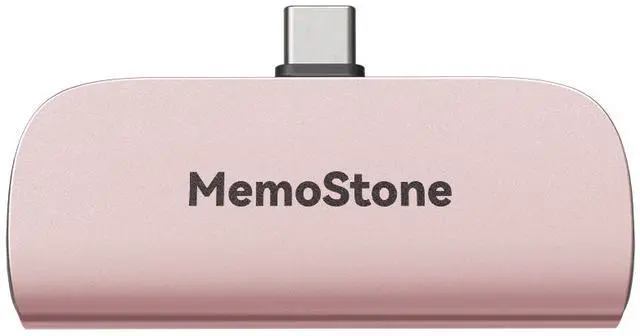
The KingSpec Memostone US5-1TB is a 1TB portable external SSD with USB 3.2 Gen 2x2 and read speeds up to 2,000MB/s, suited for creators, professionals, and everyday users who want fast file transfers in a compact Type-C drive for laptops, phones, and tablets.
| Attribute | Value |
|---|---|
| Best For | Portable external storage for laptops, phones, and desktop computers; suited to creators and users who move large video files, high-resolution photos, or large project files where high sequential throughput (up to 2000 MB/s read) is helpful |
| Capacity | 1TB capacity for storing large media libraries and project files |
| Interface And Form Factor | USB 3.2 Type-C interface for direct connection to USB-C hosts; portable external SSD form factor |
| Read Write Performance | Up to 2000 MB/s sequential read and up to 1800 MB/s sequential write, suitable for large-file transfers and media workflows |
| Reliability | 1,000,000 hours MTBF as the stated reliability metric |
| Environmental And Temperatures | Operating temperature 0°C to +70°C; storage temperature −20°C to +75°C for common consumer use and transport conditions |
| Physical Dimensions And Weight | 38.18 x 71.16 x 11 mm; 20 g — compact, pocketable size for mobile use |
| Model Identifiers | KingSpec Memostone US5-1TB (1TB) |
Q: Should I buy the KingSpec Memostone US5 1TB or a Samsung T7 Shield 1TB?
A: Choose the KingSpec Memostone US5 1TB if your laptop or desktop has a USB 3.2 Gen 2x2 20Gbps port and you want higher peak transfer speed in a much smaller, lighter drive. The US5 is rated up to 2000MB/s read and 1800MB/s write, while the T7 Shield is a 10Gbps drive rated around 1050/1000MB/s. Choose the T7 Shield if durability matters more than size or peak speed, because Samsung positions it as a rugged IP65 portable SSD with drop resistance. For Apple users, the speed gap is usually smaller because Apple systems commonly operate these USB SSDs at 10Gbps, so the T7 Shield becomes the more straightforward portability-and-durability choice.
Q: Is the KingSpec Memostone US5 1TB worth it over a typical 10Gbps portable SSD?
A: Yes, if your system supports USB 3.2 Gen 2x2 and your workload includes large file transfers, local media libraries, or external editing. A 20Gbps drive like the US5 can roughly double the ceiling of a standard 10Gbps portable SSD, which usually tops out near 1000MB/s in official specs and around the high-800s to mid-900s in many reviews. If your device is limited to 10Gbps, a mainstream 10Gbps portable SSD is often the more rational buy because the US5's extra interface headroom will not be fully used.
Q: KingSpec Memostone US5 1TB vs Samsung T9 1TB: which one makes more sense?
A: Choose the KingSpec Memostone US5 1TB if you want the compact built-in USB-C stick-style design and you mainly care about getting 20Gbps-class speed in the smallest form factor. Choose the Samsung T9 if you want a more established flagship option with broader review coverage, bundled software, and more consistent validation from professional testing. Both target the same 20Gbps class, so the decision is less about headline speed and more about form factor, software ecosystem, and buyer preference for a highly reviewed mainstream model versus a more compact alternative.
Q: Should I get the 1TB KingSpec Memostone US5 or move up to a higher-end 20Gbps portable SSD like the Crucial X10 Pro?
A: Get the KingSpec Memostone US5 1TB if your priority is a very small everyday carry drive for phone, tablet, and laptop use, especially when pocketability matters more than enclosure style. Move up to a model like the Crucial X10 Pro if you want a more established performance-focused option with stronger review coverage and a more traditional cable-attached portable SSD design. In the 20Gbps class, professional reviews show that higher-tier models like the X10 Pro and Samsung T9 are chosen more often for sustained heavy transfers and creator workflows, while the US5 fits better as a compact convenience-first alternative.
Q: Is the KingSpec Memostone US5 1TB a good choice for iPhone, MacBook, or iPad use?
A: It is a practical choice if you want a very small USB-C external SSD for mobile use, and KingSpec specifically positions the US5 for Apple-device compatibility and ProRes-style creator workflows. The main trade-off is that Apple-device USB support can limit effective throughput versus a full 20Gbps Windows PC port, so the US5's headline speed advantage may not fully show up on many Apple setups. If your priority is maximum compactness for phone and tablet use, the US5 makes sense. If your priority is rugged travel use or you do not expect to exceed 10Gbps anyway, a mainstream 10Gbps drive is often the simpler comparison point.
Q: Is this a good portable SSD for travel work and moving large files between a laptop and phone?
A: Yes, it is a strong fit for travel work if your main need is fast file transfer in a very small, light drive. The 20g weight, aluminum shell, USB-C connection, and claimed up to 2000MB/s read speed make it practical for carrying in a bag or pocket and moving video, photo, and office files between devices. The main trade-off is that it appears optimized for speed and portability rather than rugged protection: unlike some comparable portable SSDs discussed on retail Q&A pages, the provided specs do not mention water resistance, drop resistance, or built-in encryption.
Q: Will it work with a phone or iPhone for direct external storage?
A: Usually yes for modern USB-C devices, but compatibility depends on the phone port and formatting. For a USB-C phone, this type of bus-powered SSD is generally plug-and-play for storage use. On Apple devices, the product notes say speed is limited to 10Gb/s, so you may not get its full 20Gb/s-class headline performance. For iPhones, retail Q&A on comparable SSDs repeatedly shows two practical checks: the phone should have USB-C for direct use, and the drive should be in a supported file system such as exFAT or APFS. Older Lightning iPhones are a weaker fit for direct recording or direct-write workflows.
Q: Is it suitable for iPhone ProRes or creator workflows?
A: Yes, it looks suitable for creator workflows that need external SSD recording or fast media offload, especially because the product explicitly claims ProRes-supported storage and up to 1800MB/s write speed. For direct iPhone ProRes capture, the key decision is not just the SSD speed but also using a USB-C iPhone, a compatible cable, and a supported format such as exFAT. A reasonable trade-off is that the KingSpec focuses on compact size and speed, while some competing creator-focused drives add features like magnetic mounting or ruggedization that are not listed here.
Q: What are the main trade-offs versus a Samsung T7 or SanDisk Extreme portable SSD?
A: The KingSpec Memostone's main advantage is performance density: its listed up to 2000MB/s read and 1800MB/s write speeds are higher than many mainstream 10Gbps-class portable SSDs such as the Samsung T7 or the standard SanDisk Extreme models commonly discussed in retail Q&A. The trade-off is feature certainty. Comparable Samsung and SanDisk models more clearly surface extras buyers repeatedly ask about, such as included cables, encryption, warranty length, water resistance, and drop protection. If your priority is the fastest compact transfer speed for the price, KingSpec is appealing. If your priority is a more proven feature set for rough travel use, Samsung or SanDisk may be the safer choice.
Q: Is the KingSpec MemoStone US5 1TB worth buying if I want a very small, fast portable SSD?
A: It is a reasonable buy if your priority is compact size, USB-C convenience, and advertised high burst speeds on compatible USB 3.2 Gen 2x2 ports. The main trade-off is confidence: Reddit discussions around KingSpec repeatedly raise reliability and support concerns compared with better-known SSD brands, so it fits better as a portable transfer drive than as your only backup or mission-critical storage.
Q: Who is the KingSpec MemoStone US5 1TB best suited for?
A: It is best suited for people who need a lightweight USB-C SSD for moving files between a laptop, phone, and tablet, especially when portability matters more than long-term brand trust. Based on the product data, it also makes sense for creators who want external ProRes-compatible storage, but buyers who need proven enterprise-grade reliability should look at more established SSD lines.
Q: Is the KingSpec MemoStone US5 1TB a good choice for iPhone, Mac, and other Apple devices?
A: It can be a good fit for Apple users who want USB-C external storage, but it is not the best choice if your main goal is maximum speed on Apple hardware. The product information says Apple devices are limited to 10Gb/s, so you should expect a lower ceiling than the drive's headline 20Gb/s-class interface. It is better matched to users who value compatibility and pocketable size more than getting the full advertised speed.
Q: What are the main trade-offs of choosing this KingSpec portable SSD over a more established brand?
A: The likely advantages are lower cost, very small size, and strong claimed read/write performance for everyday external storage use. The trade-offs, reflected in Reddit and YouTube discussion, are weaker brand confidence, mixed expectations around real-world speed, and more caution about durability and support. That makes it easier to recommend for secondary storage, travel, and file transfer than for irreplaceable data without a backup plan.



