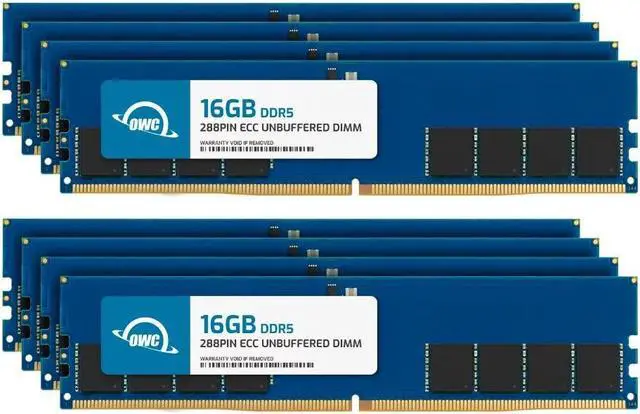
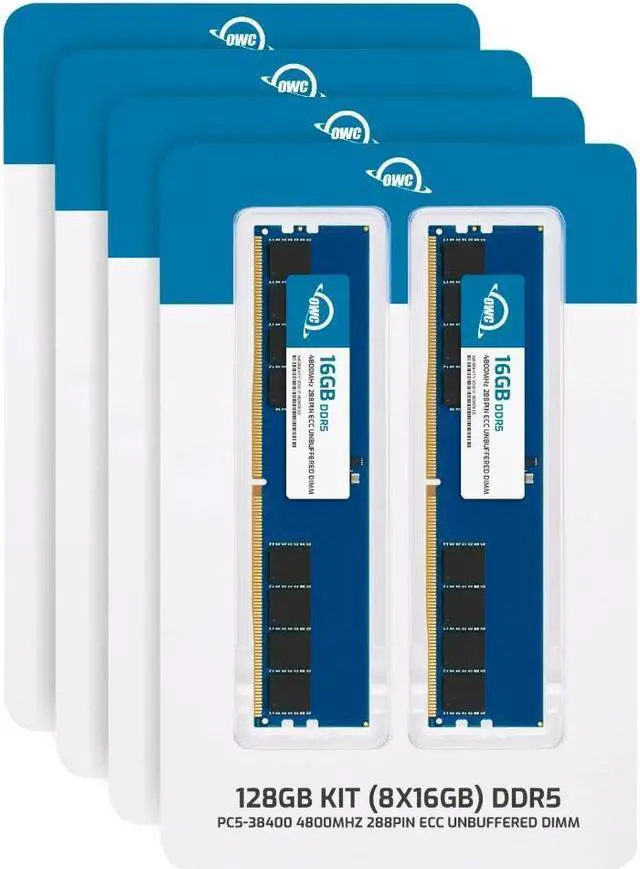
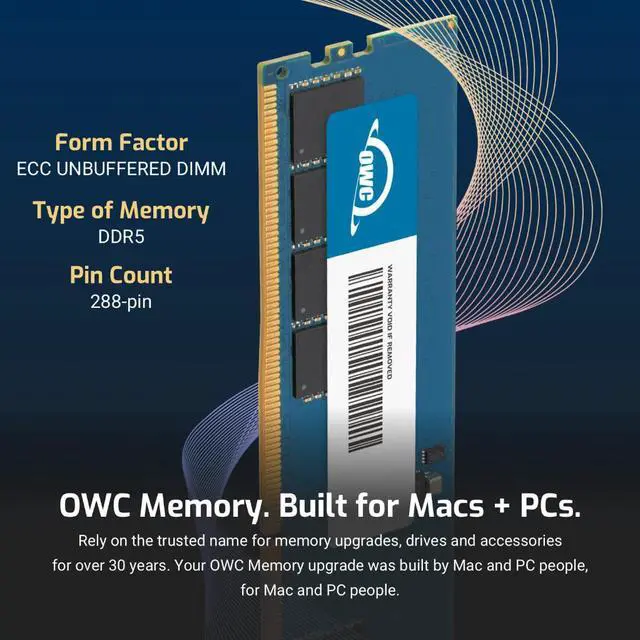
The OWC 128GB DDR5-4800 ECC memory kit includes eight 16GB unbuffered UDIMMs, making it suitable for compatible workstations, servers, and NAS systems that need error-correcting memory.
Recommended For
- Workstation users running long, memory-intensive jobs—such as engineering, scientific, or data-processing workloads—on a platform that supports ECC UDIMMs and all eight modules. ECC can help detect and correct memory errors; confirm the CPU, motherboard, and system memory limit before buying.
- Small-server builders who need 128GB of ECC memory and have a board specifically designed for DDR5 ECC UDIMMs. This is a fit for supported UDIMM systems, not a general-purpose upgrade for every server.
- Home-lab and NAS users running services that benefit from ECC—such as virtual machines or data-intensive storage—when their system supports 128GB of DDR5 ECC UDIMM and has eight compatible memory slots.
Real-World Use Scenarios
- For a compatible TrueNAS host running storage, apps, and virtual machines together, adding memory can give those workloads more room to share RAM with ZFS read caching; the actual benefit depends on the system’s workload and configuration.
- When consolidating several virtual machines on one workstation or server, extra RAM can be allocated among the guests instead of forcing each one to compete for a smaller memory pool; memory assigned to a VM is unavailable to the host and other VMs while it runs.
- For a NAS serving multiple clients or backing VM storage over iSCSI, additional memory can support the combined service and caching workload, helping avoid making RAM the immediate constraint as usage grows.
- For a long-running file or storage server, ECC memory on a platform that supports ECC can detect and correct certain in-memory errors, adding a data-integrity safeguard; it does not replace backups or protect against every kind of data loss.
- Before using this kit in a workstation, server, or NAS, verify the system supports ECC unbuffered UDIMMs, the 128GB capacity, and eight 16GB modules; ECC support or DDR5 support alone does not guarantee compatibility.




 here!