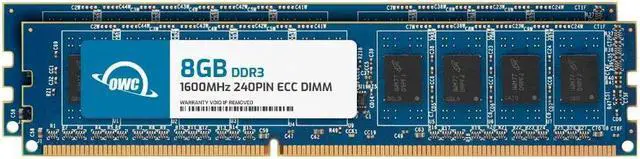
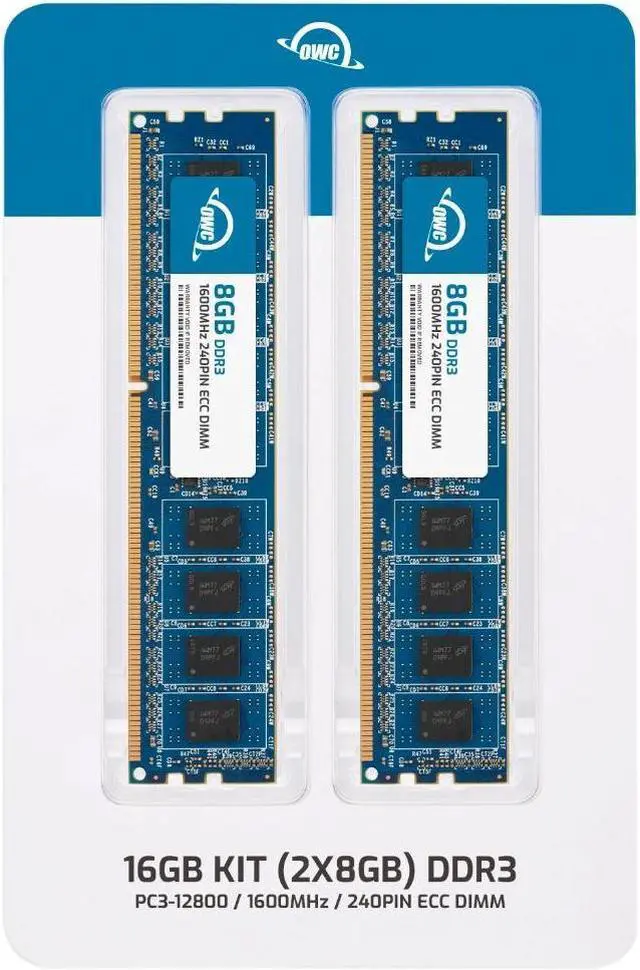
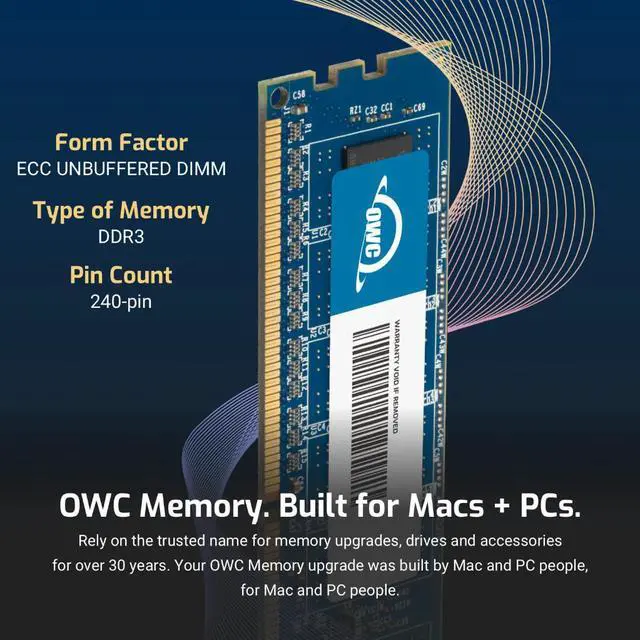
The OWC 16GB DDR3-1600 kit includes two 8GB ECC unbuffered UDIMMs for compatible desktops, workstations, servers, and NAS systems that support 240-pin, 1.5V DDR3 memory.
Recommended For
- Owners of a compatible older workstation or server that specifies DDR3-1600 ECC unbuffered DIMMs and can use a 2×8GB, 16GB kit. Confirm support for the module capacity, rank, and configuration in the system documentation before buying.
- Home-server or NAS owners upgrading a system whose motherboard and processor specifically support DDR3 ECC UDIMMs. The kit suits users seeking error-correcting memory, but ECC operation depends on platform support.
- Workstation users replacing or expanding memory in an ECC-capable DDR3 system, especially where the system’s documentation calls for unbuffered ECC DIMMs rather than registered memory.
- DIY upgraders with a compatible DDR3 desktop or workstation who want a matched 2×8GB kit for a 16GB dual-channel memory configuration.
Real-World Use Scenarios
- A home NAS running TrueNAS serves shared files and backups; adding memory can give ZFS more room for read caching and leave more RAM for file-sharing services, though it does not guarantee faster network transfers.
- A small legacy server runs file sharing alongside a few apps or containers; the added memory can give those workloads more room to run together, with the practical benefit depending on the server’s existing RAM and each app’s needs.
- A workstation slows down when several everyday applications and files are open; adding memory may reduce slowdowns caused by running short on RAM, so switching between those tasks feels smoother.
- An older ECC-capable NAS or workstation reports memory errors or has a failing module; replacing or expanding its memory can help restore stable operation, provided the system supports this ECC unbuffered module type.
- A home server hosts a small virtual machine alongside storage services; the extra RAM can be allocated between the guest and host, but the total available memory must be sufficient for both workloads.




 here!