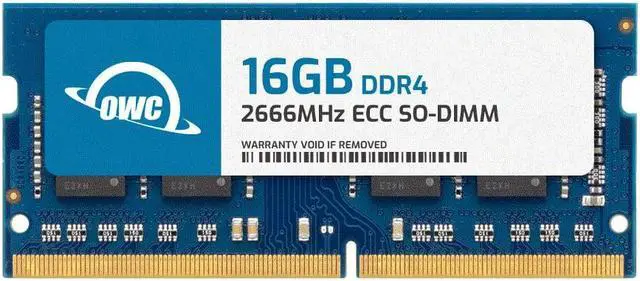
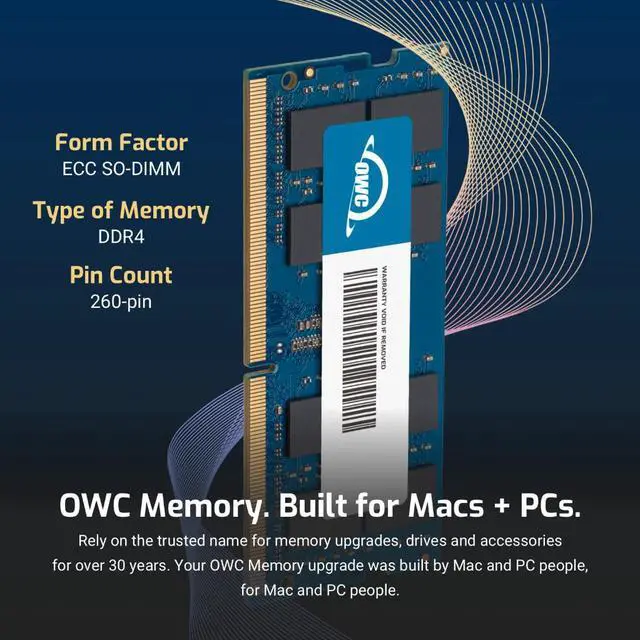
The OWC 16GB DDR4-2666 ECC unbuffered SODIMM is a single-module memory upgrade for Synology DiskStation DS1819+ and DS1821+ NAS systems, suited to owners of those models who want to expand compatible system memory.
Recommended For
- DS1821+ owners who have run short of memory while hosting multiple DSM services, containers, or virtual machines and want to add a 16GB ECC module.
- DS1819+ owners seeking an ECC memory expansion for a NAS that supports workloads such as business file services, backups, and virtual-machine data protection.
- DS1821+ users who want a single 16GB module as part of a planned memory upgrade; Synology lists 32GB as the model’s maximum capacity.
- Owners of either listed NAS who specifically need ECC, unbuffered SODIMM memory and have checked the module fit against their existing memory configuration.
Real-World Use Scenarios
- Running several self-hosted containers—such as home-automation, media-management, or network services—alongside file sharing can use more memory than basic NAS storage. The added capacity may give those apps more room to run together when memory is tight; it does not guarantee faster performance.
- Using Virtual Machine Manager for a small test or utility VM can require setting aside memory for the guest system as well as DSM. More installed RAM gives you more room to allocate, but the practical number of VMs depends on each VM’s requirements and the NAS’s other workloads.
- For a small office using the NAS for shared files and several DSM services at once, extra memory can provide more headroom as applications and background tasks compete for RAM. It is most relevant when monitoring shows memory pressure; it does not by itself increase network or drive transfer speeds.
- Hosting multiple virtual machines or a growing container stack on the NAS can make a RAM upgrade more useful than it is for simple file storage. Community reports describe upgrading memory for these workloads, though results depend on the apps and their actual memory use.
- If the NAS is used mainly for file storage and routine backups, the upgrade may make little noticeable difference while memory use remains low. It is better viewed as added capacity for memory-hungry workloads than as a guaranteed speed boost for ordinary file transfers.




 here!