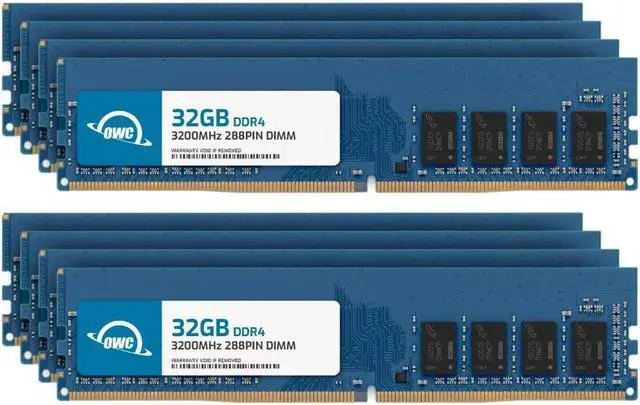
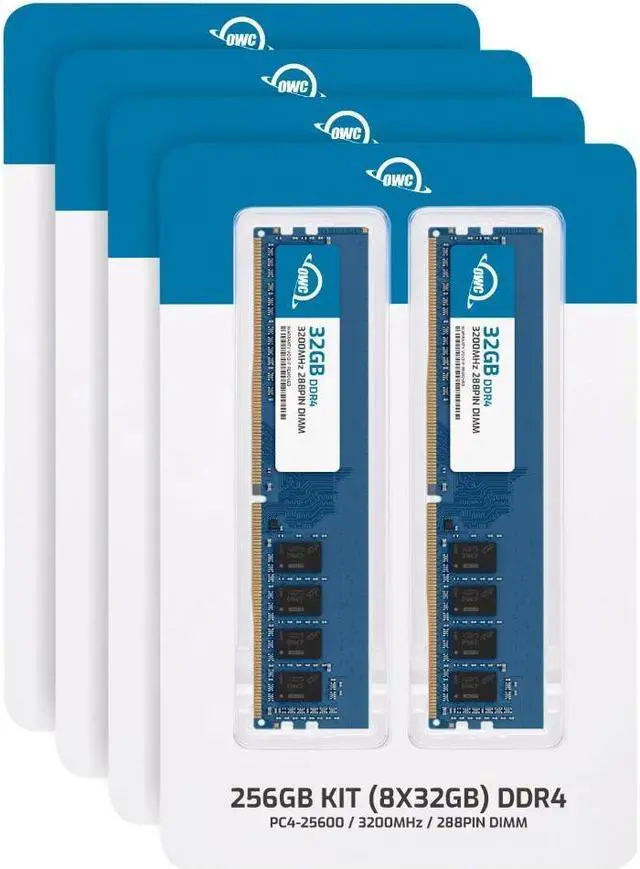
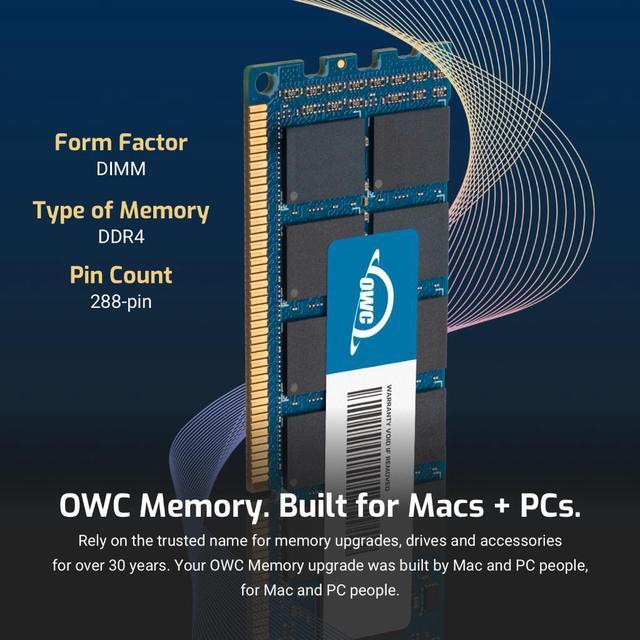
The OWC 256GB DDR4-3200 kit includes eight 32GB non-ECC, unbuffered UDIMMs for compatible desktops that need high memory capacity for demanding multitasking or memory-intensive workloads.
Recommended For
- Developers and IT professionals running several local virtual machines, containers, or test environments at once, when those workloads routinely need more memory than a smaller kit provides.
- Video editors and motion-graphics artists working with memory-heavy projects—such as complex timelines, high-resolution footage, or multiple applications together—whose measured workload can use more than 128GB.
- Workstation users handling large datasets, engineering or simulation projects, or other memory-intensive jobs that benefit from keeping more working data in system RAM instead of relying on storage paging.
- Owners upgrading a compatible desktop workstation that has eight DDR4 UDIMM slots and supports 256GB, who want a matched 8-module kit rather than assembling capacity from separate memory kits.
Real-World Use Scenarios
- On a compatible eight-slot DDR4 desktop or workstation, editing complex After Effects compositions can use the extra memory to keep more rendered frames available for previews, reducing interruptions when the project is limited by RAM.
- When a video editor runs demanding projects alongside After Effects, Photoshop, or other creative apps, the added memory gives those applications more room to work at once and can reduce slowdowns caused by the system running short of RAM.
- For a local development or test lab, running several virtual machines at the same time can benefit from having more memory to allocate across guests, instead of having to keep each VM small or run fewer concurrently.
- For 3D rendering, motion graphics, or other projects with large working sets, more system memory can help keep scene data, caches, and intermediate calculations in RAM rather than forcing the system to rely as heavily on storage.
- When data analysis or simulation workloads need a large dataset in memory, the extra capacity can help keep more of that working data available to the application; the benefit depends on whether the workload actually exceeds the system’s current RAM.




 here!