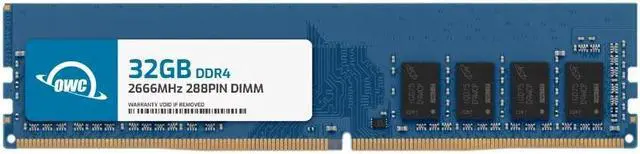
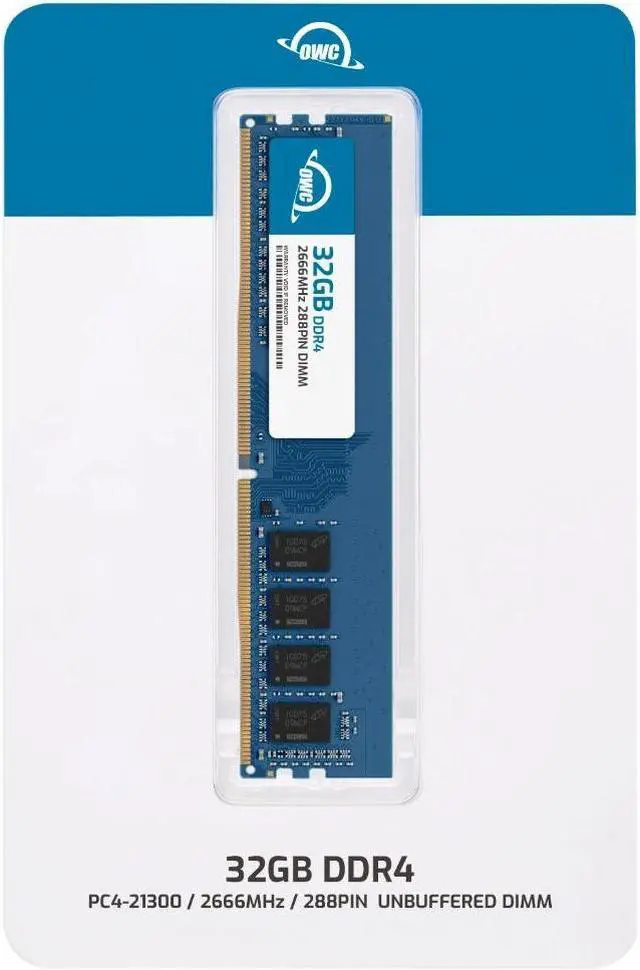
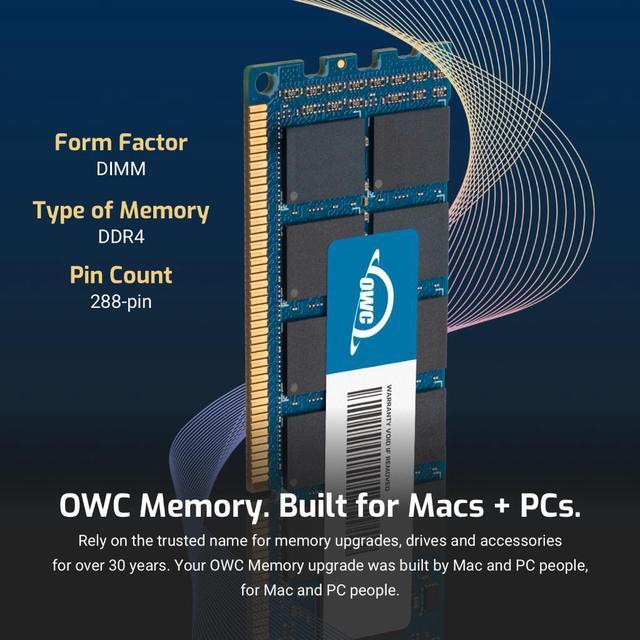
The OWC 32GB DDR4-2666 UDIMM is a non-ECC desktop memory upgrade for systems that support 32GB unbuffered DDR4-2666 modules, including as a replacement matching QNAP part RAM-32GDR4S0-UD-2666.
Recommended For
- Owners of the OWC-listed QNAP TS-h977XU-RP, TS-h1277XU-RP, TS-h1677XU-RP, or TS-h2477XU-RP who need a 32GB DDR4 UDIMM replacement or memory expansion. Confirm the configuration against the exact NAS model and installed modules before buying.
- Small-business or IT teams running supported QNAP rackmount NAS systems as virtualization hosts, where additional memory can support memory-dependent VM workloads.
- Teams using a supported QNAP NAS for containerized applications alongside file storage or backup services, when their workload needs more memory than the current configuration provides.
- Organizations running QuTS hero on a compatible model that want more memory available for storage-system workloads and concurrent services; the benefit depends on the NAS configuration and workload.
Real-World Use Scenarios
- On an OWC-listed compatible QNAP NAS, adding memory can give Windows or Linux virtual machines more room to run alongside NAS services; the number of VMs it can handle still depends on the NAS’s total memory and CPU.
- When hosting containers alongside file sharing, backups, or other NAS apps, extra memory can provide more headroom for concurrent services; it does not make the processor or storage faster.
- For a QuTS hero system running heavier workloads such as virtualization or multi-user access, additional memory can help provide capacity for those workloads and ZFS caching; the benefit depends on the workload and total installed RAM.
- In a small-business or workgroup NAS used for file sharing and backup while other applications run, more memory can reduce memory pressure and leave more room for concurrent tasks; it is not a substitute for faster disks or networking.
- For software testing or development, memory headroom can help keep a test VM available while the NAS continues its regular services; actual VM performance and capacity depend on the model and workload.




 here!