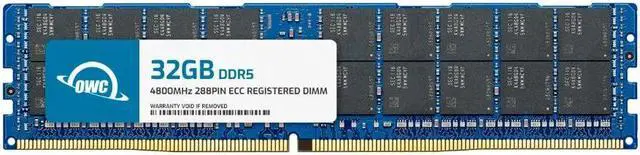
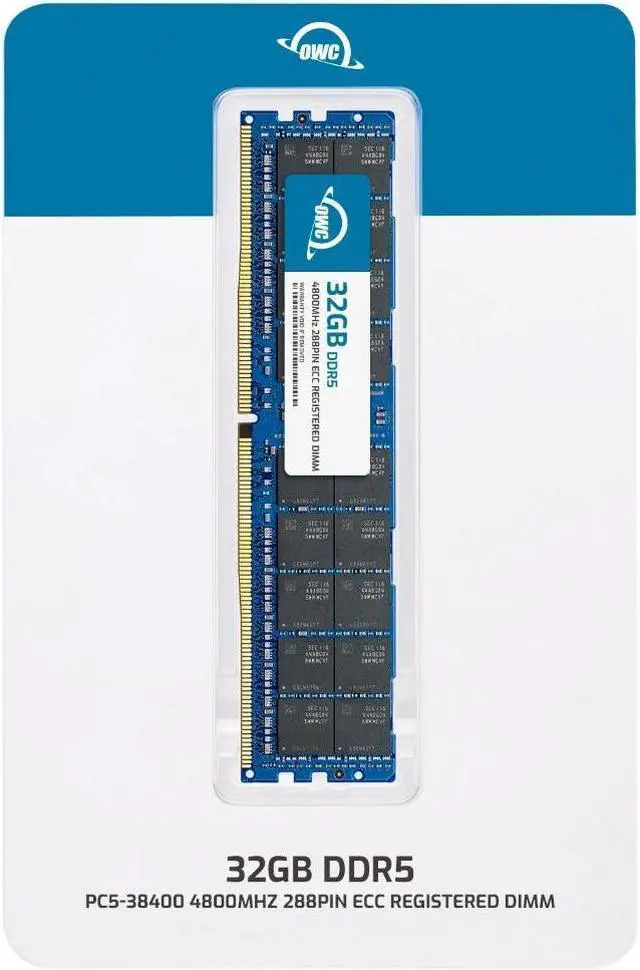
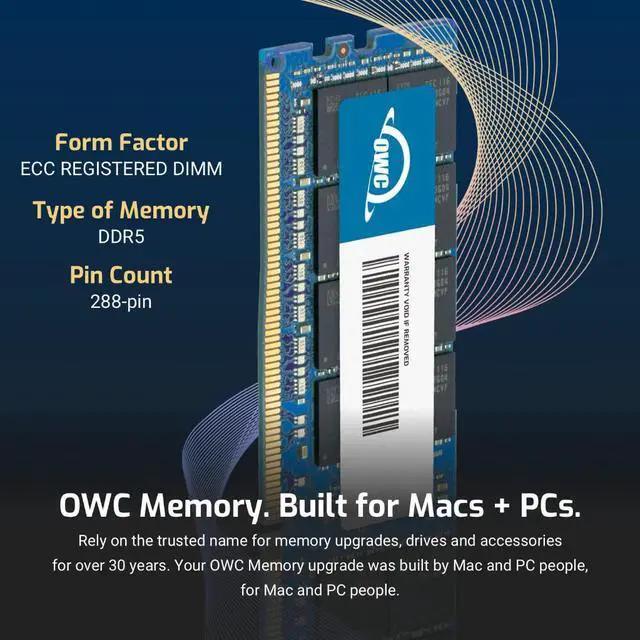
The OWC 4R8D52R832GB is a single 32GB DDR5-4800 ECC Registered RDIMM for compatible Dell PowerEdge C6600, C6620, MX760C, R660, and R6615 servers. It suits server owners upgrading or replacing registered memory in those systems.
Recommended For
- IT administrators adding memory to a compatible PowerEdge R660 virtualization host, where additional RAM can support more virtual machines; verify the server’s DIMM population rules before installation.
- Administrators maintaining a listed PowerEdge server that needs a compatible 32GB DDR5-4800 registered ECC DIMM as a replacement or incremental memory upgrade.
- Teams running dense database or analytics workloads on a compatible PowerEdge R660 and expanding server memory within their validated configuration.
- Data-center technicians servicing compatible PowerEdge C6600/C6620 or MX760C systems who need a single 32GB registered ECC module for a supported memory configuration.
Real-World Use Scenarios
- When a supported PowerEdge server is running out of memory for its virtual machines, adding this module can provide more RAM to assign across guest systems; the benefit depends on the server’s existing memory layout and whether memory is the limiting resource.
- For a database server with a growing working set, adding memory can create more room for database allocations or caching, which may help when RAM capacity—not CPU or storage—is the constraint.
- When consolidating application, database, and infrastructure services on one supported PowerEdge host, added memory can give those workloads more allocation headroom and may reduce memory pressure if the host is paging or has little free RAM.
- For a compatible PowerEdge system that needs a memory-capacity increase or replacement DIMM, this module provides a 32GB ECC registered memory addition; the server’s supported DIMM population rules determine whether it can be installed alongside existing memory.
- In a virtualized database environment, adding memory to a compatible PowerEdge host can provide more room for both database VMs and other guest systems; actual VM count and database performance still depend on the full server configuration and workload.




 here!