




 here!
I’m your shopping assistant for PC builds, upgrades, and everything tech.
Got questions? Ask away!
Start a conversation
here!
I’m your shopping assistant for PC builds, upgrades, and everything tech.
Got questions? Ask away!
Start a conversation





Any questions? Ask CelesteSM will help you find out quickly.
| Technology | DDR5 |
|---|---|
| Speed | PC5-44800 5600MHz CL46 |
| Form Factor | 262PIN SO-DIMM |
| ECC Type | NON ECC UNBUFFERED |
| Voltage | 1.1v |
| Compatibility | Laptops, Notebooks, , NAS System, All In One |




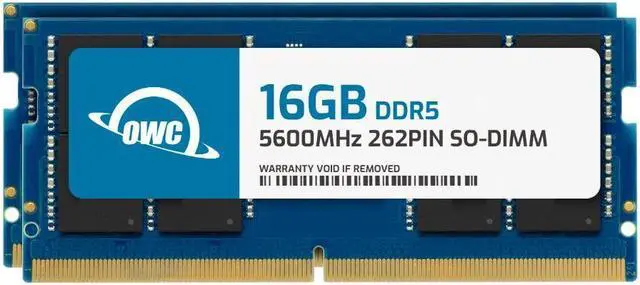
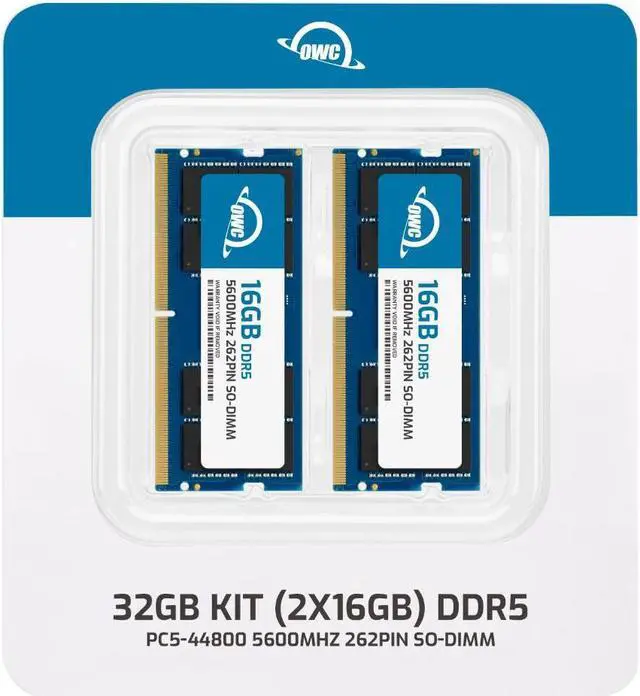
The OWC 32GB DDR5-5600 kit is a two-module, 2×16GB non-ECC SODIMM memory upgrade listed as compatible with the HP Workstation Z2 Mini G9, for owners seeking to expand or replace system memory.
| Attribute | Value |
|---|---|
| Best For | A 32GB DDR5 memory upgrade for the HP Workstation Z2 Mini G9 |
| Capacity And Kit Contents | 32GB kit with two 16GB modules |
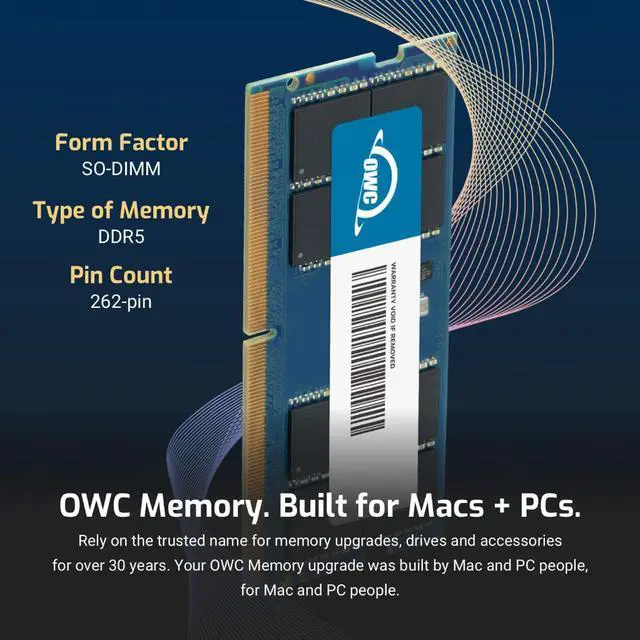
| Memory Type And Configuration | 262-pin DDR5 SODIMM, non-ECC, unbuffered, 1Rx8 |
| Speed And Timing | DDR5-5600 (PC5-44800) with CL46 timing |
| Power And Physical Design | 1.1V; black memory chips; no heat spreader |
| Model Identifiers | OWC; part number 5S6D51R8032P; model number OWC5S6D51R8032P-C140-SF |
Q: OWC 32GB (2x16GB) vs OWC 64GB (2x32GB): which kit should I choose?
A: Choose this 32GB kit when 32GB is your target capacity; choose OWC’s 64GB (2x32GB) kit when you want twice the installed memory. Both are DDR5-5600, CL46, non-ECC 262-pin SODIMM kits.
Q: OWC 32GB (2x16GB) vs OWC 16GB (2x8GB): what’s the difference?
A: This kit provides 32GB total—twice the capacity of OWC’s 16GB (2x8GB) kit. Both are DDR5-5600, CL46, non-ECC SODIMMs, so choose this kit when you want a 32GB memory upgrade.
Q: OWC 32GB (2x16GB) kit vs one OWC 32GB SODIMM—which is the difference?
A: Both configurations total 32GB at DDR5-5600, CL46, non-ECC. This kit contains two 16GB modules; the single-module option contains one 32GB module. Choose this kit when you want the two-module configuration.
Q: Is this memory compatible with the HP Workstation Z2 Mini G9?
A: Yes. This 32GB kit is listed as compatible with the HP Workstation Z2 Mini G9. It contains DDR5 262-pin SODIMMs; check your system’s configuration and memory limits before installation.
Q: Will it run at 5600MHz in my system?
A: The kit is rated for DDR5-5600, but its actual operating speed depends on the system’s supported memory speed and configuration. It may run below 5600MHz if the system supports a lower rate.
Q: Does the kit include one 32GB module or two 16GB modules?
A: It includes two 16GB DDR5 SODIMM modules, for 32GB total.
Q: Who is a 32GB memory upgrade suitable for?
A: It may suit users whose work involves several applications or memory-demanding software running at once, if their system supports the kit. More RAM helps when available memory is a limitation; it does not by itself guarantee faster processing.


