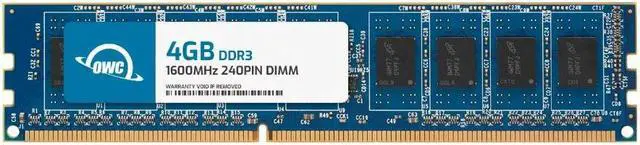
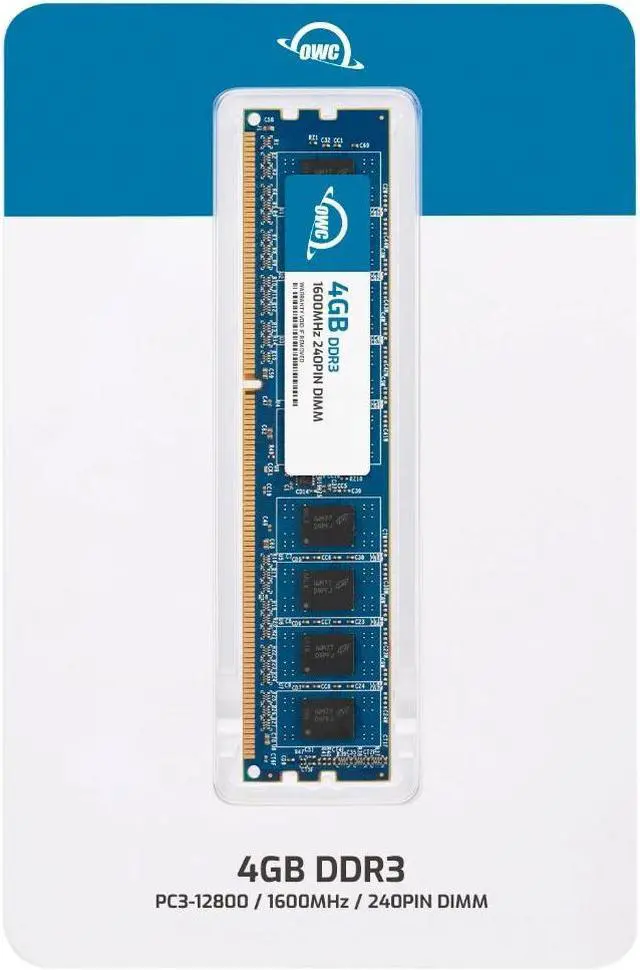
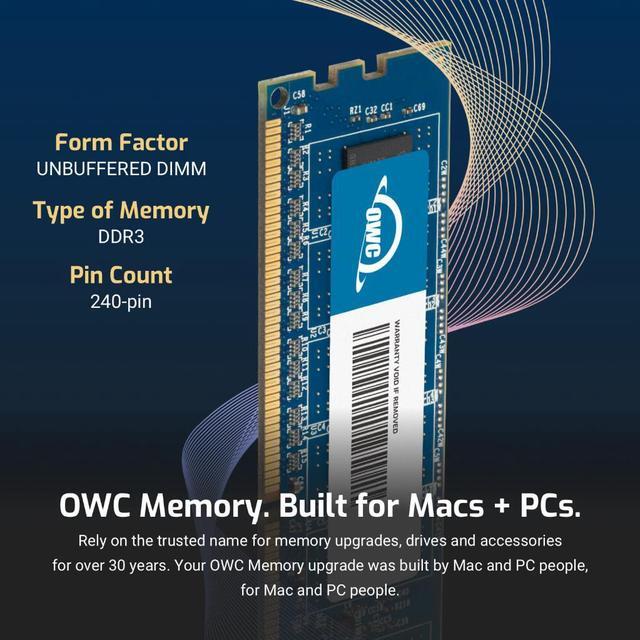
The OWC 1U6D32R804GB is a 4GB DDR3-1600 desktop memory module with the same specifications as QNAP part RAM-4GDR3-LD-1600, suited to users replacing that part or upgrading a compatible desktop with a 240-pin, 1.5V, non-ECC unbuffered DIMM.
Recommended For
- Owners of QNAP TS-879 Pro, TS-1079 Pro, TS-879U-RP, TS-1279U-RP, TS-1679U-RP, TS-870U-RP, or TS-1270U-RP who need a non-ECC 4GB long-DIMM replacement matching QNAP part RAM-4GDR3-LD-1600.
- IT staff and refurbishers keeping a supported older QNAP tower or rack NAS in service who want a 4GB replacement with the original part’s DDR3-1600 long-DIMM specification.
- Small-office NAS operators using one of the listed compatible non-ECC models for file sharing or backups who need to restore or add this specific 4GB memory module.
- QNAP owners who prioritize matching the RAM-4GDR3-LD-1600 specification over choosing a larger-capacity memory upgrade, after confirming their NAS model supports this module.
Real-World Use Scenarios
- If a compatible QNAP NAS has a faulty or missing memory module, use this 4GB replacement to restore the supported memory configuration; confirm the NAS model and memory-slot requirements before installation.
- For a supported older QNAP rack NAS, installing this module can bring the system to a 4GB memory configuration where the model supports it, helping maintain its intended setup rather than changing storage capacity or network speed.
- When a compatible NAS is running several QNAP applications alongside file services and memory is a bottleneck, adding or replacing memory may reduce memory pressure and make routine system use feel more responsive; results depend on the NAS and workload.
- For NAS tasks such as media indexing or thumbnail creation while other services are active, additional available memory may help the system handle concurrent work more smoothly, but it does not guarantee faster file transfers or media playback.
- For a NAS used mainly for basic file storage and backups, replacing a working module with another 4GB module is more likely to maintain normal operation than to produce a noticeable speed increase, especially if memory use is already low.




 here!