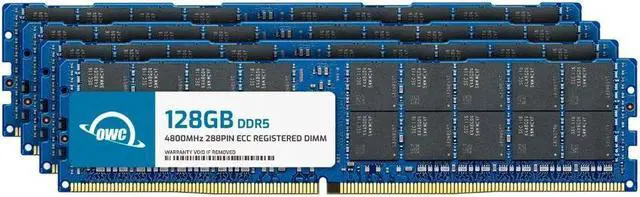
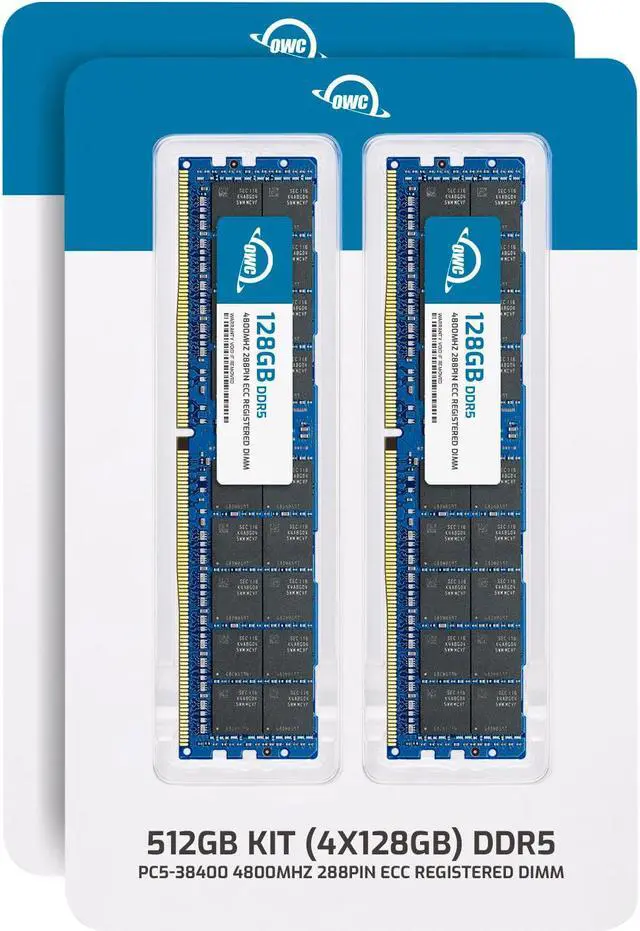
The OWC 512GB DDR5-4800 ECC Registered RDIMM kit is a four-module server memory upgrade for Cisco UCS C220 M7 SFF, C240 M7 SFF, X210c M7, and X410c M7 systems that use compatible registered memory.
Recommended For
- Cisco UCS C220 M7, C240 M7, X210c M7, or X410c M7 administrators adding 512GB of DDR5-4800 RDIMM capacity with four 128GB modules; verify the server’s CPU generation and DIMM population rules before installation.
- Virtualization and VDI teams expanding memory on a supported UCS M7 host to accommodate more memory-intensive virtual machines or desktops.
- Database and analytics operators running supported UCS M7 servers who need additional memory for larger in-memory working sets or data-intensive workloads.
- IT teams consolidating server workloads on supported Cisco UCS M7 systems, where added memory capacity can support denser virtualization or application hosting.
Real-World Use Scenarios
- When a supported UCS M7 host is running short on memory while consolidating virtual servers or desktops, adding this 512GB kit can provide room for more or larger VMs—provided the host’s CPU, storage, and memory configuration also support the workload.
- For a UCS X210c M7 ESXi host running several SQL Server VMs, this memory upgrade can help accommodate more VM memory or larger database working sets when RAM is the constraint; it does not by itself guarantee higher query throughput.
- When an X410c M7 is used for an in-memory database or SAP HANA workload, additional RAM can let the deployment assign more memory to the database or keep a larger working set in memory, subject to the application and server configuration.
- For big-data analytics on a supported C240 M7 or X210c M7, the added capacity can help run jobs with larger in-memory datasets or several concurrent workloads when existing memory limits are causing constraints.
- For enterprise application and collaboration services on a C220 M7 or C240 M7, adding RAM can provide more headroom for concurrent users and services; users are most likely to notice a benefit when the server was previously memory-constrained.




 here!