


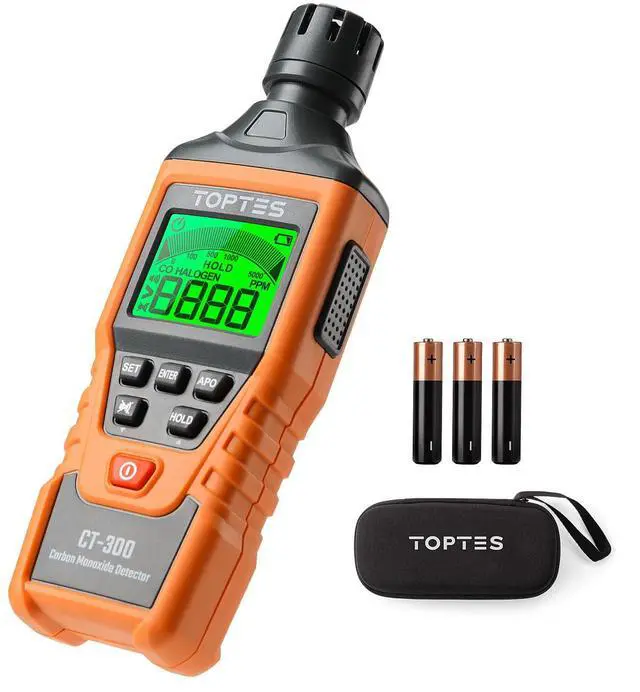
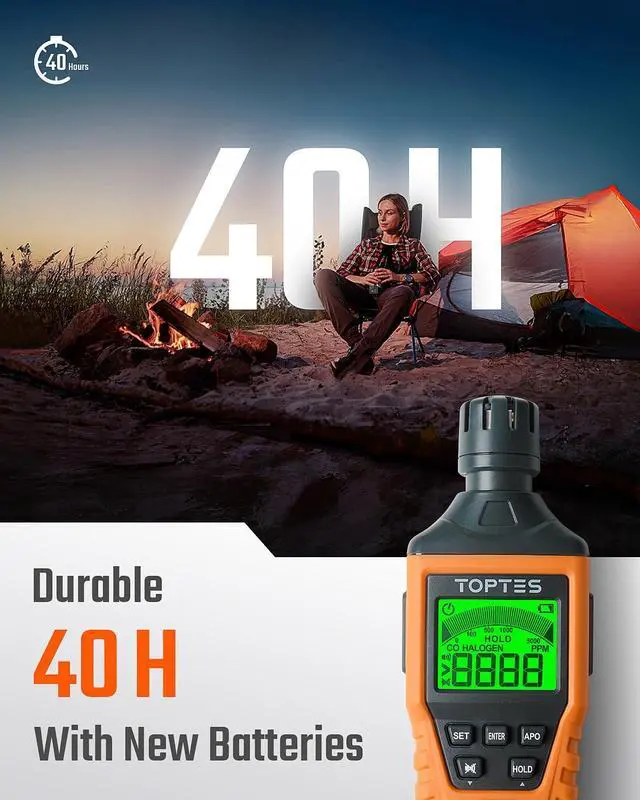
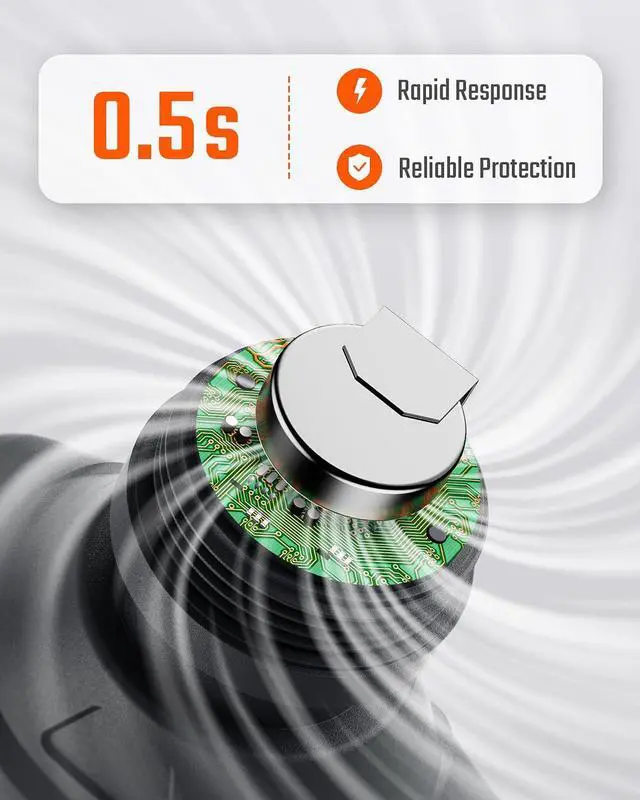
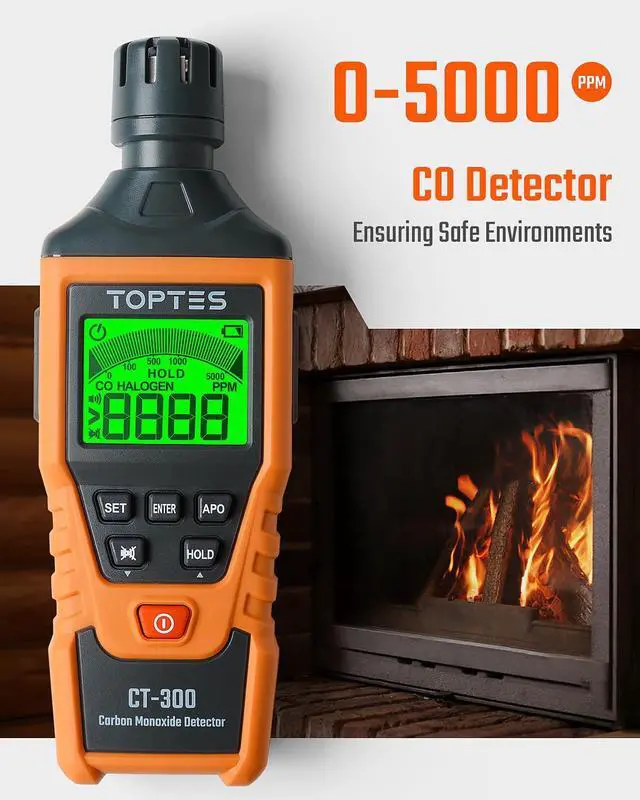



How do I use the device correctly for carbon monoxide detection?
Step1: Turn on the CT-300 in a fresh air environment (e.g., a well-ventilated outdoor space) and wait for it to warm up.
Step2: Approach the CO source for detection. Detecting from a distance may cause CO to disperse, leading to unstable readings.
Why do I smell a carbon monoxide leak, but the CT-300 doesn’t detect anything?
The smell you notice is unlikely to originate from carbon monoxide (CO), as CO is colorless and odorless. The odor may be caused by another gas, such as a combustible gas. We recommend using a combustible gas detector to identify the source.
Why can't carbon monoxide be detected in a closed room?
When there is no significant source of combustion indoors, even in a closed room, carbon monoxide will not be generated. The gases exhaled by humans contain carbon dioxide (CO2), which is a different gas from carbon monoxide (CO).
Why can't carbon monoxide be detected even when there is a combustion source present?
Not all combustion produces CO gas, only incomplete combustion does, which is characterized by a red/yellow flame in most cases. Also, ensure proximity during measurement to prevent gas dispersion, which may lead to undetectable concentrations.


How do I use the device correctly for carbon monoxide detection?
Step1: Turn on the CT-300 in a fresh air environment (e.g., a well-ventilated outdoor space) and wait for it to warm up.
Step2: Approach the CO source for detection. Detecting from a distance may cause CO to disperse, leading to unstable readings.
Why do I smell a carbon monoxide leak, but the CT-300 doesn’t detect anything?
The smell you notice is unlikely to originate from carbon monoxide (CO), as CO is colorless and odorless. The odor may be caused by another gas, such as a combustible gas. We recommend using a combustible gas detector to identify the source.
Why can't carbon monoxide be detected in a closed room?
When there is no significant source of combustion indoors, even in a closed room, carbon monoxide will not be generated. The gases exhaled by humans contain carbon dioxide (CO2), which is a different gas from carbon monoxide (CO).
Why can't carbon monoxide be detected even when there is a combustion source present?
Not all combustion produces CO gas, only incomplete combustion does, which is characterized by a red/yellow flame in most cases. Also, ensure proximity during measurement to prevent gas dispersion, which may lead to undetectable concentrations.
