


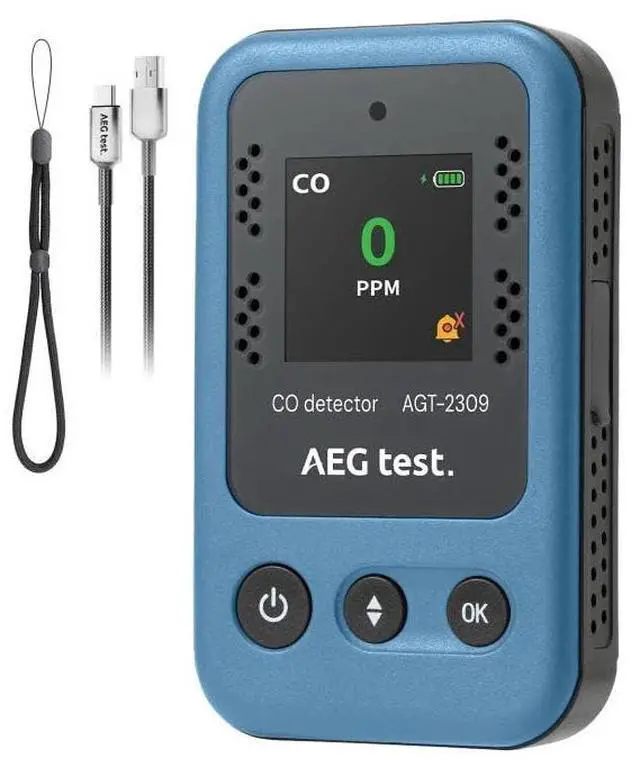


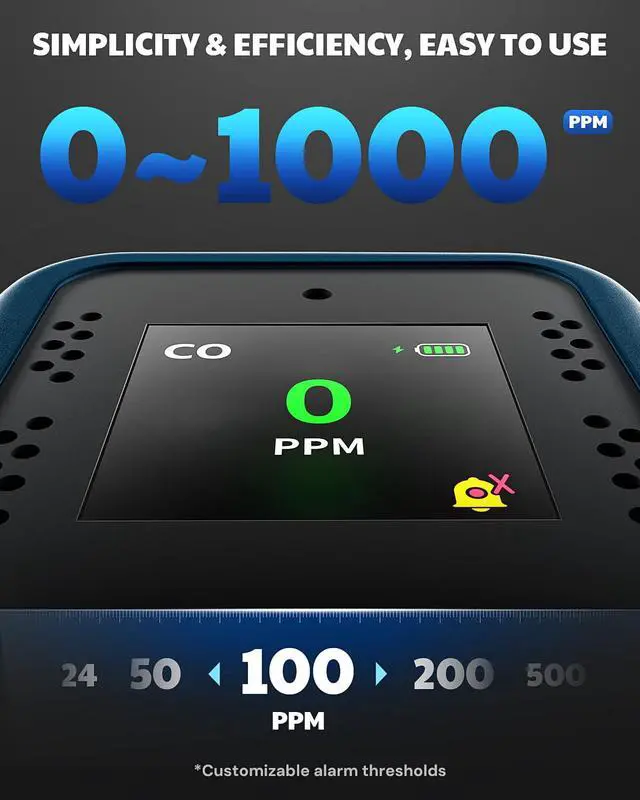
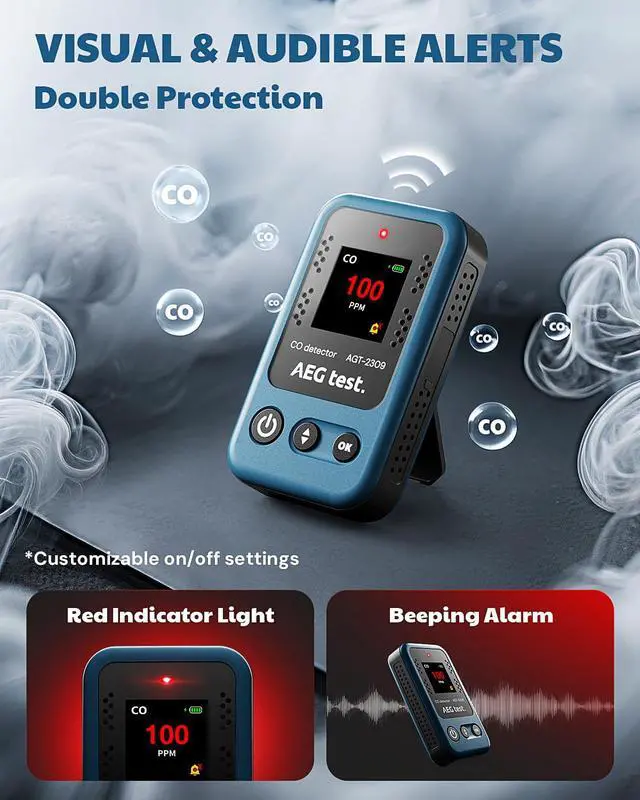
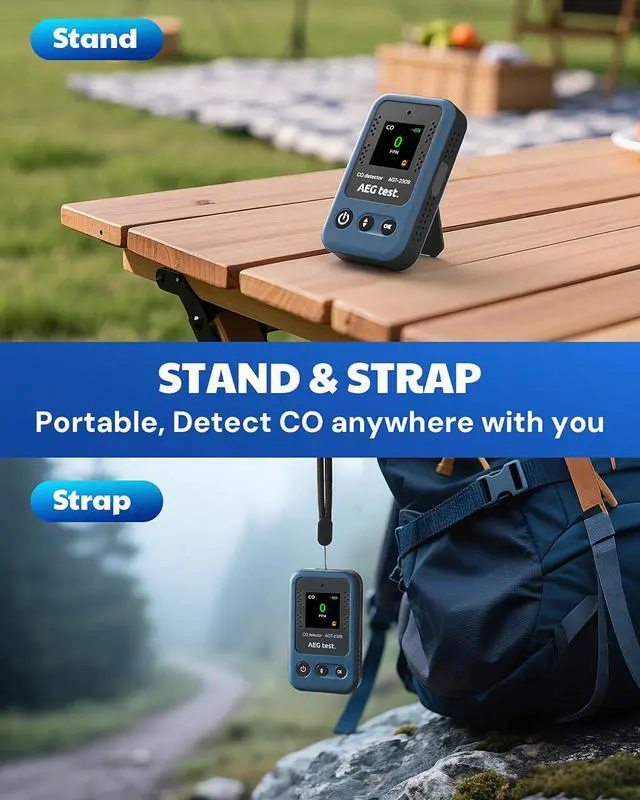




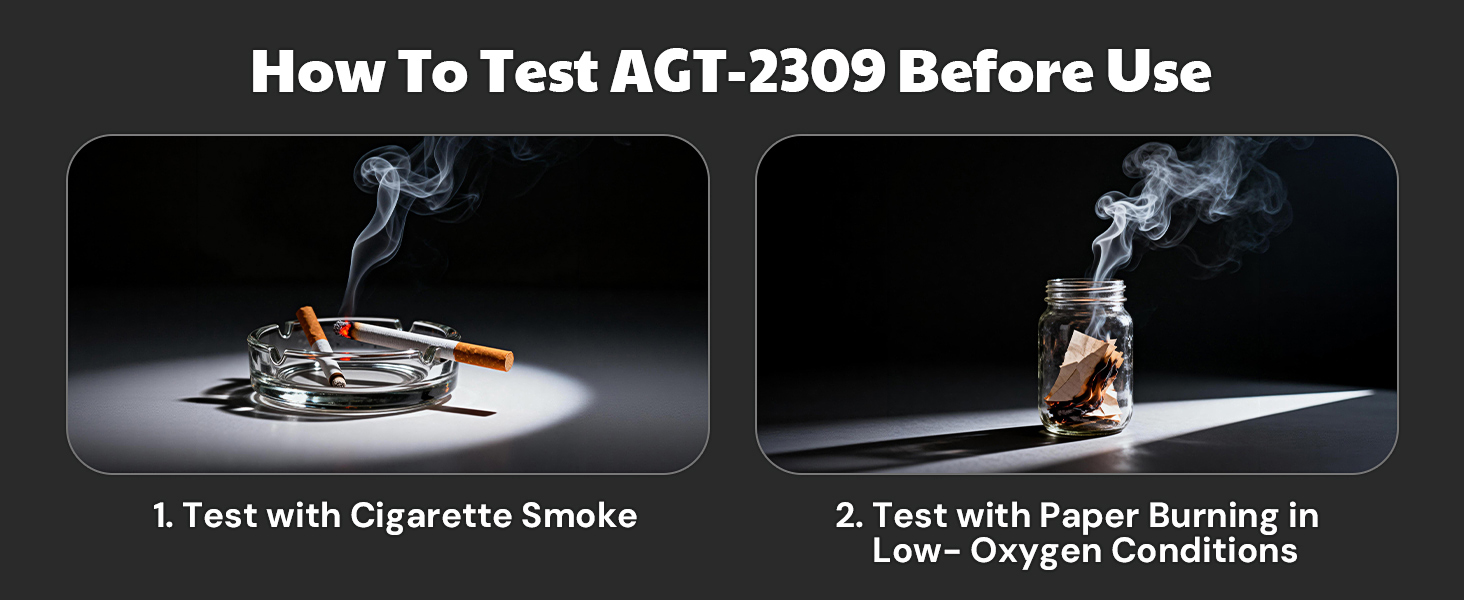

How to testAGT-2309 before use?
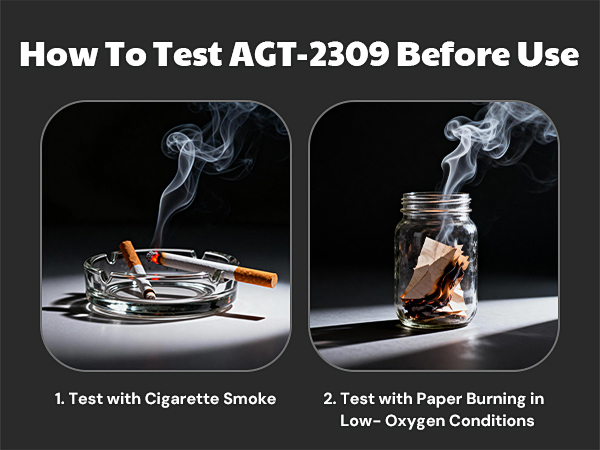
1.Lighted cigarette: Place the detector near cigarette smoke.
2.Smoldering paper: Light a piece of paper, extinguish the flame, and let it smolder. Place the detector and smoldering paper in a sealed, non-flammable container (such as a glass jar).
Why does the screen dim? Is my device still working?
This is for power saving, you can customize or disable the screen timeout in the menu. The device still works normally even when the screen dims. Press any button to wake up the screen.
Why does the device sometimes fail to detect CO?
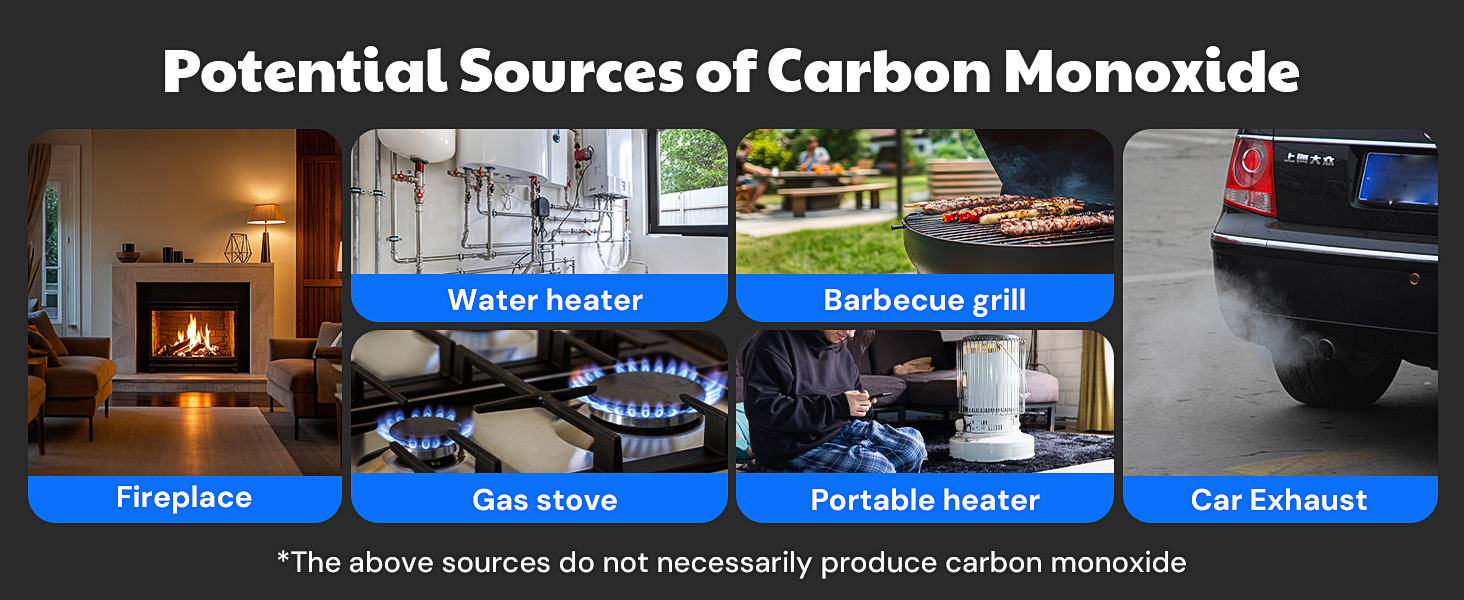
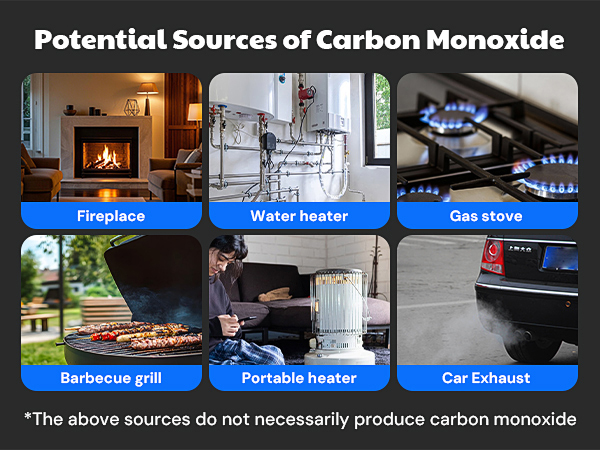
Not all combustion generates enough carbon monoxide to trigger detection. In well-ventilated areas or during complete combustion (e.g., a gas stove’s blue flame or a car engine running smoothly), CO levels may be too low for the detector to activate.
What is the difference between Carbon Monoxide (CO) and Carbon Dioxide (CO2)?
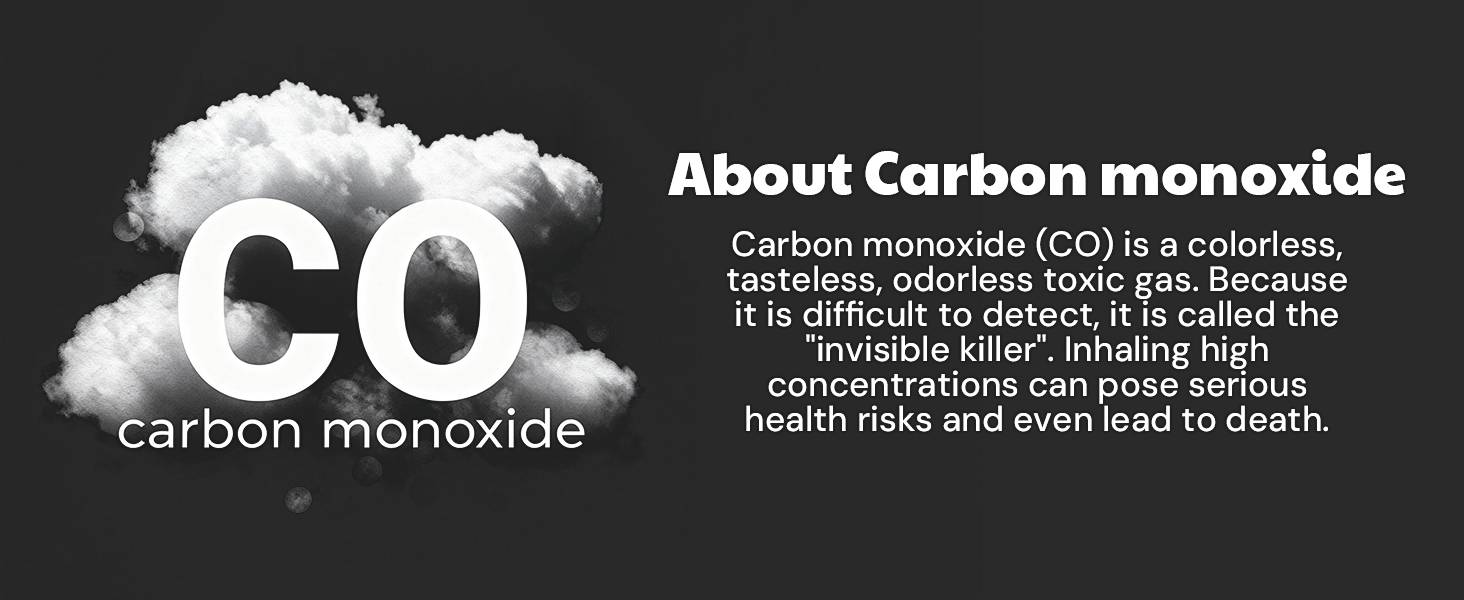
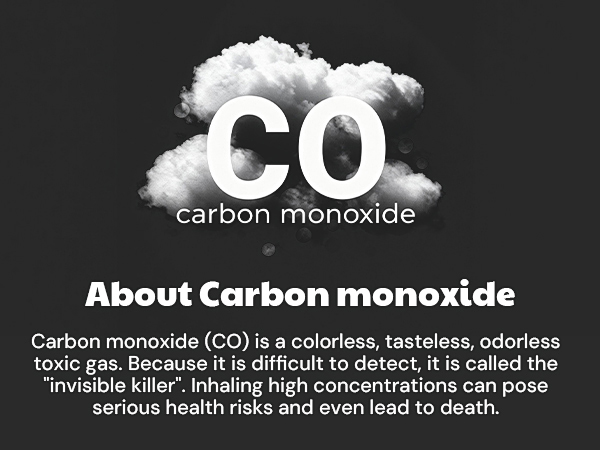
Carbon monoxide (CO) is from incomplete combustion, a colorless, odorless, tasteless toxic gas. Carbon dioxide (CO2) is mainly from biological respiration, a non-toxic gas common in nature and part of the carbon cycle.


How to testAGT-2309 before use?
1.Lighted cigarette: Place the detector near cigarette smoke.
2.Smoldering paper: Light a piece of paper, extinguish the flame, and let it smolder. Place the detector and smoldering paper in a sealed, non-flammable container (such as a glass jar).
Why does the screen dim? Is my device still working?
This is for power saving, you can customize or disable the screen timeout in the menu. The device still works normally even when the screen dims. Press any button to wake up the screen.
Why does the device sometimes fail to detect CO?
Not all combustion generates enough carbon monoxide to trigger detection. In well-ventilated areas or during complete combustion (e.g., a gas stove’s blue flame or a car engine running smoothly), CO levels may be too low for the detector to activate.
What is the difference between Carbon Monoxide (CO) and Carbon Dioxide (CO2)?
Carbon monoxide (CO) is from incomplete combustion, a colorless, odorless, tasteless toxic gas. Carbon dioxide (CO2) is mainly from biological respiration, a non-toxic gas common in nature and part of the carbon cycle.