




 here!
I’m your shopping assistant for PC builds, upgrades, and everything tech.
Got questions? Ask away!
Start a conversation
here!
I’m your shopping assistant for PC builds, upgrades, and everything tech.
Got questions? Ask away!
Start a conversationShipped by GUANGZHOU PINTECH CO LTD




Any questions? Ask CelesteSM will help you find out quickly.

PINTECH is a high-tech enterprise specializing in the research, manufacturing and sales of measurement and testing instruments.
Currently, we offer over 70 products, including optical isolation voltage probes, differential probes, high-voltage attenuation rods, current probes, high-voltage amplifiers, power amplifiers, signal generators, oscilloscopes, multimeters, high-voltage power supplies, AC power supplies and DC power supplies.
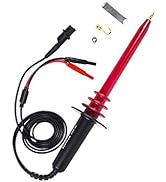
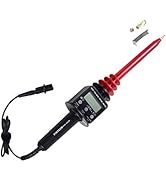
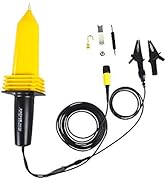
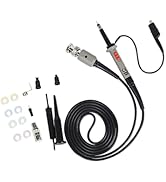
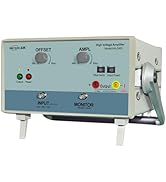
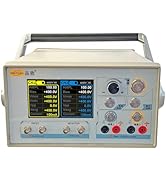
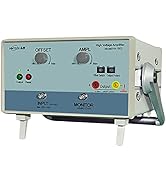
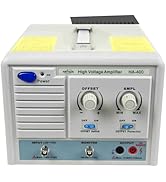

We not only provide professional measuring instruments and equipment, but also have a technical team that can offer professional advice according to your needs.
At PINTECH we have been designing and manufacturing electrical testing equipment since 2006.
PINTECH places great emphasis on pre-sales and after-sales service, prioritizing product quality to provide our customers with cost-effective products.
PINTECH is a high-tech enterprise specializing in the research, manufacturing and sales of measurement and testing instruments.
Currently, we offer over 70 products, including optical isolation voltage probes, differential probes, high-voltage attenuation rods, current probes, high-voltage amplifiers, power amplifiers, signal generators, oscilloscopes, multimeters, high-voltage power supplies, AC power supplies and DC power supplies.
We not only provide professional measuring instruments and equipment, but also have a technical team that can offer professional advice according to your needs.
At PINTECH we have been designing and manufacturing electrical testing equipment since 2006.
PINTECH places great emphasis on pre-sales and after-sales service, prioritizing product quality to provide our customers with cost-effective products.
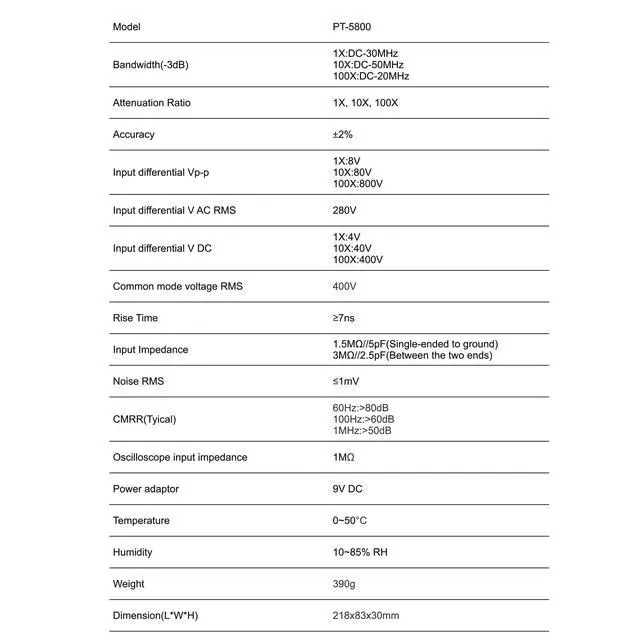
MODEL: PT-5800
Bandwidth (-3dB): 1X: DC-30MHz; 10X: DC-50MHz;100X: DC-20MHz;
Input Impedance: Between the two ends: 3M//2.5pF, Single-ended to ground: 1.5M//4pF
Attenuation Rate: 1X/10X/100X
Rising Time: 7ns
Accuracy: ±2%
Testing Voltage(Vp-p): 1X: 8V; 10X: 80V; 100X: 800V
Input DC voltage: 1X: 4V; 10X: 40V; 100X: 400V
Common-mode voltage rms: 400V
Oscilloscope Input Impedance: 1M
CMRR: 60Hz:80dB; 100Hz:60dB; 1MHz:50dB
Noise: 1mV rms
Weight: 390g/0.86lb
Dimension(LxWxH): 218x83x30 mm
| Manufacturer | PINTECH |
| Item model number | PT-5800 |
| Is Discontinued By Manufacturer | No |
| Date First Available | June 30, 2025 |
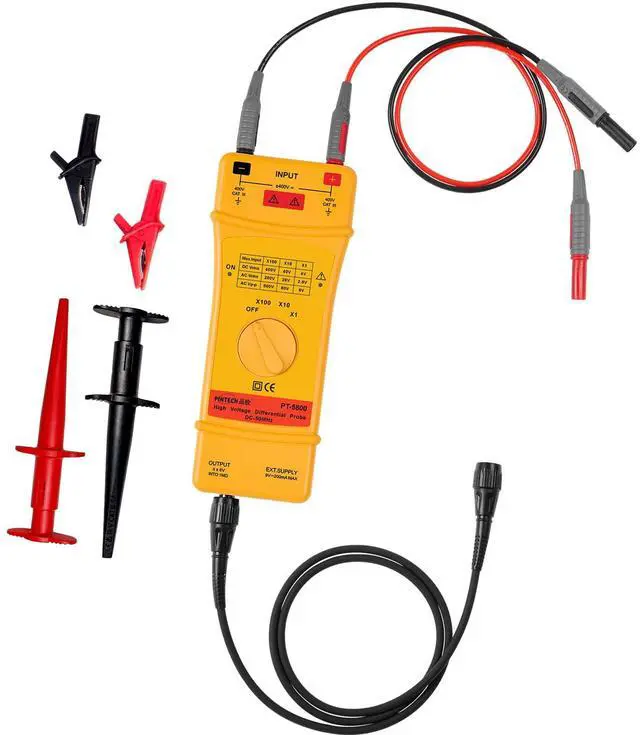
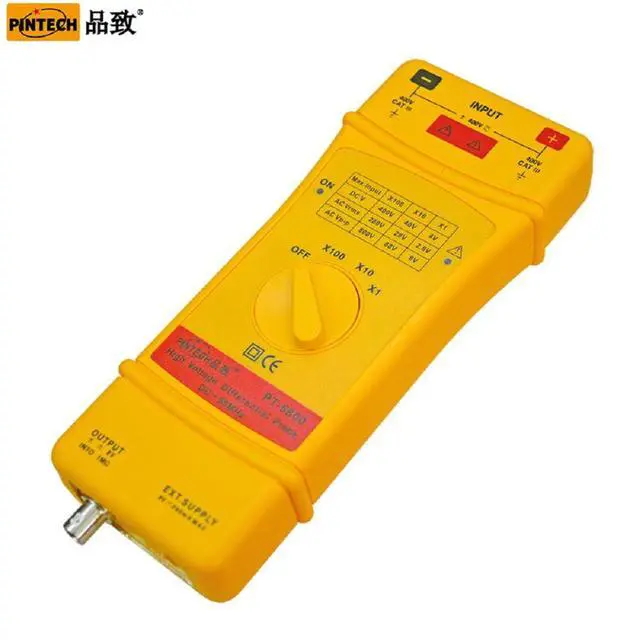
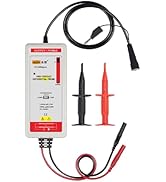
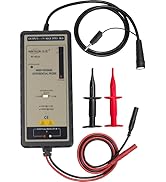
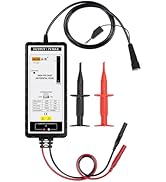
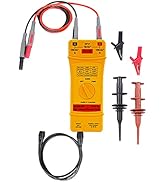
The PINTECH PT-5800 is a high-voltage differential oscilloscope probe with up to 800Vp-p measurement range, 50MHz bandwidth, 7ns rise time, and 1X/10X/100X attenuation, making it well suited for engineers, technicians, and lab users testing motor drives, power electronics, and other floating or differential circuit signals.
| Attribute | Value |
|---|---|
| Best For | Measuring differential (two-point) signals with oscilloscopes and other test and data-acquisition equipment; suitable for general circuit troubleshooting including motor circuits |
| Model Identifiers | PINTECH PT-5800; sold individually (Each) |
| Accuracy And Measurement | Typical accuracy ±2% for differential measurements |
| Physical | External dimensions 218 x 83 x 30 mm |
| Included Accessories | Ships with differential probe host unit x1 and probe hook x2 |
Q: Should I choose the PINTECH PT-5800 or a standard passive 10X oscilloscope probe for motor drives and floating signals?
A: Choose the PINTECH PT-5800 when you need to measure the voltage difference between two non-ground-referenced points, such as half-bridge nodes, motor circuits, or other floating signals. Its differential design is intended for exactly that use case, while a standard passive 10X probe is better for ground-referenced measurements on lower-complexity circuits. The trade-off is that a passive probe is simpler and cheaper for routine bench work, but it does not replace a high-voltage differential probe for floating high-side measurements.
Q: Is the PINTECH PT-5800 a better fit than using two oscilloscope channels with math subtract?
A: Yes, the PT-5800 is the more purpose-built choice when the goal is accurate differential measurement with significant common-mode voltage present. Community discussions consistently note that using two passive probes plus math subtract can work for simple cases, but it reduces channel availability and can struggle when a small differential signal rides on a much larger common-mode voltage. The PT-5800 is the better fit when measurement integrity matters more than minimizing equipment cost.
Q: Should I buy the PINTECH PT-5800 or a lower-tier 25MHz differential probe?
A: Choose the PT-5800 if you expect faster edges or want more headroom for switching-power and inverter work. Compared with PINTECH's own 25MHz-class PT-8001, the PT-5800 is positioned as the higher-bandwidth option at 50MHz while keeping an 800Vp-p maximum measurement rating. A 25MHz probe is still a reasonable choice for slower waveforms and basic troubleshooting, but the PT-5800 is the safer pick if your measurements may extend into faster switching behavior.
Q: How does the PINTECH PT-5800 compare with a 50MHz, 800V differential probe from Siglent?
A: On paper, the PT-5800 sits in the same practical class as 50MHz, 800V differential probes such as Siglent's DPB4080: both target bench measurements where moderate bandwidth and hundreds of volts of differential range are needed. The PT-5800 offers 1X, 10X, and 100X attenuation modes, while the Siglent model is documented with tighter stated accuracy and a higher insulation category on official materials. Choose the PT-5800 when you want the core 50MHz/800V capability in a straightforward BNC-compatible format; choose the Siglent option when documented safety category details and brand ecosystem fit are more important.
Q: Should I step up from the PINTECH PT-5800 to a higher-bandwidth differential probe like Micsig's MDP series?
A: Move up from the PT-5800 if your work involves faster switching edges, higher-frequency content, or you specifically need stronger published claims around low noise and common-mode rejection at higher bandwidths. Official positioning from Micsig places the MDP series above entry and mid-bandwidth probes for more demanding signal fidelity. The PT-5800 remains the better fit when your main need is general high-voltage differential measurement around the 50MHz class without paying for bandwidth you may not use.
Q: Is this a good choice for measuring floating or non-ground-referenced high-voltage signals on a standard oscilloscope?
A: Yes. A differential probe like the PT-5800 is designed for measuring the voltage difference between two points when neither point is at ground, then outputting a ground-referenced signal your oscilloscope can read. Based on the product data, it supports up to 800 Vp-p, has a BNC output for broad oscilloscope compatibility, and offers 1X/10X/100X attenuation options. It is more suitable than a standard passive probe for inverter, motor-drive, and other floating measurements. The main trade-off is that its 50 MHz bandwidth is aimed at general power-electronics work, not very high-speed switching analysis.
Q: Will this probe work with my oscilloscope?
A: Usually yes, if your oscilloscope accepts a standard BNC input and can display the probe's scaled output correctly. The PT-5800 uses a BNC interface, so it is intended to work with most general-purpose oscilloscopes rather than a brand-specific probe port. Buyers should still confirm that their scope's bandwidth, input settings, and voltage scaling fit the intended measurements. It is a practical fit for bench scopes, but it does not appear to offer automatic probe identification like some premium brand-specific probes.
Q: Who is this probe most suitable for?
A: It is most suitable for engineers, technicians, and advanced hobbyists doing power-electronics work such as motor drives, inverter stages, switch-node checks, and other differential measurements where ground-referenced probing is unsafe or inaccurate. It is less ideal for casual low-voltage debugging because a dedicated high-voltage differential probe is bulkier, more specialized, and usually chosen for safety and measurement integrity rather than convenience.
Q: Is 50 MHz enough, or should I buy a higher-bandwidth differential probe instead?
A: 50 MHz is enough for many power-electronics and motor-control tasks, especially when the goal is observing switching behavior, PWM waveforms, and differential voltage safely. A higher-bandwidth probe is the better choice if you need cleaner visibility into very fast edges, higher-frequency harmonics, or more demanding validation work. In short: choose this class of probe for mainstream HV differential bench work; move up only if your measurements are limited by bandwidth rather than voltage range or safety needs.
Q: What are the main trade-offs versus a premium differential probe from Tektronix, Keysight, or LeCroy?
A: The PT-5800's likely advantage is value and broad BNC-based compatibility for common HV differential measurements. The trade-offs versus premium probes are typically lower bandwidth, fewer integration features, less automatic scaling or probe recognition, and less emphasis on advanced performance specs across the frequency range. For routine lab work, that may be acceptable. For demanding compliance, precision validation, or very fast switching measurements, a higher-end probe is usually the safer long-term choice.
Q: Who is the PT-5800 most suitable for?
A: The PT-5800 is best suited to users who need a differential probe for floating or non-ground-referenced measurements in power electronics, motor drives, mains-related circuits, or similar higher-voltage work. Its stated 800 Vp-p limit, selectable 1X/10X/100X attenuation, and BNC output make it more appropriate for bench troubleshooting and waveform observation than for low-voltage precision probing.
Q: Is the PT-5800 a good choice for motor drives, mains, or power supply work?
A: Yes, it appears suitable for that kind of work if your signals stay within its stated voltage and bandwidth limits. Community discussion around differential probes repeatedly centers on safer measurement of motor drives, SMPS nodes, and mains-referenced circuits, which matches the PT-5800's positioning as an 800 Vp-p differential probe intended for motor circuits and general two-point measurements.
Q: What are the main trade-offs of the PT-5800 compared with a standard passive probe?
A: The main advantage is that a differential probe lets you measure voltage between two points without tying one side to oscilloscope ground, which is important for floating and high-voltage circuits. The trade-offs are that this type of probe is more specialized, has a stated 50 MHz bandwidth rather than very high RF bandwidth, and is less ideal when your work is mostly low-voltage signals where a simpler passive probe may be enough.
Q: Can the PT-5800 also be used for lower-voltage signals, or is it only for high voltage?
A: It can be used for lower-voltage differential signals, but it is primarily designed around higher-voltage isolation and safety needs. If your work is mostly low-voltage, high-gain, or high-sensitivity measurements, the PT-5800 may be more probe than you need, and its high-voltage-oriented design is the trade-off.
Q: Will the PT-5800 work with a typical oscilloscope?
A: Probably yes for many standard bench oscilloscopes, because the product uses a BNC interface and community discussions around active differential probes commonly assume standard BNC scope connection. Compatibility still depends on your oscilloscope's input expectations and voltage handling, so it is a fit check rather than a universal guarantee.



