




 here!
I’m your shopping assistant for PC builds, upgrades, and everything tech.
Got questions? Ask away!
Start a conversation
here!
I’m your shopping assistant for PC builds, upgrades, and everything tech.
Got questions? Ask away!
Start a conversationShipped by GUANGZHOU PINTECH CO LTD

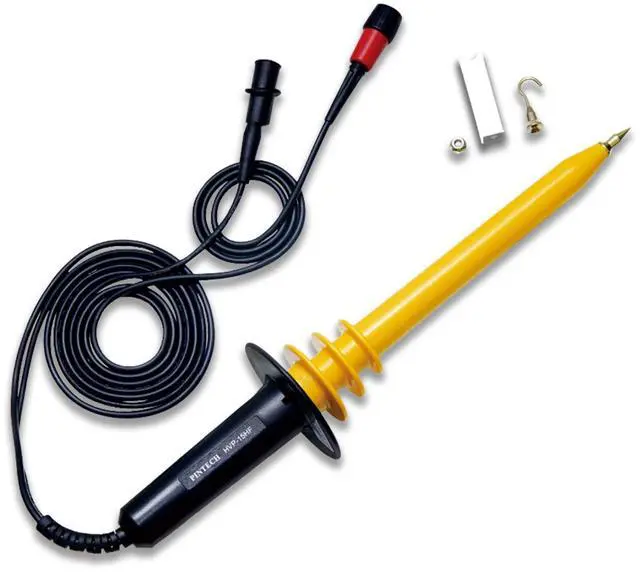
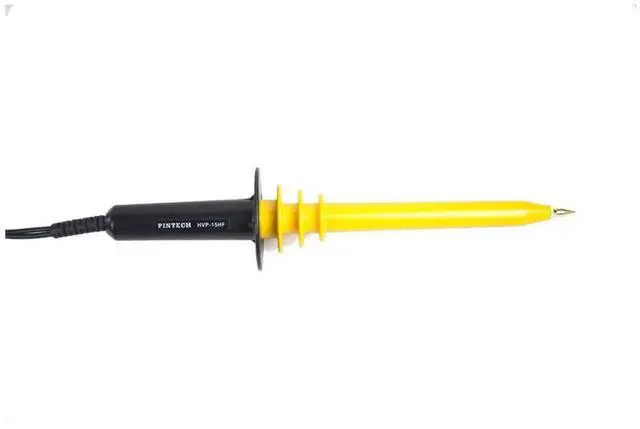
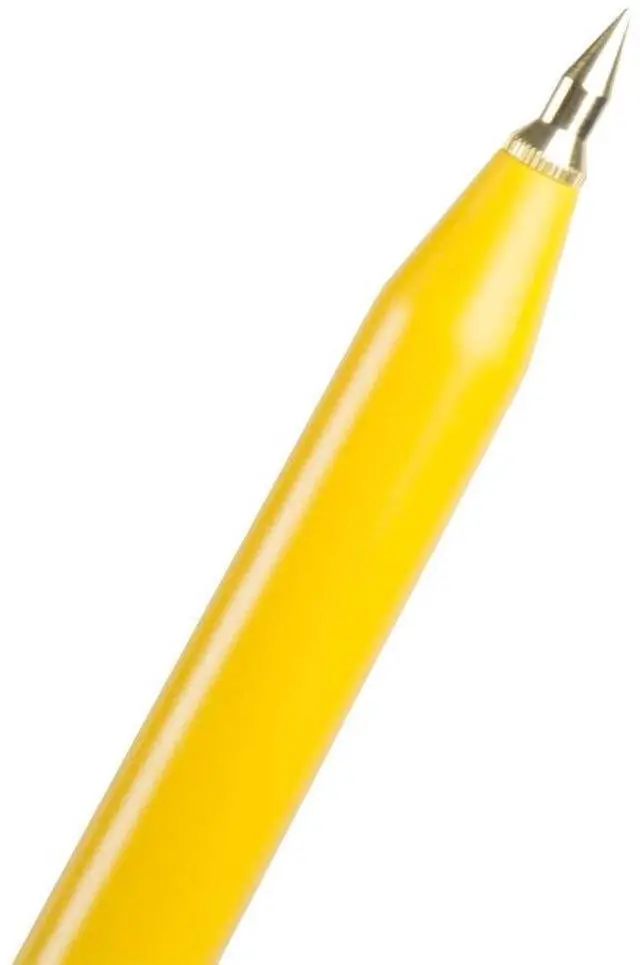
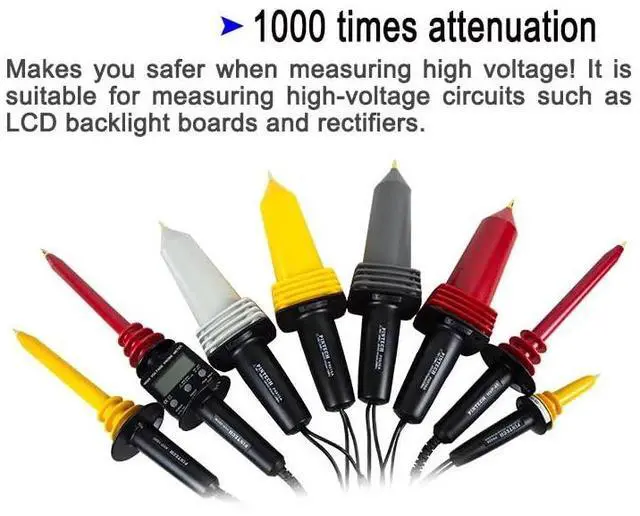



Any questions? Ask CelesteSM will help you find out quickly.

PINTECH is a high-tech enterprise specializing in the research, manufacturing and sales of measurement and testing instruments.
Currently, we offer over 70 products, including optical isolation voltage probes, differential probes, high-voltage attenuation rods, current probes, high-voltage amplifiers, power amplifiers, signal generators, oscilloscopes, multimeters, high-voltage power supplies, AC power supplies and DC power supplies.
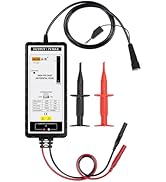
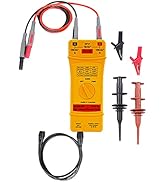
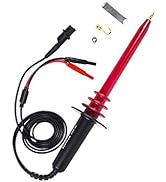
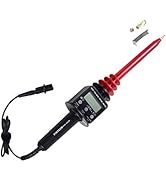
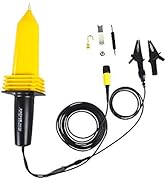
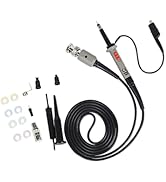
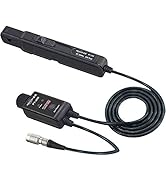
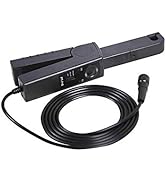
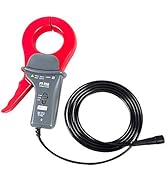
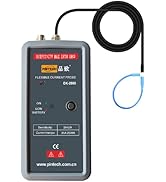
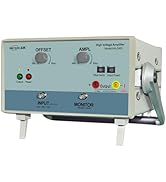
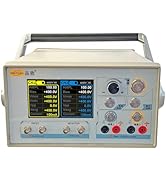
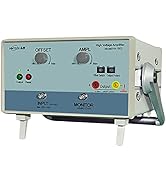
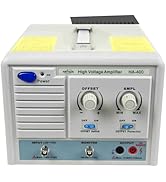

We not only provide professional measuring instruments and equipment, but also have a technical team that can offer professional advice according to your needs.
At PINTECH we have been designing and manufacturing electrical testing equipment since 2006.
PINTECH places great emphasis on pre-sales and after-sales service, prioritizing product quality to provide our customers with cost-effective products.
PINTECH is a high-tech enterprise specializing in the research, manufacturing and sales of measurement and testing instruments.
Currently, we offer over 70 products, including optical isolation voltage probes, differential probes, high-voltage attenuation rods, current probes, high-voltage amplifiers, power amplifiers, signal generators, oscilloscopes, multimeters, high-voltage power supplies, AC power supplies and DC power supplies.
We not only provide professional measuring instruments and equipment, but also have a technical team that can offer professional advice according to your needs.
At PINTECH we have been designing and manufacturing electrical testing equipment since 2006.
PINTECH places great emphasis on pre-sales and after-sales service, prioritizing product quality to provide our customers with cost-effective products.
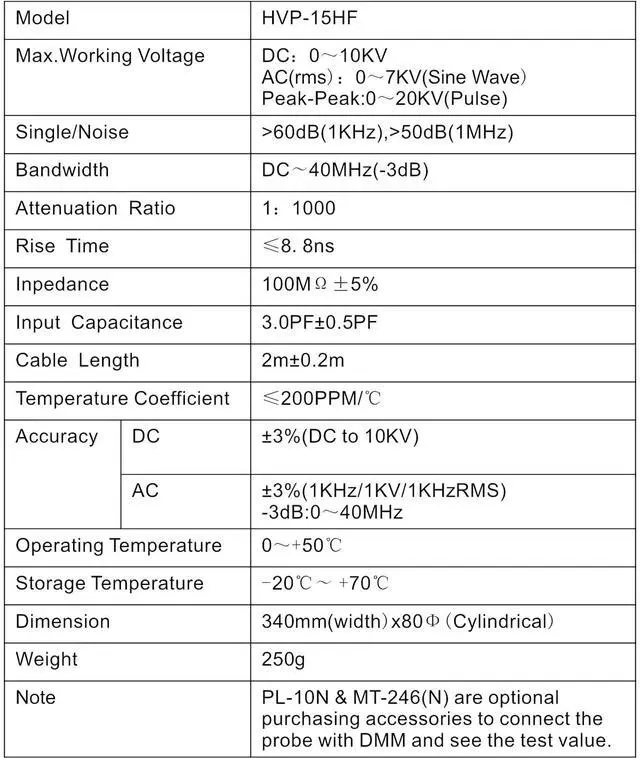
MODEL: HVP-15HF
Input Impedance: 100M±5%
Attenuation Rate: 1000:1
Bandwidth: DC-40MHz(-3dB)
Test Voltage (max): DC: 10kV; AC: 20kVp-p; Rms: 7kV
Signal-to-Noise Ratio: 60dB(1kHz), 50dB(1MHz)
Rise Time: 9ns
Accuracy(DC): ±3%(DC to 10kV)
Accuracy(AC): ±3%(1kHz/1kV/1kHzrms), -3dB: 0-40MHz
Input Capacitance: 3.0pF±0.5pF
Cable Length: 2M/78.74in
Weight: 250g/0.55lb
| Manufacturer | PINTECH |
| Item model number | HVP-15HF |
| Date First Available | September 17, 2019 |
The PINTECH HVP-15HF is a 1000:1 high-voltage oscilloscope probe designed for measuring up to 10kV DC or 20kVp-p AC, making it suitable for engineers, technicians, and electronics labs working with high-voltage waveforms on standard BNC oscilloscopes.
| Attribute | Value |
|---|---|
| Best For | Measuring high-voltage signals on oscilloscopes (standard BNC input), suited for technicians and lab work requiring up to 10 kV DC / 20 kVp‑p AC measurement using a 1000:1 probe |
| Electrical Characteristics | 10 kV max DC and 20 kVp‑p max AC input range with 1000:1 attenuation and 100 MΩ ±5% input impedance |
| Accuracy And Frequency Response | DC accuracy ±3% (to 10 kV); AC accuracy ±3% (specified at 1 kHz / 1 kV rms); frequency response −3 dB to 40 MHz |
| Connector And Compatibility | Standard BNC interface for connection to oscilloscopes with BNC probe inputs |
| Accessories And Package | Includes one high-voltage probe, one accessory kit, and one manual |
| Portability | Compact, easy to carry and use for field or bench measurements |
| Certifications | CE certified |
| Model Identifiers | PINTECH HVP-15HF high-voltage oscilloscope probe |
Q: Should I choose the PINTECH HVP-15HF or a standard 10x/100x oscilloscope probe for high-voltage work?
A: Choose the PINTECH HVP-15HF when you need to measure signals well beyond the safe range of a typical general-purpose passive probe. Its 1000:1 attenuation, 10 kV DC rating, and 40 MHz bandwidth make it more appropriate for CRT, HV power supply, ignition, or other elevated-voltage measurements where a standard 10x or 100x probe may not have enough voltage margin. A standard probe remains the better fit for low-voltage bench work because it preserves more signal amplitude on the oscilloscope input and is easier to use for everyday debugging.
Q: Is the PINTECH HVP-15HF a better choice than a differential high-voltage probe?
A: The HVP-15HF is the better choice when you need an affordable single-ended high-voltage probe for ground-referenced measurements and you want straightforward BNC compatibility with a standard oscilloscope. A differential high-voltage probe is the better fit when the measurement is floating, not ground-referenced, or when you need to measure voltage between two points without tying one side to oscilloscope ground. The trade-off is that differential probes are typically more specialized and more expensive, while the HVP-15HF is simpler for conventional HV probing.
Q: Should I buy the PINTECH HVP-15HF or move up to a higher-tier high-voltage probe?
A: Choose the HVP-15HF if your main priority is basic high-voltage oscilloscope measurement with moderate bandwidth and standard 1000:1 attenuation. It covers up to 10 kV DC and 40 MHz, which fits many service, repair, and general HV signal-checking tasks. Move to a higher-tier model if you need more bandwidth, lower circuit loading, higher working voltage, or premium features such as higher input impedance or readout support. In other words, the HVP-15HF fits practical HV measurement needs, while higher-tier probes make more sense for more demanding lab or design work.
Q: Is the PINTECH HVP-15HF better for portability or for maximum measurement performance?
A: The HVP-15HF leans toward portable, practical high-voltage use rather than maximum measurement performance. Its compact form factor, standard BNC connection, and broad oscilloscope compatibility make it convenient for field or bench setups where you need a dedicated HV probe without adding a more complex probe system. If your priority is maximum bandwidth, minimum loading, or advanced probing of difficult floating signals, a more specialized probe class is the better choice.
Q: Is this a good choice for measuring high-voltage waveforms on a standard oscilloscope?
A: Yes, if your oscilloscope has a standard BNC input and you need a single-ended high-voltage probe for up to 10 kV DC or 20 kVp-p AC. The HVP-15HF uses 1000:1 attenuation, 100 MΩ input impedance, and 40 MHz bandwidth, which fits typical bench troubleshooting and waveform viewing. It is better suited to general high-voltage observation than to low-level precision work or floating differential measurements.
Q: Who is this probe suitable for?
A: It is most suitable for technicians, engineers, and advanced hobbyists who already use an oscilloscope and need to inspect high-voltage signals safely through a 1000:1 probe. It is not an entry-level accessory for casual electronics use, because correct setup, compensation, grounding, and voltage safety practices matter more with a high-voltage probe than with a standard 10:1 probe.
Q: What are the main trade-offs versus a high-voltage differential probe?
A: The main trade-off is simplicity versus measurement flexibility. This PINTECH model is a passive single-ended BNC probe, so it is straightforward and broadly compatible with standard oscilloscopes. A high-voltage differential probe is usually better when you need floating measurements between two non-ground points, stronger common-mode rejection, or more advanced power electronics work. The downside is that differential probes are typically more expensive and may need a specific probe interface or power arrangement.
Q: Is 40 MHz enough, or should I buy a higher-bandwidth high-voltage probe instead?
A: 40 MHz is enough for many power, service, ignition, inverter, and general high-voltage bench measurements, especially when the main need is safe voltage scaling rather than very fast edge analysis. You should consider a higher-bandwidth alternative if you need cleaner visibility on faster switching edges, RF-related work, or if your oscilloscope itself is much faster and you do not want the probe to be the limiting factor.
Q: Is this better than a standard 10:1 or 100:1 oscilloscope probe for high-voltage work?
A: Yes for genuine high-voltage measurement, because this probe is purpose-built for much higher input levels and uses 1000:1 attenuation to keep the oscilloscope input within a safer range. A standard general-purpose probe is usually better for low-voltage signals because it preserves more signal amplitude and is easier to use, but it is not the right tool when the voltage can exceed normal probe limits.
Q: Who is this high-voltage probe actually suitable for?
A: This probe is best suited to users who need to view high-voltage waveforms on a standard oscilloscope through a BNC input and who understand oscilloscope grounding, attenuation, and high-voltage safety. Its 1000:1 attenuation, 10 kV DC limit, and 40 MHz bandwidth make it more appropriate for bench measurement of high-voltage signals than for casual low-voltage troubleshooting.
Q: Is this a good choice if I want to measure very high voltage with a regular oscilloscope?
A: Yes, if your use case fits within its ratings. The main reason to buy it is to extend a scope's measurable voltage range with a 1000:1 divider and standard BNC connection. The decision point is not convenience but fit: it is intended for up to 10 kV DC or 20 kVp-p AC signals, so it is useful when your scope alone cannot safely accept the voltage being tested.
Q: What are the main trade-offs of using this probe?
A: The main trade-off is attenuation versus visibility. A 1000:1 probe greatly improves measurement range, but it also makes smaller signals appear 1000 times smaller at the scope input, which reduces usefulness for low-voltage work. Another trade-off is that a high-voltage probe does not remove the need to understand grounding and safe measurement practice.
Q: Can this probe replace a differential probe?
A: No. This type of high-voltage probe is primarily a high-attenuation probe for extending voltage range, not a substitute for a differential probe when the measurement requires isolation between two non-ground-referenced points. If the circuit under test is not safely ground-referenced for a standard oscilloscope, a differential probe may still be the correct tool.
Q: Is this worth buying for general-purpose oscilloscope use?
A: No, not as a general-purpose probe. It is a specialized accessory for high-voltage measurement. If most of your work is low-voltage electronics, the 1000:1 attenuation and high-voltage-focused design are unnecessary and less practical than standard probes. It is worth buying only if high-voltage measurement is a real and recurring requirement.



