




 here!
I’m your shopping assistant for PC builds, upgrades, and everything tech.
Got questions? Ask away!
Start a conversation
here!
I’m your shopping assistant for PC builds, upgrades, and everything tech.
Got questions? Ask away!
Start a conversationShipped by GUANGZHOU PINTECH CO LTD




Any questions? Ask CelesteSM will help you find out quickly.
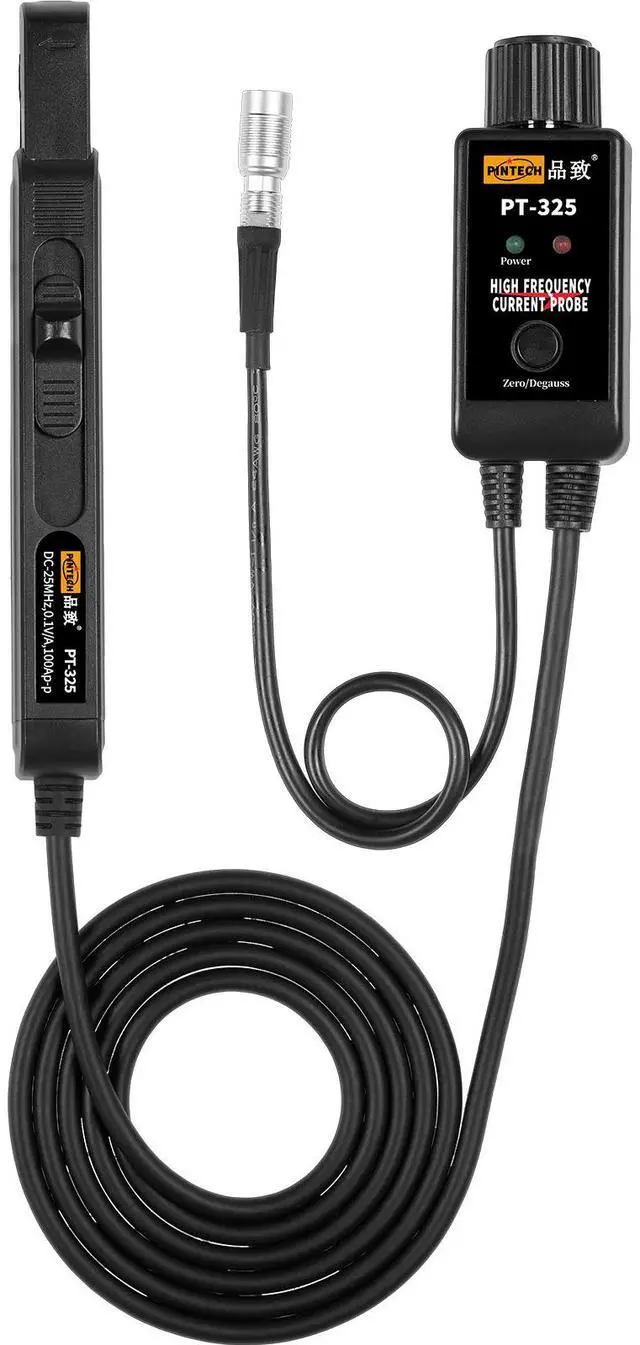
MODEL: PT-325
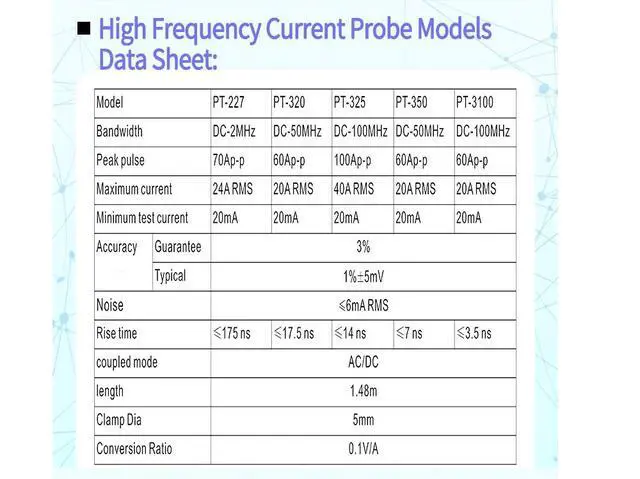
Bandwidth (-3dB): DC-25MHz
AC Current:100Ap-p
DC Current:40A
Maximum Current: 40A rms
Minimum Test Current: 20mA
Accuracy(Guarantee): 3%
Accuracy(Typical): 1%±5mV
Noise:6mA RMS
Rise Time:14 ns
Coupling Method:AC/DC
Conversion Ratio: 0.1V/A
Clamp Dia: 5mm
Length: 1.48M/58.27in
Weight: 450g/0.99lb(Adapter is included)
Size: 144 x 17 x 29 mm
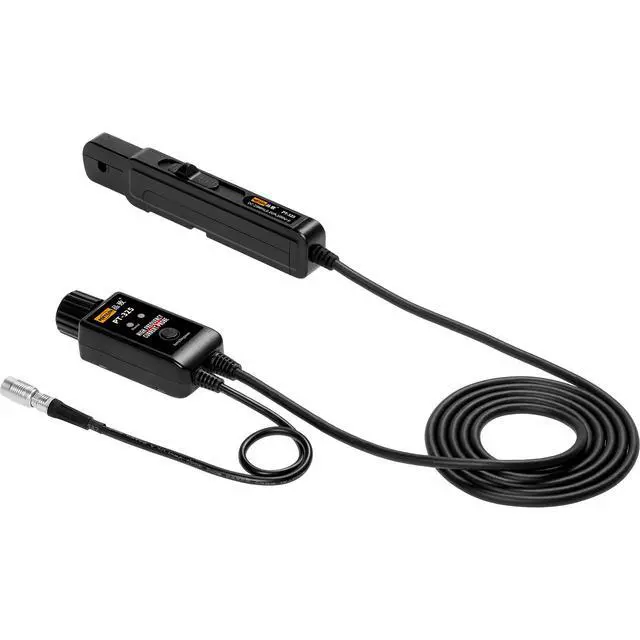
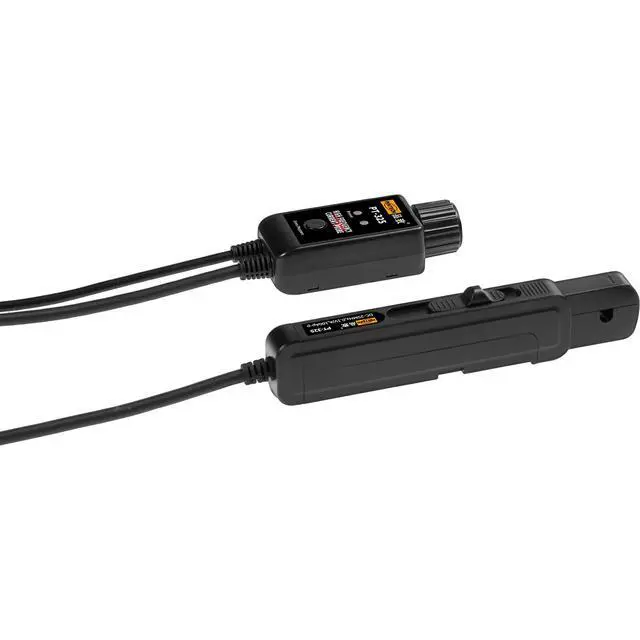
The PINTECH PT-325 is a high-precision AC/DC oscilloscope current probe with 25MHz bandwidth and 100A maximum current, suited for engineers, technicians, and lab users who need fast, accurate current waveform capture on BNC-compatible oscilloscopes.
| Attribute | Value |
|---|---|
| Best For | Electrical testing and measurement applications |
| Model Identifiers | PINTECH PT-325 |
| Physical Dimensions | External dimensions 144 x 17 x 29 mm |
| Accuracy And Certifications | Measured accuracy of ±1% + 5 mV with CE certification |
| Packaging And Unit | Sold individually (Each) |
Q: Should I choose the PINTECH PT-325 or a lower-bandwidth AC/DC current probe for power electronics work?
A: Choose the PT-325 when you need to view faster switching current waveforms, pulse behavior, or edge-related current events on an oscilloscope. Official PINTECH materials place the PT-325 at DC-25 MHz with 100 Ap-p capability, while many lower-tier AC/DC current probes in the same general price class are commonly in the sub-1 MHz to low-MHz range. Community discussions around SMPS measurement also show that lower-bandwidth probes are often acceptable for general troubleshooting, but higher bandwidth becomes more useful when waveform detail matters. The trade-off is that a lower-bandwidth probe can still be a practical choice for slower power measurements or budget-limited setups.
Q: Is the PT-325 a better fit than a shunt resistor for oscilloscope current measurements?
A: Choose the PT-325 when you want direct, non-intrusive current measurement with AC and DC support and clamp-on convenience. Community discussions consistently describe shunt-based measurement as a lower-cost option that can be very useful, but it adds insertion elements to the circuit and may be less convenient for distorted, high-side, or rapidly changing current measurements. The PT-325 is the better fit when preserving circuit behavior and quickly capturing waveform shape matter more than minimizing cost.
Q: Should I get the PINTECH PT-325 or move up to a higher-bandwidth PT-350 or PT-3100?
A: Choose the PT-325 if you want a middle-ground option focused on higher current range rather than maximum bandwidth. In PINTECH's own lineup, the PT-325 is rated at DC-25 MHz and 100 Ap-p, while the PT-350 and PT-3100 move to 50 MHz and 100 MHz respectively but with lower listed AC current capacity of 60 Ap-p. That makes the PT-325 the more practical choice when your priority is measuring larger current waveforms with more bandwidth than entry models, while the higher-tier models are the better fit when waveform speed and rise-time fidelity matter more than peak current headroom.
Q: How does the PT-325 compare with the lower-tier PT-320 for everyday oscilloscope current probing?
A: Choose the PT-325 when you need more headroom for current and somewhat more bandwidth. PINTECH's catalog lists the PT-320 at DC-20 MHz and 60 Ap-p, while the PT-325 is DC-25 MHz and 100 Ap-p. For general bench use, both are positioned as compact AC/DC current probes with the same 5 mm clamp diameter class, so the decision mainly comes down to whether your work benefits from the PT-325's added current capacity and modest bandwidth increase. If your measurements stay comfortably below those limits, the lower-tier model can still make sense.
Q: Is the PT-325 better for portable bench work or for maximum measurement performance?
A: The PT-325 is better aligned with portable bench work that still needs meaningful high-frequency current measurement. Its official specs emphasize a compact body, 5 mm jaw diameter, BNC oscilloscope compatibility, and AC/DC measurement in a small form factor. The trade-off is that users who prioritize maximum bandwidth for very fast transients may still prefer moving to a higher-bandwidth probe class, while users who prioritize compact setup and broader everyday compatibility may find the PT-325 to be the more balanced choice.
Q: Is the PINTECH PT-325 a good choice if I need to view both DC current and fast switching waveforms on an oscilloscope?
A: Yes, if your main need is oscilloscope-based current waveform analysis rather than basic low-frequency current logging. The PT-325 is designed for AC/DC measurement and lists a much higher bandwidth than many entry-level current clamps, so it is better suited to observing switching edges, ripple, and transients. The trade-off is that its jaw opening is very small and its continuous current limits are more restrictive than the headline 100A figure suggests, so it fits bench diagnostics better than large-conductor or general-purpose clamp work.
Q: Will this current probe work with my oscilloscope?
A: Usually yes, if your oscilloscope has a standard 1MΩ BNC input and enough vertical sensitivity to display the probe's output clearly. The PT-325 uses a BNC interface and is presented as broadly compatible with oscilloscopes. As with comparable probes, physical connection is not the only requirement: you also need adequate scope sensitivity, proper DC zeroing, and the right scaling in volts-per-amp to interpret readings correctly.
Q: Who is the PT-325 most suitable for?
A: It is most suitable for engineers, technicians, and advanced hobbyists who need non-intrusive current measurements on small conductors and want to capture current waveforms directly on a benchtop oscilloscope. It is less suitable for buyers who mainly need a general clamp meter, large jaw capacity, or routine measurement on thick cables, because the PT-325's clamp diameter is only 5 mm.
Q: What are the main trade-offs versus a cheaper current clamp for oscilloscopes?
A: The PT-325's main advantage is bandwidth: it is positioned for much faster signals than low-cost clamp probes that are typically used for lower-frequency troubleshooting. That makes it the better fit for power electronics and transient analysis. The trade-offs are price, smaller jaw size, and lower DC/rms operating range than the 100A headline may imply. A cheaper probe can be enough for slow AC/DC current trends, but it is usually the weaker choice for fast waveform fidelity.
Q: Is the 100A rating enough reason to buy this model?
A: Not by itself. For this product, the more important buying criteria are bandwidth, conductor size, and the type of current you need to measure. The PT-325 listing shows 100A peak-to-peak AC, but also lists 40A DC and 40A rms maximum, so buyers should read the practical operating limits instead of focusing only on the top-line 100A number.
Q: Who is the PINTECH PT-325 best suited for?
A: The PT-325 is best suited for users who need to view both DC and AC current waveforms on an oscilloscope without adding a shunt resistor. Based on repeated Reddit and YouTube discussion about oscilloscope current probes, this type of probe is most useful for power electronics, switching supplies, motor drives, and general bench troubleshooting where current shape matters, not just RMS value. Its stated 25 MHz bandwidth and 100 A maximum make it more appropriate for waveform analysis than for basic multimeter-style current checks.
Q: Is the PT-325 a good fit for hobby or light lab oscilloscope work?
A: Yes, if your work involves observing current waveforms and your oscilloscope accepts a BNC-input probe. Community discussion around current probes repeatedly focuses on bench debugging, switch-mode power supply analysis, and general electronics troubleshooting. The PT-325's published specs suggest it fits that use case. The main limitation is that buyers should still verify whether 25 MHz bandwidth, 100 A range, and jaw size are appropriate for their specific circuits.
Q: What are the main trade-offs of the PT-325 compared with simpler current measurement methods?
A: The main advantage is convenience: a current probe lets you see waveform shape directly on a scope without inserting a shunt into the circuit. The trade-offs discussed in Reddit threads are cost, noise, bandwidth limits, and jaw-size constraints. For the PT-325 specifically, the 0.2 inch jaw opening is useful for small conductors but may be restrictive for thicker cables, and buyers should not assume it replaces every clamp meter or every high-end lab current probe.
Q: Is the PT-325 worth buying if I only need occasional current measurements?
A: Usually only if you specifically need current waveforms on an oscilloscope. Repeated buyer discussions show that current probes are most justified when troubleshooting switching behavior, inrush, ripple, or transient current events. If you only need occasional steady-current checks, a simpler meter-based solution may be more practical. The PT-325 makes more sense when waveform visibility is the reason for the purchase.



