





What is rTMS?
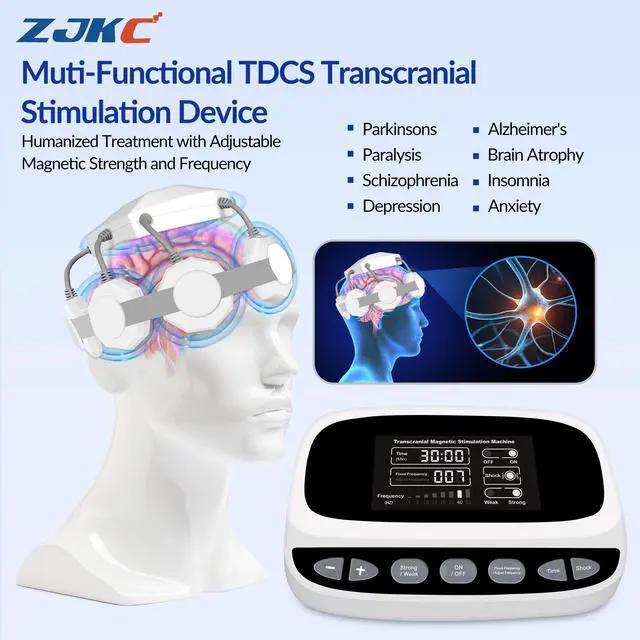
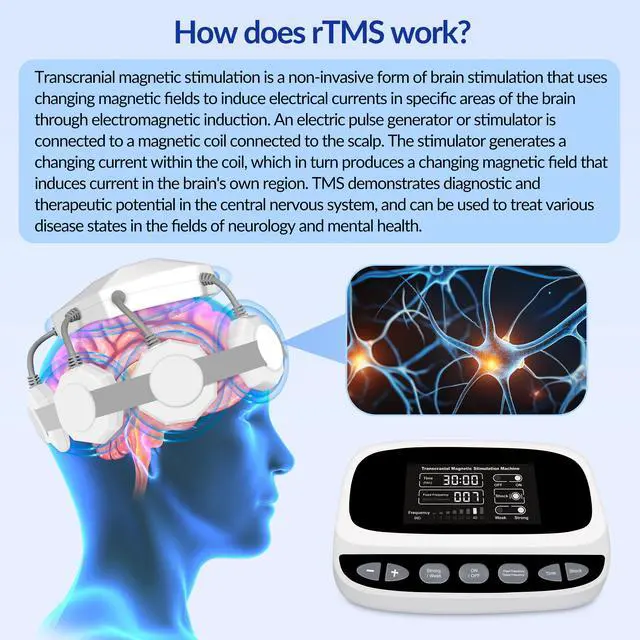
Repetitive transcranial magnetic stimulation (rTMS) is a non-invasive brain stimulation method that uses a changing magnetic field to induce electrical currents in specific brain regions through electromagnetic induction. An electrical pulse generator (or stimulator) is connected to a magnetic coil placed against the scalp. The stimulator generates a changing current within the coil, creating a changing magnetic field that induces currents in specific areas of the brain. rTMS has shown great potential in the diagnosis and treatment of central nervous system disorders and can be used to treat a variety of neurological and mental health conditions.

How rTMS Works
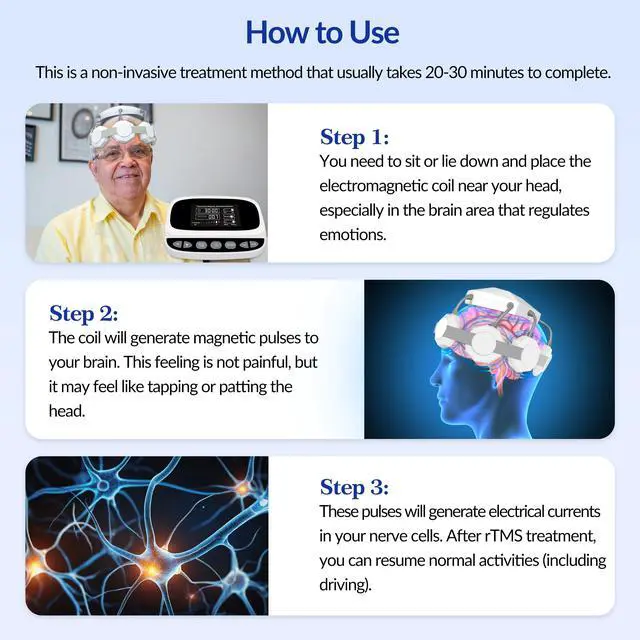
Repetitive transcranial magnetic stimulation (rTMS) is a non-invasive brain stimulation technique. It uses coils placed on the scalp to generate focused pulsed magnetic fields. These fields pass painlessly through the skull and induce weak electrical currents in specific brain regions.
These induced currents can activate or inhibit nerve cells in the target area. Repeated treatment leads to more lasting changes in brain circuitry. This process, based on neuroplasticity, helps restore abnormal neural function to normal.High-frequency stimulation typically enhances brain activity, while low-frequency stimulation reduces it. This ability to modulate cortical excitability is the basis for its therapeutic applications, such as treating depression by stimulating the prefrontal cortex, which regulates mood.

Treatment principle
Transcranial magnetic stimulation (TMS) therapy primarily enhances cerebral blood flow and improves vascular elasticity in the targeted lesion area. Furthermore, TMS improves the metabolic environment of brain cells and promotes neurological function recovery. More importantly, TMS actively promotes the normalization and ordering of brain magnetic function. Its significant mechanism involves the magnetization of erythrocytes, prompting them to aggregate into chain-like structures, thereby effectively reducing blood viscosity. These combined effects-improving hemodynamics, optimizing cellular metabolism, and restoring neuromagnetic activity-work synergistically to exert its clinical efficacy and promote the recovery of brain function.

Mental Health: Major Depression, Anxiety, Post-Traumatic Stress Disorder (PTSD), Obsessive,Compulsive Disorder (OCD)
Neurological Disorders: Parkinson'S Disease, Stroke Recovery, Traumatic Brain Injury (TBI), Alzheimer's Disease
Pain Management: Chronic Pain, Migraine
Addiction: Smoking Cessation, Alcohol Dependence
Cognitive Disorders: Autism, Schizophrenia, Cognitive Decline
Sleep Disorders: Insomnia
Other Conditions: Epilepsy, Tinnitus, Motor Cortex Dysfunction

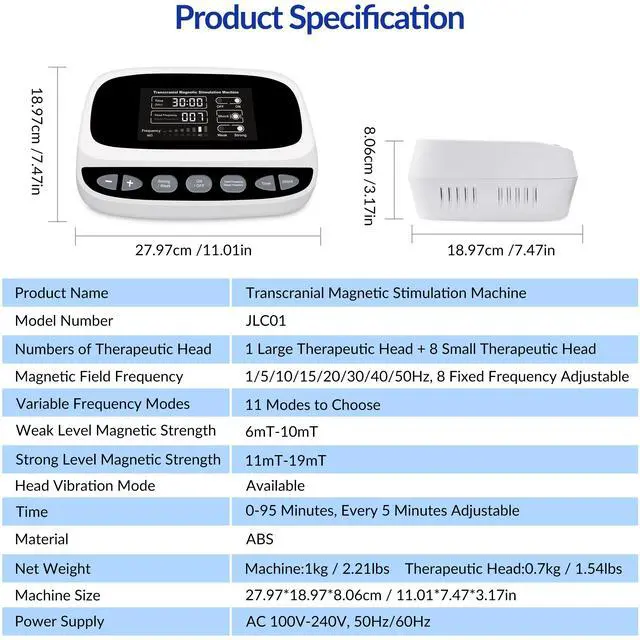
| Product Name | Transcranial Magnetic Stimulation Machine |
|---|---|
| Model Number | JLC01 |
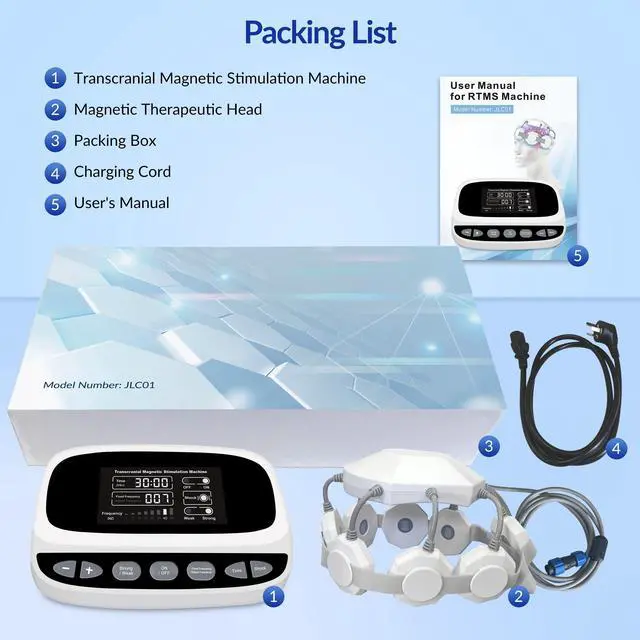
| Numbers of Therapeutic Head | 1 Large Therapeutic Head + 8 Small Therapeutic Head |
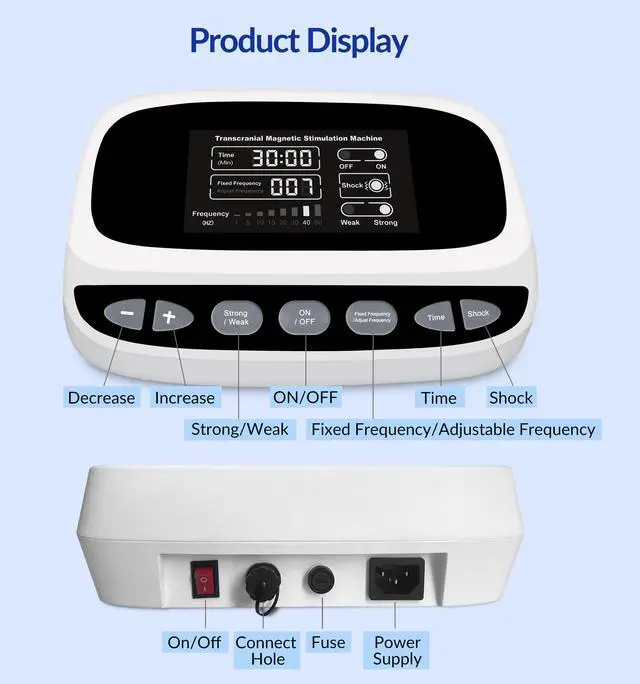
| Magnetic Field Frequency | 1/5/10/15/20/30/40/50Hz, 8 Fixed Frequency Adjustable |
| Variable Frequency Modes | 11 Modes to Choose |
| Weak Level Magnetic Strength | 6mT-10mT |
| Strong Level Magnetic Strength | 11mT-19mT |
| Head Vibration Mode | Available |
| Time | 0-95 Minutes, Every 5 Minutes Adjustable |
| Material | ABS |
| Net Weight | Machine:1kg / 2.21lbs |
| Therapeutic Head | 0.7kg / 1.54lbs |
| Machine Size | 27.97*18.97*8.06cm / 11.01*7.47*3.17in |
| Power Supply | AC 100V-240V, 50Hz/60Hz |

Features
1.19 Treatment Modes: Choose from 8 fixed frequencies and 11 variable frequencies to personalize treatments for a variety of conditions.
2.No Side Effects: As a drug-free alternative, rTMS is ideal for patients who may not respond well to medications or experience adverse side effects.
3.Long-Lasting Benefits: Many patients report significant, lasting relief from symptoms of depression, anxiety, and PTSD following a complete treatment course.
4.Versatile Applications: rTMS is effective for a wide range of neurological and psychiatric conditions, including depression, chronic pain, stroke recovery, addiction, and cognitive disorders, making it a highly adaptable treatment option.


