Your Browsing History
Meet Your Seller
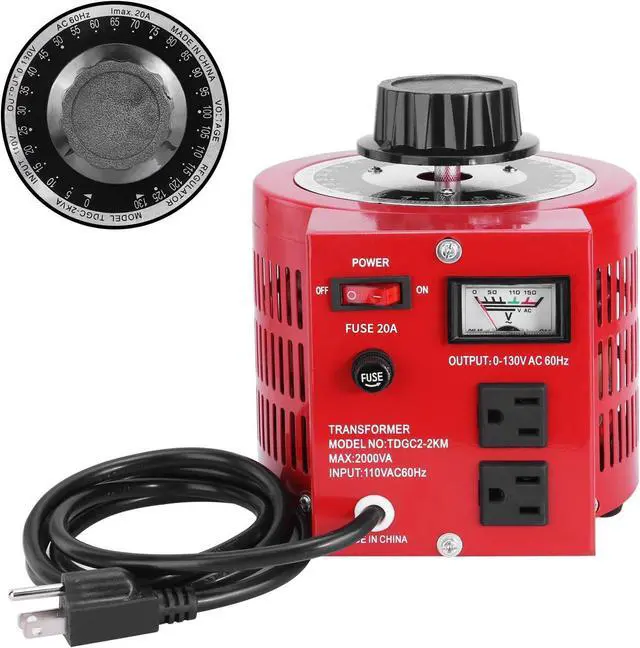
20Amp Variable Transformer Auto AC Voltage Regulator Power Supply
- a variable AC input to a transformer input DC bridge rectifier to produce a variable output
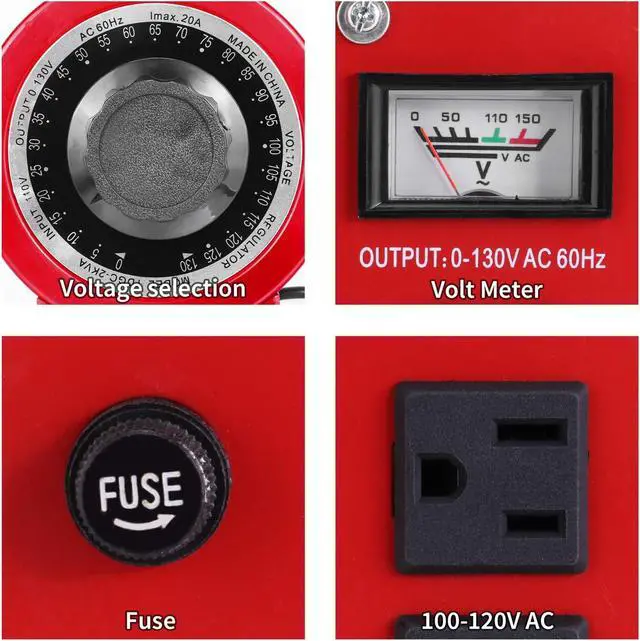
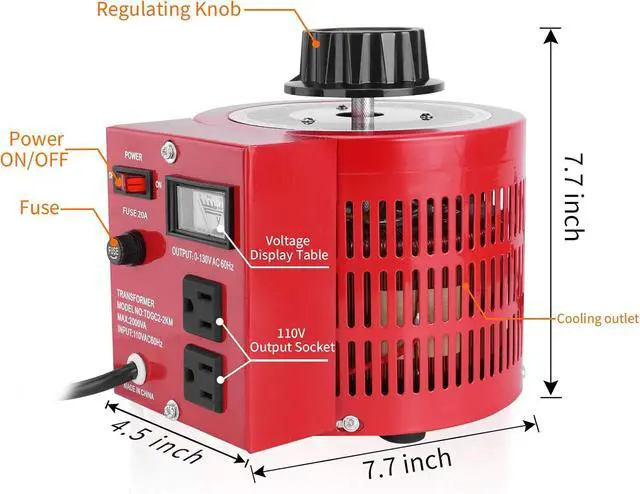
- The adjustable voltage transformers does not convert AC to DC. It requires an AC input and the output is also AC. Also, the unit will not affect the cycle rate from the power company. If your power system is providing 60Hz, the Variac auto transformer will not change that, the ouput will be an undistorted 60Hz. This unit is rated up to 20 Amps or 2KVA Peak (16A Continous).
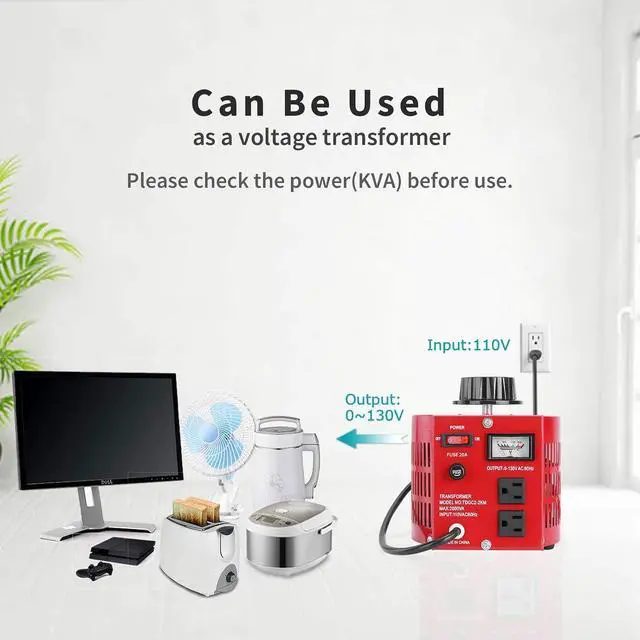
- Power: 2000VA,Input voltage: 110V, Input current: 18A, Output voltage: 0-130V, Rated output current: 15.38A (Continuous operation for 2 hours, <10A can work continuously
+
+
Overview
Specs
Reviews
Any questions? Our AI mode will help you find out quickly.
Try me now
This variable transformer is the perfect speed controller. The speed is infinitely variable, and because a transformer doesn't chop up the AC waveform like electronic speed controllers do, there's no noise, humming, etc.
If you're planning on using this as an "industrial" or bench-top supply with heavy loads, I'd recommend examining the brushes and adjusting the spring pressure on the windings. This can improve performance by reducing brush-contact sparking. Otherwise, this device is ready to work right out of the box.
There are a lot of common uses and practical applications for variacs. As we mentioned earlier, theyre more portable and more cost-effective than regular AC power supplies, which pretty much makes them a top pick for short-term projects and casual hobbies. variable autotransformercan be used to gradually revive previously dormant electronic equipment. They can also be used to regulate servo motors and control the temperature of ovens and heaters.
Voltage adjustment, when used with thermostatic control, provides more uniform heating.
You can also use variacs to simulate various voltage and line conditions for experiments, or power electrical equipment designed for voltage that isnt the typical 120V or 240V supplied domestically.
Here are some other applications:
Regulating voltage
Controlling specified input voltage to rectifier elements to generate variable DC voltages from an AC source
Operating electrical equipmenttypically motorsat the correct or optimal voltage even with subnormal or higher-than-normal supply
Varying step-transformer output voltage by control of input voltage Starting synchronous or induction motors in order to provide 50%-60% of the total voltage to the motor stator during start-up.
Correcting voltage in subnormal or over-voltage supplies on 1-phase, 2-phase, or 3-phase circuits
Compensating for voltage drops by giving small boosts to the distribution of a cable Controlling AC motors and DC motors operation rectified AC circuits Powering fans and other motors with low starting torque
Controlling the brightness/
Extending lamp life by operating it below rated voltage
Calibrating electrical equipment and controls
Compensating for appreciable voltage drops at the end of lines where distances run too long

If you're planning on using this as an "industrial" or bench-top supply with heavy loads, I'd recommend examining the brushes and adjusting the spring pressure on the windings. This can improve performance by reducing brush-contact sparking. Otherwise, this device is ready to work right out of the box.
There are a lot of common uses and practical applications for variacs. As we mentioned earlier, theyre more portable and more cost-effective than regular AC power supplies, which pretty much makes them a top pick for short-term projects and casual hobbies. variable autotransformercan be used to gradually revive previously dormant electronic equipment. They can also be used to regulate servo motors and control the temperature of ovens and heaters.
Voltage adjustment, when used with thermostatic control, provides more uniform heating.
You can also use variacs to simulate various voltage and line conditions for experiments, or power electrical equipment designed for voltage that isnt the typical 120V or 240V supplied domestically.
Here are some other applications:
Regulating voltage
Controlling specified input voltage to rectifier elements to generate variable DC voltages from an AC source
Operating electrical equipmenttypically motorsat the correct or optimal voltage even with subnormal or higher-than-normal supply
Varying step-transformer output voltage by control of input voltage Starting synchronous or induction motors in order to provide 50%-60% of the total voltage to the motor stator during start-up.
Correcting voltage in subnormal or over-voltage supplies on 1-phase, 2-phase, or 3-phase circuits
Compensating for voltage drops by giving small boosts to the distribution of a cable Controlling AC motors and DC motors operation rectified AC circuits Powering fans and other motors with low starting torque
Controlling the brightness/
Extending lamp life by operating it below rated voltage
Calibrating electrical equipment and controls
Compensating for appreciable voltage drops at the end of lines where distances run too long
Warranty & Returns
Warranty, Returns, And Additional Information
Warranty
- Please contact the Seller directly for warranty information. Warranty information may also be found on the Manufacturer's website.
- CONTACT
Return Policies
- Return for refund within: 30 days
- Return for replacement within: 30 days
- This item is covered by Grandwood Tech Limited Return Policy
Manufacturer Contact Info
- For a directory of all our manufacturers, please click below.
- Manufacturers Directory
LOADING...