here!
I’m your shopping assistant for PC builds, upgrades, and everything tech.
Got questions? Ask away!
Start a conversation
here!
I’m your shopping assistant for PC builds, upgrades, and everything tech.
Got questions? Ask away!
Start a conversation



Any questions? Ask CelesteSM will help you find out quickly.


WDJD has been specializing in smart chargers as 3.7V Li-ion batteries, AA/AAA batteries, camera batteries, USB wall mounts, custom chargers etc.
With more than 200 square feet factory and experienced R&D department, we are capable of providing good quality products with reasonable affordable to satisfy our customers with product development and customization services. We also have international standard qualifications such as CE, FCC, ROSH, etc.




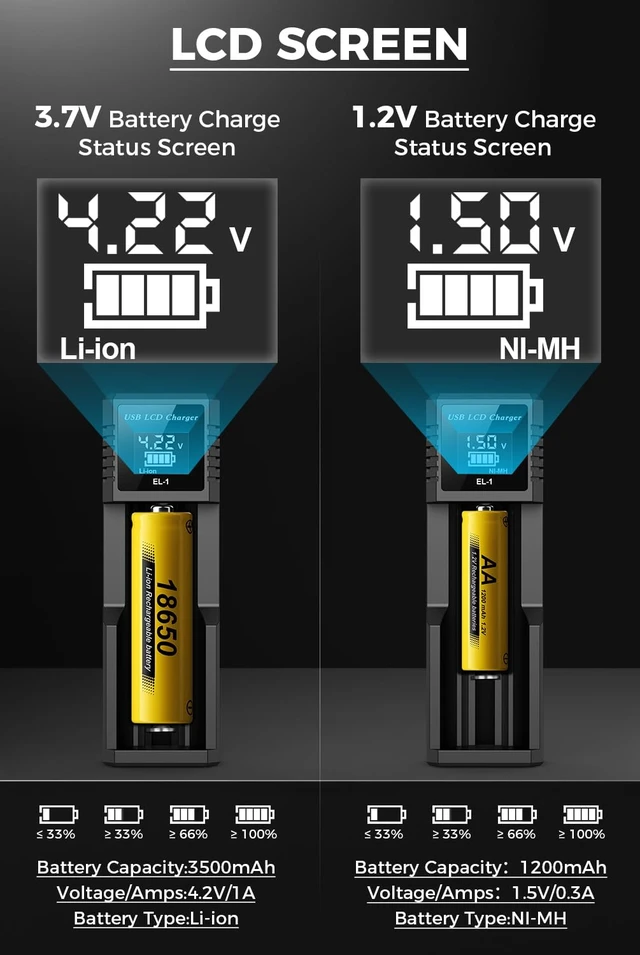
When charging rechargeable NiMH/NiCd batteries, the voltage of a universal battery charger will gradually increase until it reaches the charging termination voltage, typically between 1.45V and 1.55V. Once the battery voltage reaches this level, the charger will stop charging. After charging, when a NiMH/NiCd battery is removed from the charger, due to internal impedance and self-discharge factors, the voltage will quickly drop to around 1.2V. Over time, the battery voltage will continue to slowly decrease until it is completely discharged.
Therefore, when you place a fully charged rechargeable NiMH/NiCd AA/AAA battery back into the charger, the voltage measured by the charger is about 1.2V. The charger may briefly indicate that the battery needs to be recharged. However, at this point, the charger will quickly recognize that the battery is fully charged. This does not mean there is an issue with the battery or the charger, but rather it is due to the chemical characteristics of NiMH/NiCd AA/AAA batteries. Thus, if the battery shows as fully charged, there is no need to place it back into the battery charger for recharging.
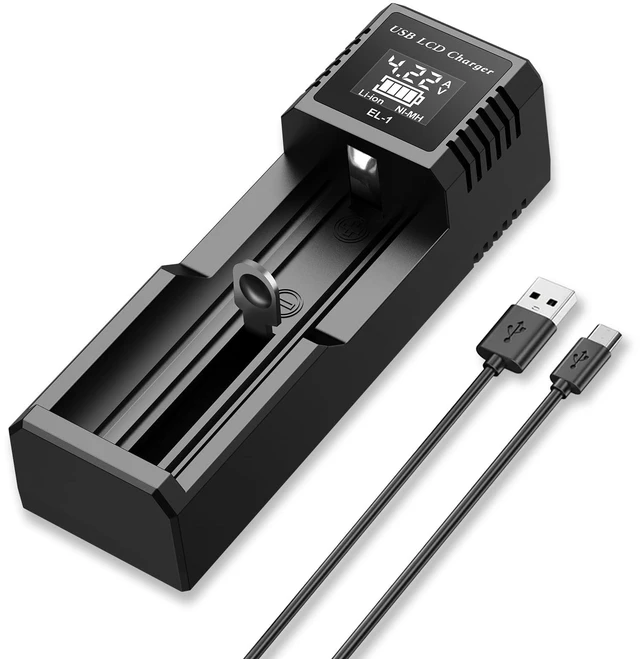
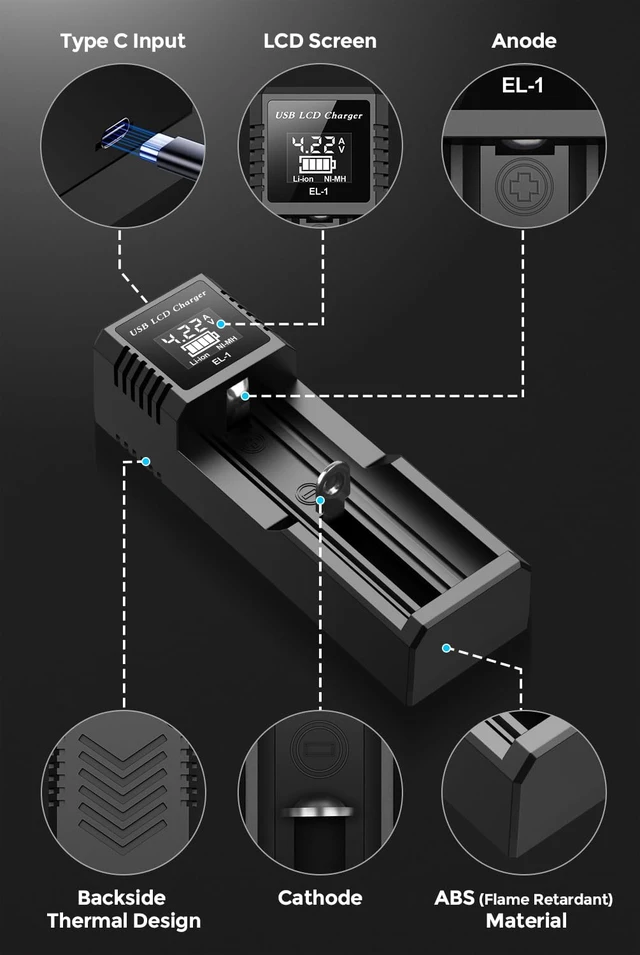
| Model | EL-1 |
|---|---|
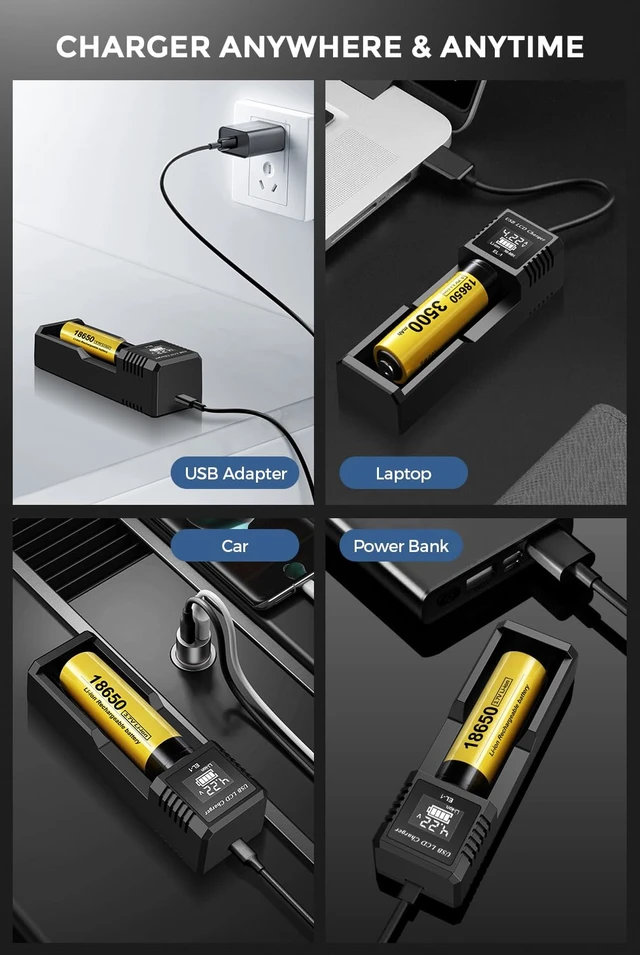
| Input | DC 5V/2A |
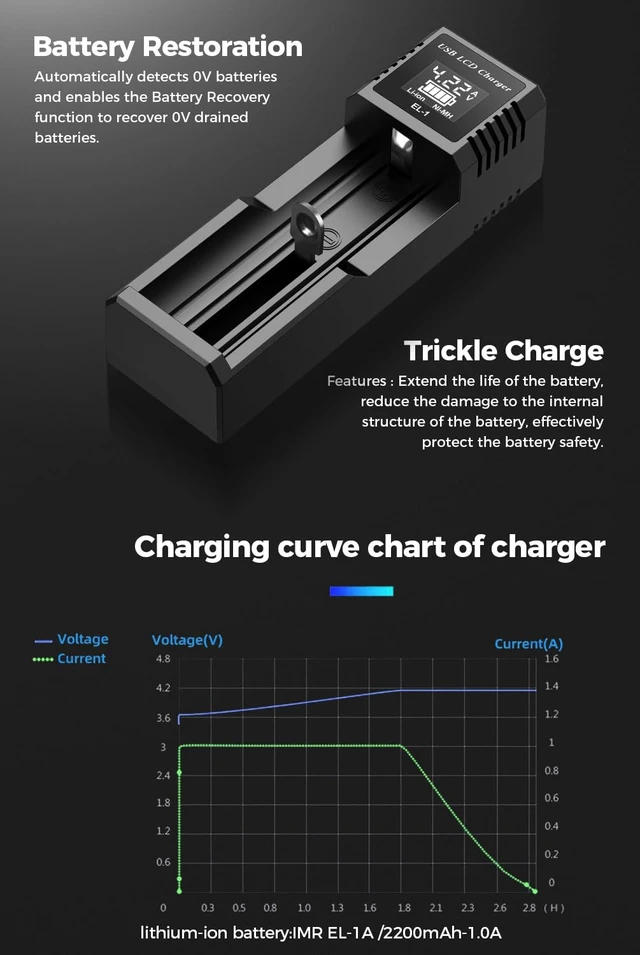
| Output Voltage | 4.2V ±1% / 1.45V ±1% |
| Output Current | 1000mA / 300mA |
| Net Weight | 60g |
| Material | Fireproofing PC+ABS |
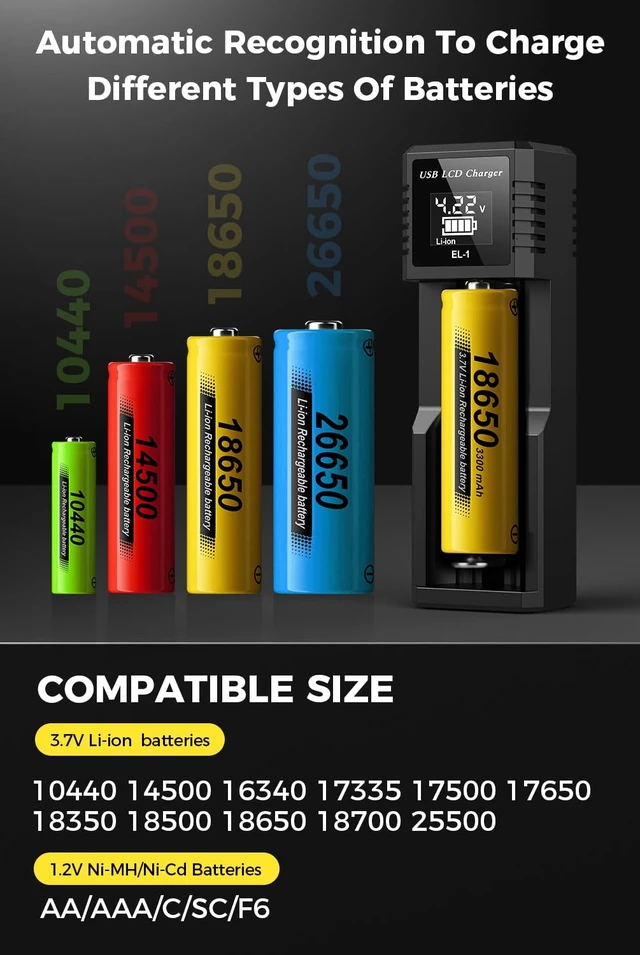
| Compatible Battery Types | 3.7V Li-ion/IMR,1.2V NI-MH/NI-CD |
WDJD has been specializing in smart chargers as 3.7V Li-ion batteries, AA/AAA batteries, camera batteries, USB wall mounts, custom chargers etc.
With more than 200 square feet factory and experienced R&D department, we are capable of providing good quality products with reasonable affordable to satisfy our customers with product development and customization services. We also have international standard qualifications such as CE, FCC, ROSH, etc.