here!
I’m your shopping assistant for PC builds, upgrades, and everything tech.
Got questions? Ask away!
Start a conversation
here!
I’m your shopping assistant for PC builds, upgrades, and everything tech.
Got questions? Ask away!
Start a conversation Hot Seller Hot Seller





Any questions? Ask CelesteSM will help you find out quickly.
We want to ensure your holiday shopping this year is hassle-free. That’s why we’re automatically extending our return policies on almost every product! For purchases placed between November 1st, 2026 and December 31, 2026 you will have until January 31, 2027 to return your product.
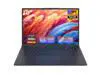
The HP ProBook 4 G1ah is a 14-inch Windows 11 Pro laptop with a six-core AMD Ryzen 5 220, 16GB of DDR5 memory and a 512GB SSD, suited to everyday productivity, study and office work.
| Attribute | Value |
|---|---|
| Best For | Home, personal, business, and student productivity, supported by a 6-core Ryzen 5 processor, 16GB memory, and 512GB SSD |
| Processor And Core Count | AMD Ryzen 5 220 with 6 cores |
| Clock Speed And Cache | Up to 4.9 GHz with 16 MB L3 cache |
| GPU And Graphics Memory | Integrated AMD Radeon 740M graphics using shared system memory |
| Display Spec | 14-inch, 1920 × 1200 IPS display with 60 Hz refresh rate, 300-nit brightness, and 62% sRGB color gamut; non-touch |
| Memory Configuration | 16GB DDR5-5600 memory, with 2 slots and a 16GB maximum |
| Storage And Expansion | 512GB SSD; no HDD or optical drive |
| Ports And Connectivity | 2 USB-A ports at 5Gbps, including one powered port; 2 USB-C ports at 10Gbps with USB Power Delivery 3.0 and DisplayPort 1.4; 1 HDMI 2.1 port and a stereo headphone/microphone combo jack |
| Wired And Wireless Networking | Gigabit Ethernet, 802.11ax Wi-Fi, and Bluetooth |
| Battery And Power | 56 Wh, 3-cell Li-ion polymer battery |
| Webcam And Security | Built-in webcam and fingerprint reader |
| Keyboard And Control | Spill-resistant chiclet keyboard and multi-touch touchpad |
| Audio Setup | Dual stereo speakers tuned by Poly Studio |
| Portability | 3.09 lb notebook in silver |
| Operating System | Windows 11 Pro |
| Model Identifiers | HP ProBook 4 G1ah; part/model number BY2K7AT#ABA |
Q: HP ProBook 4 G1ah Ryzen 5 220 vs Ryzen 3 210: which configuration should I choose?
A: Choose the Ryzen 5 220 configuration for a six-core, 12-thread processor suited to multitasking; the Ryzen 3 210 version has four cores and eight threads. Both are available in the ProBook 4 G1ah family, so compare the specific memory and storage configuration as well as the processor.
Q: Is the HP ProBook 4 G1ah Ryzen 5 230 worth choosing over the Ryzen 5 220?
A: Choose the Ryzen 5 230 configuration if you want the listed 16 TOPS NPU for supported AI features. Both processors have six cores and 12 threads; the Ryzen 5 220 configuration pairs its processor with Radeon 740M graphics and is a straightforward fit for users who do not prioritize the NPU feature.
Q: HP ProBook 4 G1ah Ryzen 5 220 or Ryzen 7 250 for demanding multitasking?
A: Choose the Ryzen 7 250 configuration when your work can benefit from more processor cores: it has eight cores and 16 threads, compared with six cores and 12 threads in the Ryzen 5 220. The Ryzen 7 250 also lists a 16 TOPS NPU, making it the higher-tier option for supported AI workloads.