




 here!
I’m your shopping assistant for PC builds, upgrades, and everything tech.
Got questions? Ask away!
Start a conversation
here!
I’m your shopping assistant for PC builds, upgrades, and everything tech.
Got questions? Ask away!
Start a conversation Hot Seller




Any questions? Ask CelesteSM will help you find out quickly.


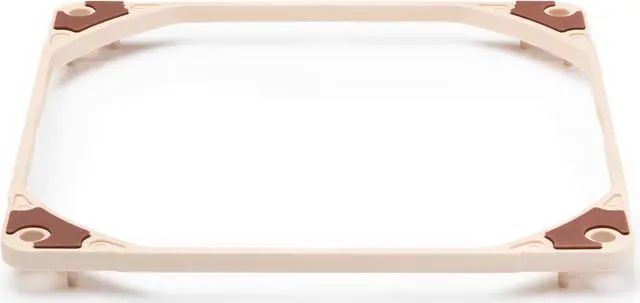
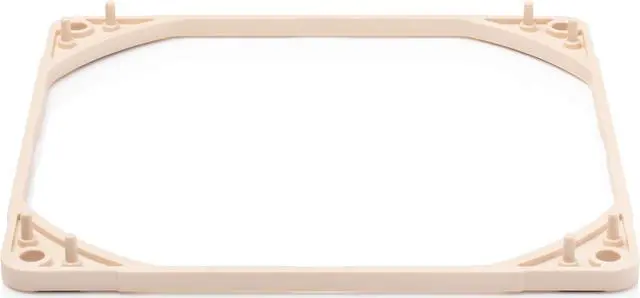
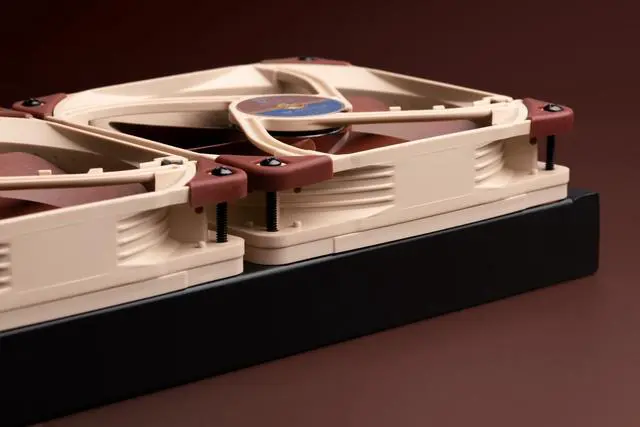
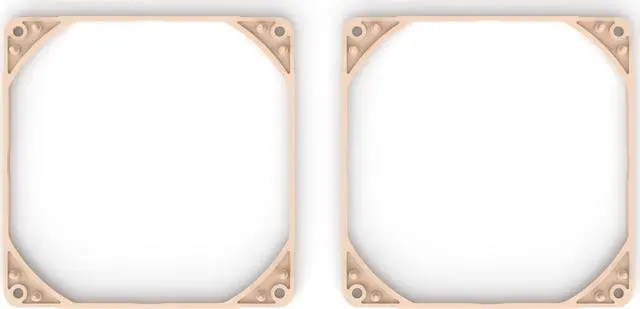
The NA-IS1-14 Sx2 is a set of two 5mm thick intake side spacer frames for Noctua 140x25mm fans that can help to improve both acoustics and performance in suction or "pull" type applications where the fan draws air through obstacles such as grills, perforated plates, mesh panels, filters or radiators. By offsetting the fan from the obstacle, the NA-IS1 inlet spacer reduces influx turbulences, which can, depending on the application and fan model, not only improve airflow but also significantly reduce overall noise levels and make the fan sound more pleasant to the ear. Designed to replace the fan's stock NA-AVP1 anti-vibration pads, the NA-IS1-14 are compatible with all current square-frame Noctua 140x25mm fans and extremely straightforward to install. In sum, the NA-IS1-14 Sx2 set is a simple yet highly effective fine-tuning measure for suction type applications where a reduction of influx turbulence can lead to improved airflow and acoustics.

Reducing influx turbulences doesn't only improve acoustics, it also helps fans to operate more efficiently from an airflow performance point of view. In many suction-type applications, using inlet spacers can therefore enable fans to achieve both higher flow rates and lower noise emissions.

| Suction applications where fans draw air through obstacles such as grills or perforated panels are notoriously challenging acoustically due to the turbulences caused by these obstacles. Introducing a 5mm off-set between the fan and the obstacle, the NA-IS1 spacers can reduce these turbulences, which often improves noise levels and/or noise profiles significantly. |

| Replacing the fan's stock NA-AVP1 anti-vibration pads, the NA-IS1-14 are compatible with all current Noctua square-frame 140x25mm fans such as the popular NF-A14 or NF-P14s redux series. Fans from other manufacturers are not supported. |

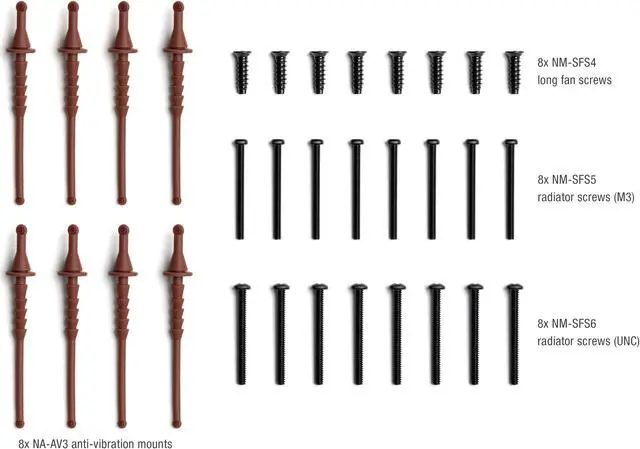
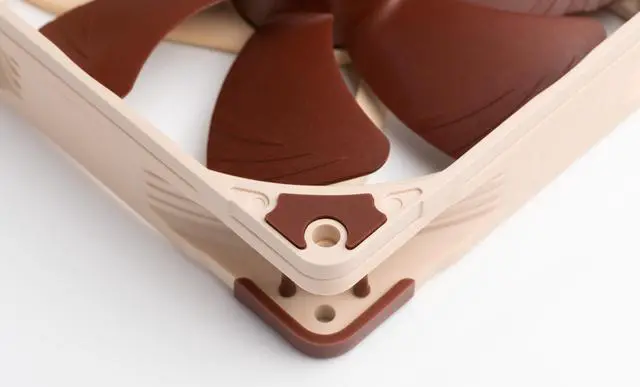
| For use with case intake fans, the NA-IS1-14 Sx2 contains eight long self-tapping fan screws and eight NA-AV3 silicone anti-vibration mounts for tool-free, vibration-proof installation. Both the screws and the anti-vibration mounts simply go through the holes in the spacer and attach to the fan, sandwiching the spacer between the fan and the case. |


| Products | ||||
|---|---|---|---|---|
| Colour | Beige & Brown | Black | Beige & Brown | Black |
| Quantity | x2 | x2 | x2 | x2 |
| Fan Compatibility | Noctua 120x25mm square fans | Noctua 120x25mm square fans | Noctua 140x25mm square fans | Noctua 140x25mm square fans |
The Noctua NA-IS1-14 Sx2 is a two-pack of 5mm inlet spacers for current Noctua 140x25mm fans, designed for PC builders who want to reduce intake turbulence when fans pull air through a grille, mesh panel, filter, or radiator.


