here!
I’m your shopping assistant for PC builds, upgrades, and everything tech.
Got questions? Ask away!
Start a conversation
here!
I’m your shopping assistant for PC builds, upgrades, and everything tech.
Got questions? Ask away!
Start a conversation


Any questions? Ask CelesteSM will help you find out quickly.
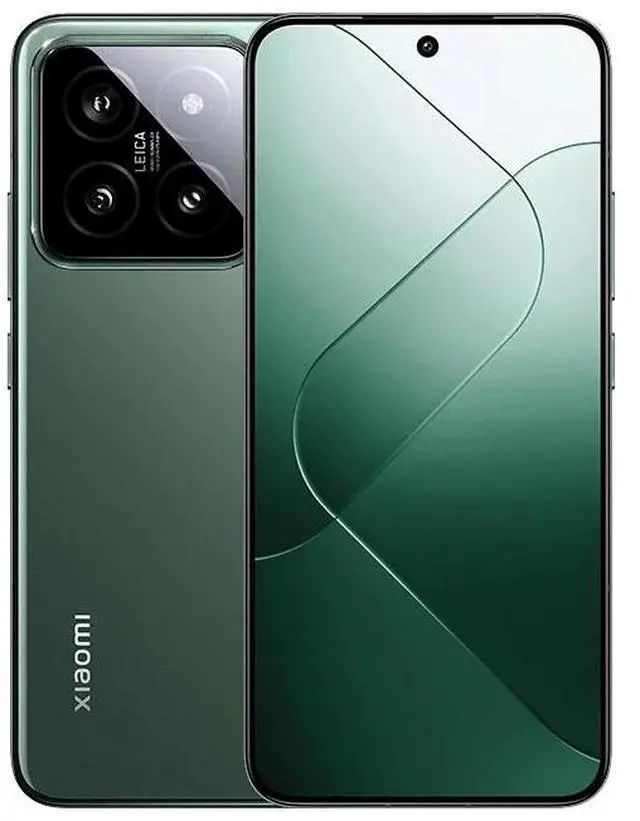
***Xiaomi 14 5G 6.36" OLED 120Hz Leica 50MP Snapdragon8Gen3 4610mAh By FedEx***
GLOBAL VERSION FACTORY UNLOCKED
New & Unlocked Phone
NETWORK Technology
GSM / CDMA / HSPA / CDMA2000 / LTE / 5G
2G bands GSM 850 / 900 / 1800 / 1900 - SIM 1 & SIM 2
CDMA 800
3G bands HSDPA 800 / 850 / 900 / 1700(AWS) / 1900 / 2100
CDMA2000 1x
4G bands 1, 3, 4, 5, 8, 18, 19, 26, 28, 34, 38, 39, 40, 41, 42, 48, 66
5G bands 1, 3, 5, 8, 28, 38, 40, 41, 48, 66, 77, 78 SA/NSA
Speed HSPA, LTE-A, 5G
LAUNCH Announced 2023, October 26
Status Coming soon. Exp. release 2023, October
BODY Dimensions 152.8 x 71.5 x 8.2 mm or 8.3 mm
Weight 188 g or 193 g (6.63 oz)
Build Glass front, glass back or silicone polymer back, aluminum frame
SIM Nano-SIM and eSIM or Dual SIM (Nano-SIM, dual stand-by)
IP68 dust/water resistant (up to 1.5m for 30 min)
DISPLAY Type LTPO OLED, 68B colors, 120Hz, Dolby Vision, HDR10+, 3000 nits (peak)
Size 6.36 inches, 97.6 cm2 (~89.3% screen-to-body ratio)
Resolution 1200 x 2670 pixels, 20:9 ratio (~460 ppi density)
PLATFORM OS Android 14, HyperOS
Chipset Qualcomm SM8650-AB Snapdragon 8 Gen 3 (4 nm)
CPU Octa-core (1x3.3 GHz Cortex-X4 & 5x3.2 GHz Cortex-A720 & 2x2.3 GHz Cortex-A520)
GPU Adreno 750
MEMORY Card slot No
Internal 512GB 12GB RAM
UFS 4.0
MAIN CAMERA Triple 50 MP, f/1.6, 23mm (wide), 1/1.31", 1.2µm, dual pixel PDAF, Laser AF, OIS
50 MP, f/2.0, 75mm (telephoto), PDAF (10cm - ), OIS, 3.2x optical zoom
50 MP, f/2.2, 14mm, 115 (ultrawide)
Features Leica lens, Dual-LED dual-tone flash, HDR, panorama
Video 8K@24fps (HDR), 4K@24/30/60fps (HDR10+, 10-bit Dolby Vision HDR, 10-bit LOG), 1080p@30/60/120/240/960fps, 720p@1920fps, gyro-EIS
SELFIE CAMERA Single 32 MP, (wide)
Features HDR, panorama
Video 4K@30/60fps, 1080p@30/60fps, gyro-EIS
SOUND Loudspeaker Yes, with stereo speakers
3.5mm jack No
24-bit/192kHz audio
COMMS WLAN Wi-Fi 802.11 a/b/g/n/ac/6e/7, dual-band, Wi-Fi Direct
Bluetooth 5.4, A2DP, LE, aptX HD, aptX Adaptive
Positioning GPS (L1+L5), GLONASS (G1), BDS (B1I+B1c+B2a), GALILEO (E1+E5a), QZSS (L1+L5), NavIC (L5)
NFC Yes
Infrared port Yes
Radio No
USB USB Type-C 3.2, OTG
FEATURES Sensors Fingerprint (under display, optical), accelerometer, proximity, gyro, compass, barometer, color spectrum
BATTERY Type Li-Po 4610 mAh, non-removable
Charging 90W wired, PD3.0, QC4, 100% in 31 min (advertised)
50W wireless, 100% in 46 min (advertised)
10W reverse wireless
The Xiaomi 14 5G is a compact unlocked Android flagship with a 6.36-inch 120Hz LTPO OLED display, Snapdragon 8 Gen 3, 16GB RAM, 1TB storage, and a Leica-branded 50MP camera system, making it a strong fit for buyers who want top-tier performance and big storage in a pocket-friendly phone.
| Attribute | Value |
|---|---|
| Best For | Buyers who want an unlocked global 5G smartphone focused on mobile photography, sustained performance and large local storage — equipped with a Snapdragon 8 Gen 3 SoC, Leica 50MP rear camera, 16GB RAM and 1TB storage; suited for multitasking, mobile photography, and large offline media libraries |
| Release And Availability | First listed on Newegg July 20, 2026 |
Q: Should I buy the Xiaomi 14 or Samsung Galaxy S24?
A: Choose the Xiaomi 14 if you want a compact flagship with faster charging, a larger 6.36-inch display, and a more camera-forward hardware setup with three 50MP rear cameras and Leica tuning. Choose the Galaxy S24 if longer software support and Samsung’s software ecosystem matter more than charging speed. Across reviews and community comparisons, this is commonly treated as a choice between Xiaomi’s stronger value in hardware and imaging versus Samsung’s longer-term software advantage.
Q: Is the Xiaomi 14 worth it over the Xiaomi 13?
A: Yes, the Xiaomi 14 is the better pick if the price gap is reasonable. It keeps the same compact flagship direction but adds Snapdragon 8 Gen 3, a newer 50MP triple-camera setup, 1-120Hz LTPO display behavior, faster front-camera video capability, and a newer update policy. The Xiaomi 13 still makes sense if you want a similar size and day-to-day experience at a lower cost, but most review and owner discussions treat the Xiaomi 14 as the more complete long-term buy.
Q: Xiaomi 14 or OnePlus 12: which one is the better buy?
A: Choose the Xiaomi 14 if you want a smaller phone with stronger emphasis on camera versatility in a flagship-sized compact body. Choose the OnePlus 12 if you prefer a larger screen, a bigger battery, and value charging and endurance over pocketability. Both use Snapdragon 8 Gen 3, so this comparison usually comes down to compact premium design and camera balance on the Xiaomi 14 versus big-screen battery-focused value on the OnePlus 12.
Q: Should I get the Xiaomi 14 or move up to the Xiaomi 14 Ultra?
A: Choose the Xiaomi 14 if you want flagship performance and Leica-branded cameras in a smaller, lighter phone that is easier to carry every day. Move up to the Xiaomi 14 Ultra if photography is the priority and you specifically want the larger 1-inch main sensor, more advanced zoom hardware, and the bigger display that comes with Xiaomi’s top camera model. This is mainly a portability-versus-camera-hardware decision rather than a performance decision, since both are built on Snapdragon 8 Gen 3.
Q: Is the Xiaomi 14 a better choice for portability than a larger flagship?
A: Yes, if you want high-end performance without moving to a large-format phone. The Xiaomi 14 is positioned and reviewed as a compact flagship: it keeps Snapdragon 8 Gen 3 performance, a 120Hz LTPO display, fast wired and wireless charging, and a full three-camera rear system in a 6.36-inch form factor. A larger flagship is the better fit if your priority is maximum battery size or a bigger screen for gaming and media, but the Xiaomi 14 is the more practical choice for one-handed use and easier carry.
Q: Is the Xiaomi 14 Global Version a good choice for international travel or using two numbers?
A: Yes, it is a practical fit for travel users who want an unlocked phone with dual-SIM flexibility in a compact flagship size. The Newegg listing states that this model is factory unlocked, supports Dual SIM, and is sold as a Global Version. Similar retail Q&A patterns on Best Buy repeatedly focus on whether unlocked phones can be used internationally and whether they support dual SIM, which suggests this is a common decision point. The main trade-off is that buyers should still confirm band support with their specific carrier before purchase.
Q: Who is the Xiaomi 14 best suited for?
A: The Xiaomi 14 is best suited for buyers who want flagship-level speed and cameras without moving to a large phone. Its 6.36-inch display makes it more compact than many premium Android alternatives, while the Snapdragon 8 Gen 3, 16GB RAM, 1TB storage, and Leica-branded 50MP camera setup make it suitable for power users, mobile photography, and heavy everyday multitasking. It is less ideal for buyers who want expandable storage or who prefer the simpler carrier support and after-sales experience of mainstream US-market models.
Q: Is the Xiaomi 14 a good buy for camera-focused users?
A: Yes, if your priority is getting a high-end camera system in a smaller phone. The listing highlights a Leica 50MP camera setup, and the Xiaomi 14 pairs that with flagship processing power that should handle fast capture, editing, and heavy app use well. Compared with many retail Q&A discussions around competing phones, camera quality is one of the most repeated buying concerns, and this model is positioned strongly for that need. The trade-off is that camera buyers in the US may find Samsung or Pixel easier for carrier compatibility, support, and ecosystem integration.
Q: Is the Xiaomi 14 better than a larger alternative like the OnePlus 12 or Galaxy S24 for everyday work and media use?
A: It is better if you value a smaller phone that still delivers flagship performance. The Xiaomi 14 gives you a compact 6.36-inch form factor, Snapdragon 8 Gen 3 performance, 16GB RAM, and 1TB storage, which is more than enough for meetings, messaging, multitasking, cloud apps, and media. A larger alternative such as the OnePlus 12 may be better for buyers who want a bigger screen and fewer compromises on battery and charging convenience, while a Galaxy S24 may be a safer pick for buyers who prioritize easier US retail support and compatibility.
Q: What are the main trade-offs of buying this Xiaomi 14 Global Version instead of a US-market flagship?
A: The main advantages are high-end specs, compact size, dual-SIM flexibility, and very large storage. The main trade-offs are the lack of memory card expansion, the need to verify carrier band support yourself, and potentially less predictable US-focused warranty, support, and retail ecosystem coverage than phones sold directly for the US market. This trade-off appears often in competitor retail Q&A, where buyers repeatedly ask about carrier compatibility, version differences, and SIM configuration before purchasing unlocked phones.
Q: Is the Xiaomi 14 worth buying if I want a compact flagship phone?
A: Yes, if you specifically want a smaller Android flagship with top-tier performance, a high-end display, and strong camera hardware. The Xiaomi 14 combines a 6.36-inch LTPO OLED screen, Snapdragon 8 Gen 3, 16GB RAM, and 1TB storage in a compact format. The main trade-offs repeatedly discussed by users are heat under heavy use, mixed battery-life reports, and Xiaomi software preferences.
Q: Who is the Xiaomi 14 best suited for?
A: It is best suited for buyers who want flagship speed, strong rear cameras, dual-SIM support, and large storage without moving to a larger phone. It fits users who value portability and photography more than maximum battery size or the lightest possible software experience.
Q: Are battery life and heating major drawbacks on the Xiaomi 14?
A: They can be. Community discussion repeatedly flags heat during gaming, demanding tasks, or warm environments, and battery feedback is inconsistent across users. For everyday use, many users still report acceptable to good endurance, but buyers sensitive to thermals or seeking the longest battery life should treat this as a real trade-off.
Q: Is the Xiaomi 14 a good choice for camera-focused buyers?
A: Yes, if camera quality is a priority in a smaller phone. The product listing confirms a 50MP Leica-branded camera system, and repeated Reddit and YouTube discussion centers on the camera as one of the phone's strongest reasons to buy. The main limitation is that overall buying decisions still depend on your tolerance for Xiaomi software and thermal behavior.
Q: What are the main trade-offs of choosing the Xiaomi 14 over another flagship?
A: The main trade-offs are not raw performance or storage, but day-to-day behavior. You get flagship hardware, a compact screen size, dual SIM, and very large 1TB storage, but users repeatedly compare that against possible heat under load, uneven battery impressions, and Xiaomi's software experience. It is a stronger fit for buyers prioritizing compact hardware and cameras than for buyers who want the most predictable thermals and battery consistency.