




 here!
I’m your shopping assistant for PC builds, upgrades, and everything tech.
Got questions? Ask away!
Start a conversation
here!
I’m your shopping assistant for PC builds, upgrades, and everything tech.
Got questions? Ask away!
Start a conversationShipped by Hebei XG Technology Co., Ltd.






Any questions? Ask CelesteSM will help you find out quickly.
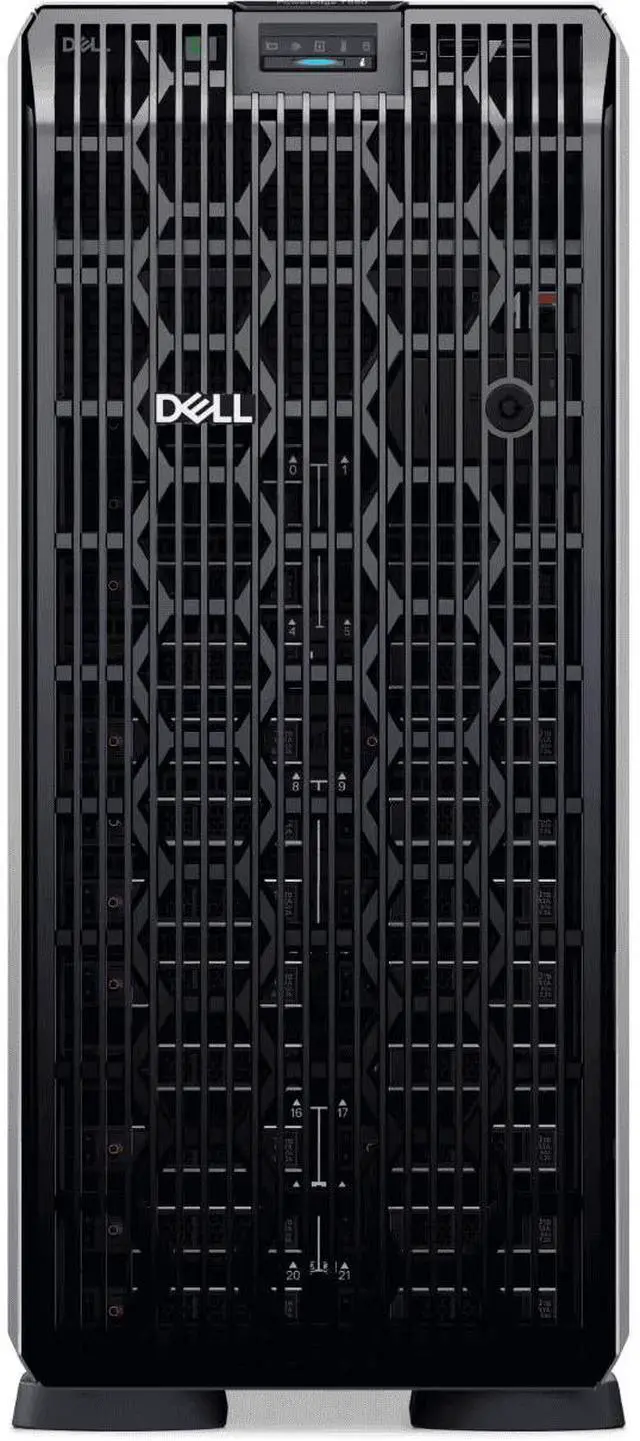
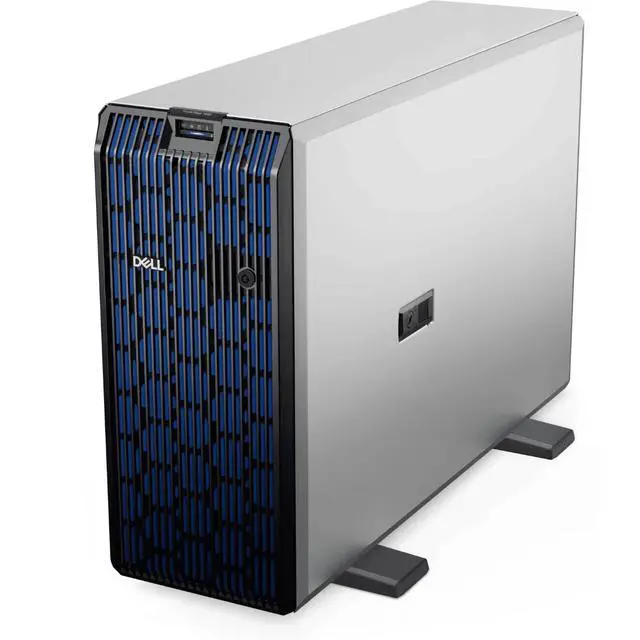
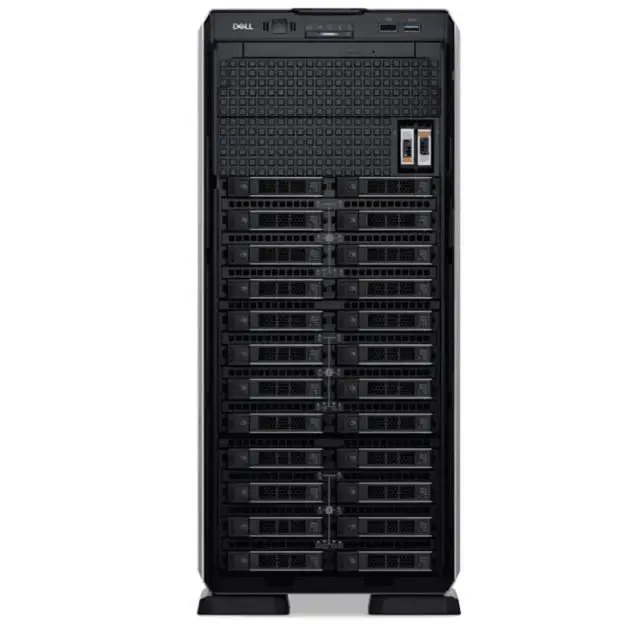
- Compact and Space - saving: It adopts a 3U form factor with a chassis volume of less than 17 liters, which is suitable for deployment in various environments, such as warehouses, retail stores, or office desktops, and has good acoustic performance, suitable for office use.
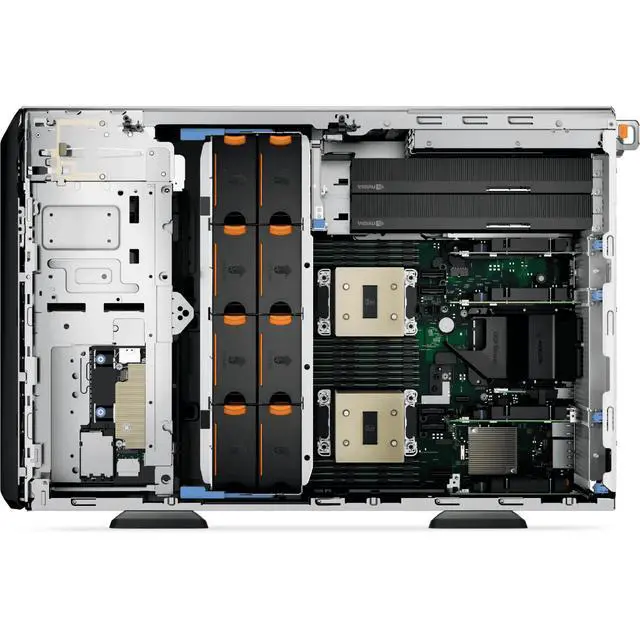
- Processor Performance: It is equipped with an Intel Xeon E - 2414 processor, which has 4 cores, 4 threads, a main - frequency of 2.6GHz, and a cache of 12MB, with a power consumption of 55W, which can provide a certain computing power.
- Expandable Memory: It has 4 DDR5 DIMM slots, supporting UDIMM, with a maximum of 32GB per DIMM and a speed of up to 4400MT/s. Only unbuffered ECC DDR5 DIMMs are supported, and users can configure the appropriate memory capacity according to their needs.
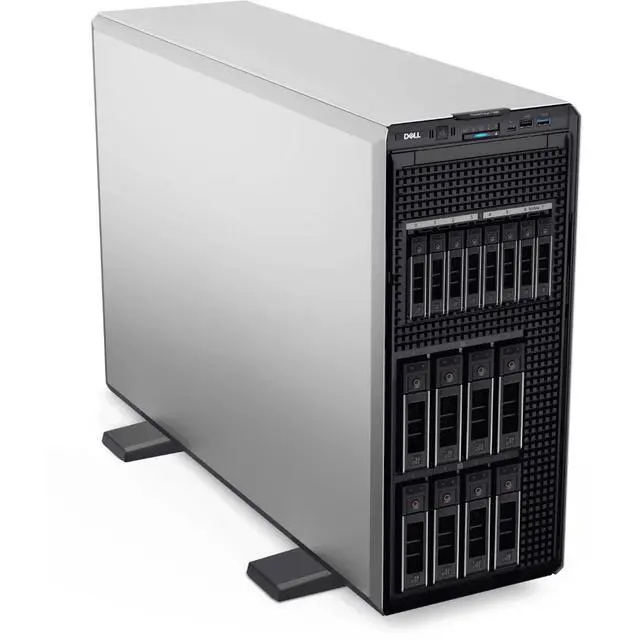
- Flexible Storage: The server is equipped with 4 3.5 - inch drive bays, which can support SAS/SATA HDDs or SSDs, with a maximum capacity of 48TB. It can also be configured with an additional 2 2.5 - inch drive bays, with a maximum capacity of 63.36TB, and supports software RAID S160, providing flexible storage solutions.
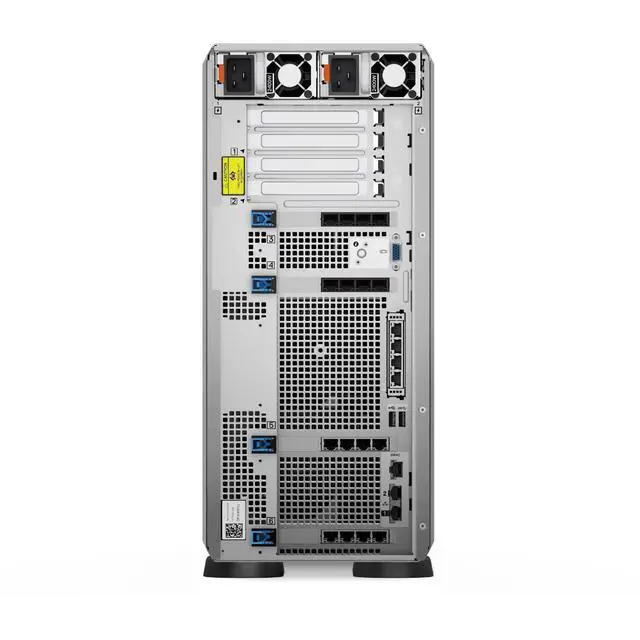
- Rich Interfaces: It has a variety of interfaces, including 1 iDRAC Direct (Micro - AB USB) port and 1 USB 3.2 Gen1 port on the front; 3 USB 2.0 ports, 3 USB 3.2 Gen1 ports, 1 dedicated iDRAC Ethernet port, 1 serial port, 1 VGA port, and 2 Ethernet ports on the back, which can meet different connection needs.
- Power Supply Configuration: It is equipped with a single 300W copper - level AC power supply, which can provide stable power support for the server.
- Management and Security: It is equipped with an iDRAC9 management controller, which supports remote monitoring, management, and maintenance. It also has functions such as TPM 2.0, secure boot, and silicon root of trust to ensure the security and integrity of the system.
The Dell T160 is a compact tower server with an Intel Xeon E-2414, four 3.5-inch drive bays, and ECC DDR5 support, making it a good fit for small businesses, branch offices, retail sites, or warehouse deployments that need entry-level on-site infrastructure with flexible storage.
| Attribute | Value |
|---|---|
| Best For | Small offices, retail stores and warehouses needing a compact, quiet tower server for modest 4-core Xeon compute and multi-drive local storage |
| Processor And Core Count | Intel Xeon E-2414 — 4 cores / 4 threads, 2.6 GHz base frequency, 12 MB cache, 55W power consumption |
| Memory Configuration | 4 DDR5 DIMM slots supporting UDIMM; only unbuffered ECC DDR5 DIMMs supported, up to 32 GB per DIMM and up to 4400MT/s |
| Storage And Expansion | 4 × 3.5-inch drive bays supporting SAS/SATA HDDs or SSDs (listed max 48TB); optional additional 2 × 2.5-inch bays (listed max 63.36TB); supports software RAID S160 |
| I/O And Remote Management | Front: iDRAC Direct (Micro-AB USB) and 1 × USB 3.2 Gen1; Rear: 3 × USB 2.0, 3 × USB 3.2 Gen1, dedicated iDRAC Ethernet, serial, VGA, and 2 Ethernet ports — includes dedicated iDRAC for out-of-band management |
| Power And Cooling | Single 300W copper-level AC power supply (single-PSU configuration) |
| Chassis And Acoustics | Compact 3U-form-factor tower with chassis volume <17 liters; described as space-saving with good acoustic performance suitable for office use |
| Default Configuration | Ships without memory and without disks by default; configured with a single power supply |
| Model Identifiers | Dell T160 (E2414 option) — 4 × 3.5-inch drive bays |
Q: Should I choose the Dell PowerEdge T160 or the older PowerEdge T150 for a small office server?
A: Choose the PowerEdge T160 if you want a newer platform in a much smaller tower. Dell positions the T160 as a compact 3U single-socket tower, while the T150 is a larger 4U mini tower. The T160 moves to newer Xeon E-2400 processors and DDR5 memory, and independent review coverage highlights that it is about 42% smaller than the T150 while keeping enterprise features such as iDRAC and flexible storage. The T150 still makes sense if physical size is less important and you are comparing against older DDR4-based deployments, but the T160 is the more current choice for space-constrained branch, retail, and office use.
Q: Is the Xeon E-2414 T160 worth it over a Pentium G7400 T160 configuration?
A: Choose the Xeon E-2414 configuration if the server will run business workloads, multiple services, or light virtualization. Dell offers the T160 with both Pentium and Xeon options, but the Xeon E-2414 gives you server-class positioning with 4 cores instead of 2, ECC support within the platform, and a clearer path for branch office infrastructure tasks. A Pentium-based T160 is the better fit when the goal is a lower-cost appliance-like server for basic file sharing, simple domain services, or a lightly loaded edge role.
Q: When should I buy the PowerEdge T360 instead of the T160?
A: Buy the PowerEdge T360 if you expect the server to grow into a heavier general-purpose role and you want a larger tower platform. Dell positions the T360 as a 4.5U single-socket tower for customers who want more versatility and processing power, while the T160 is the smaller compact model for flexibility and affordability in tighter spaces. In practice, the T160 is the better choice for edge, retail, and quiet office deployment where footprint matters more than expansion. The T360 is the better choice when you prioritize a roomier chassis and a configuration path aimed at broader small-business server duties.
Q: Is the T160 a better fit than a rack server like the PowerEdge R260?
A: Choose the T160 if you need a compact server for an office, back room, retail site, or other location without a rack. Dell introduced the T160 and R260 together for near-edge deployments, but they serve different installation preferences: the T160 is a compact tower, while the R260 is a short-depth rack server. Performance class is similar because both target compact single-socket edge use, so the decision is usually about form factor, acoustics, and where the system will physically live rather than raw capability alone.
Q: Is the T160 a good choice for a quiet, space-saving edge server, or should I prioritize a larger performance-first tower?
A: The T160 is the better choice when low footprint and office-friendly deployment are the main priorities. Dell positions it as a compact tower for customers who need flexibility, affordability, and processing power in small spaces, and review coverage specifically ties it to retail, branch, and small-office edge use. A larger tower becomes the better fit when you know you will value more internal expansion, a less constrained chassis, or a broader long-term workload plan over the T160's smaller physical size.
Q: Who is this tower server suitable for?
A: This model fits small business, branch office, and edge deployments that need a compact on-site server rather than a fully configured out-of-box system. It is best for buyers who plan to add their own ECC DDR5 memory, storage drives, and operating system, and who want a quiet tower form factor with remote management and flexible local storage.
Q: Does it come ready to use out of the box?
A: No. This configuration is a bare or near-bare server build: no memory and no disks are included, so it is not ready for production use until you install compatible unbuffered ECC DDR5 RAM, storage drives, and a supported operating system. It is better suited to IT-managed setups than to buyers looking for a plug-and-play office machine.
Q: Is 4 cores enough for office server tasks?
A: Yes for light to moderate server workloads such as file sharing, basic business applications, user authentication, print services, and small database or collaboration tasks. The Xeon E-2414 is not ideal for heavy virtualization, large multi-user application stacks, or compute-intensive workloads, so performance depends on keeping the workload modest and pairing it with enough ECC memory and fast storage.
Q: Can it work well as a small office file server or backup server?
A: Yes. The 4 x 3.5-inch bays, support for SATA or SAS HDDs or SSDs, and software RAID support make it a practical fit for local file storage, shared folders, and backup targets in a small office. The main trade-off is that this listing includes no drives, so storage performance, capacity, and fault tolerance depend entirely on how you configure the disks and RAID.
Q: Can this server sit in a normal office without a rack or cooling room?
A: Generally yes. This is a compact tower server designed for office, retail, and branch environments, so it is more suitable for desk-side or back-office placement than a data-center rack server. Buyers should still allow for airflow, noise tolerance, and the heat produced by the drives they install, but it is intended for normal business environments rather than a dedicated server room.
Q: Who is the Dell T160 with Xeon E-2414 best suited for?
A: This configuration fits small business edge workloads more than virtualization-heavy use. It makes the most sense for basic file sharing, domain controller duties, light office infrastructure, branch office services, or a quiet on-site server where compact size matters. The main limits are the entry-level 4-core CPU, no included memory or storage in this listing, and a single power supply.
Q: Is this Dell T160 a good choice for virtualization or multiple VMs?
A: Not as listed, unless your VM load is light. The Xeon E-2414 is a 4-core, 4-thread entry CPU, and this unit ships with no memory or disks. For one or two light infrastructure VMs it can work once configured, but it is not the best fit for dense virtualization, larger multitasking loads, or growth-heavy deployments.
Q: Is buying the barebones Dell T160 worth it compared with a fully configured system?
A: It can be worth buying if you already plan to add your own ECC DDR5 memory and drives, because the barebones listing avoids paying for bundled parts you may replace anyway. The trade-off is that total value depends heavily on upgrade cost, and community discussion shows that Dell server storage and configuration pricing can become poor value quickly if bought fully populated from major vendors.
Q: What are the main trade-offs of the Dell T160 in this configuration?
A: The main trade-offs are expandability and resilience versus simplicity. You get a compact tower with up to four 3.5-inch bays and ECC DDR5 support, but this specific listing includes no RAM, no disks, and only a single 300W power supply. That makes it better for cost-controlled, entry server roles than for redundancy-focused or performance-heavy deployments.
Q: Is the Dell T160 a good replacement for an older tower server in a small office?
A: Yes, if the old server is handling basic office infrastructure and you want a newer, smaller, quieter platform with modern ECC DDR5 support and current remote management features. It is a weaker replacement if the older system has more cores, more drive capacity, redundant power, or is already running many VMs or heavier server applications.


