here!
I’m your shopping assistant for PC builds, upgrades, and everything tech.
Got questions? Ask away!
Start a conversation
here!
I’m your shopping assistant for PC builds, upgrades, and everything tech.
Got questions? Ask away!
Start a conversation



Any questions? Ask CelesteSM will help you find out quickly.
|
CPU |
AMD Ryzen AI 9 HX 470,12C/24T,Up to 5.2GHz |
|---|---|
|
GPU |
AMD RadeonTM 890M |
|
Memory |
32GB DDR5 SODIMM(Dual-channel, Included); Max 256GB |
|
Storage |
1TB M.2 2280 NVMe PCle4.0 x4 SSD(pre-installed),two additional M.2 slot for expansion |
|
Connectivity |
Dual 2.5G LAN |
|
Operating System |
Windows 11 Pro |
|
Package Included |
1x Mini PC, 1x Power adapter, 1x VESA mount with screws, 1x HDMI cable, 1x User Manual |


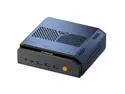
The BOSGAME VTA-439 is a compact Windows 11 Pro AI mini PC with an AMD Ryzen AI 9 HX 470, 32GB DDR5, 1TB SSD, and 86 TOPS total AI compute, making it a strong fit for developers, creators, and power users who want local AI workflows, multitasking, and fast networking in a small desktop.
Q: Who is this mini PC best suited for?
A: This model is best suited for power users who want a very small desktop for heavy multitasking, local AI workloads, multi-monitor office setups, fast networking, or future eGPU expansion. It fits developers, creators, home-lab users, and professionals who benefit from 32GB RAM, dual 2.5GbE, Wi-Fi 7, four-display output, and OCuLink. It is less suitable for buyers who only need basic web, note-taking, or light office work, because lower-cost mini PCs can handle those tasks without paying for the extra AI and expansion features.
Q: Is it good for office work, meetings, and multi-monitor productivity?
A: Yes. For office work, meetings, browsing, spreadsheets, remote sessions, and heavy multitasking, this mini PC is more than sufficient. Its practical advantage over many mainstream mini PCs is connectivity: up to four displays, dual 2.5GbE, Wi-Fi 7, and 32GB DDR5 already installed. The trade-off is that it is likely more machine than most standard office users need, so its value is strongest when you will actually use the extra displays, networking, storage expansion, or AI acceleration.
Q: Can it replace a gaming desktop by itself?
A: Not fully. The integrated Radeon 890M is strong for integrated graphics, so it should be fine for lighter gaming, esports titles, older games, and lower settings in many modern games. But as a stand-alone gaming replacement, an integrated-GPU mini PC is still a compromise versus a desktop with a dedicated graphics card. The main reason to choose this model for gaming is the OCuLink port, which gives you a clearer upgrade path to an external GPU later.
Q: What are the main trade-offs versus a more typical mini PC?
A: The main advantages are AI capability, stronger integrated graphics, OCuLink for eGPU use, dual 2.5GbE, Wi-Fi 7, and broader expansion headroom. The trade-offs are usually price, power draw under load, and the fact that many buyers will not use features like local AI acceleration, dual high-speed Ethernet, or external GPU support. Compared with a simpler office-focused mini PC, this is the better choice only if you want advanced connectivity, heavier workloads, or longer upgrade runway.
Q: Is it a good travel or space-saving work device?
A: Yes, if you want desktop-class capability in a small footprint. A mini PC like this works well for travel between offices, hot-desk setups, VESA-mounted workstations, or users who want a permanent desk system without a tower. The limitation is that it is still a desktop: you must bring power, display, keyboard, and mouse, so it is less convenient than a laptop for true mobile work. It makes the most sense for portable deployment, not lap-based computing.
Q: Who is the BOSGAME VTA-439 a good fit for?
A: It makes the most sense for buyers who want a compact desktop for heavy multitasking, developer work, homelab use, multiple displays, or experimenting with local AI on an NPU-enabled Windows mini PC. Based on repeated Reddit and YouTube discussion around this model and similar BOSGAME mini PCs, the main appeal is strong CPU/iGPU performance in a small footprint, plus features that are uncommon at this size such as OCuLink, dual 2.5GbE, and newer wireless. It is less suited to buyers who only need basic web, office, or media use, because those workloads do not justify this class of hardware.
Q: Is the BOSGAME VTA-439 worth buying over a cheaper mini PC?
A: It is worth considering if you specifically want the newer Ryzen AI 9 HX 470 platform, Radeon 890M graphics, local AI support, OCuLink expansion, dual 2.5GbE, and higher upgrade headroom in one box. If your needs are general productivity, media playback, light office work, or a basic home PC, a cheaper Ryzen-based mini PC will usually deliver better value. The trade-off discussed repeatedly in community threads is that BOSGAME systems can offer strong specs for the price, but the decision only makes sense when you will actually use the higher-end features.
Q: Can the BOSGAME VTA-439 replace a larger desktop for work or home lab use?
A: For many users, yes. Its CPU class, 32GB DDR5 standard memory, 1TB SSD, dual 2.5GbE, Wi-Fi 7, and support for multiple displays make it practical as a space-saving desktop for development, office work, NAS-adjacent networking tasks, VMs, and always-on utility roles. The main limitation is graphics: the integrated Radeon 890M is strong for an iGPU, but it is still not a substitute for a dedicated high-end GPU in sustained 3D, rendering, or serious gaming unless you plan to add an eGPU through OCuLink.
Q: What are the main trade-offs of choosing the BOSGAME VTA-439?
A: The main trade-offs are price, reliance on integrated graphics unless you add an eGPU, and the usual mini PC limits around thermals, acoustics, and vendor confidence compared with larger desktops from top-tier brands. Community discussion around BOSGAME products often treats them as feature-rich and competitive on paper, but buyers still weigh support reputation and long-term reliability more carefully than they would with mainstream desktop vendors. In short: the VTA-439 is strongest when you value compact size and I/O flexibility more than maximum GPU power or brand reassurance.
Q: Is the BOSGAME VTA-439 a good choice for gaming?
A: It is a reasonable choice for light to moderate gaming on integrated graphics, but not the best fit if gaming is your main priority. The Radeon 890M should be capable for esports, older titles, and lower settings in newer games, but a similarly priced system with a stronger dedicated GPU will usually be the better gaming buy. The VTA-439 becomes more interesting for gaming if you specifically want a compact everyday PC now and may add an external GPU later through OCuLink.