












Can this external SSD work with IOS?
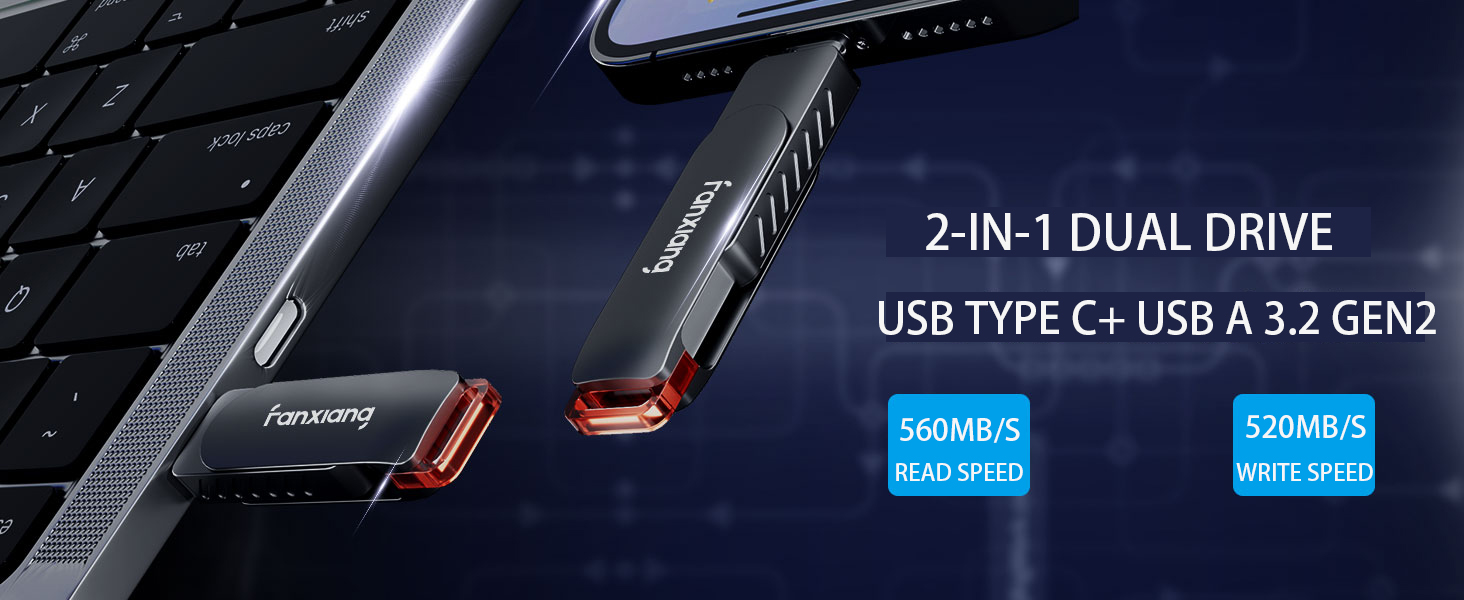
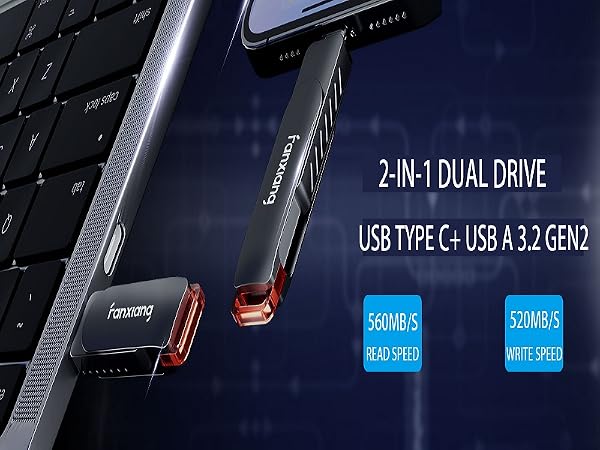
Yes, but it can only support Type-C Port such as iPad Pro, iPhone 15, 15 Pro, 15 Pro Max, etc.
Why can't this USB drive be recognized on a smartphone?
Please go to check the flash drive’s format, make sure it is EXFAT and open the OTG function.
Why does the write speed drop when I write to large files?
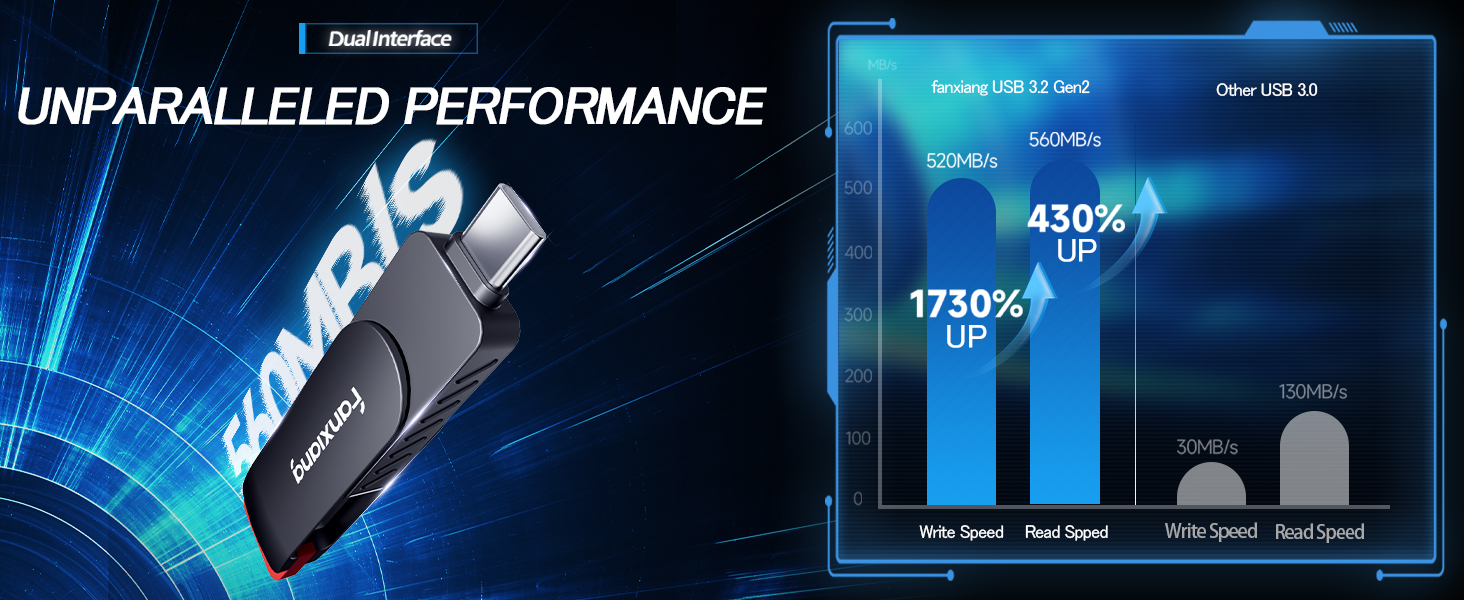
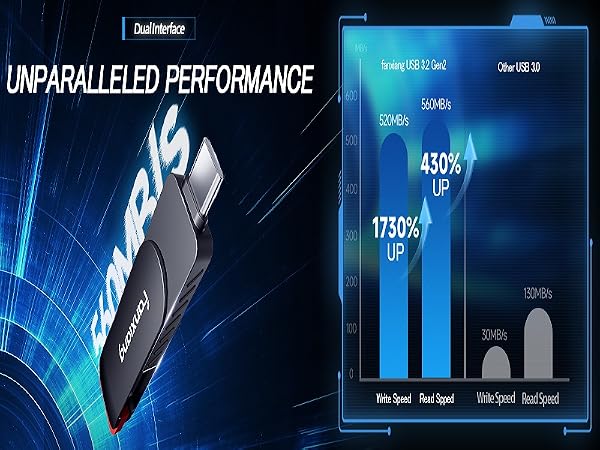
If you want to maintain a high write speed, it is recommended that you do not write more than 1/4 of the remaining usable capacity at one time.
Why does my USB drive show less storage than the advertised capacity when I plug it into my computer?
The advertised flash drive capacity is based on a decimal system (1GB=1000MB=1000000KB), but computer uses a binary system (1GB=1024MB=1048576KB), which results in slightly less available space. This is normal for all storage devices.
Why does the solid state USB flash drive feel a little warm during use?
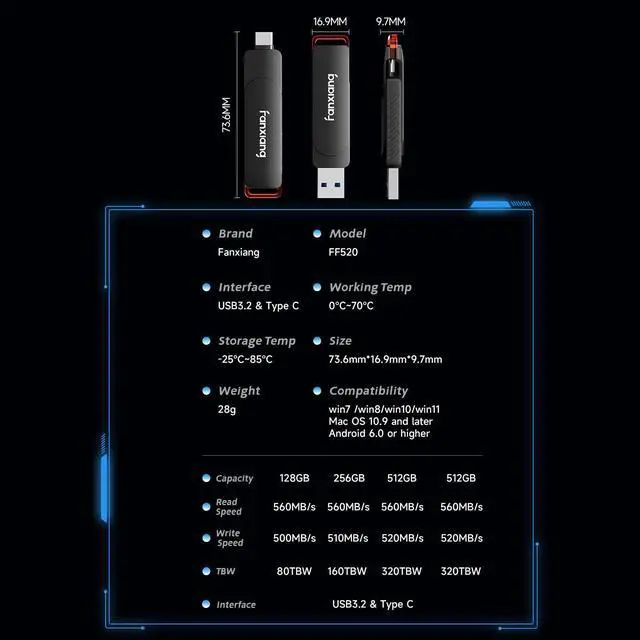
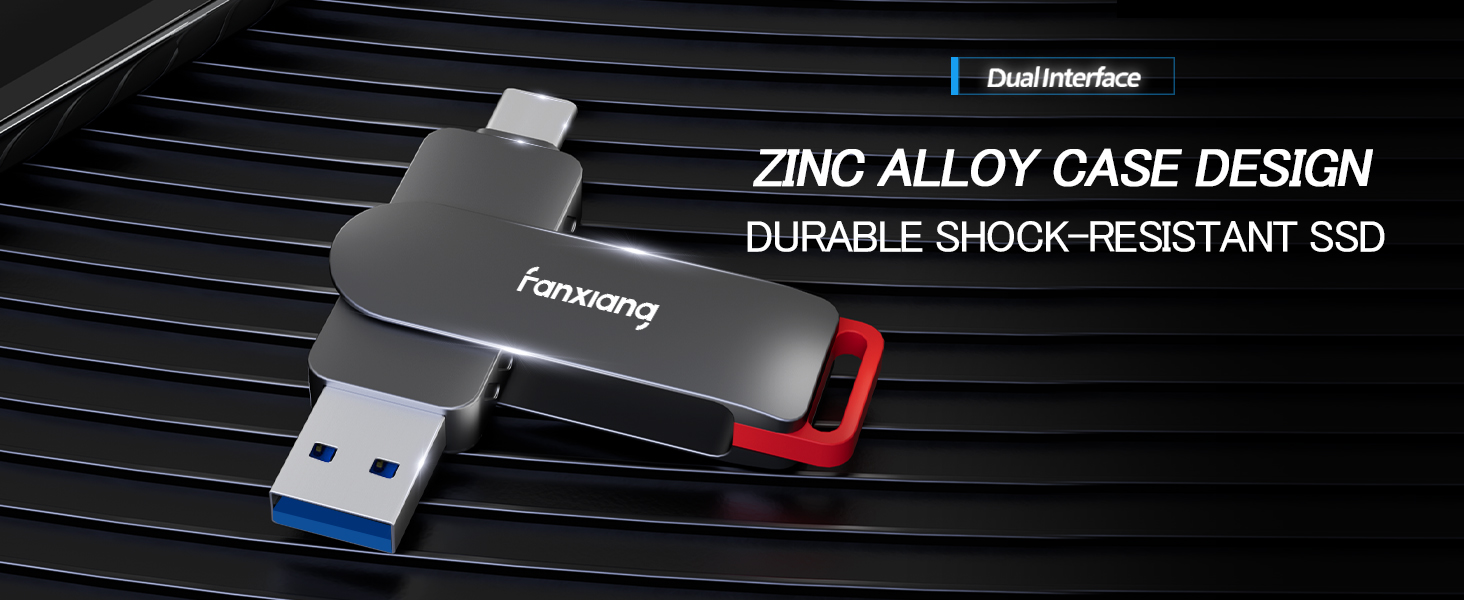
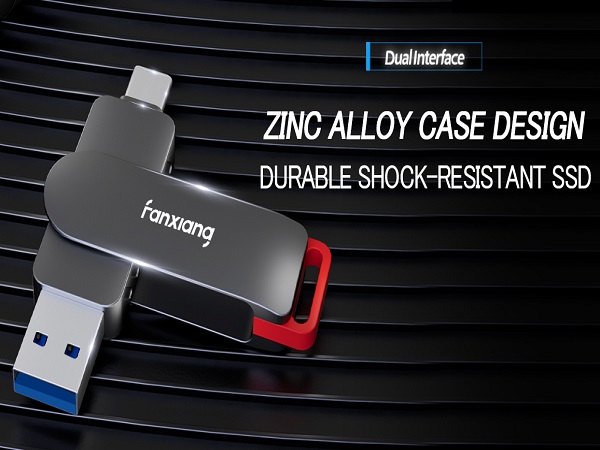
The built-in SSD structure generates heat during high-speed data transfer. The zinc alloy casing dissipates heat effectively. After long-term and multiple high-temperature tests, it operates safely within 0°C to 70°C, so the warmth is normal and safe


Can this external SSD work with IOS?
Yes, but it can only support Type-C Port such as iPad Pro, iPhone 15, 15 Pro, 15 Pro Max, etc.
Why can't this USB drive be recognized on a smartphone?
Please go to check the flash drive’s format, make sure it is EXFAT and open the OTG function.
Why does the write speed drop when I write to large files?
If you want to maintain a high write speed, it is recommended that you do not write more than 1/4 of the remaining usable capacity at one time.
Why does my USB drive show less storage than the advertised capacity when I plug it into my computer?
The advertised flash drive capacity is based on a decimal system (1GB=1000MB=1000000KB), but computer uses a binary system (1GB=1024MB=1048576KB), which results in slightly less available space. This is normal for all storage devices.
Why does the solid state USB flash drive feel a little warm during use?
The built-in SSD structure generates heat during high-speed data transfer. The zinc alloy casing dissipates heat effectively. After long-term and multiple high-temperature tests, it operates safely within 0°C to 70°C, so the warmth is normal and safe