


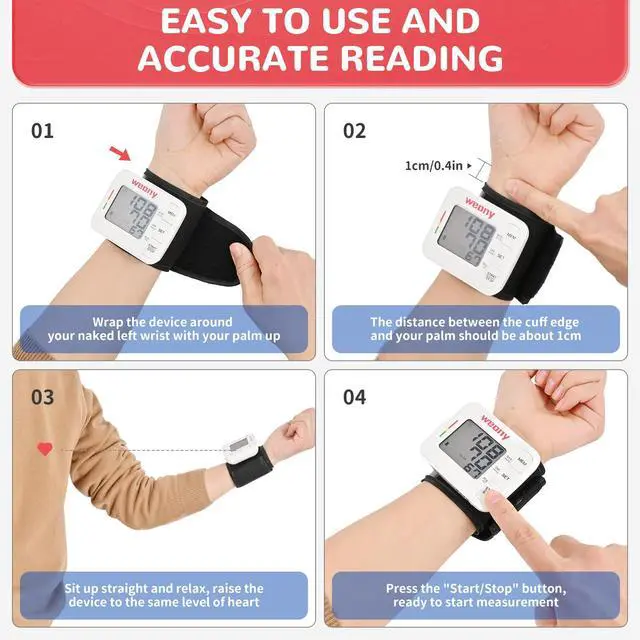



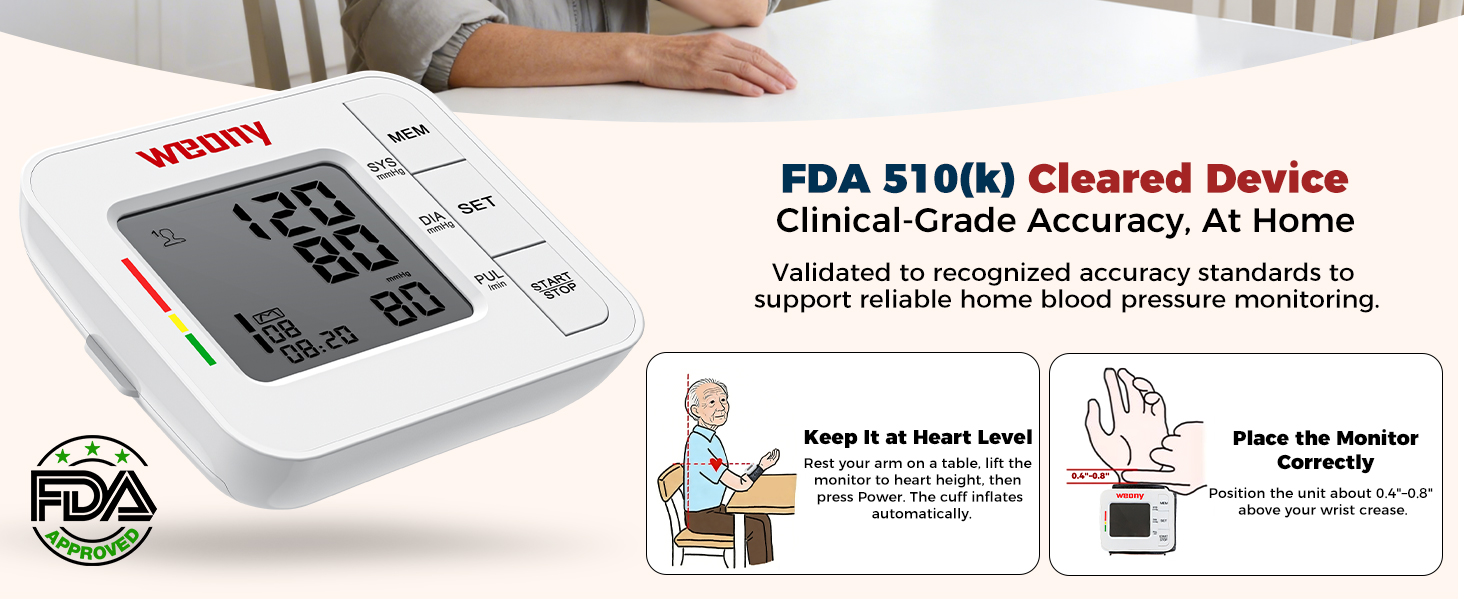
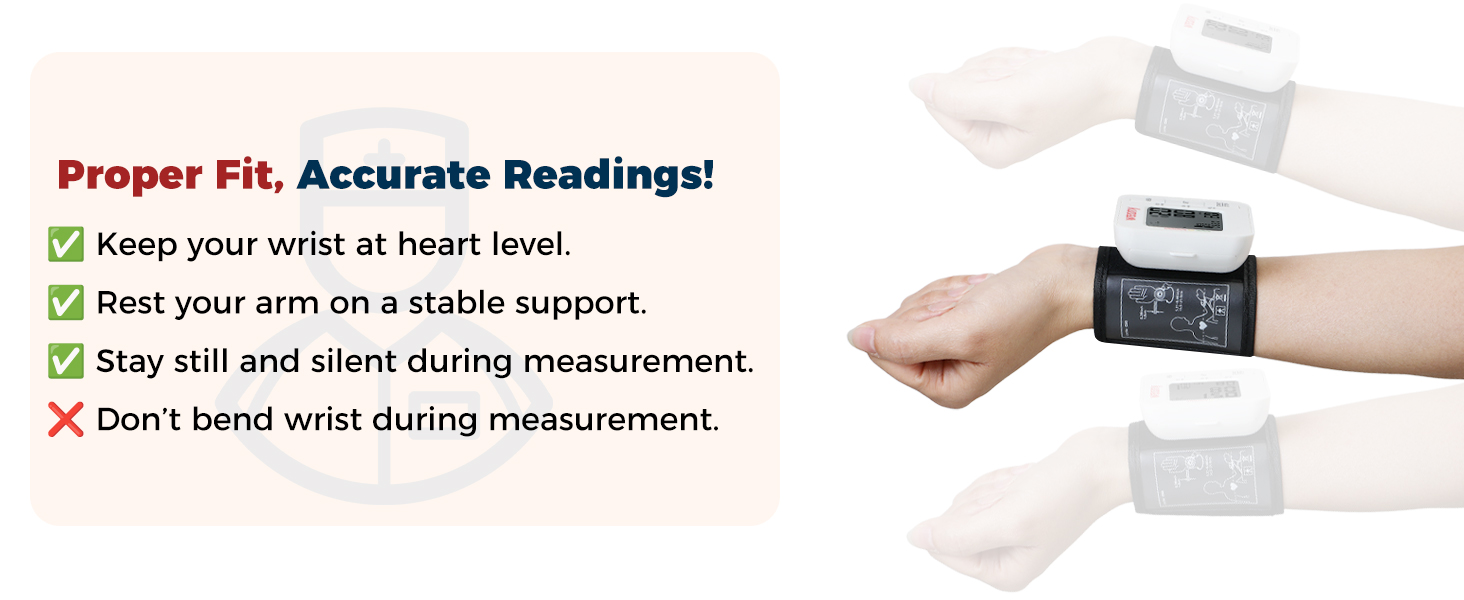
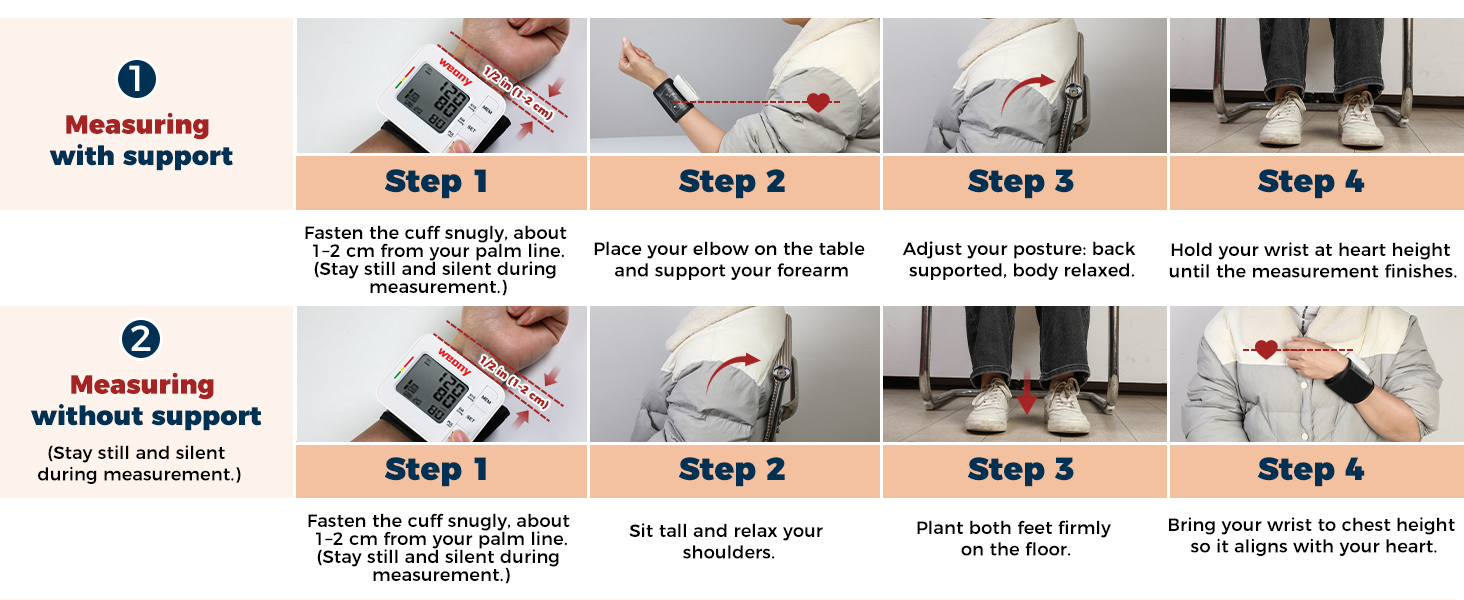
Do I need to wear this wrist monitor at a certain height?
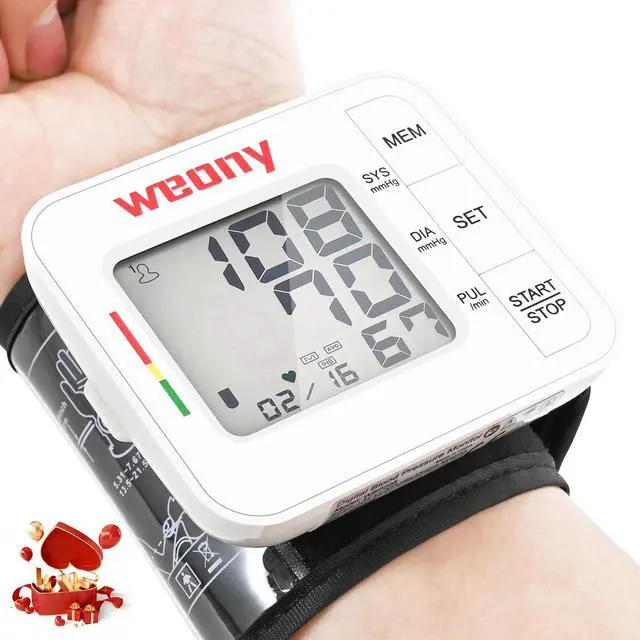
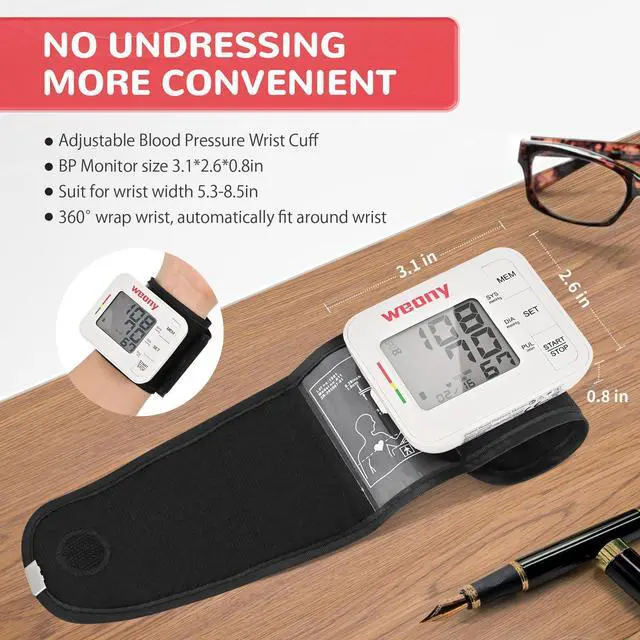
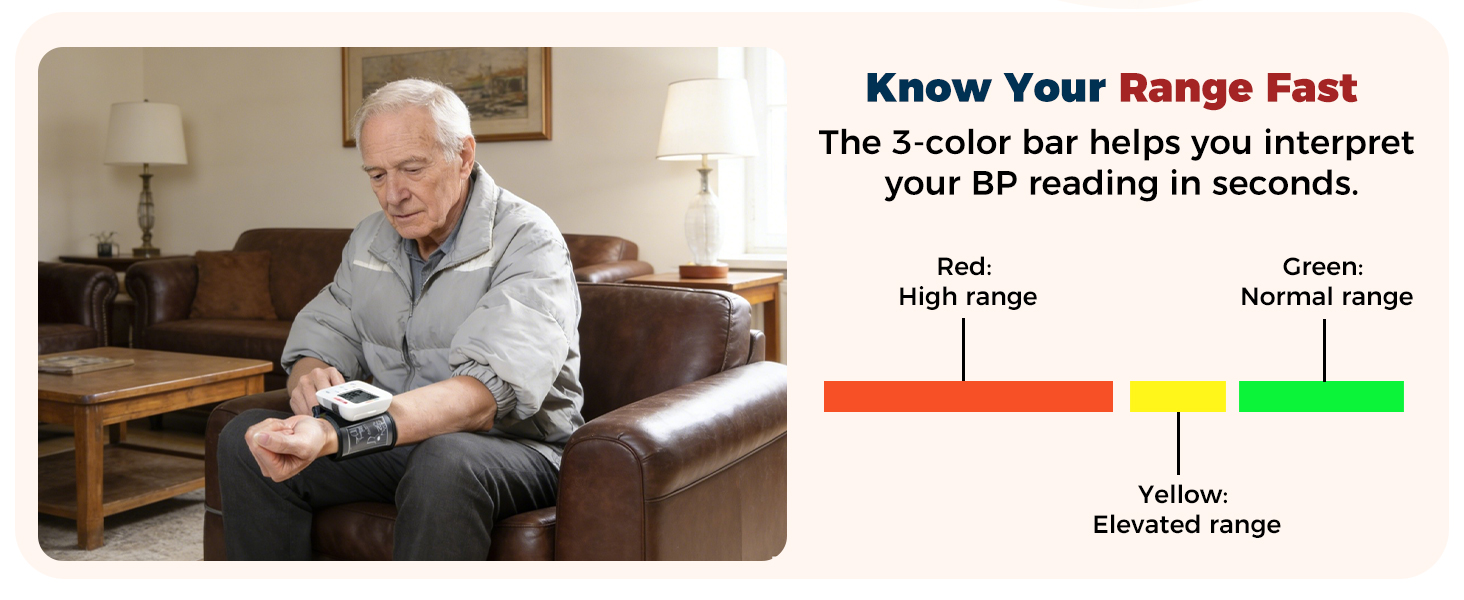
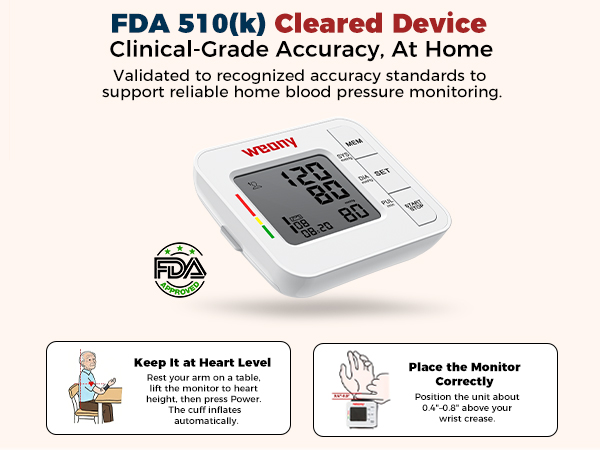
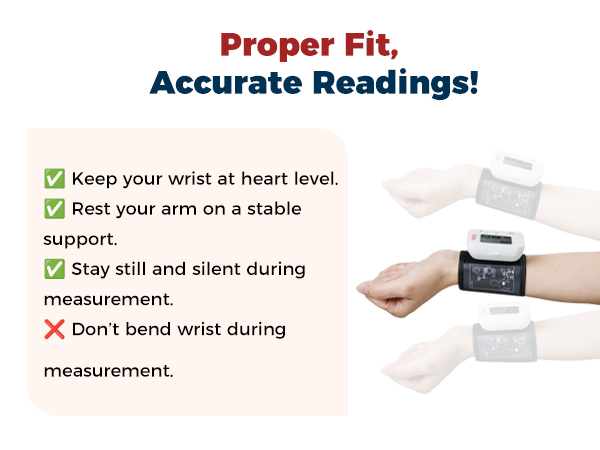
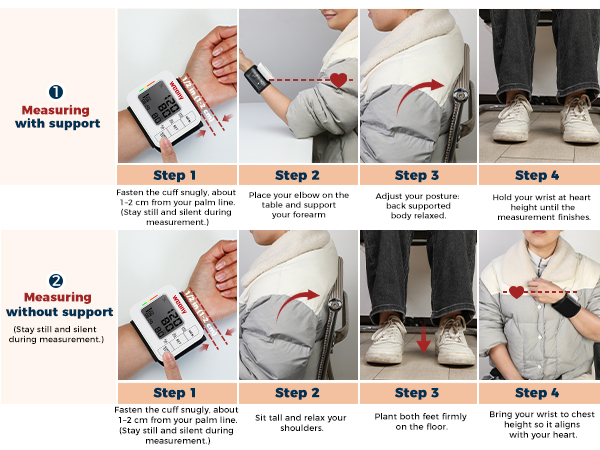
Yes, make sure the cuff is on your inner wrist with the screen facing up, and keep your wrist at heart level (e.g., rest your elbow on a table). That helps ensure more accurate measurements.
Is this easy to use for seniors?
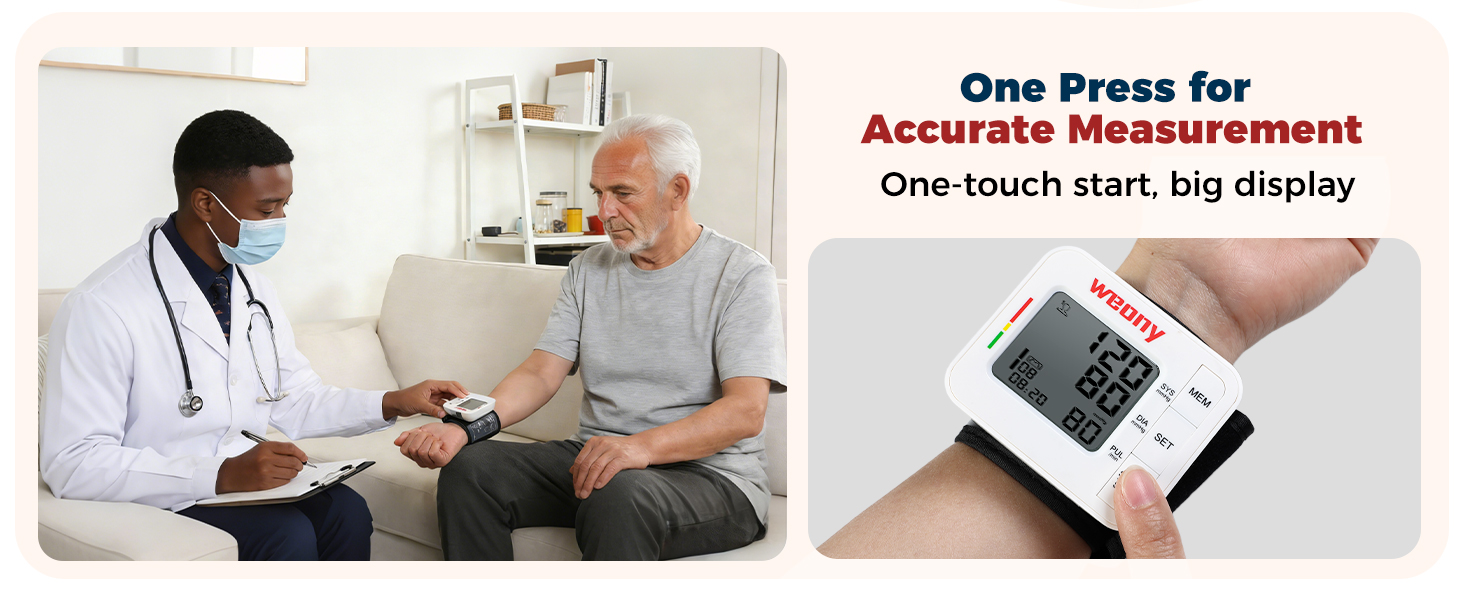
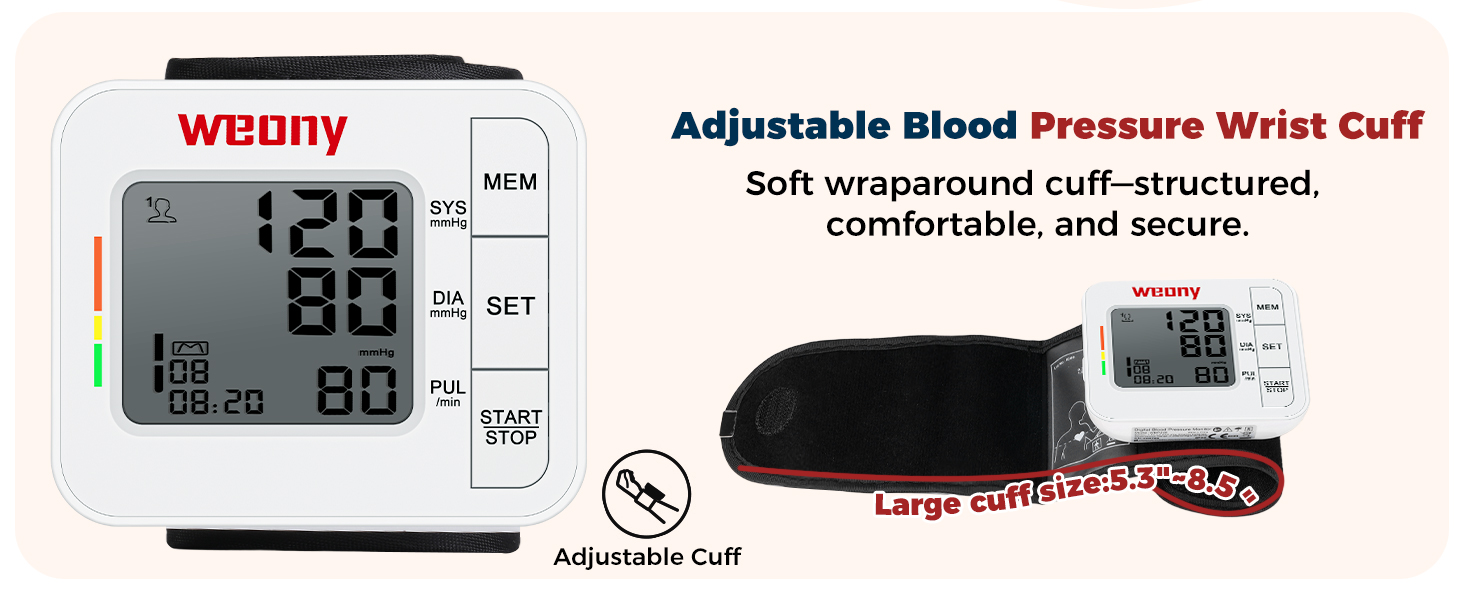
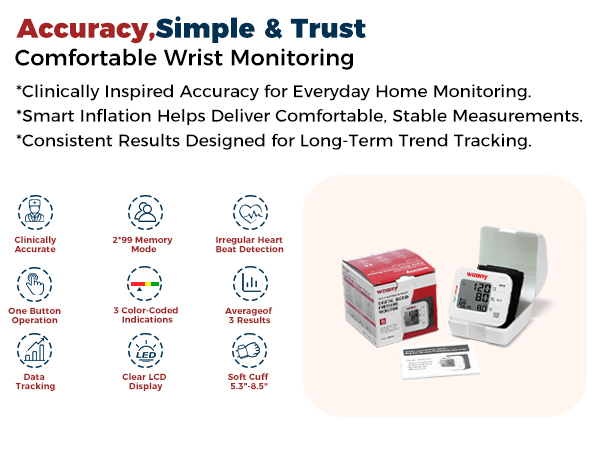
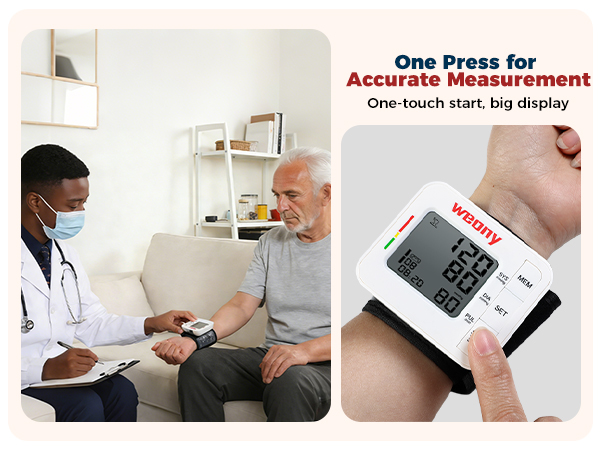
Absolutely — just one button to start, a big clear display, and no cuff wrapping like older models. Many seniors find it simple and comfortable.
My readings are different from the hospital’s. Can I trust this monitor?
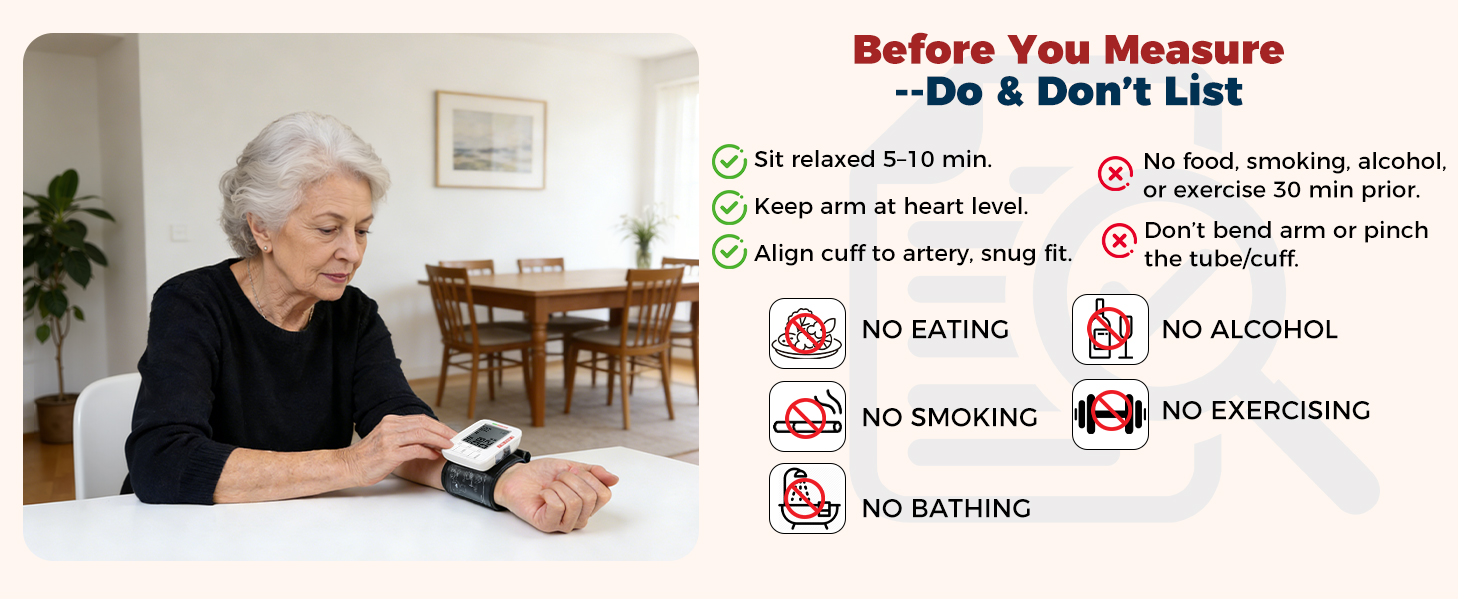
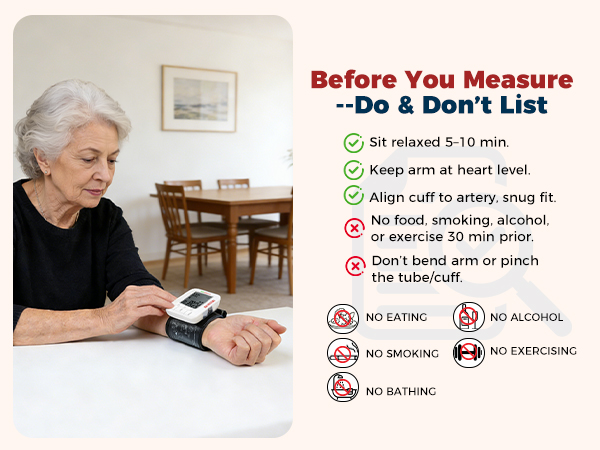
This is common and doesn’t mean the monitor is faulty. Sit quietly 5 min, keep the cuff at heart level, ensure a snug fit, and average 2–3 readings. Use it for trend tracking rather than single clinical comparison.
Will this watch for irregular heartbeats?
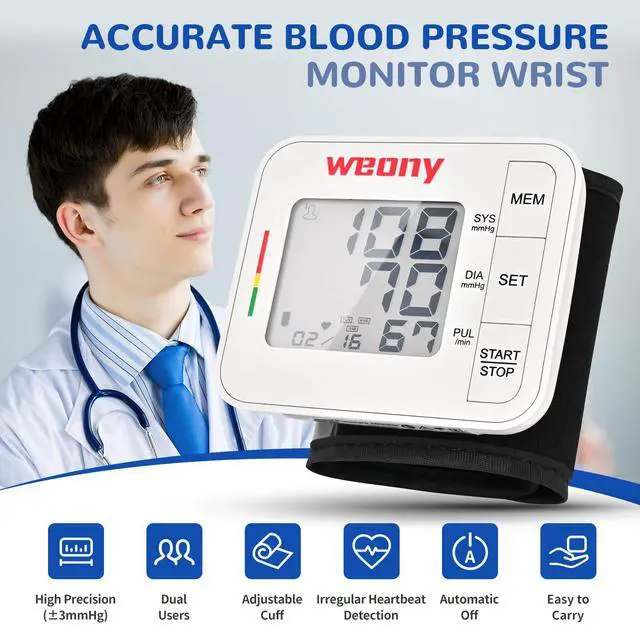
Yes, it can show an irregular heartbeat symbol if it detects uneven pulse patterns during measurement. It’s great for spotting unusual changes early (not a medical diagnosis).
My readings are different on each wrist — is that normal?
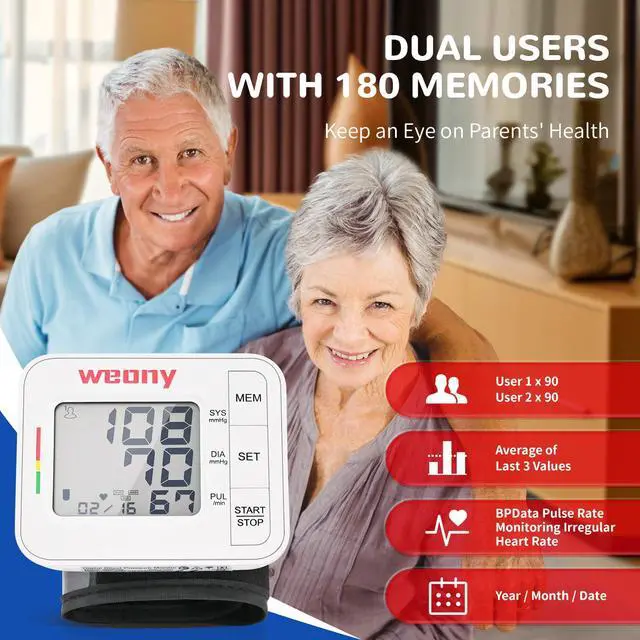
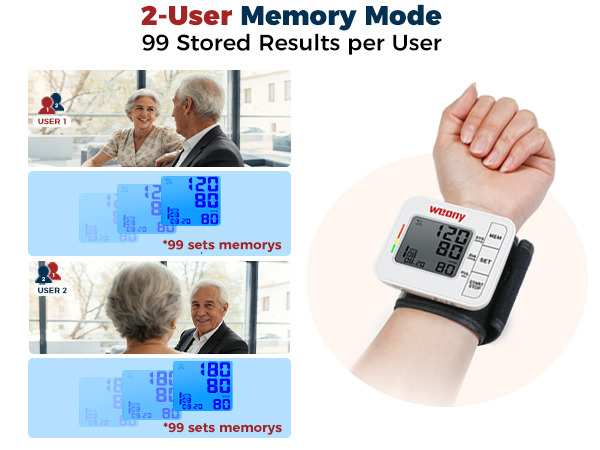
Slight differences between arms are common. Try always using the same wrist and compare trends over time.

WEONY BP Monitor
Leading The Way In Health and Well-being

WEONY means we only focus on home diagnostics medical field with the spirit of craftsman.
Weony is a professional manufacturer developing digital blood pressure monitors,. All our products are designed by our R&D department and manufactured under ISO 13485 standards and FDA.
A happy life's secret is a healthy life. We strive to provide the high accurate blood pressure monitor to take care of your health, bring the health to your family.
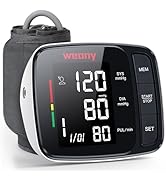
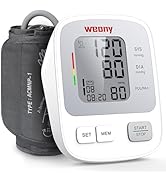
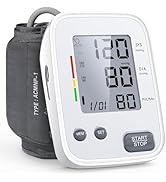
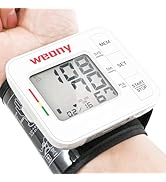
Blood Pressure Monitors
How did we get our start?
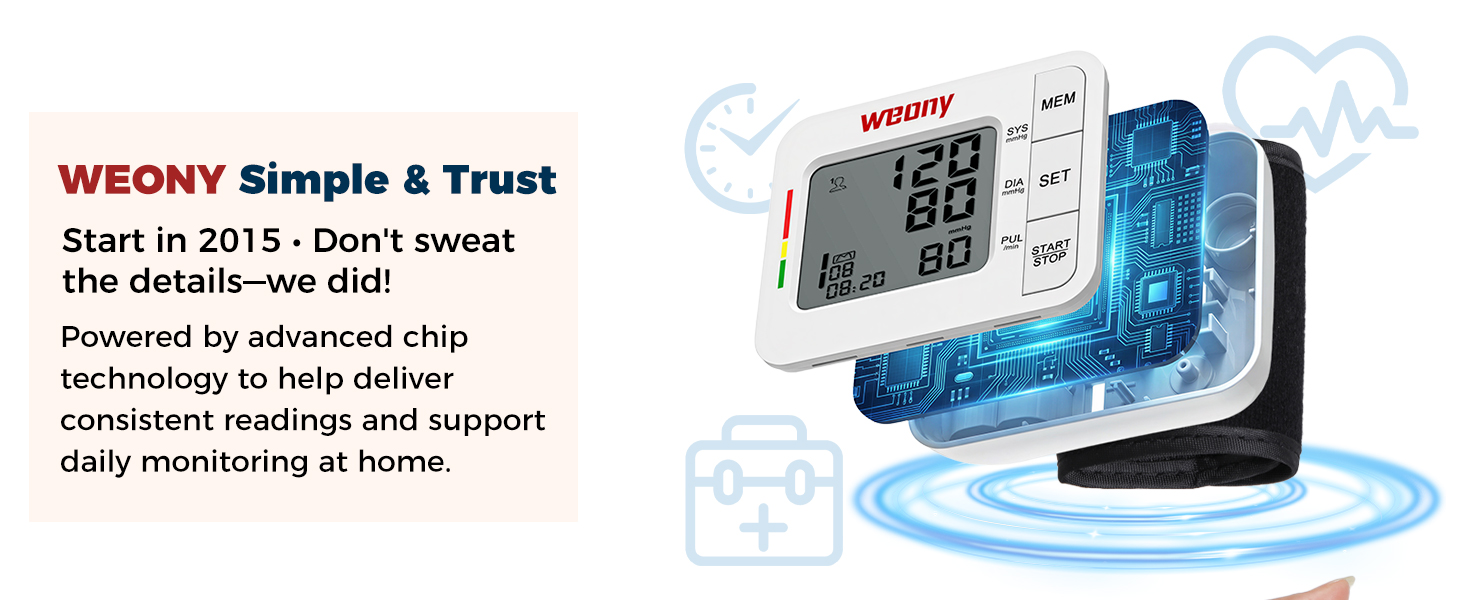
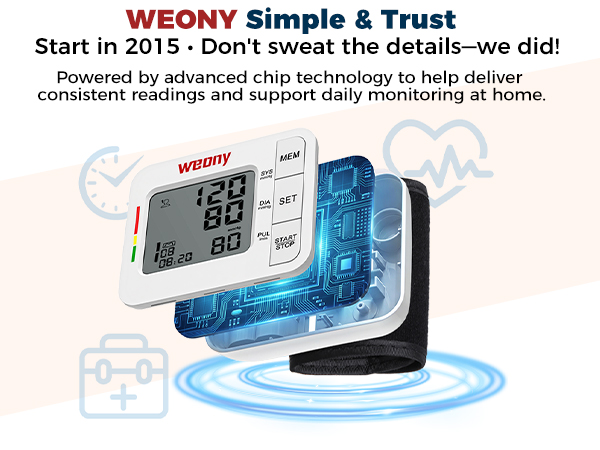
Founded in 2015 by medical-device engineers, we brought clinical-grade monitoring into everyday homes through research and real-world testing.
What makes our products unique?
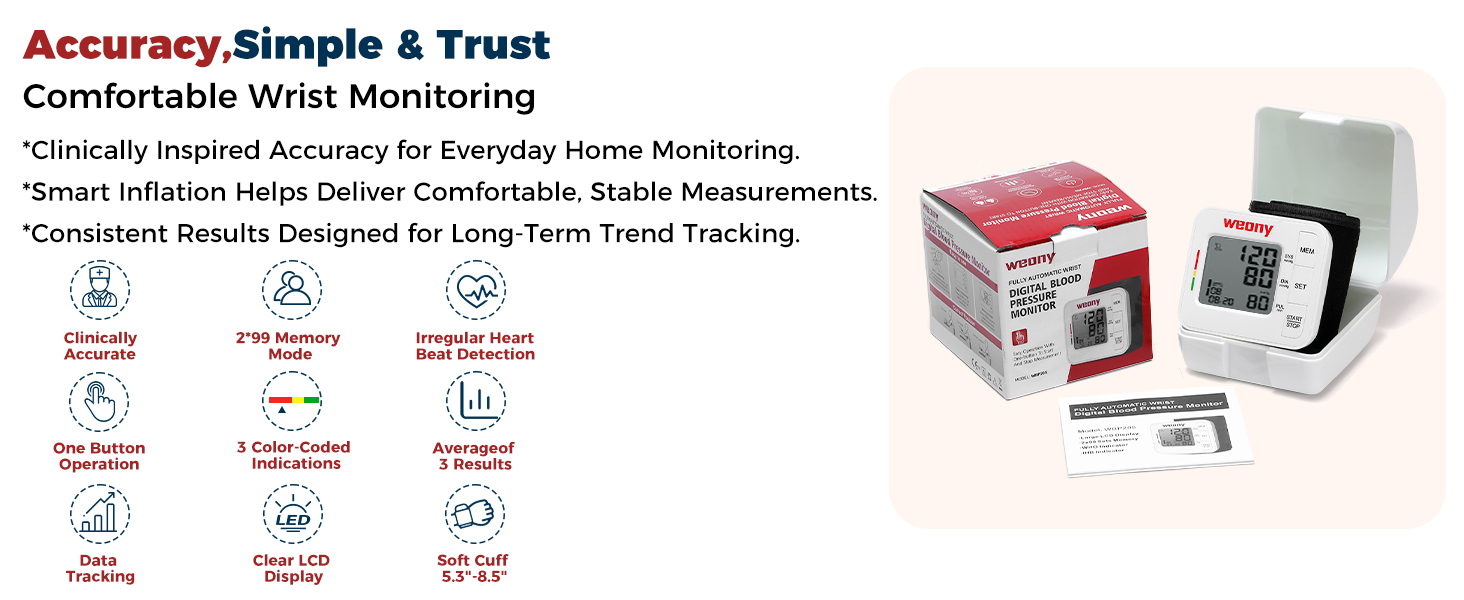
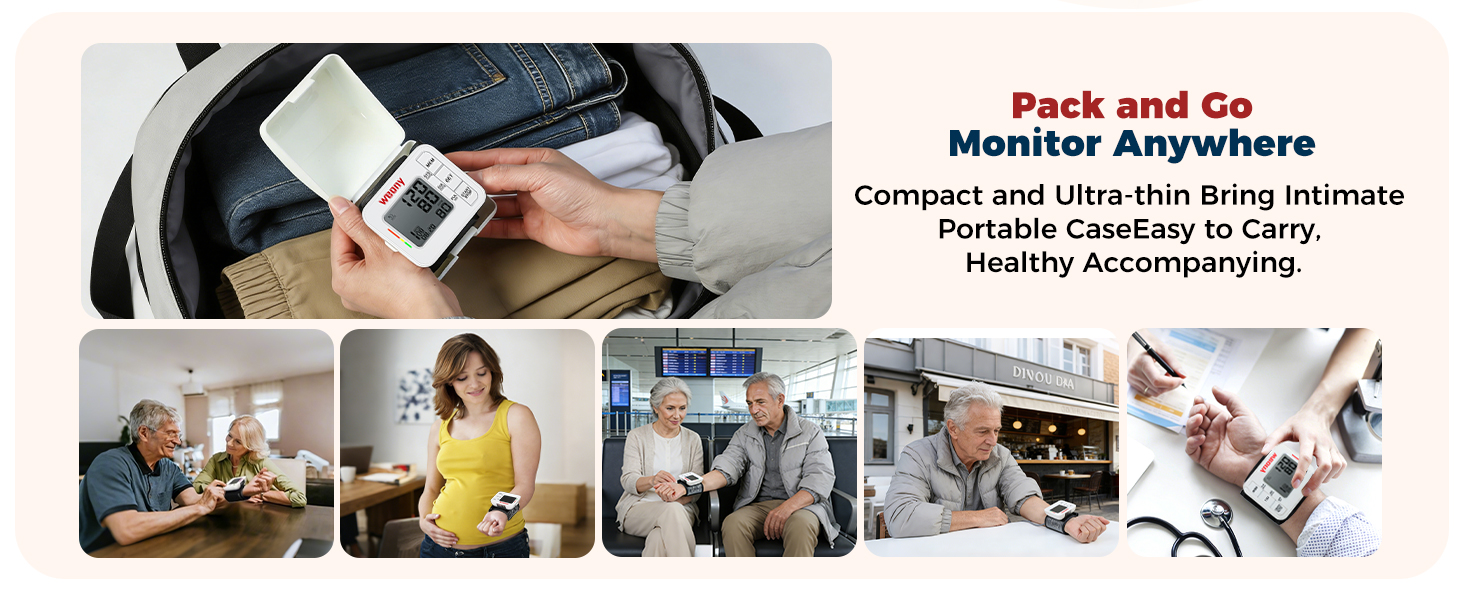
Medical-grade accuracy with ISO/FDA/MDR credentials, compact user-friendly design, smart connectivity, and quiet, reliable performance.
Why choose WEONY?
Choose WEONY for trusted engineering, global quality, fast support and easy-to-use devices—giving you peace of mind.For best results, follow the included precautions, and contact WEONY's after-sales support team anytime with questions!
WEONY BP Monitor
Leading The Way In Health and Well-being
WEONY means we only focus on home diagnostics medical field with the spirit of craftsman.
Weony is a professional manufacturer developing digital blood pressure monitors,. All our products are designed by our R&D department and manufactured under ISO 13485 standards and FDA.
A happy life's secret is a healthy life. We strive to provide the high accurate blood pressure monitor to take care of your health, bring the health to your family.
Blood Pressure Monitors
How did we get our start?
Founded in 2015 by medical-device engineers, we brought clinical-grade monitoring into everyday homes through research and real-world testing.
What makes our products unique?
Medical-grade accuracy with ISO/FDA/MDR credentials, compact user-friendly design, smart connectivity, and quiet, reliable performance.
Why choose WEONY?
Choose WEONY for trusted engineering, global quality, fast support and easy-to-use devices—giving you peace of mind.For best results, follow the included precautions, and contact WEONY's after-sales support team anytime with questions!
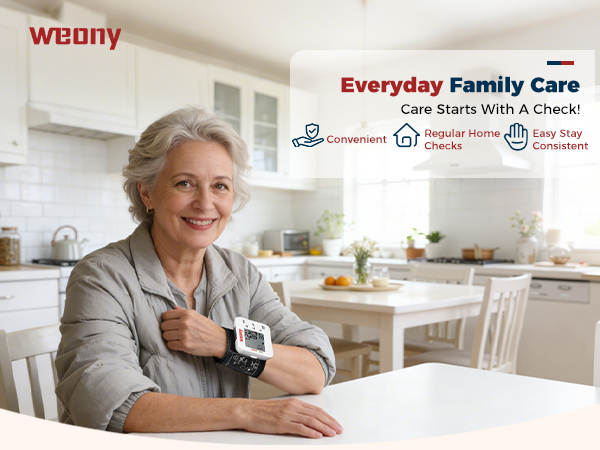


Do I need to wear this wrist monitor at a certain height?
Yes, make sure the cuff is on your inner wrist with the screen facing up, and keep your wrist at heart level (e.g., rest your elbow on a table). That helps ensure more accurate measurements.
Is this easy to use for seniors?
Absolutely — just one button to start, a big clear display, and no cuff wrapping like older models. Many seniors find it simple and comfortable.
My readings are different from the hospital’s. Can I trust this monitor?
This is common and doesn’t mean the monitor is faulty. Sit quietly 5 min, keep the cuff at heart level, ensure a snug fit, and average 2–3 readings. Use it for trend tracking rather than single clinical comparison.
Will this watch for irregular heartbeats?
Yes, it can show an irregular heartbeat symbol if it detects uneven pulse patterns during measurement. It’s great for spotting unusual changes early (not a medical diagnosis).
My readings are different on each wrist — is that normal?
Slight differences between arms are common. Try always using the same wrist and compare trends over time.