








QA:
1.Is it normal for the charger to heat up during use? Is it safe?
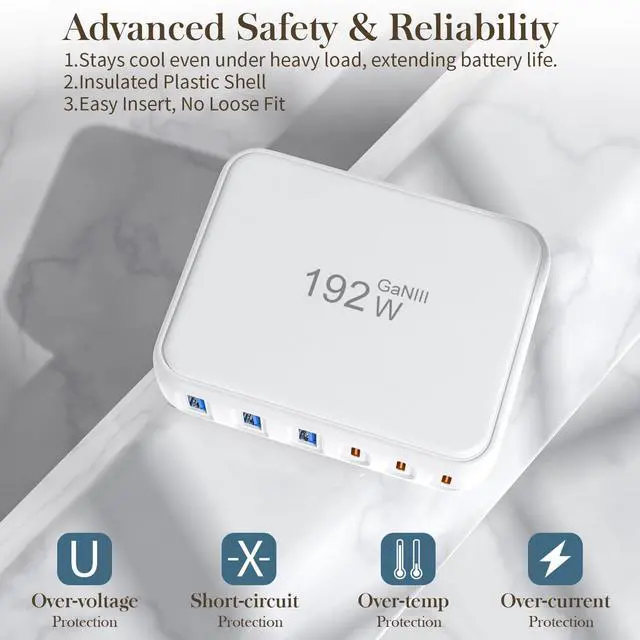
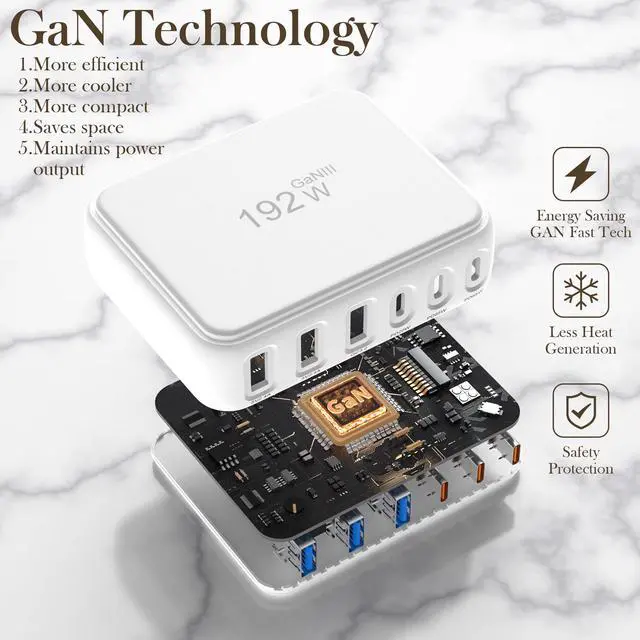
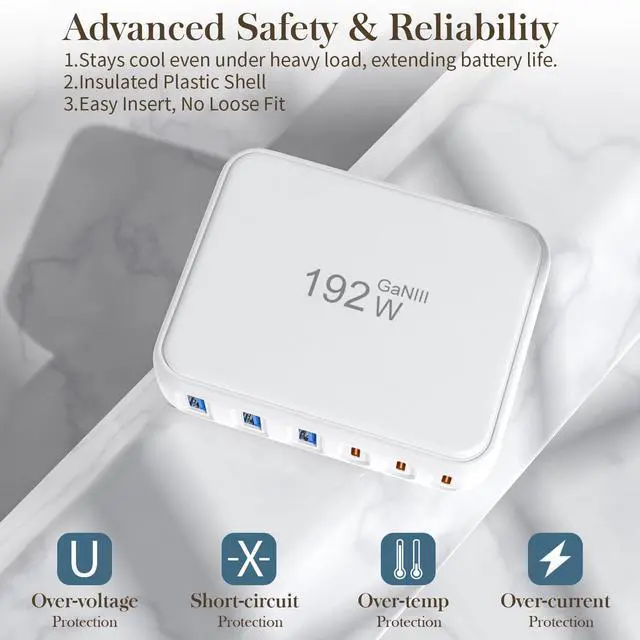
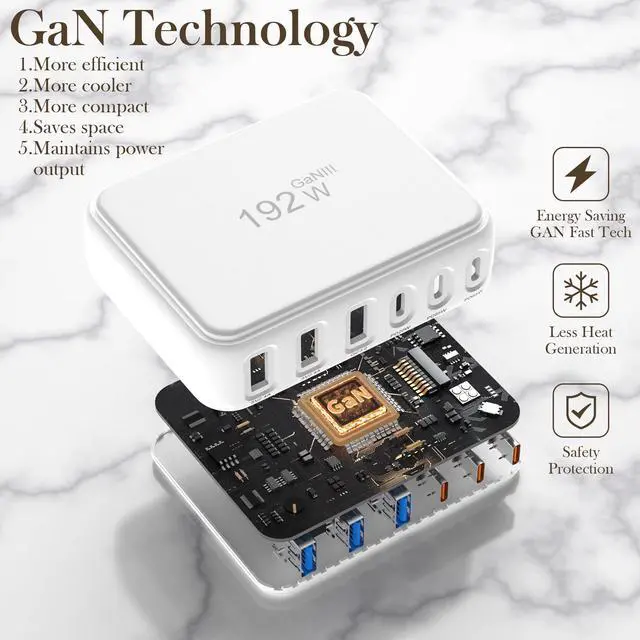
Heat generation is a normal physical phenomenon during high-power charging. When charging power-demanding devices like laptops, energy conversion efficiency isn't 100%, and some energy is naturally dissipated as heat. Our GaN technology reduces heat generation by 30% compared to traditional chargers, but some warmth may still be felt—this is common for all high-wattage chargers.For safety, the charger is built with flame-retardant (PC+ABS) materials and includes multi-protection features such as over-temperature, over-voltage, over-current, and short-circuit prevention.
2.Will this charger work with all my devices? What determines compatibility?
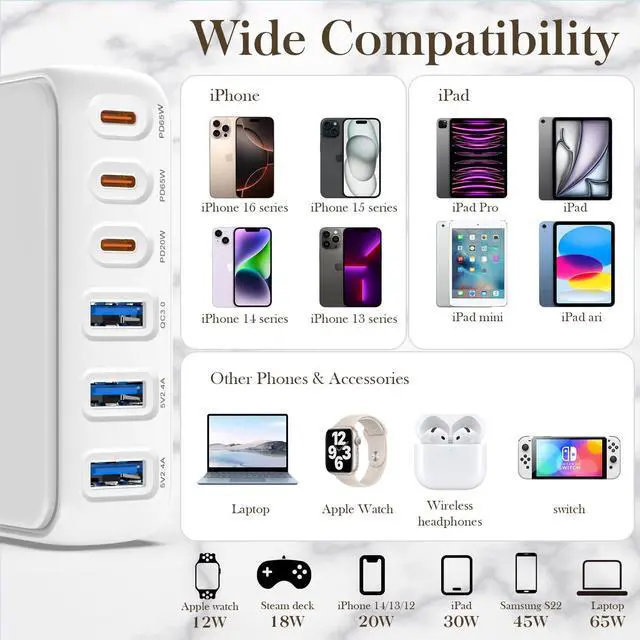
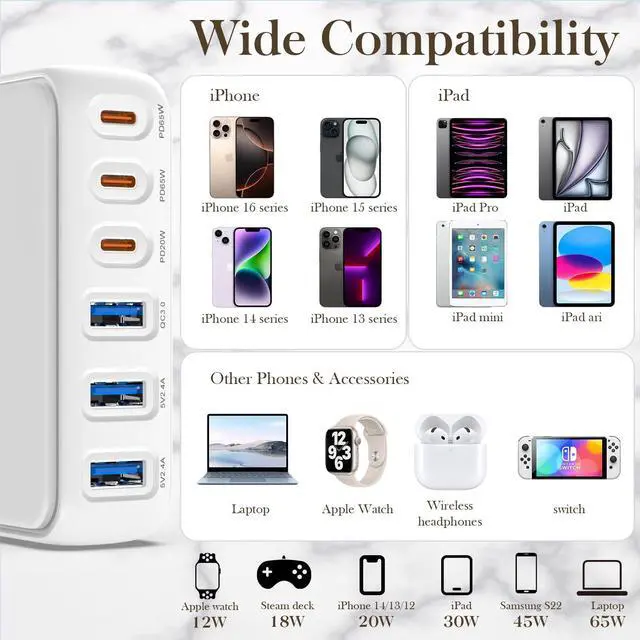
Yes, it is compatible with most USB devices (Type-C or Type-A). The key factor is voltage matching – the charger must support the voltage your device requires. For example, an old charger that only outputs 5V cannot properly fast-charge a phone needing 9V (it may charge very slowly or not at all). Our charger supports multiple voltages (5V/9V/12V/15V/20V), making it widely compatible with modern devices.
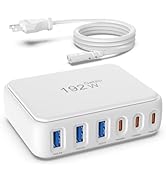
3.Is the 192W output advertised real?
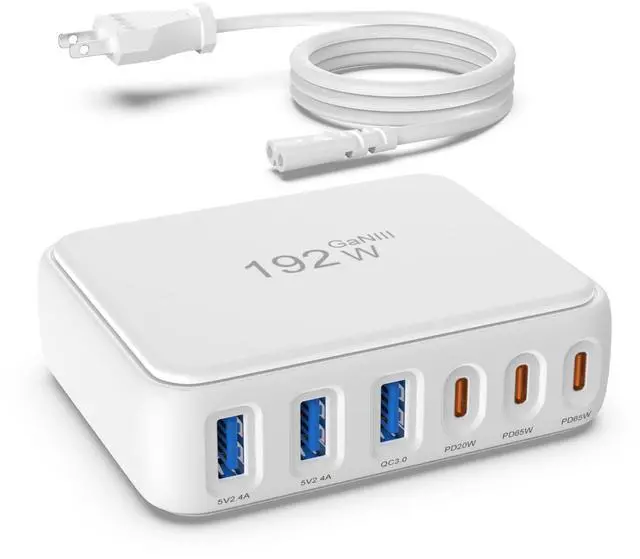
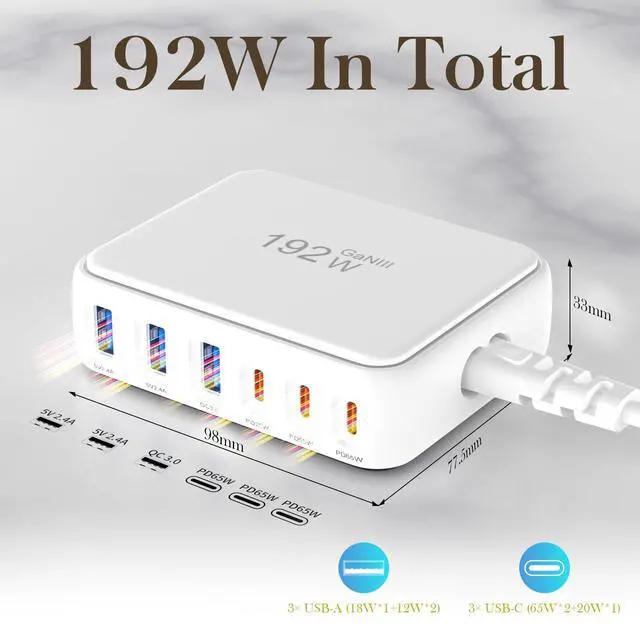
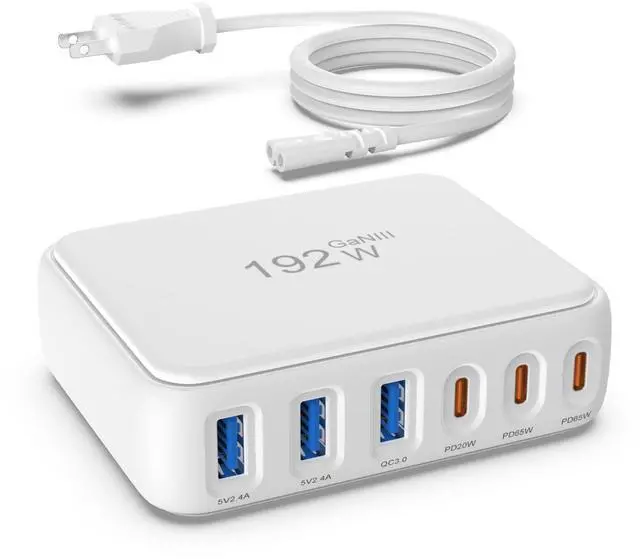
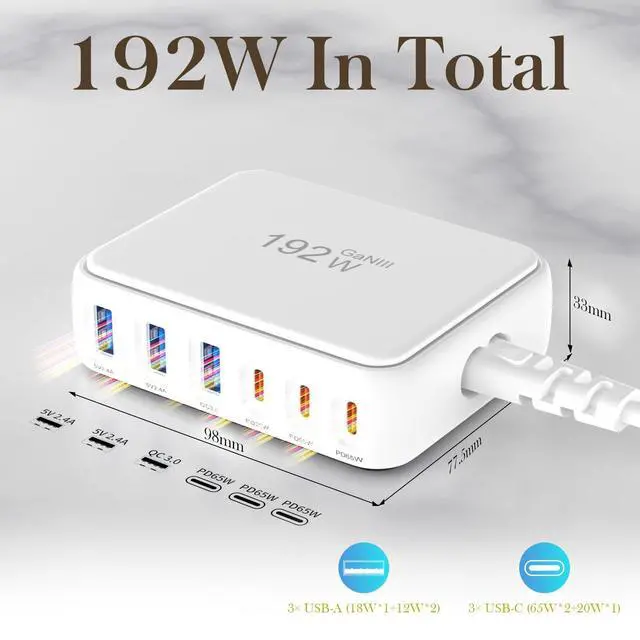
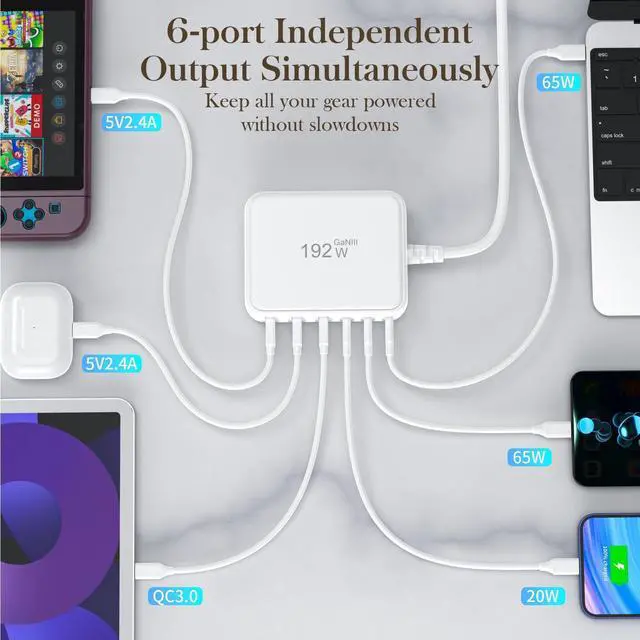
Yes. Our charger's 192W total output is authentic. It features six independent circuits—each port can deliver its max power without interference. Think of it like six apartments sharing a 192W power grid, each with its own meter. Devices don’t always draw max power. Charging speed adjusts intelligently based on battery level and usage. For example, a laptop may use only 40W when near full charge to protect the battery. This ensures both efficiency and safety. Actual power delivery also depends on cable quality.
4.Will the total power reach 192W when charging three devices?
No. When all six ports are used simultaneously, the combined power output will not exceed the 192W safety limit. For example, if three ports are used at the same time, their total power delivery will not surpass the sum of their individual maximum rated outputs.
ps: Actual charging speed and performance may vary depending on the device, cable quality, and environmental conditions.


Power You Can Trust
Why Choose Our? The Direct Source for Power.
We are manufacturers, not just designers. For over 20 years, we've been obsessed with one thing: building safer, more reliable charging solutions.
Unlike brands that outsource, we own our factory. This means we control everything—from circuit design to final assembly. No middlemen.
We eliminate the anxiety around charging. Our mission is to deliver power that is simple, safe, and efficient.
Adapts to your needs
QA:
1.Is it normal for the charger to heat up during use? Is it safe?
Heat generation is a normal physical phenomenon during high-power charging. When charging power-demanding devices like laptops, energy conversion efficiency isn't 100%, and some energy is naturally dissipated as heat. Our GaN technology reduces heat generation by 30% compared to traditional chargers, but some warmth may still be felt—this is common for all high-wattage chargers.For safety, the charger is built with flame-retardant (PC+ABS) materials and includes multi-protection features such as over-temperature, over-voltage, over-current, and short-circuit prevention.
2.Will this charger work with all my devices? What determines compatibility?
Yes, it is compatible with most USB devices (Type-C or Type-A). The key factor is voltage matching – the charger must support the voltage your device requires. For example, an old charger that only outputs 5V cannot properly fast-charge a phone needing 9V (it may charge very slowly or not at all). Our charger supports multiple voltages (5V/9V/12V/15V/20V), making it widely compatible with modern devices.
3.Is the 192W output advertised real?
Yes. Our charger's 192W total output is authentic. It features six independent circuits—each port can deliver its max power without interference. Think of it like six apartments sharing a 192W power grid, each with its own meter. Devices don’t always draw max power. Charging speed adjusts intelligently based on battery level and usage. For example, a laptop may use only 40W when near full charge to protect the battery. This ensures both efficiency and safety. Actual power delivery also depends on cable quality.
4.Will the total power reach 192W when charging three devices?
No. When all six ports are used simultaneously, the combined power output will not exceed the 192W safety limit. For example, if three ports are used at the same time, their total power delivery will not surpass the sum of their individual maximum rated outputs.
ps: Actual charging speed and performance may vary depending on the device, cable quality, and environmental conditions.
Power You Can Trust
Why Choose Our? The Direct Source for Power.
We are manufacturers, not just designers. For over 20 years, we've been obsessed with one thing: building safer, more reliable charging solutions.
Unlike brands that outsource, we own our factory. This means we control everything—from circuit design to final assembly. No middlemen.
We eliminate the anxiety around charging. Our mission is to deliver power that is simple, safe, and efficient.
Adapts to your needs