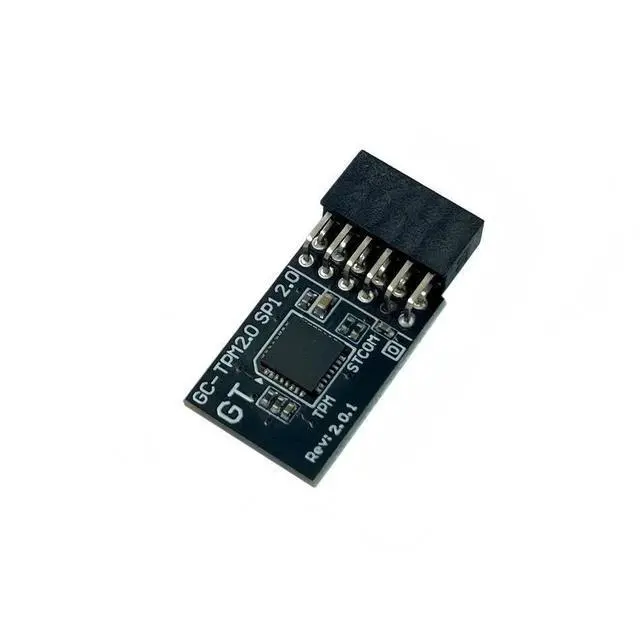
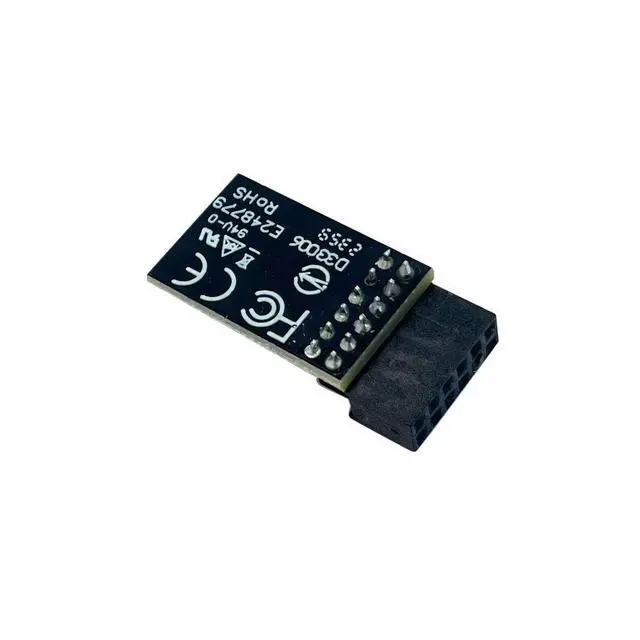
Important Notes: 1. This product is only compatible with older motherboards such as Intel and AMD. It is not compatible with newer motherboard models featuring firmware TPM, all-in-one PCs, or laptops. 2. The minimum hardware requirements for upgrading to Windows 11 via
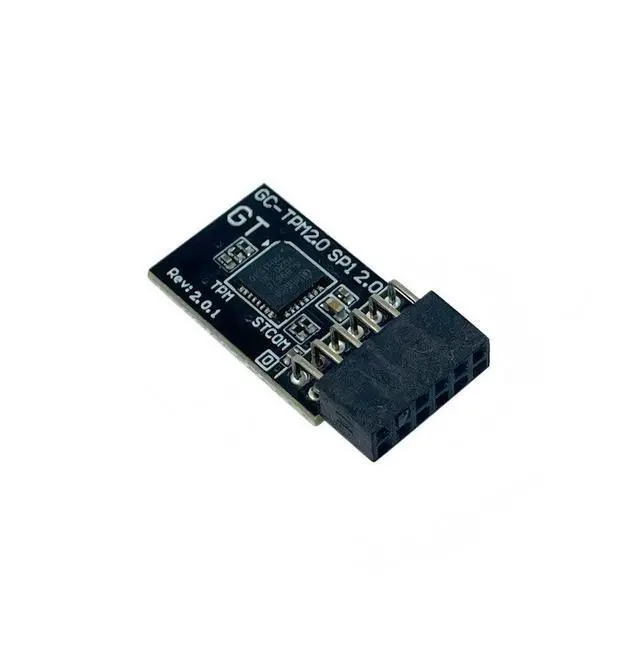
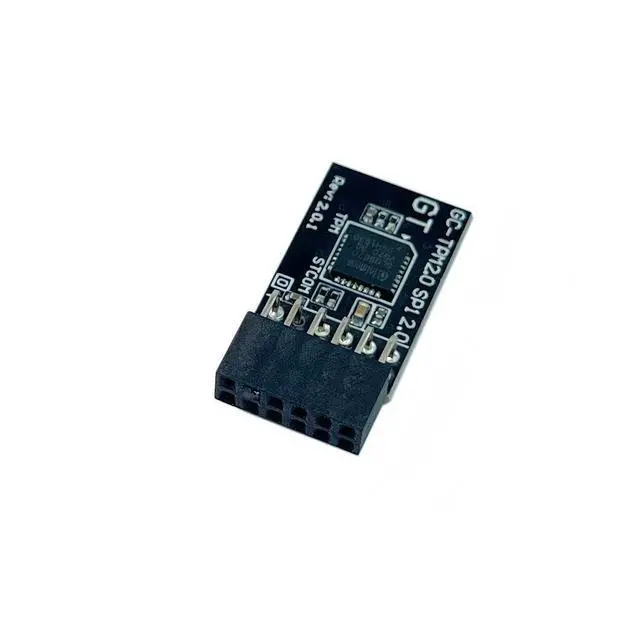
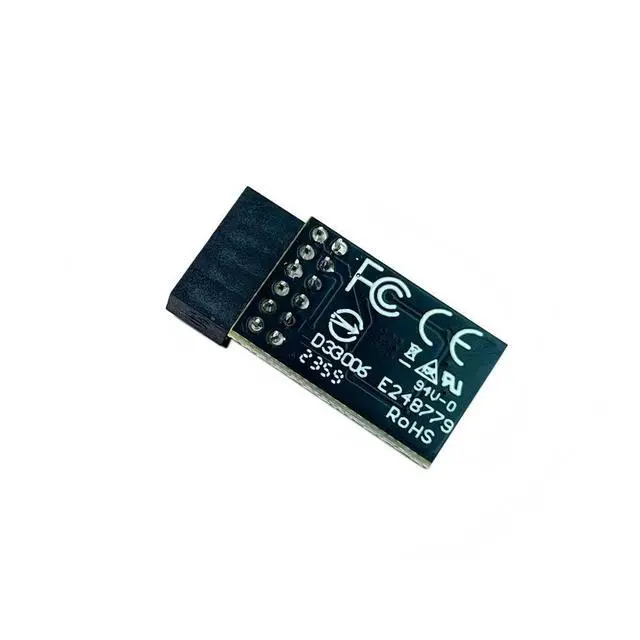
TPM 2.0 are as follows: a 1 GHz or faster 64-bit processor (dual-core/multi-core), 4 GB of memory, 64 GB of storage space, firmware supporting UEFI Secure Boot and TPM 2.0, a DirectX 12-compatible graphics card, and a display with a resolution of 720p or higher. 3. This product has a 12-pin-1 connector. Please carefully check the pin positions in the image to ensure compatibility with your motherboard before purchasing.
Compatible models: for Gigabyte MotherboardZ590 DZ590MZ590M GAMING XZ590 AORUS ULTRAZ590 GAMING XZ590 AORUS PRO AXZ590 UD ACZ590 UDZ590 VISION GZ590 AORUS MASTERZ590 AORUS ELITE AXZ590 AORUS ELITEZ590 VISION DZ890 AERO GZ890 AI TOPZ890 AORUS ELITE WIFI7Z890 AORUS ELITE WIFI7 ICEZ890 AORUS MASTERZ890 AORUS MASTER AI TOPZ890 AORUS PRO ICEZ890 EAGLE WIFI7Z890 GAMING X WIFI7Z890 UDZ890 UD WIFI6EZ890I AORUS ULTRAZ890M GAMING XHow to select and install a security module: 1. Confirm whether the host has TPM 2.0 or if TPM 2.0 is enabled. 2.
Click Run,
enter: tpm. msc (Win+R keys), and check if the TPM version is ready. 3. If version 2.0 is displayed but not ready, you need to configure settings in the BIOS; consult the motherboard manufacturer's customer service. 4. Open the host and inspect the TPM pins on the motherboard. 5. When installing the module, ensure the chip-side faces inward, align with the pins, and insert fully to prevent loosening. (See image for direction)
Product PerformanceCompatible with: GC-TPM 2.0
SPI 2.0C hipset:
SLB9670Interface: SPIPIN
DEFINE: 12-pin TPM-SPI Trusted
Platform ModuleCore Applications:
1: Seamless upgrade to
Windows 11: Resolve TPM 2.0 verification issues and easily upgrade to the latest operating system.
2: Enhanced
hardware-level security: Provides an independent secure encryption chip specifically designed for securely storing sensitive data (such as encryption keys, digital certificates, and login credentials), thereby enhancing overall system security.
3: Hardware
encryption acceleration: Reduces CPU load by accelerating encryption operations via dedicated hardware, indirectly improving system response speed and enhancing the smooth operation of certain encryption-dependent applications (such as games and security software).





 here!
here!