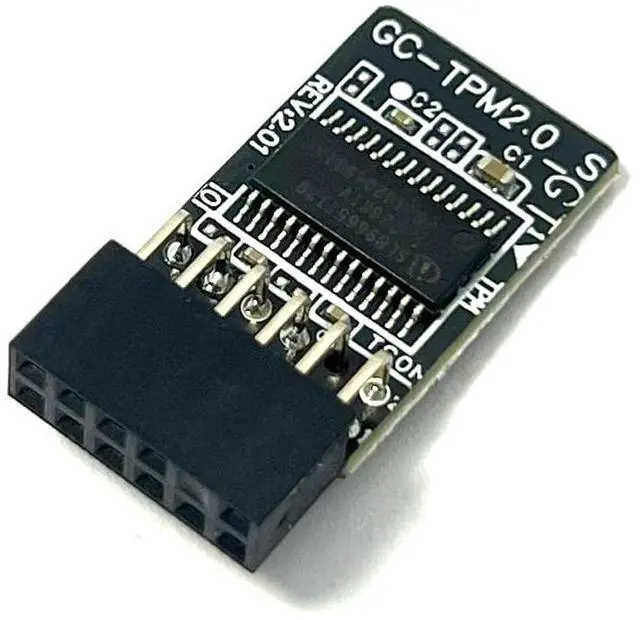
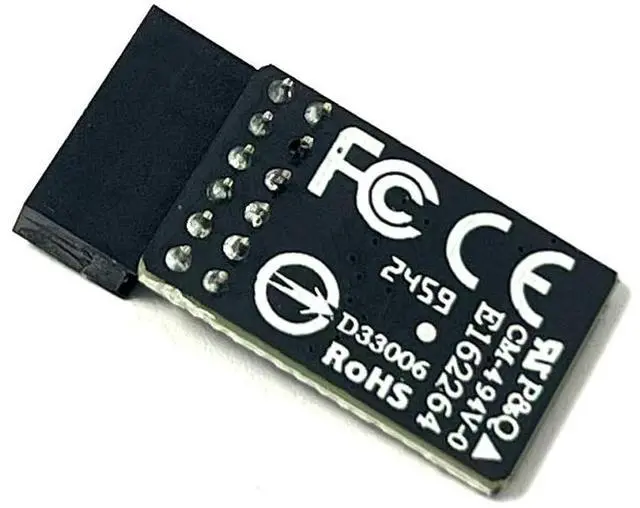
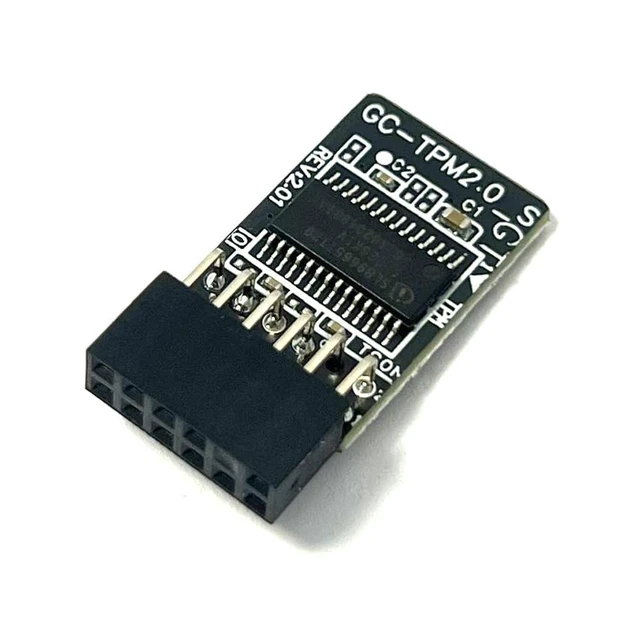
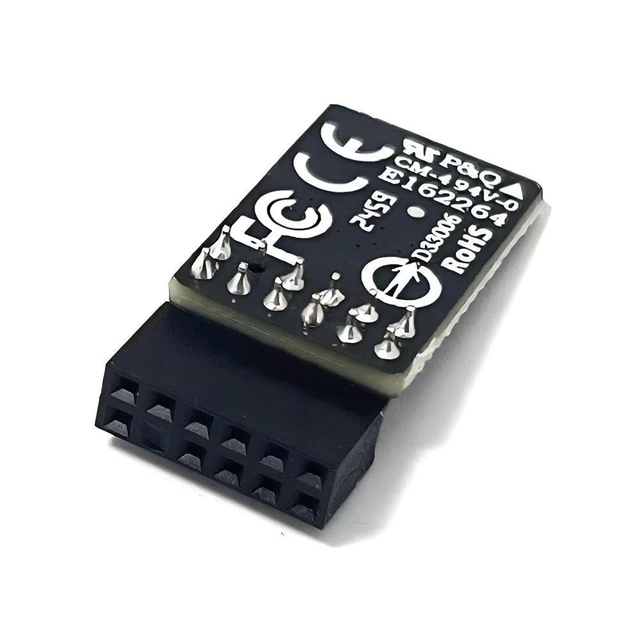
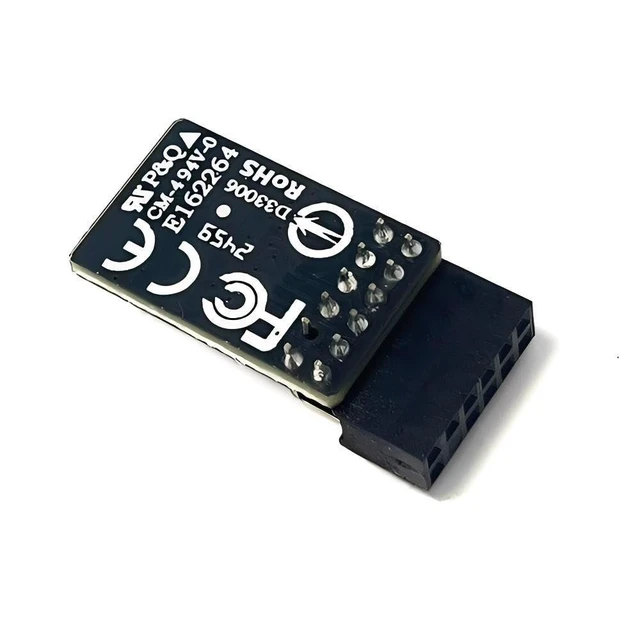
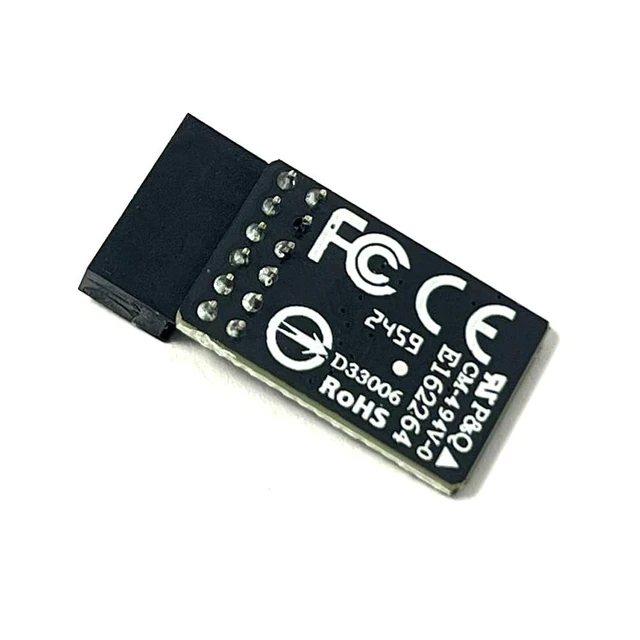
Package Includes1PCS TPM Chip TPM-LPC Trusted Platform Module (As shown in the figure) Compute Securely Bus Header KeyImportant Notes: 1. This product is only compatible with older motherboards such as Intel and AMD. It is not compatible with newer motherboard models featuring firmware TPM, all-in-one PCs, or laptops. 2. The minimum hardware requirements for upgrading to Windows 11 via
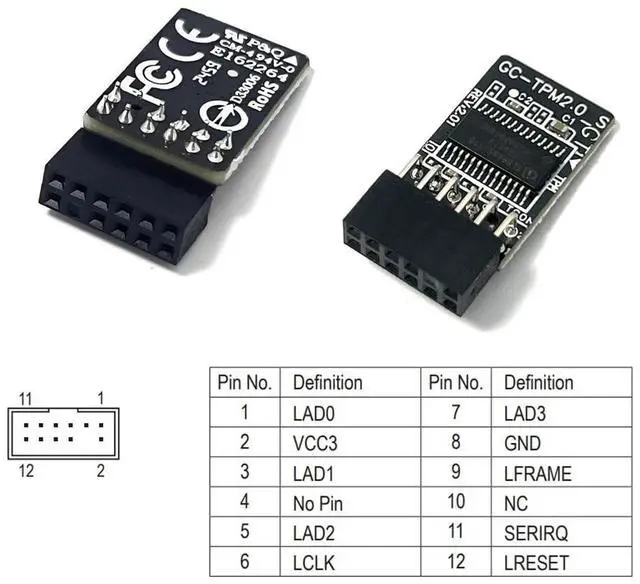
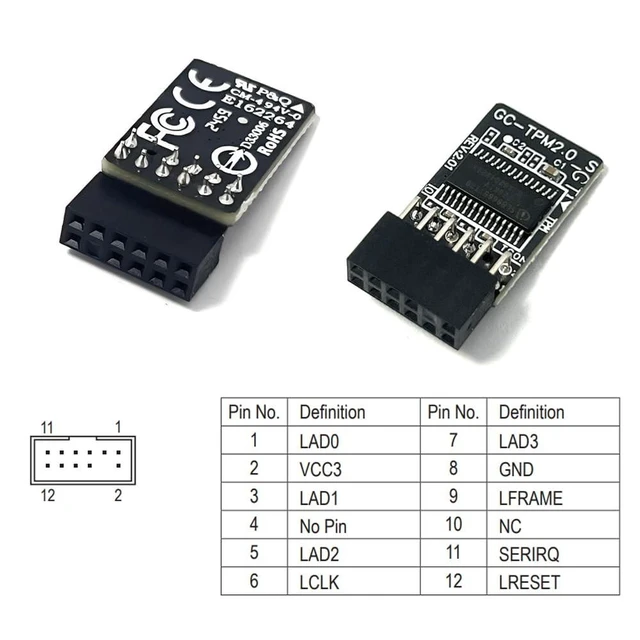
TPM 2.0 are as follows: a 1 GHz or faster 64-bit processor (dual-core/multi-core), 4 GB of memory, 64 GB of storage space, firmware supporting UEFI Secure Boot and TPM 2.0, a DirectX 12-compatible graphics card, and a display with a resolution of 720p or higher. 3. This product has a 12pin-1 connector. Please carefully check the pin positions in the image to ensure compatibility with your motherboard before purchasing.
Compatible models: for Gigabyte MotherboardB360 HD3PB360 HD3B360 AORUS GAMING 3 WIFIB360 AORUS GAMING 3B360M GAMING HDB360M AORUS GAMING 3B360M POWERB360M D2VB360M D3VB360M HD3B360M DS3HB360M D3H GSMB360M AORUS PRO
How to select and install a security module: 1. Confirm whether the host has TPM 2.0 or if TPM 2.0 is enabled. 2.
Click Run,
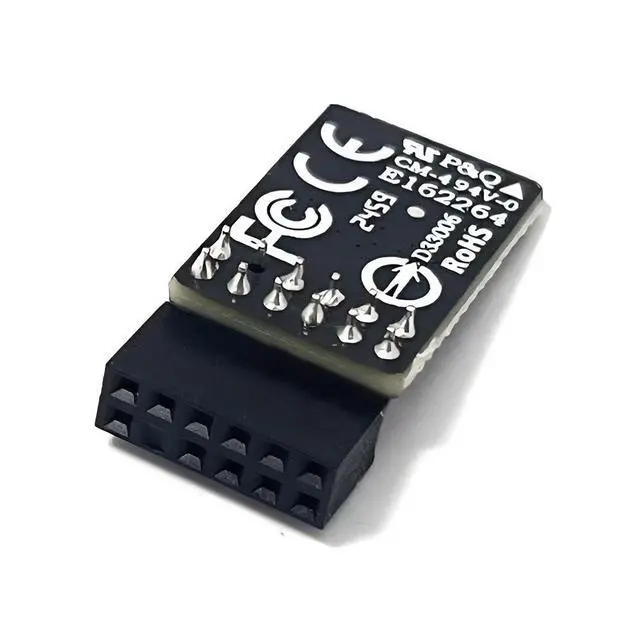
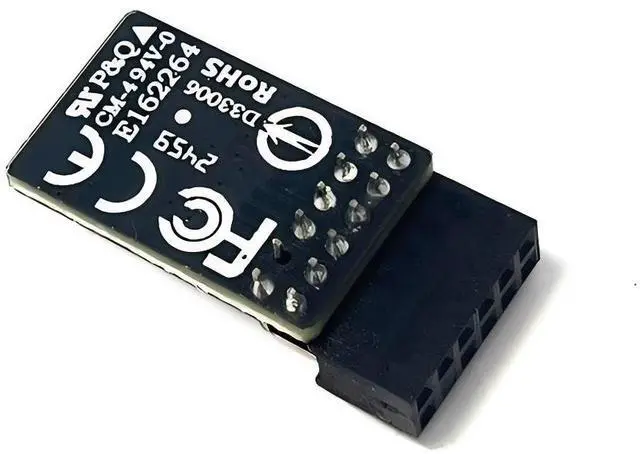
enter: tpm. msc (Win+R keys), and check if the TPM version is ready. 3. If version 2.0 is displayed but not ready, you need to configure settings in the BIOS; consult the motherboard manufacturer's customer service. 4. Open the host and inspect the TPM pins on the motherboard. 5. When installing the module, ensure the chip-side faces inward, align with the pins, and insert fully to prevent loosening. (See image for direction)
Product PerformanceCompatible with: GC-TPM
2.0 _S (12pin-1)Chipset:
SLB9665Interface: LPCPIN
DEFINE: 12pin-1Core
Applications:
1: Seamless upgrade to
Windows 11: Resolve TPM 2.0 verification issues and easily upgrade to the latest operating system.
2: Enhanced
hardware-level security: Provides an independent secure encryption chip specifically designed for securely storing sensitive data (such as encryption keys, digital certificates, and login credentials), thereby enhancing overall system security.
3: Hardware
encryption acceleration: Reduces CPU load by accelerating encryption operations via dedicated hardware, indirectly improving system response speed and enhancing the smooth operation of certain encryption-dependent applications (such as games and security software).





 here!
here!