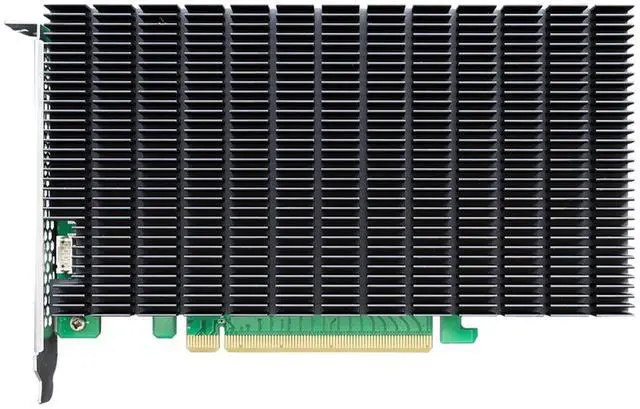
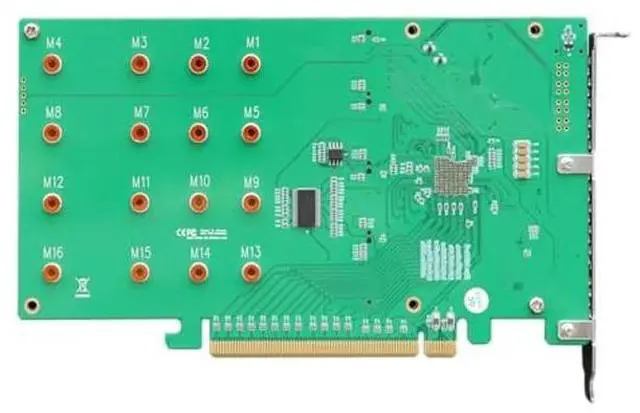
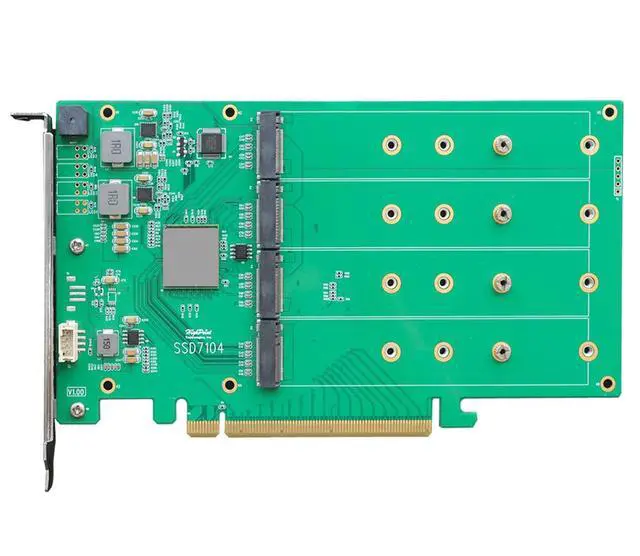
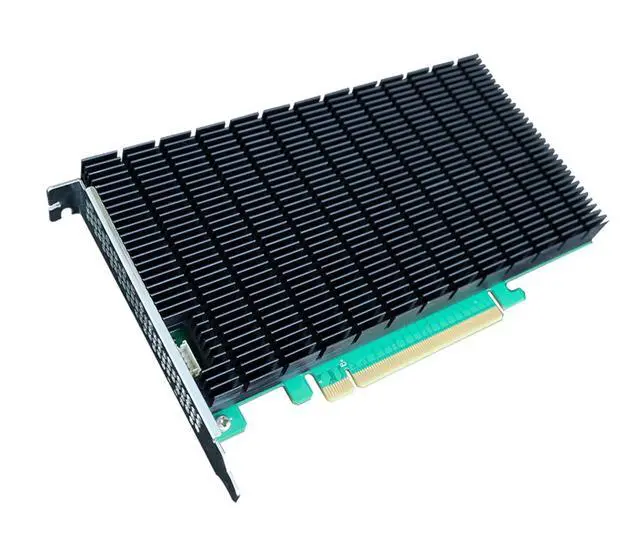
The SSD7104 features our next-gen PCB architecture and industry proven NVMe RAID technology to deliver up to 14, 000 MBs of performance from just four off-the-shelf M. 2 drives! Unlike most NVMe devices in todays marketplace, which are tied to a specific hardware platform or brand of SSD or motherboard, the SSD7104 can be integrated into any AMD or Intel motherboard with a dedicated PCIe 3.0 or 4.0 x16 slot, and is compatible with macOS, Linux & Windows operating systems.
Performance-Focused NVMe Architecture: Cross Sync
RAID Technology: Customers can easily link two SSD7104 controllers to act as a single storage device. A single RAID controller can support up to 8TB of storage @ 14, 000MB/s. Cross-Sync doubles capacity & speed to 16TB @ 28, 000MB/s! Distraction-Free, Zero-Noise
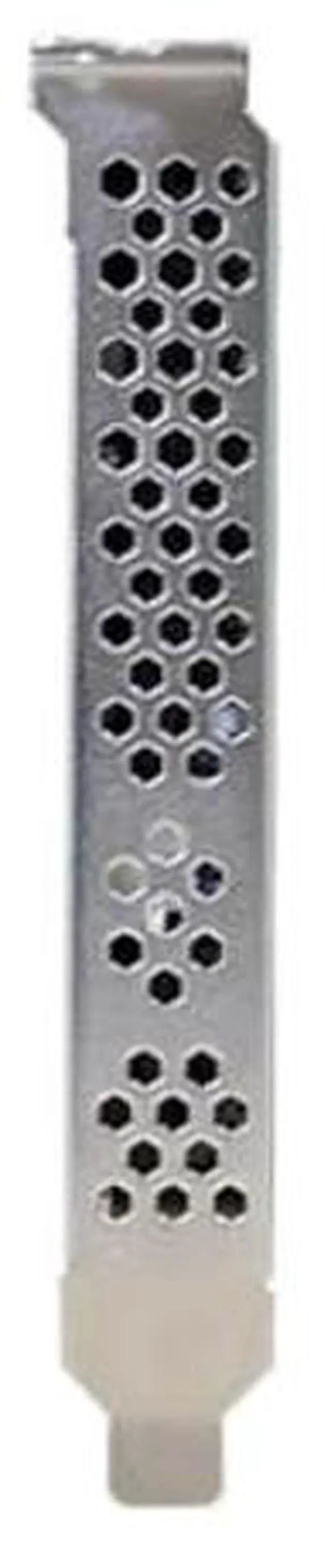
Cooling Solution: The SSD7104 can operate in complete silence, thanks to its full-length black anodized aluminum heat sink and ventilated full-height bracket, which work in conjunction to dissipate waste heat away from critical NVMe chipset componentry and the four hosted M. 2 NVMe SSDs.
Comprehensive NVMe RAID Support: RAID 1/0 (Security & Speed) - Requires a minimum of 4 NVMe SSDs; will mirror the data of the 1st stripe array to a 2nd hidden stripe array for security. RAID 0 (Speed) - Maximum Performance; requires a minimum of 2 NVMe SSDs. RAID 1 (Security) - Creates a hidden duplicate of the target SSD; requires 2 NVMe SSDs to configure Comprehensive NVMe
RAID Management: The WebGUI is a simple, intuitive web-based management tool and is ideal for customers who are new to RAID technology. The CLI (command line interface) is a powerful, text-only management interface designed for advanced users & professional administrators. Both interfaces were designed to streamline NVMe Storage Management. Customers can easily track TBW (Terabytes Written) & the temperature of each individual NVMe SSD, ensure the SSD7500 series controller is using the fastest available PCIe slot, configure an event log with email notification, & monitor the status of critical RAID configurations in person or remotely via an internet connection.





 here!
here!