• $58.99
  • Free 30-day Returns
  • Price alert
    Shop it at NeweggBusiness.

    Meet Your Seller

    Suuoo 6 Packs ESP32-S3 Development Board N16R8 Microcontroller for IoT Smart Home Prototype Monitoring

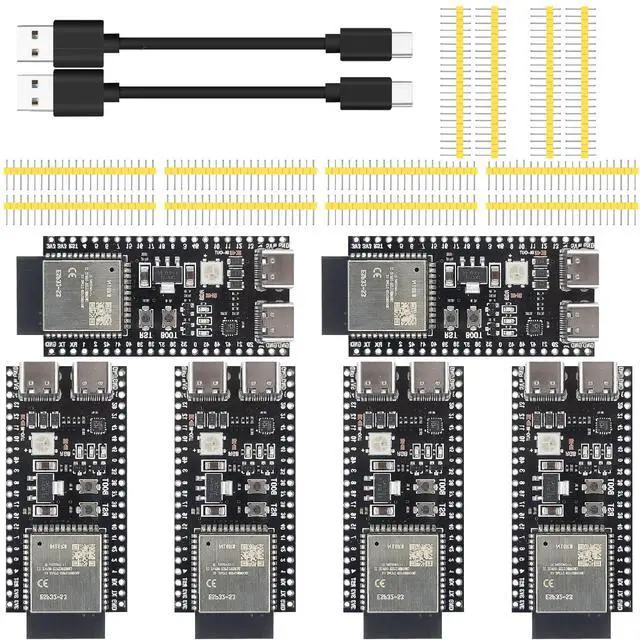
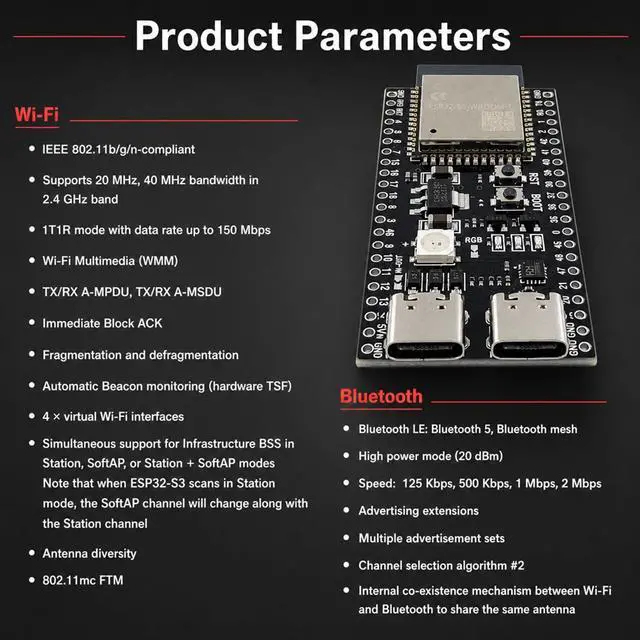
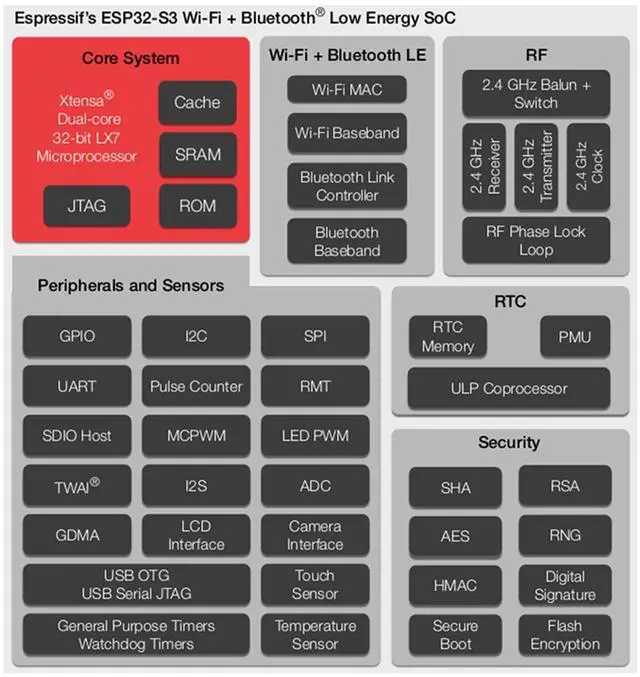
    • [COMPLETE 6-PACK SET AND EXACT SPECIFICATIONS]: Each pack includes 6 single-board computers with pre-soldered pin headers. Total package contains 6 ESP32-S3 N16R8 boards. Specifications include dual-core Xtensa 32-bit LX7 microprocessor up to 240 MHz, 16MB embedded Flash memory, 8MB PSRAM with Octal SPI support, 34 GPIOs, and 3.3V operating voltage.
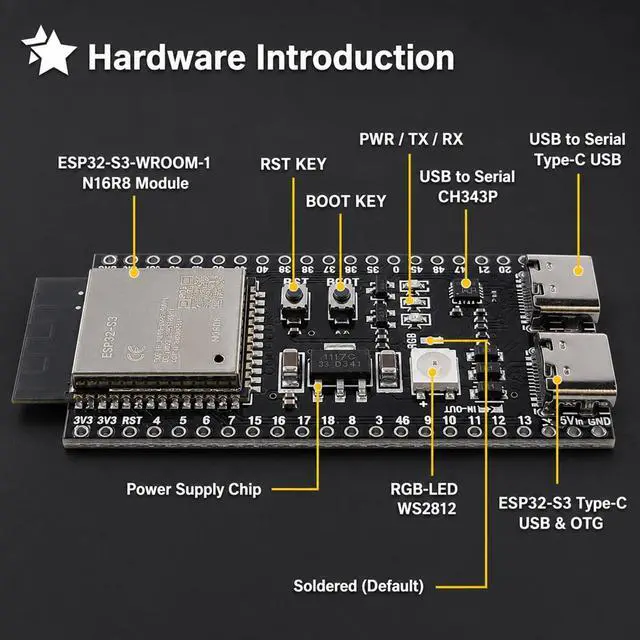
    • Features two independent USB Type-C ports: one dedicated native USB for direct flashing and CDC communication, and a second port operating through a USB-to-UART bridge for straightforward serial debugging.
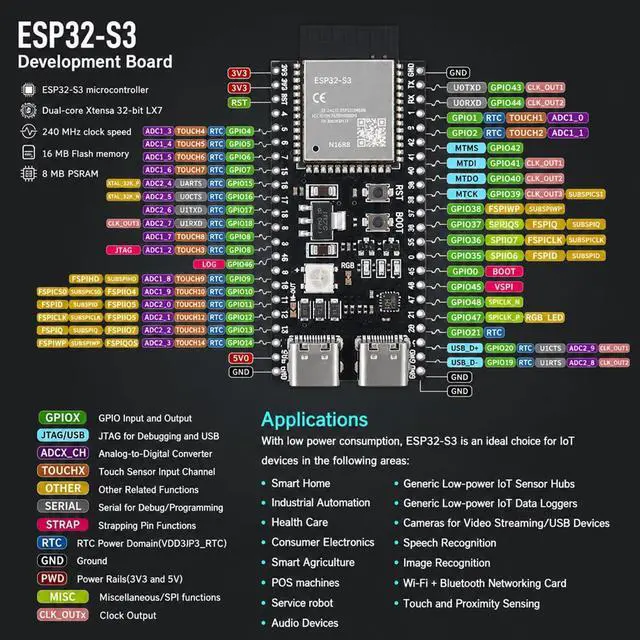
    • [OPTIMIZED PIN MAPPING AND RELIABILITY]: Overcomes common setup limitations by clearly defining the onboard RGB LED mapping to GPIO48 instead of GPIO47. The generous 16MB Flash and 8MB PSRAM provide substantial headroom for compiling complex libraries, running heavy displays over SPI, and managing intensive wireless data transmission without memory overflow.
    • [STEP-BY-STEP FIRMWARE DEPLOYMENT INSTRUCTIONS]: 1. Connect the b
    +
    +
    Overview
    Specs
    Reviews
    avatar

    Any questions? Our AI beta will help you find out quickly.

    [COMPLETE 6-PACK
    SET AND EXACT SPECIFICATIONS]: Each pack includes 6 single-board computers with pre-soldered pin headers. Total package contains 6 ESP32-S3 N16R8 boards.

    Specifications

    include dual-core Xtensa 32-bit LX7 microprocessor up to 240 MHz, 16MB embedded Flash memory, 8MB PSRAM with Octal SPI support, 34 GPIOs, and 3.3V operating voltage. ^^ Features two independent
    USB Type-C ports: one dedicated native USB for direct flashing and CDC communication, and a second port operating through a USB-to-UART bridge for straightforward serial debugging. ^^ [OPTIMIZED
    PIN MAPPING AND RELIABILITY]: Overcomes common setup limitations by clearly defining the onboard RGB LED mapping to GPIO48 instead of GPIO47. The generous 16MB Flash and 8MB PSRAM provide substantial headroom for compiling complex libraries, running heavy displays over SPI, and managing intensive wireless data transmission without memory overflow. ^^ [STEP-BY-STEP
    FIRMWARE DEPLOYMENT INSTRUCTIONS]: 1. Connect the board to your computer via the native USB-C port. 2. To enter programming mode, press and hold the BOOT button, click the RST button once, then release the BOOT button. 3. Select your preferred C/C++ or MicroPython development environment. 4. Compile and flash your code. 5. Define your status LED to GPIO48 for visual feedback. ^^ [APPLICABLE
    SCENARIOS AND TARGET AUDIENCE]: Engineered for electronics hobbyists, firmware developers, and engineering students. Ideal for prototyping custom IoT devices, building home automation nodes, constructing real-time HVAC pressure differential monitors, gathering aquarium temperature telemetry, and deploying sensor mesh networks.

    Warranty & Returns

    Warranty, Returns, And Additional Information

    Warranty

    • Please contact the Seller directly for warranty information. Warranty information may also be found on the Manufacturer's website.
    • CONTACT

    Return Policies

    • Return for refund within: 30 days
    • Return for replacement within: 30 days
    • This item is covered by JMDesign Return Policy

    Manufacturer Contact Info

    LOADING...