




 here!
I’m your shopping assistant for PC builds, upgrades, and everything tech.
Got questions? Ask away!
Start a conversation
here!
I’m your shopping assistant for PC builds, upgrades, and everything tech.
Got questions? Ask away!
Start a conversationShipped by Hebei XG Technology Co., Ltd.






Any questions? Ask CelesteSM will help you find out quickly.
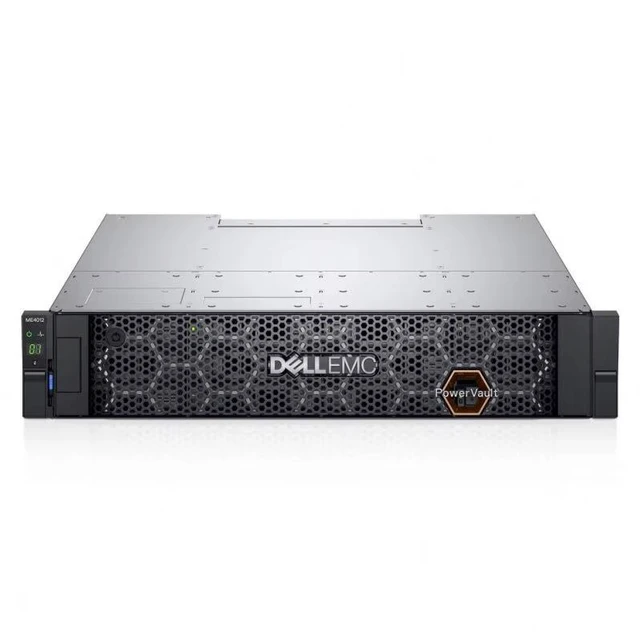
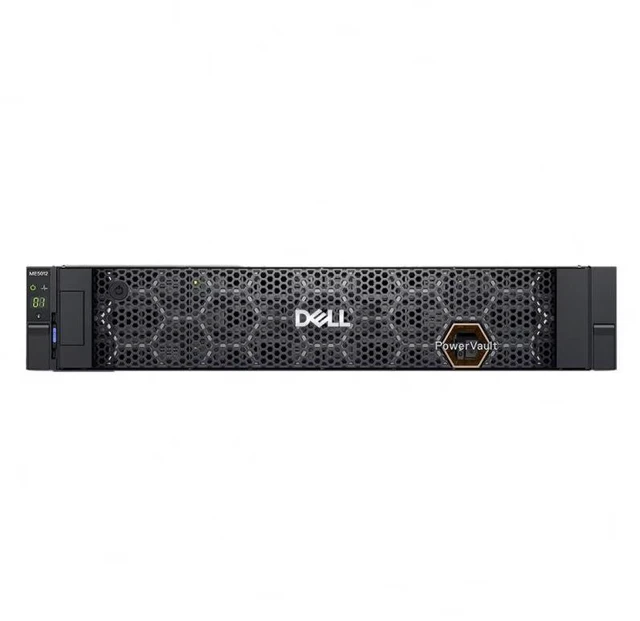
1. Ample Storage: 24 x 2.5 - inch drive bays offer large storage capacity, meeting growing data needs.
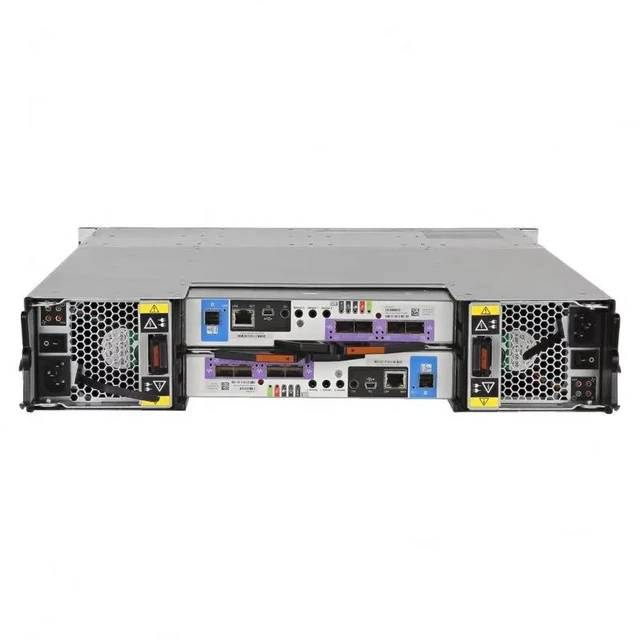
2. Dual - Controller Reliability: Dual - controllers ensure high availability; one can take over if the other fails.
3. Power Redundancy: 580W redundant power supply guards against power failures, keeping the system running.
4. High - Speed Transfer: 16Gb FC enables fast data transfer, suitable for high - demand applications.
5. Convenient Installation: Slide rails make it easy to install and maintain in the rack.
6. Long - term Warranty: 3 - year warranty provides peace of mind and reliable after - sales support.
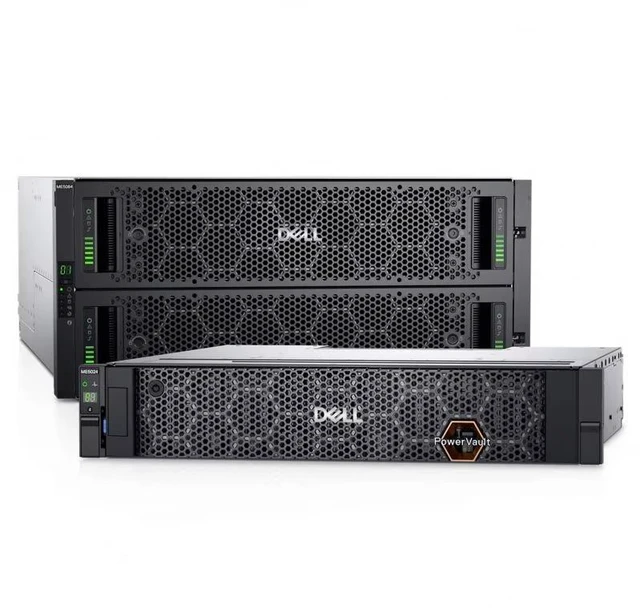
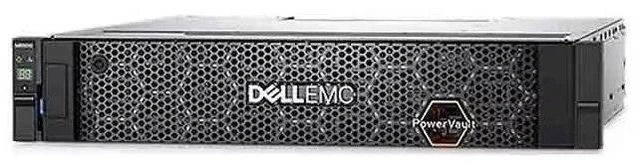
The Dell ME5024 is a 2U dual-controller storage array with 24 x 2.5-inch drive bays, 16Gb Fibre Channel connectivity, redundant 580W power, and slide rails, making it well suited for businesses, IT teams, and data center environments that need high availability and scalable shared storage.
| Attribute | Value |
|---|---|
| Best For | Rack-mounted SAN and iSCSI storage deployments that need dense 2U, 24 x 2.5-inch drive capacity with controller-level high availability |
| Model Identifiers | Dell ME5024 2U storage array model |
| Form Factor And Drive Bays | 2U rack chassis with 24 × 2.5-inch drive bays for high-density small-form-factor drives |
| Controllers And High Availability | Dual controllers with controller failover to provide high availability |
| Power And Redundancy | 580W redundant power supply for power-failure protection |
| Connectivity | 16Gb FC connectivity and iSCSI protocol support for SAN/iSCSI network access |
| Rack Mount And Installation | Includes slide rails for rack installation and easier service access |
| Warranty | 3-year warranty coverage |
Q: Dell PowerVault ME5024 vs ME4024: which one makes more sense today?
A: Choose the ME5024 if you want the newer Dell entry-level block storage platform with 24 x 2.5-inch bays, newer controller hardware, support for faster host connectivity such as 32Gb FC and 25Gb iSCSI, and more headroom for SSD-heavy or mixed-performance deployments. The older ME4024 is the closer previous-generation match if you want a similar 24-bay 2U layout, but it is positioned around 16Gb FC and 10Gb iSCSI with older controller architecture. For refresh projects, the ME5024 is the more practical choice when performance growth and longer platform runway matter.
Q: Should I buy the ME5012 or the ME5024?
A: Buy the ME5024 when you expect to use more SSDs, want more drive slots in the base chassis, or need better density for virtualization and mixed-performance workloads in 2U. Buy the ME5012 when your priority is larger-capacity 3.5-inch media in a smaller starting configuration and you do not need 24 small-form-factor bays on day one. In short, the ME5024 is the stronger fit for performance-oriented 2U deployments, while the ME5012 is the simpler fit for capacity-first deployments.
Q: ME5024 vs ME5084: which should I choose?
A: Choose the ME5024 if you want a 2U array that is easier to fit into existing racks and is better aligned with SSD or mixed-media deployments using 24 x 2.5-inch bays. Choose the ME5084 if your main goal is higher raw capacity and denser scale from the base chassis, since it starts with 84 drive bays in 5U. The ME5024 is the better fit for performance-per-rack-unit and smaller-footprint deployments; the ME5084 is the better fit for capacity expansion and larger storage pools.
Q: Is the ME5024 a better fit than a NAS appliance for shared storage?
A: Choose the ME5024 when you need block storage for SAN or direct-attached enterprise use cases and already have servers or hypervisors that will consume that storage over FC, iSCSI, or SAS. A NAS appliance is the better fit when you specifically need file services managed directly from the storage system. Community feedback consistently shows that buyers should treat the ME5 platform as a block storage array, not as a self-contained NAS replacement.
Q: ME5024 vs a higher-end all-flash array: when is each the better choice?
A: Choose the ME5024 when you want entry-level enterprise block storage with a simpler cost profile, flexible media choices, and enough performance for many SMB, edge, and virtualization workloads. Move to a higher-end all-flash platform when you need deeper enterprise software features, lower-latency consistency at larger scale, or a platform positioned above entry-level arrays. Review coverage and community discussions commonly place the ME5 family as a cost-conscious entry SAN, while higher-end all-flash systems are usually selected for more demanding feature sets and premium performance goals.
Q: Who is the Dell ME5024 best suited for?
A: The Dell ME5024 is best suited for SMB and midrange IT environments that need shared block storage with high availability. Its 24 x 2.5-inch bays, dual-controller design, and FC/iSCSI connectivity make it a better fit for virtualization clusters, databases, and business applications than for simple file sharing or light office storage.
Q: Is the ME5024 a good choice for VMware or other virtualization hosts?
A: Yes, the ME5024 is a strong fit for virtualization when you need shared SAN storage. Dell documents support for VMware connectivity over iSCSI and Fibre Channel, and dual controllers are recommended for higher availability. That makes it suitable for clustered hosts and live-migration-style environments, but it is more infrastructure-focused than a simple direct-attached array.
Q: Should I choose the ME5024 for Fibre Channel or iSCSI deployments?
A: Choose the ME5024 if you already run Fibre Channel or iSCSI and want a dual-controller SAN that fits into that environment. Fibre Channel is often preferred in existing SAN environments for dedicated storage networking, while iSCSI is usually easier to adopt when you already have Ethernet-based infrastructure. The trade-off is that deployment simplicity depends more on your current network and host adapters than on the chassis itself.
Q: What are the main trade-offs versus a similar 24-bay alternative like the HPE MSA 2060?
A: The ME5024 and comparable 24-bay arrays both target shared business storage, but the ME5024 stands out when you want Dell's ME5 platform and broader SAN connectivity options such as Fibre Channel and iSCSI. A comparable HPE MSA 2060 listing emphasizes 10GbE iSCSI and expansion flexibility. In practice, the better choice depends on whether your environment is already standardized on Dell or HPE, and whether FC support matters for your deployment.
Q: Is the ME5024 a good buy if I expect storage needs to grow later?
A: Yes, the ME5024 is a sensible choice if you need room to scale beyond the base 24-bay chassis. Dell's ME5 documentation shows that the platform supports expansion enclosures and a much higher total drive count than the base unit alone. The trade-off is that it is better for planned rack-based infrastructure growth than for buyers who only need a fixed-capacity array with minimal SAN management.
Q: Who is the Dell ME5024 a good fit for?
A: The ME5024 is best suited to small and mid-size IT environments that need shared block storage with high availability, especially for virtualization, general business workloads, and mixed SSD/HDD deployments. It is a practical fit when dual controllers, redundant power, and standard SAN connectivity matter more than advanced data services.
Q: Is the Dell ME5024 worth buying if you want a simple, reliable SAN?
A: It can be worth buying if your priority is straightforward shared storage at a lower price tier than more feature-rich arrays. Reddit discussions repeatedly describe the ME5024 as reliable and cost-effective for basic SAN use, but they also frame it as a simpler platform rather than a premium feature-heavy one.
Q: What are the main trade-offs of choosing the ME5024 instead of a higher-end array?
A: The main trade-off is simplicity versus features. The ME5024 gives you core SAN hardware such as dual controllers, redundant power, 24 small-form-factor bays, and FC or iSCSI connectivity, but community comparisons often note that higher-end alternatives may offer stronger software features such as richer data services, tighter backup integration, or more advanced management.
Q: Should you choose the ME5024 for iSCSI or Fibre Channel environments?
A: The ME5024 can suit either, but the better choice depends on your existing infrastructure. If you already run Fibre Channel, the included 16Gb FC support is a direct fit for performance-focused SAN environments. If you already have spare 10GbE networking and want easier integration, iSCSI is often the more practical choice. The decision is usually about the rest of your stack, not the chassis alone.
Q: Is the ME5024 a good replacement for entry-level NAS or older shared storage?
A: Yes, if you are moving to a dedicated SAN with higher availability and more structured shared storage. Community discussions place the ME5024 in upgrade conversations from smaller NAS-style or older storage setups, especially where the buyer wants dual-controller resilience and room for mixed drive configurations. It is less suitable if you specifically need NAS-style flexibility or advanced software-defined storage features.


