




 here!
I’m your shopping assistant for PC builds, upgrades, and everything tech.
Got questions? Ask away!
Start a conversation
here!
I’m your shopping assistant for PC builds, upgrades, and everything tech.
Got questions? Ask away!
Start a conversationShipped by Hebei XG Technology Co., Ltd.






Any questions? Ask CelesteSM will help you find out quickly.
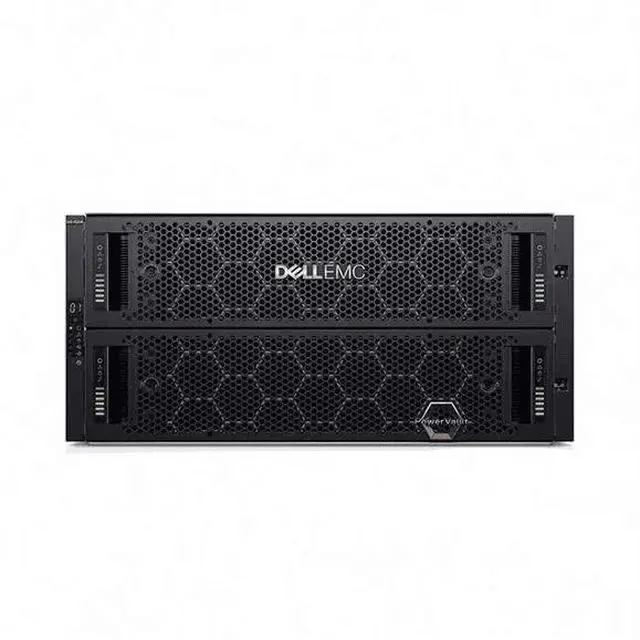
1. Massive Storage Volume:With 84 3.5 - inch drive bays, it offers an extensive storage capacity, suitable for large - scale data storage requirements in enterprises.
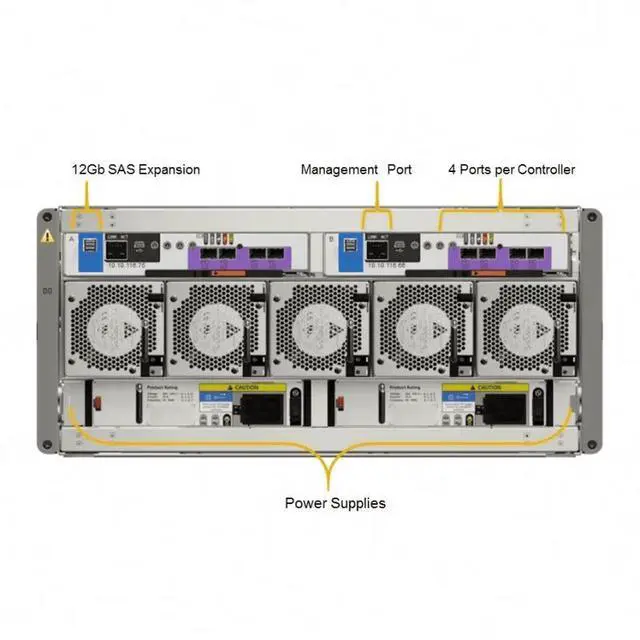
2. Dual - Controller High Availability:The dual - controller design ensures seamless operation. In case of one controller failure, the other can take over immediately, minimizing system downtime.
3. Power Redundancy:Dual power supplies provide reliable power backup. This guards against power outages, ensuring continuous operation of the storage system.
4. Convenient Installation:Slide rails are included, facilitating easy installation and maintenance within the rack.
5. High - speed Data Transfer:FC (Fibre Channel) connectivity enables high - speed data transfer, meeting the demands of data - intensive applications.
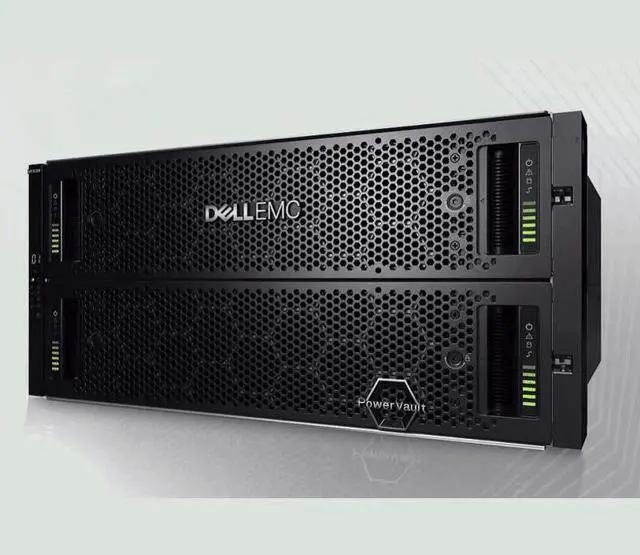
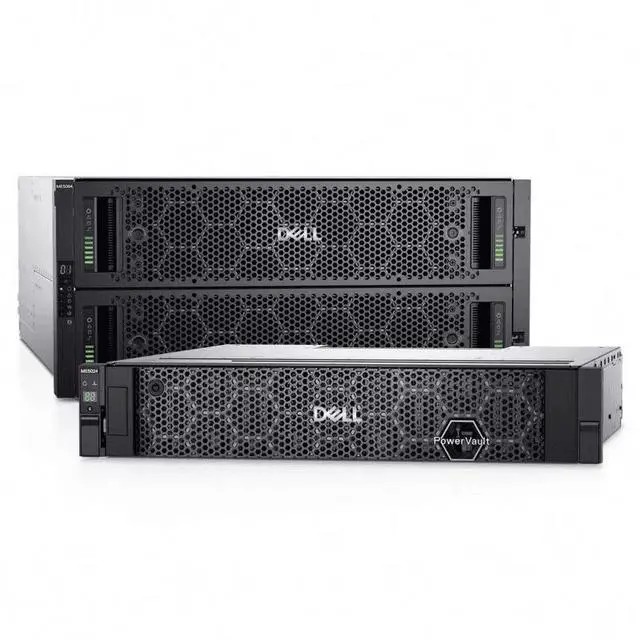
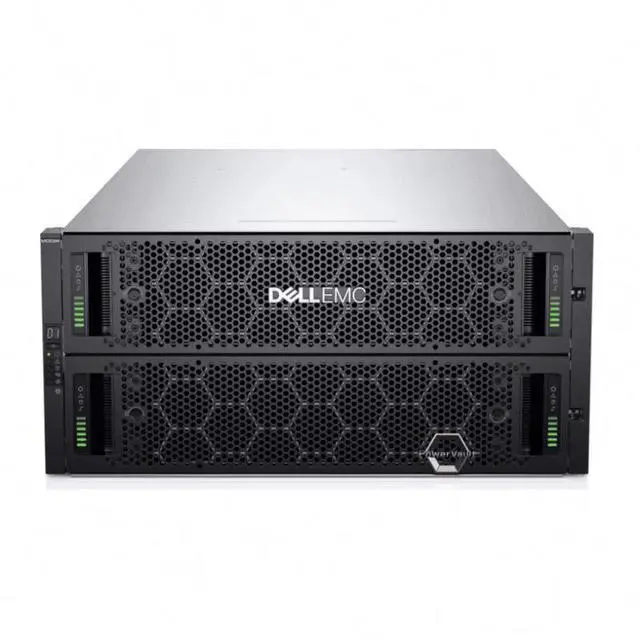
The Dell ME5084 is a 5U enterprise storage array with 84 x 3.5-inch drive bays, dual controllers, dual power supplies, slide rails, and Fibre Channel connectivity, making it well suited for organizations that need high-capacity, rack-mounted shared storage with availability-focused infrastructure.
| Attribute | Value |
|---|---|
| Best For | Enterprise rack deployments needing high-density, redundant SAN storage — a 5U array designed to hold up to 84 3.5-inch drives and operate in Fibre Channel or iSCSI environments where controller and power redundancy are required |
| Capacity | 84 x 3.5-inch drive bays in a single 5U chassis for high-density HDD capacity |
| Interface And Form Factor | 5U rack-mount storage array with included slide rails for rack installation |
| High Availability And Redundancy | Dual storage controllers for failover and dual power supplies for redundant power |
| Connectivity And Protocols | Fibre Channel (FC) connectivity and iSCSI protocol indicated for SAN connectivity |
| Warranty | 3-year warranty |
| Model Identifiers | Dell ME5084 storage array (5U, 84 x 3.5-inch drive bays) |
Q: Should I choose the Dell PowerVault ME5084 or the ME5024 for backup and archive storage?
A: Choose the ME5084 when capacity density is the main goal. Dell positions the ME5084 as the 5U 84-bay model for large-capacity, cost-conscious data retention, while the ME5024 is a 2U 24-bay model that is more often used where rack efficiency and smaller-footprint deployment matter more. If your workload is backup, archive, or large file retention and you want more disks in one enclosure, the ME5084 is usually the better fit. If you need a more compact array or expect a smaller initial deployment, the ME5024 is the more practical choice.
Q: Is the Dell PowerVault ME5084 a better fit than the previous-generation PowerVault ME4 5U platform?
A: Yes, if you are buying new and want current host connectivity and updated controller hardware. Dell’s ME5 materials position the ME5 generation as a step up from ME4 with faster processors, higher-scale connectivity options such as 32Gb Fibre Channel and 25Gb iSCSI, and higher overall platform performance. Community discussions also commonly describe ME5 as an ME4-class design with newer controllers rather than a completely different product family. The ME4 may still be relevant for installed-base consistency, but the ME5084 is the clearer choice for a new deployment.
Q: Should I buy the ME5084 now or start with a smaller ME5 model and add expansion later?
A: Buy the ME5084 first when you already know the environment will be capacity-heavy from day one. Dell’s ME5 documentation shows the ME5084 as the dense 5U controller enclosure, while ME5012 and ME5024 can scale with additional expansion shelves. Starting with a smaller model makes sense when you want a lower initial footprint and more gradual growth. Starting with the ME5084 makes more sense when you want fewer enclosures, fewer rack units per terabyte, and a simpler path to very large raw capacity in one chassis.
Q: Is the ME5084 a better choice than a more performance-focused Dell storage platform like PowerStore?
A: Choose the ME5084 when you want entry-tier block storage with high raw capacity density and straightforward SAN deployment. Choose a higher-tier platform such as PowerStore when advanced data services or a more performance-first architecture are more important than low-cost capacity scaling. Dell and reseller positioning consistently place PowerVault ME5 as entry storage, while community comparisons often frame PowerStore and similar platforms as the step up for richer feature sets. For backup repositories, archive targets, and general block storage where density matters, the ME5084 is usually the more aligned option.
Q: Who is this Dell ME5084-class 84-bay storage system suitable for?
A: This type of 84-bay Dell ME5 storage system is best suited for enterprise and data-center use, especially teams that need very large raw capacity, rack integration, and high availability. It is a better fit for virtualization, backup targets, archive tiers, media repositories, or shared block storage than for small-office or home NAS use. Buyers choosing products in this category usually value controller redundancy, many drive bays, and serviceability more than simplicity or low power use.
Q: Does it come with drives installed, or is it mainly the storage enclosure?
A: Buyers should confirm the exact seller configuration, but products in this category are often sold as the enclosure or chassis only, with drives selected separately. That matters because enterprise buyers usually choose their own HDD or SSD mix, capacity, and RAID layout. If the listing does not explicitly state populated drives and usable capacity, assume you need to verify drive inclusion before purchase.
Q: Is dual-controller, dual-power storage worth paying extra for?
A: Yes, if uptime matters. Dual controllers and dual power supplies are valuable when the storage system supports production workloads, because they reduce single points of failure and make maintenance or component failure less disruptive. If the storage is only for noncritical backup or lab use, the added cost and complexity may be harder to justify than with a simpler single-controller system.
Q: Can you start with fewer drives and add more later?
A: Usually yes, but the practical answer depends on the controller features and the RAID level you want. Retail Q&A for comparable storage products repeatedly shows that buyers often start with fewer drives, then expand later, but some RAID configurations work best when all planned drives are installed up front. For this reason, the ME5084 is more suitable for buyers who already have a capacity plan, not for casual incremental expansion without checking the array's supported expansion path.
Q: Is this a good choice instead of a simpler NAS appliance?
A: Choose this kind of platform if you need much higher drive density, Fibre Channel or iSCSI-style shared storage, and hardware redundancy. Choose a simpler NAS appliance if your priority is easier setup, lighter administration, lower noise and power draw, or file sharing for a small team. The trade-off is straightforward: an 84-bay enterprise array offers scale and resilience, while a smaller NAS is usually easier and cheaper to deploy.
Q: Who is the Dell ME5084 best suited for?
A: The ME5084 is best suited for organizations that need very high raw capacity in a single chassis and want shared storage with controller and power redundancy. It fits backup repositories, archive-heavy workloads, and general enterprise block storage better than small-office or lab use, because its main advantage is density and availability rather than simplicity or low cost.
Q: Is the Dell ME5084 worth buying for backup or large-capacity storage?
A: It can be a practical choice if your priority is packing a large number of 3.5-inch drives into one rack system with dual controllers and redundant power. It is more compelling for backup targets, bulk storage, and capacity-focused deployments than for latency-sensitive applications, because the product data emphasizes density, Fibre Channel connectivity, and high availability rather than all-flash performance.
Q: What are the main trade-offs of choosing the ME5084?
A: The main trade-off is density versus simplicity. You get 84 drive bays, dual controllers, and redundant power in one 5U platform, but discussion around the ME5 series shows that planning, controller balancing, host connectivity, and deployment choices matter. Buyers that want straightforward small-scale storage may find it more system than they need, while larger environments can benefit from the capacity and redundancy.
Q: Is the ME5084 a good fit if I need high availability?
A: Yes, if redundancy is a priority. Based on the provided product data, the dual-controller design and dual power supplies are intended to reduce downtime from a controller or power failure. That makes it a better fit for business storage continuity than a single-controller or non-redundant enclosure, assuming the rest of the environment is also designed for failover.
Q: Are there compatibility or deployment risks to check before buying the ME5084?
A: Yes. Community discussion around ME5084 deployments repeatedly points to checking drive compatibility, controller layout, and host network or SAN setup before purchase. This matters more with a dense enterprise array than with simpler direct-attached storage, so buyers should confirm supported drives, planned protocol use, and how volumes will be distributed across controllers.


